Source Cold Rolled Nickel Alloy Plate for Boiler, Ship, and Container Use
Find 30 listings for Cold Rolled Nickel Alloy Plate suitable for boiler plates, ship plates, and container plates. Buyers can compare specifications, prices, and delivery times from verified suppliers in China.
Key considerations
Products List


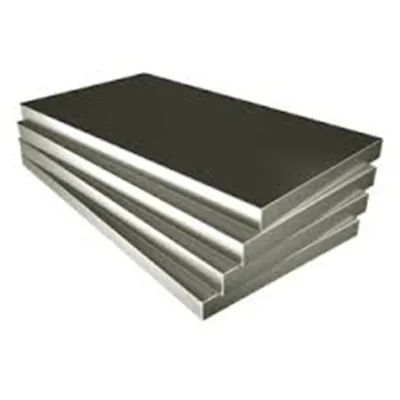


$600.00 - $800.00
MOQ: 1 Tons

Comprehensive Sourcing Guide
Strategic Sourcing Guide for Cold Rolled Nickel Alloy Plate
Understanding Technical Specifications and Material Variants
When sourcing Cold Rolled Nickel Alloy Plate, buyers must first navigate a complex landscape of technical specifications that define the material's performance and suitability for specific industrial applications. The core keyword, "Cold Rolled Nickel Alloy Plate," implies a manufacturing process where the metal is reduced in thickness at temperatures below its recrystallization point. This process, distinct from hot rolling, is critical for achieving precise dimensional tolerances and enhanced surface finishes. Based on available market data, the production of these plates often involves techniques such as cold drawing and cold rolling, which are essential for producing ultra-thin variants ranging from 0.005mm to 100mm in thickness.
The material composition is equally critical. The market offers a diverse array of specific grades, including Monel 400, INCONEL 617/N06617, and specialized alloys like 80Ni20Cr (NCr8020). Other notable models include GH6159, GH159, MP159, GH4098, and GH98, alongside the 12KM16 designation. These specific model numbers represent distinct chemical and mechanical properties tailored for high-performance environments. For instance, certain grades are engineered for high-temperature resistance, while others prioritize excellent anti-corrosion properties. The thickness specifications observed in the market vary significantly, with some products available in an ultra-thin range of 0.5mm to 100mm, while others are specifically noted for ranges as thin as 0.005mm to 0.3mm. Buyers must verify that the specific model number aligns with the required mechanical properties, as the "nickel alloy steel" designation covers a broad spectrum of performance capabilities.
Compliance, Certification, and International Standards
Navigating the regulatory and standards landscape is a fundamental step in ensuring that the procured nickel alloy plate meets international quality expectations. The industry operates under a robust framework of recognized standards, including AISI, ASTM, BS, DIN, GB, and JIS. These standards provide the necessary benchmarks for chemical composition, mechanical testing, and dimensional accuracy. For example, specific high-strength steel plates are often referenced against standards such as En 10025-6 S960ql, which dictates requirements for high-strength structural applications.
Certification plays a pivotal role in supplier validation. The presence of ISO certification is a key indicator of a manufacturer's commitment to quality management systems. While specific test results and detailed certification documents must be verified on a per-transaction basis, the general availability of ISO-certified production lines suggests a baseline of operational reliability. Buyers should also be aware that standards can vary by region and application; for instance, some products adhere to "as customer's requirement" specifications, which necessitates a clear definition of the technical drawing or specification sheet prior to ordering. It is imperative to confirm that the supplier can provide documentation proving compliance with the specific standard (e.g., ASTM, DIN, or JIS) required for the intended application, rather than relying on general market assertions.
Cost Drivers and Pricing Dynamics
The pricing of Cold Rolled Nickel Alloy Plate is influenced by a multitude of factors, resulting in a wide observed range from $8.5 to $1,350 USD. This significant variance is not arbitrary but is driven by the specific alloy grade, the thickness of the plate, the level of surface treatment, and the complexity of the customization required. Ultra-thin plates, such as those in the 0.005mm to 0.3mm range, typically command higher prices due to the precision manufacturing techniques involved. Similarly, specialized grades like INCONEL 617 or GH series alloys often carry a premium over standard nickel alloys due to their unique high-temperature and corrosion-resistant properties.
Surface treatment is another critical cost driver. Products listed with a "polished" surface finish or those undergoing galvanization may incur additional processing costs compared to standard mill-finish plates. The form factor also impacts price; while the product type is generally categorized as "Sheet" or "Plate," the transition from a standard plate to a specialized "High-strength Steel Plate" or "Wear Resistant Steel" alters the cost structure. Furthermore, the "Customization" attribute being available suggests that non-standard dimensions or specific mechanical property requirements will increase the unit cost. Buyers should anticipate that the final price is a function of the interplay between material scarcity, processing complexity, and the specific technical demands of the project.
Typical Applications and Performance Requirements
Cold rolled nickel alloy plates are integral to industries where reliability under extreme conditions is non-negotiable. The observed "Special Use" categories highlight the versatility of these materials, ranging from "High-strength Steel Plate" and "Wear Resistant Steel" to "Silicon Steel" and "Mold Steel." These applications often require materials that can withstand high temperatures, aggressive chemical environments, or significant mechanical stress.
In the energy sector, these plates are frequently utilized as "Boiler Plate" and "Container Plate," where resistance to high pressure and temperature is paramount. The automotive and transportation industries may leverage "Cold Heading Steel" and "Free Cutting Steel" for precision components. Additionally, the "Ship Plate" application underscores the material's necessity in marine environments, where "Excellent Anti-Corrosion Properties" are critical for longevity. The "Mechanical Property" of these plates is often defined as being "in accordance with standard," ensuring that the tensile strength, yield strength, and elongation meet the rigorous demands of structural integrity. Whether used for "Cutting Tools" or general structural reinforcement, the selection of the correct grade—such as Monel 400 for corrosion resistance or GH series for high-temperature stability—is essential for operational success.
Supplier Evaluation and Geographic Considerations
Evaluating suppliers for Cold Rolled Nickel Alloy Plate requires a focus on geographic origin, production capacity, and logistical capabilities. The market data indicates that a significant portion of these products originates from China, with specific manufacturing hubs noted in Shandong Province and Hebei. These regions are known for their robust metal processing industries. When assessing a supplier, buyers should verify the "Place of Origin" to ensure it aligns with their supply chain strategy and any trade compliance requirements.
The availability of stock is a crucial factor in supplier selection. Many suppliers indicate "Stock Available" or "Stock," which can significantly reduce lead times compared to made-to-order scenarios. However, for highly customized orders, the "Delivery Time" may extend to 10-20 days, or specifically 14 days for certain configurations. Buyers must also scrutinize the "Trade Terms" offered, such as EXW, FOB, CIF, and CFR, to understand their responsibility for shipping and insurance. Packaging is another evaluation point; "Marine Packaging of Metal" or "Seaworthy Packing" is standard to prevent damage during transit, but "as The Customer's Requirement" options should be confirmed to ensure the packaging meets specific logistical needs.
Quality Control and Dimensional Tolerances
Quality control in the production of Cold Rolled Nickel Alloy Plate is paramount, particularly regarding dimensional accuracy and surface integrity. The market data highlights a tolerance of ±1%, which serves as a benchmark for acceptable deviation in thickness and dimensions. However, buyers must recognize that tolerance requirements can vary based on the specific application; ultra-thin plates may require tighter tolerances than thicker structural plates. The "Surface Treatment" process, whether polished or galvanized, directly impacts the final quality and must be inspected to ensure it meets the specified finish requirements.
Verification of the "Mechanical Properties" is essential to confirm that the plate performs as expected under load. The statement that properties are "in accordance with standard" implies adherence to established testing protocols, but buyers should request specific test reports for critical batches. The "Product Name" and "Model Number" must match the ordered specifications exactly, as even slight deviations in grade (e.g., between INCONEL 617 and 690) can lead to catastrophic failures in high-stress environments. Regular audits of the supplier's quality management systems, particularly those certified to ISO standards, provide an additional layer of assurance regarding consistent product quality.
Long-Term Procurement and Logistics Strategy
Developing a long-term procurement strategy for Cold Rolled Nickel Alloy Plate involves more than just securing a single transaction; it requires building a resilient supply chain capable of adapting to market fluctuations. The "MOQ" (Minimum Order Quantity) varies, with observed ranges from 1 to 500 units, and specific weight-based thresholds like 20kg or 50kg. Understanding these thresholds is vital for inventory management and cost optimization. For buyers with lower volume needs, suppliers offering flexible MOQs are preferable, while high-volume purchasers should negotiate based on larger order quantities to secure better pricing.
Lead time management is another critical component. With delivery times ranging from 10 to 15 days or up to 20 days, buyers must factor these durations into their production schedules. The "Stock Available" status can mitigate delays, but for custom orders, the lead time becomes a fixed constraint. Furthermore, the "Customization" availability allows for long-term partnerships where the supplier can adapt their production lines to meet evolving project needs. By establishing clear communication channels regarding standards, tolerances, and packaging requirements, buyers can ensure a smooth flow of materials that supports continuous operations. Ultimately, a successful procurement strategy balances the immediate need for specific technical specifications with the long-term goal of supply chain stability and cost efficiency.
FAQs
What standards apply to cold rolled nickel alloy plates?
These plates comply with multiple international standards including AISI, ASTM, BS, DIN, GB, and JIS. Specific models like Monel 400 and INCONEL 617 adhere to these rigorous benchmarks for chemical composition and mechanical testing.
Can I customize the thickness of cold rolled nickel alloy plates?
Yes, customization is available for various thickness ranges from ultra-thin 0.005mm up to 100mm. Buyers can request specific dimensions such as the 0.5 to 100mm range or the 0.005 to 0.3mm range depending on project needs.
What is the typical delivery time for these steel plates?
Delivery times generally range from 10 to 20 days depending on stock availability and order specifics. Some configurations may require 14 days, while standard stock items can often be shipped within the 10 to 15 day window.
Which certifications do manufacturers of these plates hold?
Manufacturers often hold ISO certification to ensure quality management systems are in place. Buyers should verify specific compliance documents for standards like ASTM or DIN before finalizing any procurement transaction.
How does the price vary for cold rolled nickel alloy plates?
Prices range from 8.5 to 1350 USD based on alloy grade, thickness, and surface treatment. Ultra-thin variants and specialized grades like GH series alloys typically command higher prices due to complex manufacturing requirements.
What are the minimum order quantities for these products?
Minimum order quantities vary between 1 unit and 500 units, with weight thresholds often set at 20kg or 50kg. Buyers should check specific supplier requirements as stock availability can influence these thresholds.
Which surface treatments are available for nickel alloy plates?
Available surface treatments include polished finishes and galvanization to enhance durability and appearance. The choice of treatment impacts the final cost and suitability for applications requiring excellent anti-corrosion properties.
Where are these cold rolled plates typically manufactured?
Production is primarily located in China, with specific hubs in Shandong Province and Hebei. Buyers should confirm the place of origin to ensure alignment with their supply chain strategy and trade compliance needs.