Source Color Catcher Sheets for Laundry, Travel, and Stain Removal
Find 30 verified listings for Color Catcher sheets designed to absorb loose dyes during washing. Buyers can compare specifications like material composition, sheet dimensions, and packaging options from suppliers in China to meet bulk procurement needs.
Key considerations
Products List


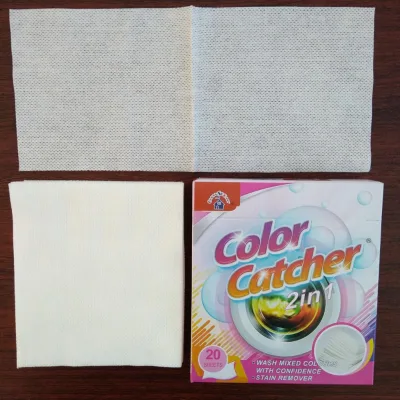
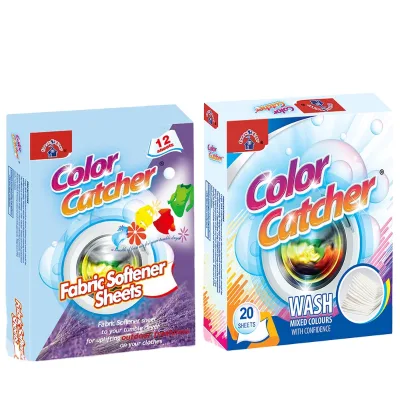









Comprehensive Sourcing Guide
Strategic Sourcing Guide for Color Catcher Products
The global demand for household cleaning innovations has elevated the category of Color Catcher sheets to a staple in modern laundry management. For B2B procurement professionals, navigating this market requires a disciplined approach that distinguishes between generic observations and verified product specifications. The following guide synthesizes available market data to provide a framework for sourcing Color Catcher sheets, focusing on technical attributes, compliance verification, and supply chain stability. Buyers must treat product attributes as observations of specific listings rather than universal claims for every item in the category.
Technical Specifications and Material Composition
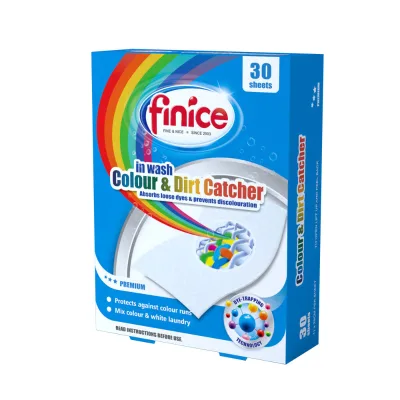
Understanding the physical and chemical makeup of Color Catcher sheets is the first step in defining a procurement requirement. The core function of these products is to absorb loose dyes and color molecules during the wash cycle, preventing dye transfer between garments. The material composition varies significantly across suppliers, and this variation directly impacts performance and cost.
Analysis of current market listings reveals two primary material profiles. One common specification utilizes a blend of 70% viscose and 30% polyester. Another variation lists the composition as 30% polyester and 70% viscose. While the ratio appears consistent in terms of total percentage, the manufacturing process and fiber quality can differ. Some suppliers specify the material simply as "Non-Woven," which is a broader classification that may encompass various fiber blends. The grammage, or weight per square meter, is another critical technical parameter. Observed data indicates a range of 65gsm to 74gsm. This weight influences the sheet's absorbency capacity and durability during the wash cycle.
Dimensions are equally variable and must be matched to the target market's expectations. Standardized sizes observed in the market include 11x25cm, 11x25.5cm, 11x28cm, 12x25cm, and 12x28cm. A specific model, identified as TK20231114, lists a standard size of 28x11cm, while another model, Dccs230726, aligns with the 11x25cm dimension. The shape is consistently described as a sheet, designed to be disposable after a single use. The active ingredient content is noted in some specifications to range between 50% and 80%, though the specific chemical nature of these ingredients is often proprietary. Buyers should verify the exact chemical composition and its safety profile for the intended application, particularly regarding compatibility with different fabric types.
Packaging Standards and Logistics Configuration
Logistics efficiency is a major cost driver in the household chemical sector. The packaging of Color Catcher sheets must balance product protection with shipping volume optimization. The primary packaging unit is typically a box, with common configurations including 12 pieces, 20 pieces, 24 pieces, or 48 boxes per carton. The single gross weight is frequently cited as 0.500 Kg, which is a crucial figure for freight calculations. The single package dimensions are often recorded as 15x12x8 cm, providing a baseline for palletization strategies.
Customization is a key feature available in this sector. Suppliers often offer flexible packaging solutions, allowing buyers to request specific piece counts per box or custom carton quantities. The product is generally shipped in cartons, with the port of dispatch frequently listed as Shanghai, China. The place of origin for many high-volume listings is Anhui, China, though some suppliers operate out of Shanghai. The supply ability for established manufacturers can reach 500,000 bags per month, indicating a robust capacity for large-scale orders. However, buyers must confirm the actual lead time and production capacity relative to their specific order volume, as these figures are not guaranteed for all suppliers.
Compliance, Certification, and Safety Standards
In the B2B procurement of household chemicals, compliance is non-negotiable. The market data indicates that reputable suppliers often hold a suite of certifications, including BSCI, ISO, SQP, MSDS, and FSC. These certifications cover various aspects of the supply chain, from social responsibility and quality management to material sourcing and safety data.
The MSDS (Material Safety Data Sheet) is particularly critical for chemical products. It provides detailed information on the hazards, handling, and emergency measures associated with the product. Buyers must request the MSDS for any specific model number to ensure the product meets the safety regulations of the destination country. The FSC certification, if applicable, indicates that the paper-based components of the non-woven material are sourced from responsibly managed forests. ISO certifications generally refer to quality management systems, ensuring consistent production standards.
It is important to note that while these certifications are observed in the market, they are not universal. A buyer cannot assume a product is compliant based solely on the category name. Verification requires direct confirmation from the supplier that the specific batch or model number carries the claimed certification. The product type is broadly categorized as "Other Household Chemicals" or "Daily Household Necessities," which may subject the product to specific regulatory frameworks depending on the importing region.
Cost Drivers and Pricing Dynamics
The pricing structure for Color Catcher sheets is influenced by several factors, including material costs, packaging complexity, and order volume. The observed price range in the market spans from $0.15 to $20,000, reflecting the vast difference between a single unit purchase and a full container load of customized goods. This wide range underscores the importance of defining the "unit" clearly. The price per sheet will vary based on the grammage (65gsm vs. 74gsm), the material blend, and the packaging configuration.
Minimum Order Quantity (MOQ) is a significant constraint in this sector. Data shows an MOQ range from 1 to 20,000 units. A specific listing cites an MOQ of 20,000 boxes, which is a substantial commitment for a new buyer. Conversely, some suppliers may offer lower entry points for sampling or small-batch testing. The "Selling Units" are often listed as "Single Item," which can be misleading if the buyer does not clarify the minimum purchase requirement. Buyers should calculate the total landed cost, including shipping from the port of dispatch (e.g., Shanghai) and any applicable duties, rather than focusing solely on the unit price.
Supplier Evaluation and Brand Strategy
When evaluating suppliers, buyers should look beyond the product name and examine the brand strategy. The market features both established brand names, such as "Dr.Easy," and OEM (Original Equipment Manufacturer) options. The availability of customization allows buyers to develop their own private label, which is a common strategy for retailers and distributors. The "Brand Name" attribute can be listed as "OEM Brand," indicating the supplier's willingness to produce under the buyer's label.
Supplier reliability is often signaled by their "Supply Ability" and "MOQ" flexibility. A supplier claiming a supply ability of 500,000 bags per month demonstrates capacity, but the buyer must verify if this capacity is dedicated to their order or if it is shared across multiple clients. The "Place of Origin" is another factor; while Anhui and Shanghai are common, the specific factory location can impact logistics costs and lead times. Buyers should also assess the supplier's responsiveness to customization requests, as the "Customization" attribute is listed as "Available" but requires active negotiation to implement.
Quality Control and Performance Verification
Quality control in the Color Catcher category hinges on the sheet's ability to absorb dye without disintegrating in the wash. The "Feature" attributes observed include "Eco-Friendly," "Disposable," and "Stocked." These features suggest a focus on sustainability and convenience, but they must be validated through testing. The "Function" is described as absorbing color molecules and removing stains, but the efficacy varies by material quality.
Buyers should request sample testing to verify the "Gram Weight" and "Size" accuracy. A discrepancy in the 11x25cm specification could affect the sheet's surface area and, consequently, its dye absorption capacity. The "Active Ingredient" content, noted as 50%-80% in some listings, should be verified to ensure the product meets performance expectations. Additionally, the "Scent" is often "Unscented," which is a preference for many buyers, but this must be confirmed as some variations may include fragrances.
Long-Term Procurement Considerations
Sourcing Color Catcher sheets is not a one-time transaction but a long-term partnership. Buyers should consider the stability of the supply chain, particularly regarding the "Port of Dispatch" and "Lead Time." While Shanghai is a major hub, geopolitical factors or port congestion can impact delivery schedules. The "Packaging" standard, such as the 15x12x8 cm size, should be consistent to ensure efficient warehousing and retail display.
The "Range of application" is listed as "all kinds of cloth," but buyers should verify if the product is suitable for specific fabric types, such as delicate silks or heavy cottons. The "Age Group" is specified as "Adult," which may limit marketing strategies for family-oriented brands. Finally, the "Model Number" (e.g., CC-02, 98544) serves as a unique identifier for tracking and reordering. Maintaining a consistent model number across orders ensures that the product specifications remain stable, reducing the risk of quality fluctuations.
Comparative Analysis of Product Attributes
To facilitate decision-making, the following table summarizes the key technical and logistical attributes observed in the market. This comparison highlights the variability that buyers must navigate.
| Attribute Category | Observed Variations | Key Verification Points |
|---|---|---|
| Material Composition | 70% Viscose + 30% Polyester; 30% Polyester + 70% Viscose; Non-Woven | Confirm fiber blend and source of raw materials. |
| Gram Weight | 65gsm; 74gsm | Verify weight consistency for absorbency performance. |
| Dimensions | 11x25cm; 11x25.5cm; 11x28cm; 12x25cm; 12x28cm | Match dimensions to packaging and retail requirements. |
| Packaging | 12pc/box; 20pc/box; 24pc/box; 48boxes/carton | Confirm carton dimensions and total piece count. |
| Certifications | BSCI, ISO, SQP, MSDS, FSC | Request valid certificates for the specific batch. |
| MOQ | 1 to 20,000 units (e.g., 20,000 boxes) | Negotiate MOQ based on initial order volume. |
| Origin | Anhui China; Shanghai China | Assess logistics impact based on factory location. |
In conclusion, sourcing Color Catcher sheets requires a meticulous approach to verifying technical specifications, compliance, and supply chain capabilities. By focusing on the observed data and maintaining a rigorous verification process, buyers can secure high-quality products that meet their specific market needs while mitigating the risks associated with product variability. The market offers significant customization and scale, but success depends on the buyer's ability to navigate the nuances of material composition, packaging standards, and supplier reliability.
FAQs
What is the primary function of Color Catcher sheets?
The primary function is to absorb loose dyes and color molecules during the wash cycle. This prevents dye transfer between garments, making them effective for all kinds of cloth. The sheets are designed to be disposable after a single use.
Which materials are commonly used in these sheets?
Common materials include a blend of 70% viscose and 30% polyester, or 30% polyester and 70% viscose. Some listings simply specify the material as non-woven. The grammage typically ranges from 65gsm to 74gsm to ensure adequate absorbency.
Can buyers request custom packaging for these products?
Yes, customization is available for packaging configurations. Suppliers often offer options like 12, 20, 24, or 48 pieces per box. Buyers can also request specific carton quantities to optimize shipping and storage efficiency.
What certifications do suppliers typically hold for these items?
Reputable suppliers often hold certifications such as BSCI, ISO, SQP, MSDS, and FSC. These cover quality management, social responsibility, and material safety. Buyers should verify that specific batches carry these claimed certifications before ordering.
How does the minimum order quantity affect purchasing?
The minimum order quantity ranges from 1 to 20,000 units depending on the supplier. Some listings specify an MOQ of 20,000 boxes, while others allow smaller initial orders. Buyers must confirm the specific MOQ before finalizing any purchase agreement.
What are the standard dimensions for Color Catcher sheets?
Standard sizes observed include 11x25cm, 11x25.5cm, 11x28cm, 12x25cm, and 12x28cm. Specific models may list dimensions like 28x11cm. These dimensions are critical for ensuring the sheet covers enough surface area to absorb dye effectively.
Where are these products typically shipped from?
Products are typically shipped from the port of Shanghai, China. The place of origin is often listed as Anhui, China, though some suppliers operate directly from Shanghai. This location impacts logistics costs and lead times for international buyers.