Source Color Blocking Bodycon Mini Dress for Daily Wear, Events, and Parties
Explore 30 listings for the Color Blocking Bodycon Mini Dress featuring styles like A-Line, Sweet, and Fashion. Buyers can compare attributes such as V-Neck, High-Waisted, and Polyester material from suppliers in China with OEM/ODM services available.
Key considerations
Products List


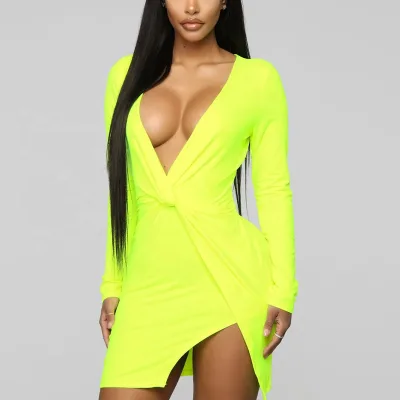


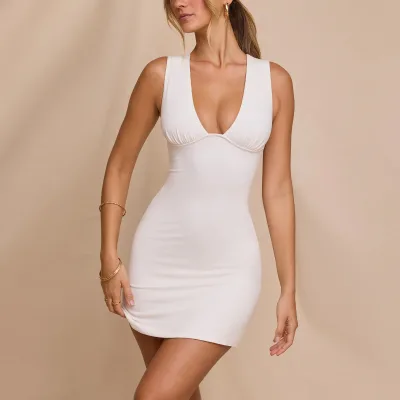
Summer Women Party Bodycon Bandage Sexy Deep V Neck Mini Backless Dresses
$9.98 - $12.38
MOQ: 50 pieces


New Design Women Sexy Bodycon Mini Dress Floral Slip Dress Summer Night
$12.50 - $12.70
MOQ: 100 Pieces

Comprehensive Sourcing Guide
Strategic Sourcing Guide for Color Blocking Bodycon Mini Dresses
The global apparel market for women's fashion is characterized by rapid trend cycles and a high demand for versatile, statement-making pieces. Among these, the Color Blocking Bodycon Mini Dress represents a specific niche that combines bold aesthetic choices with a form-fitting silhouette. For B2B procurement professionals, sourcing this category requires a nuanced understanding of material properties, manufacturing capabilities, and the specific constraints of the supply chain. This guide provides a disciplined approach to evaluating suppliers and products in this sector, relying strictly on verified product attributes and established industry practices to mitigate risk and ensure quality.
Understanding Product Specifications and Design Variations
When sourcing a Color Blocking Bodycon Mini Dress, the first step is to define the technical specifications that align with your brand's identity. The term "bodycon" implies a tight fit that follows the body's contours, while "mini" indicates a hemline that falls well above the knee. However, the supplied data reveals a diverse landscape of product attributes that must be reconciled with this core definition. For instance, while the target keyword specifies a bodycon fit, observed product listings include styles described as "Loose," "A-Line," and "Straight." This discrepancy highlights a critical verification step: buyers must explicitly confirm the cut and fit of the specific SKU before placing an order, as the market often lists various silhouettes under broad search terms.
Material composition is another pivotal specification. The available data indicates that "Polyester" is a primary standard for this category, often cited as the material standard or product standard. Polyester is favored for bodycon dresses due to its elasticity and ability to hold shape, which is essential for the "bodycon" aesthetic. However, the data also notes that "Fabric Weight" is often customizable. This suggests that while the base material is likely polyester, the density and hand-feel can be adjusted to meet specific quality expectations. Buyers should verify the exact GSM (grams per square meter) or fabric weight specifications in the product sheet, as this directly impacts the dress's opacity, drape, and comfort.
Furthermore, the "Color" attribute in the observed data ranges from "Single Color" to "White, Other, Multicolor, Green, Blue." For a "color blocking" design, the presence of "Multicolor" and "Other" options is relevant, but the specific arrangement of blocks must be confirmed. The data mentions "Digital Printing" and "Silk Screen Printing" as logo or pattern methods. While these are typically used for graphics, they can also be relevant for applying color blocks if the garment is constructed from a base fabric that is then printed. Buyers must distinguish between garments constructed from sewn-together colored panels versus those created through printing techniques, as the latter may have different durability and feel characteristics.
Compliance, Certification, and Material Standards
Navigating the compliance landscape for apparel sourced from China, specifically from regions like Guangdong, requires a rigorous approach to material safety and labor standards. The supplied facts list "OEKO-TEX" and "Reach" as low-confidence background standards. This classification is significant; it means that while these certifications are relevant to the industry, they cannot be assumed to be present on any specific listing without direct verification. A buyer cannot rely on the general presence of these standards in the market category to assume compliance for a specific order.
Instead, procurement teams must treat these certifications as verification targets. For polyester-based garments, the primary concern is often the chemical treatment used during dyeing and finishing. The "Reach" regulation in the European Union restricts the use of certain hazardous substances, and "OEKO-TEX" certifies that the textile is free from harmful levels of substances. Since the data does not confirm these certifications for the specific models listed (such as XH-120, 039, or ZPL25041214), buyers must request valid, current test reports from the supplier. Relying on the assumption that a supplier is compliant because they operate in a major manufacturing hub is a procurement risk.
Additionally, the "Standard" attribute in the data includes entries like "Customized" and specific size ranges (S, M, L, XL, XXL). This indicates that the product standards are not fixed but are often tailored to the buyer's requirements. This flexibility extends to material standards as well. If a buyer requires a specific eco-friendly standard or a specific chemical restriction beyond the baseline, it must be explicitly written into the purchase order and the technical pack. The absence of a confirmed certification in the public listing data necessitates a proactive audit or third-party testing protocol before mass production begins.
Cost Drivers and Pricing Dynamics
The pricing structure for color blocking bodycon mini dresses is influenced by several variables, including material costs, customization levels, and order volume. The observed price range in the market data spans from $0.5 to $70 USD. This wide variance is not indicative of a single product tier but rather reflects the spectrum from basic, unbranded items to highly customized, premium designs. The lower end of the range likely corresponds to standard polyester blends with minimal customization, while the upper end may include complex color blocking patterns, high-quality fabric weights, or specific branding services.
A primary cost driver is the "Customization" attribute, which is marked as available. Customization can encompass everything from the specific color blocking layout to the inclusion of custom logos via "Digital Printing" or "Silk Screen Printing." Each layer of customization adds to the production complexity and cost. For example, a multi-panel color block design requires more cutting and sewing time than a single-color garment. Furthermore, the "Service" attribute lists "OEM/ODM," indicating that suppliers offer original equipment and design manufacturing. ODM services, where the supplier provides the design, may have different pricing structures compared to OEM, where the buyer provides the design.
The "MOQ" (Minimum Order Quantity) range of 2 to 200 units also plays a significant role in unit pricing. Suppliers with lower MOQs (e.g., 2 units) often charge a premium per unit to cover setup costs for smaller batches. Conversely, orders approaching the higher end of the MOQ range (e.g., 200 units) typically benefit from economies of scale, reducing the unit cost. Buyers must balance their inventory needs against their budget. If the target price is near the lower end of the observed range, the buyer should expect higher MOQs or less customization. If the order volume is low, the unit price will likely be higher, potentially approaching the mid-to-high end of the $0.5-$70 spectrum.
Supplier Evaluation and Operational Capabilities
Evaluating suppliers for this specific product category requires a focus on their ability to handle the technical demands of color blocking and bodycon construction. The data indicates that products originate from "China," with specific mentions of "Guangdong, China." Guangdong is a major manufacturing hub known for its textile and apparel infrastructure. However, the mere location does not guarantee capability. Buyers should verify the supplier's specific experience with "Polyester" fabrics and their proficiency in "Digital Printing" and "Silk Screen Printing" if these are required for the color blocking effect.
The "Packing" specifications vary, with options including "Polybag, Carton," "Carton," and "Standard Transport Packaging." This variation suggests that different suppliers have different logistical capabilities. A supplier offering "Standard Transport Packaging" might be better equipped for large-scale international shipping, while those using simple "Polybag" packing might be more suited for smaller, direct-to-consumer shipments. Buyers should align the supplier's packing capabilities with their own logistics requirements to avoid additional costs or damage during transit.
Furthermore, the "Service" attribute confirms that OEM/ODM services are available. This is a strong indicator of a supplier's flexibility. However, buyers must assess the supplier's capacity to manage the "Customizable" nature of the product. Can they handle complex color blocking patterns without compromising the "Soft Breathable" feature mentioned in the data? The "Feature" attribute lists "Soft Breathable," which is a desirable quality for polyester garments, as polyester can sometimes feel non-breathable. A supplier that can consistently deliver breathable polyester bodycon dresses demonstrates a higher level of technical expertise in fabric selection and finishing.
Quality Control and Production Verification
Quality control for color blocking bodycon mini dresses must address both aesthetic and functional dimensions. The "Style" attributes observed include "Sweet," "Fashion," "Leisure," and "Sexy," indicating that the target audience and intended use vary. Regardless of the style, the "Bodycon" fit demands precise tailoring to ensure the garment does not lose its shape after washing or wear. The "Fabric Weight" being "Customizable" means that quality control must verify that the actual weight matches the agreed-upon specification, as deviations can lead to transparency issues or poor fit.
The "Pattern" attribute is listed as "Other," which is a broad category. For color blocking, this likely refers to the geometric or abstract arrangement of colors. Buyers must establish clear visual standards for the color blocks, including exact color codes (e.g., Pantone) and the precision of the seams where different colors meet. Misalignment of color blocks is a common defect in this category. Additionally, the "Collar Type" is noted as "V-Necked" in some listings, while "Neckline" includes "V-Neck/Round Neck/Square Neck/Low Neck." Buyers must ensure the final product matches the specific neckline design agreed upon, as this significantly affects the garment's silhouette and appeal.
Testing for "Soft Breathable" properties is also essential. Since the data lists this as a feature, it should be a baseline requirement. However, without specific test data provided in the source material, buyers should request independent lab tests to verify breathability and comfort. The "Front Fly" attribute is listed as "Pullover," which is standard for bodycon dresses, but this should be confirmed to ensure there are no unintended zippers or closures that alter the fit.
Long-Term Procurement and Market Adaptability
Sourcing for the "Summer" and "Spring/Summer" seasons, as indicated in the data, requires a strategic approach to inventory planning. The "Season" attribute confirms that these products are designed for warmer weather. This seasonal alignment means that procurement timelines must be synchronized with the fashion calendar to ensure products are available before the peak selling season. Delays in production or shipping can result in missed sales opportunities, especially for trend-driven items like color blocking mini dresses.
The "Occasion" is listed as "Daily," suggesting these dresses are intended for everyday wear rather than formal events. This versatility is a key selling point, but it also means the design must be durable enough for frequent use. Buyers should consider the "Product Name" as "Casual Dress" when marketing these items, ensuring that the quality matches the casual expectation. The "Suitable for" attribute specifies "Youth" and "Girls," indicating a target demographic that values trendiness and comfort. Understanding this demographic helps in selecting the right color palettes and fit profiles.
Finally, the "Logo/Pattern" options of "Digital Printing" and "Silk Screen Printing" offer opportunities for brand differentiation. In the long term, building a relationship with a supplier who can consistently execute these printing techniques will be valuable. Buyers should consider the scalability of these printing methods. Digital printing is often better for small runs and complex designs, while silk screen printing may be more cost-effective for larger volumes of simpler patterns. Aligning the printing method with the order volume and design complexity will optimize costs and ensure consistent quality over multiple production cycles.
Comparative Analysis of Product Attributes
To facilitate decision-making, the following table summarizes key attributes observed in the market data, highlighting the variability that buyers must navigate.
| Attribute Category | Observed Values | Procurement Implication |
|---|---|---|
| Material | Polyester | Verify fabric weight and breathability; standard for bodycon. |
| Style | Sweet, Fashion, Loose, Straight, Sexy | Confirm fit (Bodycon vs. Loose) explicitly; style varies widely. |
| Color | Black, White, Multicolor, Green, Blue, Single Color | Ensure "Color Blocking" is defined by paneling or printing. |
| Length | Short, Mini | Verify hemline measurement; "Short" and "Mini" are used interchangeably. |
| Sleeve Type | Long Sleeve, Sleeveless, Short Sleeve | Confirm sleeve length; data shows conflicting attributes. |
| Customization | Available, Customized | High flexibility; verify specific design requirements in PO. |
| Origin | China, Guangdong | Major hub; verify specific factory capabilities and certifications. |
| Service | OEM/ODM | Confirm if design is provided by buyer or supplier. |
| Packing | Polybag, Carton, Standard Transport | Align with logistics needs; varies by supplier. |
| Season | Summer, Spring/Summer | Plan inventory for warm weather peaks. |
This table underscores the necessity of detailed communication with suppliers. The presence of conflicting or broad attributes in the general market data means that a buyer cannot assume a specific product will meet their needs without explicit confirmation. By focusing on these specific variables, procurement professionals can effectively navigate the complexities of sourcing color blocking bodycon mini dresses.
FAQs
Can I customize the fabric weight for this dress?
Yes, the fabric weight is customizable to meet your specific quality needs. This allows you to adjust the GSM for better opacity or drape while maintaining the polyester material standard.
What customization options are available for the design?
Customization is available for logos and patterns using digital printing or silk screen printing. You can also request specific color blocking arrangements and neckline styles like V-neck or round neck.
Which materials are used for these dresses?
The primary material standard is polyester, which provides elasticity and shape retention. Some listings also indicate that the material standard can be customized to suit specific brand requirements.
What is the minimum order quantity for these dresses?
The minimum order quantity ranges from 2 to 200 units depending on the supplier and customization level. Lower MOQs often incur higher per-unit costs, while larger orders benefit from economies of scale.
Where are these dresses manufactured?
Products originate from China, with specific manufacturing hubs noted in Guangdong. Buyers should verify the exact location of the factory to ensure alignment with their logistics and compliance requirements.
How are the dresses packed for shipping?
Packing options include polybags, cartons, or standard transport packaging depending on the supplier. You should confirm the specific packing method to ensure it meets your logistics and damage prevention needs.
What styles and fits are available for this dress?
Available styles include A-Line, Straight, Loose, and Bodycon fits with various necklines. Buyers must explicitly confirm the silhouette as market listings often mix different cuts under broad search terms.
Are there specific certifications like OEKO-TEX available?
Certifications like OEKO-TEX and Reach are not confirmed in the standard product data. Buyers must request valid test reports directly from the supplier to verify compliance with these safety standards.