Source Color Changing Car Wrap Vinyl for Body, Glass, and Interior
Compare 30 listings for Color Changing Car Wrap Vinyl with options in PVC and TPU materials. Buyers can evaluate customization, thickness, and application types like whole body or annual inspection protection stickers from suppliers in Shanghai.
Key considerations
Products List


Glossy Film Car Wrap Color Changing Sticker with High Quality for Decoration
$85.00 - $90.00
MOQ: 100 Rolls
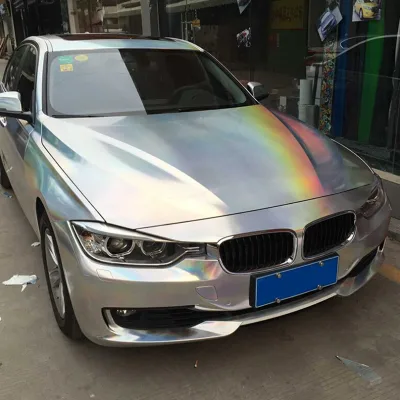


Hot Sale Cars Wrap Vinyl Car Wrapping Film Customization Car Color Changing Film
$0.35 - $0.50
MOQ: 1000 Square Meters

Self Adhesive Vinyl Car Color Change Film for Ultimate Protection
$0.35 - $1.50
MOQ: 2000 Square Meters


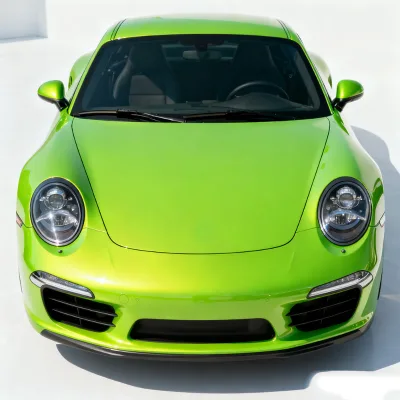
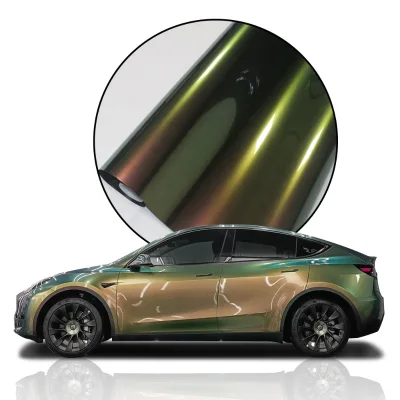
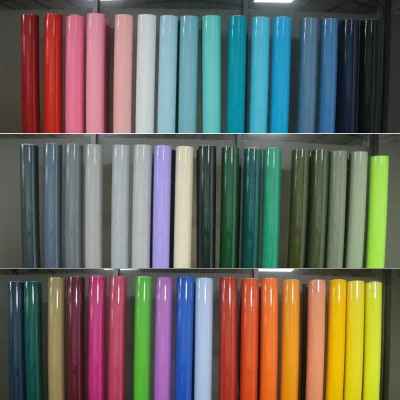
Comprehensive Sourcing Guide
Strategic Sourcing Guide for Color Changing Car Wrap Vinyl
Understanding Product Variants and Technical Specifications
The market for color-changing car wrap vinyl presents a complex landscape where material composition and physical dimensions dictate performance. Buyers must distinguish between products labeled as "Color Changing Sticker" and those defined as "Self Healing Anti-Scratch Car Skin Protection PPF," as these terms often indicate different underlying technologies. The core material composition observed in current listings includes Polyvinyl Chloride (PVC) and Thermoplastic Polyurethane (TPU). PVC variants are frequently associated with specific thicknesses such as 8s or 10s, while TPU options are often specified with a thickness range of 6.5mil to 9.5mil, equivalent to 160-240 microns. This variance in thickness is critical for buyers, as it influences the film's ability to conform to complex vehicle curves and its resistance to environmental stress.
Standard roll dimensions vary significantly across suppliers, with observed specifications including 1.52 meters by 30 meters, 1.52 meters by 50 meters, and narrower widths of 0.61 or 1.22 meters by 50 meters. The width of 1.52 meters is a common industry standard for full-body applications, allowing for efficient coverage of vehicle panels with minimal seams. However, buyers must verify the exact standard dimensions for each specific order, as some listings reference 1.5230m while others cite 1.5250m. The release paper backing, which protects the adhesive during application, is typically 120GSM or 140GSM. This weight indicates the density of the paper and affects the ease of peeling and the structural integrity of the film during the wrapping process.
| Specification Category | Observed Range / Value | Application Implication |
|---|---|---|
| Material Type | PVC, TPU | PVC often used for color change; TPU for self-healing protection. |
| Thickness | 8s/10s PVC; 6.5-9.5mil (160-240mic) | Thicker films offer better durability but may be harder to apply on tight curves. |
| Roll Width | 0.61m, 1.22m, 1.52m | 1.52m is standard for full-body wraps; narrower widths for accents or small parts. |
| Roll Length | 30m, 50m | Longer rolls reduce waste and seams for large vehicles. |
| Adhesive Type | Permanence / Removable | Determines if the film can be removed without damaging the original paint. |
Compliance, Certification, and Standard Verification
When sourcing color-changing vinyl, the absence of explicit certification claims in product listings requires a rigorous verification process by the buyer. While some products mention compliance with specific standards or originate from regions like Shanghai, China, buyers cannot assume that every listed product meets international safety or environmental regulations without direct confirmation. The "prod_standard" field often lists dimensional specifications rather than safety certifications. Therefore, procurement teams must request documentation regarding chemical composition, specifically ensuring the absence of harmful volatile organic compounds (VOCs) and heavy metals that could off-gas inside the vehicle cabin.
Buyers should verify if the product adheres to automotive industry standards for UV resistance and color stability. The "Color Changing" attribute implies a shift in hue based on viewing angle or light exposure, a feature that must remain stable under prolonged sunlight. Without a specific certification standard listed in the product data, the buyer must ask the supplier for test reports confirming UV resistance and color retention over time. Additionally, the "Air Bubble Free" attribute suggests a high-quality adhesive formulation, but this is an observation of the product's design intent rather than a guaranteed performance metric for every batch. Verification of the adhesive's bond strength and its ability to withstand temperature fluctuations without delaminating is essential for long-term reliability.
Cost Drivers and Pricing Structure Analysis
The pricing structure for color-changing car wrap vinyl is influenced by material type, roll dimensions, and the level of customization required. Observed price ranges in the market span from $0.35 to $460, a wide variance that reflects differences in material quality, brand positioning, and order volume. The lower end of the spectrum likely corresponds to standard PVC films with basic color-shifting properties, while the higher end may include premium TPU films with self-healing capabilities and advanced optical effects. The "Unit-Scratch" feature mentioned in some listings suggests a specific durability claim that may command a price premium, but buyers must treat this as an observation rather than a universal guarantee.
Minimum Order Quantity (MOQ) is a significant cost driver. Listings indicate MOQs ranging from 100 rolls to 2000 units, with specific constraints such as "20 Rolls Each Color" for multi-color orders. This requirement can impact the total cost of ownership for smaller buyers or those testing new designs. Furthermore, the availability of free samples is noted, though shipping costs are typically excluded. The lead time for production is another financial factor, with observed production times of 10 days after payment and delivery times of 7 days after receiving advance payment. Buyers must factor these timelines into their inventory planning to avoid stockouts or delays in vehicle wrap projects.
Typical Applications and Design Flexibility
Color-changing vinyl serves a diverse range of applications beyond simple aesthetic enhancement. The product attributes highlight specific use cases, including "Body Stickers," "Whole Body Sticker," and "Car Glass Sticker" types. The "Car Body Sticker Type" is often categorized as a "Large Sticker" or "Whole Body Sticker," indicating its suitability for full vehicle coverage. For interior applications, the vinyl is used for "Steering Wheel Sticker" and "SZM Surface Sticker," demonstrating versatility across the vehicle's interior and exterior surfaces. The "Kind" attribute, described as "Sporting Sticker" or "Personalized Sticker," suggests that the product is marketed toward enthusiasts seeking unique visual identities.
The customization options are extensive, with "Color" listed as "Customized" or available in a spectrum including Red, Black, Yellow, Green, Blue, Orange, and White. The "Design Style" is often noted as "Business/Luxury," appealing to commercial fleets and high-end private owners. The "Application" function is explicitly stated as "Changing Color," which allows for dynamic visual effects. Additionally, the "Function" includes "Protect Your Car Paint," indicating a dual purpose of aesthetics and protection. Buyers should note that while the product supports customization, the specific design style and color availability must be confirmed with the supplier, as the "As shown" attribute implies that visual references are necessary for accurate ordering.
Supplier Evaluation and Operational Capabilities
Evaluating a supplier for color-changing vinyl requires a focus on their production capabilities, logistics, and service models. The "Location" is frequently listed as Shanghai, China, a major manufacturing hub for automotive accessories. Buyers should verify the specific factory location and capacity to ensure consistent quality control. The "Service" attribute often includes "OEM/ODM," indicating that suppliers can produce custom-branded products or modify existing designs. This is crucial for businesses looking to white-label products or create unique branding for their clients.
The "Sample" policy is a key indicator of supplier confidence. Many listings offer free samples, though shipping costs are usually borne by the buyer. The "Sample Time" is typically 1-3 days, allowing for rapid prototyping and quality assessment. However, the "Production Time" of 10 days after receiving payment highlights the need for advance planning. Buyers should assess the supplier's ability to meet these timelines consistently, especially during peak seasons. The "Packing" method, described as "Carton Box / Pallet," ensures that the rolls are protected during transit, but buyers should confirm the specific packaging standards to prevent damage during shipping.
Quality Control and Long-Term Procurement Considerations
Maintaining quality control in color-changing vinyl procurement involves rigorous testing of the film's physical and chemical properties. The "Feature" of "Unit-Scratch" suggests a focus on durability, but buyers must request specific test data to validate this claim. The "Glue" type, described as "Permanence / Removable," requires verification to ensure it does not leave residue upon removal. The "Thickness" specifications, such as 8s/10s for PVC or 6.5-9.5mil for TPU, must be measured to ensure they meet the agreed-upon standards. Any deviation could affect the film's performance and longevity.
Long-term procurement considerations include the stability of the color-changing effect and the film's resistance to environmental factors. The "Color" attribute, while customizable, must be tested for consistency across different batches. Buyers should establish a quality assurance protocol that includes regular sampling and testing of the film's adhesion, flexibility, and UV resistance. The "Standard" dimensions, such as 1.5230m or 1.5250m, should be verified to ensure they match the buyer's requirements for coverage and waste reduction. By focusing on these technical and operational details, buyers can mitigate risks and ensure a successful sourcing strategy for color-changing car wrap vinyl.
FAQs
What materials are used for Color Changing Car Wrap Vinyl?
The product uses PVC or TPU materials depending on the specific variant. PVC films typically have thicknesses of 8s or 10s, while TPU options range from 6.5mil to 9.5mil for self-healing protection.
How long does production take after payment?
Production time is generally 10 days after receiving payment. Delivery occurs 7 days after the advance payment is received, with sample times ranging from 1 to 3 days.
What are the standard roll dimensions available?
Standard roll dimensions include 1.52 meters by 30 meters or 1.52 meters by 50 meters. Narrower widths like 0.61 or 1.22 meters by 50 meters are also observed for specific applications.
Can I get free samples for testing?
Free samples are available without shipping costs. The sample preparation time is typically 1 to 3 days, allowing for rapid quality assessment before placing a bulk order.
What is the minimum order quantity for these stickers?
Minimum order quantities vary by supplier, ranging from 100 to 2000 rolls. Some listings specify a minimum of 20 rolls per color or 30 rolls total for specific product models.
Where are these products manufactured?
Products originate from Shanghai, China. This location is a major manufacturing hub for automotive accessories, ensuring access to established supply chains and production facilities.
Does the vinyl offer customization options?
Customization is available for colors, designs, and specifications. Buyers can request specific colors like red, black, or yellow, and options for OEM or ODM services are supported.