Source Commercial Touch Screen Pancake Maker for bakeries, cafes, and food trucks
Source a Commercial Touch Screen Pancake Maker from 30 verified listings. Buyers can compare gas and electric models, stainless steel capacities, and temperature control features to find the right equipment for bakeries, cafes, and food trucks.
Key considerations
Products List
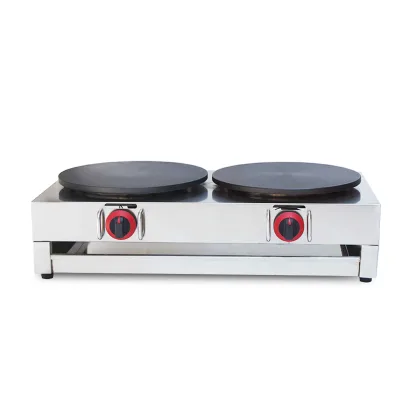
Commercial Snack Machine Double-head Thin Crispy Pancake Maker Gas Crepe Maker
$175.54 - $219.43
MOQ: 1 pieces
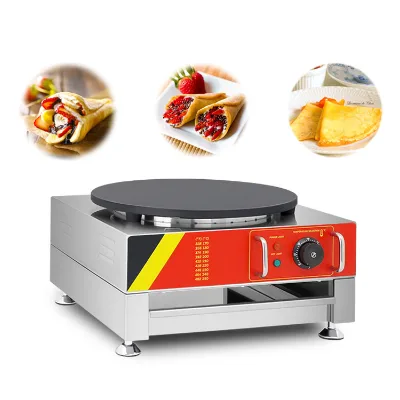
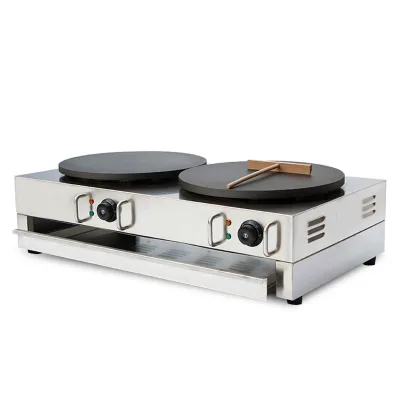


Premium Pancake Machine and Versatile Waffle Maker for Delicious Treats
$56.00 - $66.00
MOQ: 10 Pieces


1200W 12" Electric Pancake Crepe Maker Machine Non Stick Large Hot Plate
$5.00 - $10.00
MOQ: 2912 Pieces
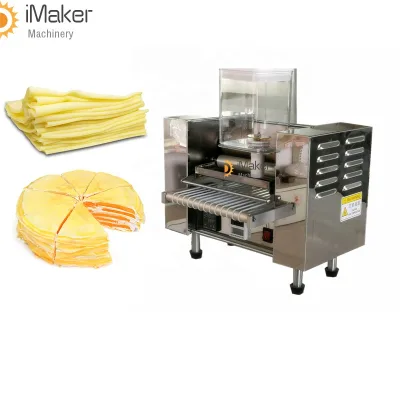
Low Noise Industrial Pancake Machine Automatic Pancake Maker Machine
$906.85 - $2267.12
MOQ: 1 Minimum

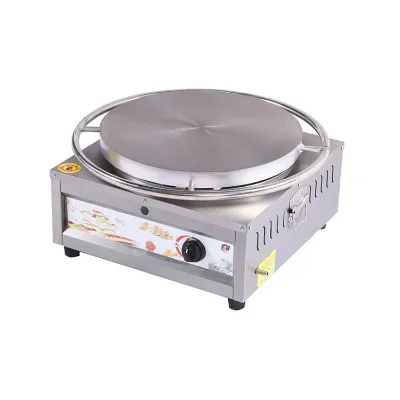
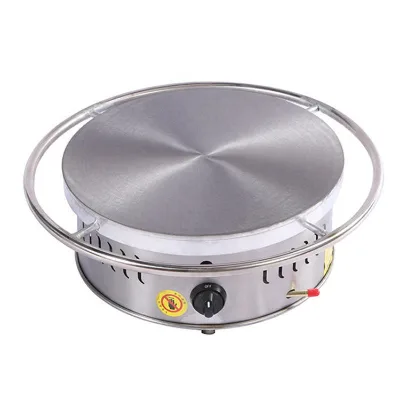


Multifunctional 3-in-1 Breakfast Toaster Sandwich Waffle Maker Breadmaker
$19.15 - $26.69
MOQ: 100 Pieces
Comprehensive Sourcing Guide
Strategic Sourcing Guide for Commercial Touch Screen Pancake Makers
Understanding the Commercial Pancake Maker Landscape
The commercial foodservice sector demands equipment that balances high throughput with operational reliability. When sourcing a Commercial Touch Screen Pancake Maker, buyers must navigate a market defined by specific functional attributes and diverse power configurations. The available inventory reveals a clear segmentation between heavy-duty gas units and versatile electric models. The core product category includes "commercial pancake maker" units designed for high productivity, often featuring a "double-headed pancake maker" configuration to maximize output in limited kitchen spaces.
A critical observation in the current market is the variation in heat sources. While the core keyword emphasizes "touch screen" interfaces, the supplied product data indicates that many commercial units operate on "Gas, Electric" or specific "LPG" power sources. Buyers must verify if the specific model they are evaluating actually incorporates a touch screen interface, as the provided facts list "Mechanical" control types alongside "Push Button" options. The presence of a "Temperature Control Device" is a standard feature for consistency, but the user interface method—whether mechanical, push-button, or touch screen—requires explicit confirmation during the supplier inquiry phase.
The physical footprint of these machines is substantial. Observed dimensions for large-capacity units reach 900mm in width, with a depth of 480mm and a height of 290mm. These specifications are typical for "Stainless Steel Body" constructions designed to withstand the rigors of a commercial kitchen. The "Large Capacity" feature is often paired with a "Max. Capacity" of 10-20kg, indicating these units are intended for high-volume production environments such as hotels, large cafeterias, or dedicated breakfast chains.
Technical Specifications and Power Configuration
Selecting the correct technical specifications is paramount for operational efficiency. The market offers distinct models, such as the "NP-586-gas" and "NP-583-electric," each with unique power requirements. The electric variants often list power consumption in the range of 3 kW to 6 kW, with some models supporting dual voltage inputs of 110V/220V to accommodate different regional electrical standards. In contrast, gas models rely on LPG or natural gas connections, requiring specific ventilation and safety compliance checks that differ from electrical installations.
The cooking surface is another critical technical parameter. The "Cooking Pan Size" is frequently standardized at 40cm, providing a consistent cooking area for uniform product quality. The "Single package size" for these heavy units can be as large as 105x75x40 cm, reflecting the robust construction and the inclusion of necessary safety packaging. The "Single gross weight" varies significantly, with observed values ranging from 40.000 kg to 60.000 kg. This weight variance suggests differences in internal heating elements, insulation, and the thickness of the stainless steel body.
Buyers must pay close attention to the "Control Type" when searching for touch screen interfaces. While the general category includes "Mechanical" controls, the specific requirement for a "touch screen" implies a more advanced electronic control system. If a supplier lists "Mechanical" or "Push Button" as the primary control type, the unit may not meet the specific "touch screen" criteria of the procurement request. Therefore, the technical specification sheet must explicitly confirm the interface type to avoid purchasing a unit that lacks the desired automation and ease of use.
Compliance, Certification, and Safety Standards
In the commercial food equipment sector, compliance is not merely a formality but a prerequisite for insurance and regulatory approval. The supplied product data highlights "CE" and "RoHS" certifications as available standards for these units. The CE mark indicates conformity with health, safety, and environmental protection standards for products sold within the European Economic Area, while RoHS (Restriction of Hazardous Substances) ensures the equipment does not contain specific hazardous materials.
However, the presence of these certifications in the general product data does not guarantee that every specific model or batch possesses them. Buyers must verify that the specific "NP-586" or "NP-583" models they intend to purchase carry valid, up-to-date certification documents. The "place of origin" is listed as "Henan, China," which is a major manufacturing hub for commercial kitchen appliances. While this region has a mature supply chain, buyers should ensure that the manufacturing facility adheres to international quality management systems.
Safety features are integral to the design of these machines. The "Stainless Steel Body" provides durability and ease of cleaning, which is essential for food safety compliance. The "New" condition of the products ensures that no prior wear or tear compromises the structural integrity or heating elements. Additionally, the "1 Year" warranty is a standard offering, but buyers should clarify the scope of this warranty, particularly regarding the "Temperature Control Device" and the heating elements, which are the most critical components for operation.
Cost Drivers and Pricing Dynamics
The pricing for commercial pancake makers is influenced by several factors, including power source, capacity, and control interface complexity. The observed price range in the market spans from 3 USD to 2,267.12 USD. This wide disparity suggests a mix of small-scale portable units and large, fully automated commercial systems. The lower end of the spectrum likely corresponds to smaller, single-unit machines with basic controls, while the higher end reflects the "High productivity" double-headed units with advanced features like touch screens and large capacities.
The "MOQ" (Minimum Order Quantity) is another significant cost driver. The observed MOQ range is 1 to 2,912 units. For a buyer seeking a single unit for a pilot program or a small café, an MOQ of 1 is favorable. However, for large chains or distributors, negotiating an MOQ closer to the lower end of the high-volume range can significantly reduce the per-unit cost. The "Selling Units" are typically listed as "Single item," which simplifies the ordering process for individual purchases but may limit bulk discounts unless negotiated.
Other cost factors include the "Single gross weight" and "Single package size," which directly impact shipping costs. A unit weighing 60.000 kg with dimensions of 105x75x40 cm will incur higher freight charges than a lighter, more compact model. Buyers should calculate the total landed cost, including freight, insurance, and customs duties, rather than focusing solely on the ex-works price. The "condition" being "New" also ensures that the price reflects a full lifecycle value, though buyers should verify if the price includes installation support or training, which can add value to the procurement.
Typical Applications and Operational Use Cases
Commercial pancake makers are designed for high-volume environments where speed and consistency are critical. The "High productivity" attribute makes these units ideal for busy breakfast service periods in hotels, hospitals, and large-scale catering operations. The "double-headed" configuration allows for simultaneous cooking, effectively doubling the output compared to single-head models. This is particularly beneficial in settings where time is a constraint, such as airport terminals or fast-food chains.
The "Large Capacity" feature, with a max capacity of 10-20kg, supports continuous operation without frequent refilling. This is essential for "commercial crepe maker" applications where the batter volume is high. The versatility of the "Heat source: Electric, Gas" allows these units to be installed in various kitchen layouts, depending on the available infrastructure. For instance, gas units may be preferred in kitchens with existing gas lines and robust ventilation, while electric units are suitable for locations with reliable electrical grids but limited gas access.
The "automatic pancake machine" keyword suggests that some models offer automated batter dispensing or flipping mechanisms, further reducing labor requirements. This automation is a key differentiator for buyers looking to minimize staffing costs and ensure consistent product quality. The "Portable, Lightweight" features observed in some models indicate that certain units can be moved easily for cleaning or reconfiguration, adding flexibility to the kitchen workflow.
Supplier Evaluation and Quality Assurance
Evaluating suppliers for commercial pancake makers requires a rigorous approach to ensure product quality and reliability. Buyers should verify the "brand name" and reputation of the manufacturer. While "Lemo" is listed as a brand in the data, buyers must ensure that the specific supplier they engage with is an authorized distributor or the original manufacturer. The "place of origin" being "Henan, China" is a common manufacturing location, but the quality of the final product depends heavily on the specific factory's quality control processes.
Quality assurance should include a review of the "Material" specifications. The "Stainless Steel Body" is a standard requirement, but the grade of the stainless steel (e.g., 304 vs. 430) affects durability and corrosion resistance. Buyers should request material certificates to confirm the grade. Additionally, the "condition" of the product must be verified as "New," with no signs of refurbishment or prior use.
The "warranty" period of 1 Year is a baseline expectation. Buyers should negotiate for extended warranty terms or comprehensive service packages, especially for high-value units. The "Temperature Control Device" should be tested for accuracy and responsiveness during the pre-shipment inspection. Any discrepancies in the "Control Type" or "Power" specifications should be addressed before finalizing the order to avoid operational disruptions.
Long-Term Procurement and Maintenance Considerations
Long-term success with commercial pancake makers depends on maintenance and the availability of spare parts. The "1 Year" warranty covers manufacturing defects, but buyers should plan for ongoing maintenance costs. The "Stainless Steel Body" requires regular cleaning to prevent buildup and maintain hygiene. The "Cooking Pan Size" and "dimension" specifications should be considered when planning the kitchen layout to ensure adequate space for cleaning and maintenance access.
Buyers should also consider the "lead time" for restocking or repairs. While specific lead times are not provided in the data, the "Single package size" and "Single gross weight" suggest that shipping spare parts or replacement units may require significant logistics planning. Establishing a relationship with a supplier that offers local support or has a network of service centers can mitigate downtime risks.
Finally, the "Key Selling Points" such as "High productivity" and "Large Capacity" should be monitored over time to ensure the equipment continues to meet the operational demands of the business. As the business grows, the ability to scale up production or upgrade to more advanced models with better interfaces will be crucial. Regular performance reviews and adherence to the "CE" and "RoHS" standards will ensure that the equipment remains compliant and efficient throughout its lifecycle.
FAQs
What heat sources are available for commercial pancake makers?
Commercial units typically operate on gas, electric, or dual power sources. Some models support LPG connections while others require 110V or 220V electrical inputs. Buyers must verify the specific power requirement for their kitchen infrastructure before ordering.
Which control types are common for these commercial machines?
Available control types include mechanical switches and push button interfaces. While the category mentions touch screens, the current data lists mechanical and push button options. Verify the specific interface type with the supplier to ensure it meets your automation needs.
How large is the cooking surface on these double-headed units?
The cooking pan size is frequently standardized at 40cm for consistent product quality. Large capacity units often feature double-headed configurations to maximize output. This size supports high-volume production in busy commercial kitchens without requiring excessive space.
Can I find units with CE and RoHS certifications?
Yes, CE and RoHS certifications are available for these commercial units. These marks indicate conformity with health, safety, and environmental standards. Buyers should request valid documentation for specific models to ensure regulatory compliance for their region.
What is the typical weight and package size for these machines?
Single gross weight ranges from 40kg to 60kg depending on the model. Package dimensions can reach up to 105x75x40 cm for larger units. These heavy specifications reflect robust stainless steel construction and require careful logistics planning for shipping.
What warranty coverage is standard for new commercial pancake makers?
A standard 1-year warranty is typically offered for new products. This coverage usually includes manufacturing defects but may exclude wear and tear on heating elements. Clarify the specific scope of the warranty with the supplier before finalizing the purchase.