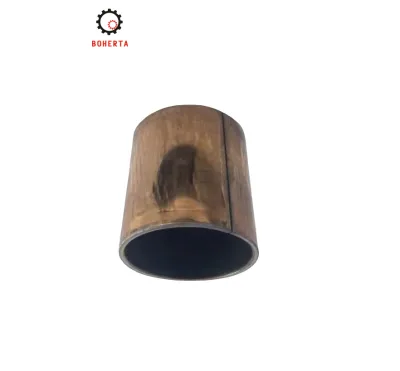
Source Composite Kelly Bushing for drilling rigs, mining, and oil wells
Explore 30 verified listings for Composite Kelly Bushing suitable for petroleum machinery and well drilling applications. Buyers can compare specifications, manufacturing processes, and customization options from suppliers in China.
Key considerations
Products List

$1000.00 - $8000.00
MOQ: 1 Pieces


$0.20 - $2.00
MOQ: 800 Pieces



Comprehensive Sourcing Guide
Strategic Sourcing Guide for Composite Kelly Bushing Components
The procurement of specialized drilling equipment, specifically components identified as composite kelly bushings, requires a rigorous approach grounded in verified technical data and supplier capability. In the global energy and mining sector, the reliability of petroleum machinery parts is paramount. Sourcing guides must navigate a complex landscape where product attributes vary significantly between listings. This guide synthesizes observed market data to provide a framework for evaluating potential suppliers, ensuring that the final selection aligns with operational safety and efficiency requirements. The focus remains on objective analysis of available product specifications, manufacturing processes, and compliance standards without making unverified claims about specific vendors.
Technical Specifications and Material Composition
Understanding the technical baseline of a Composite Kelly Bushing is the first step in any procurement strategy. The market data indicates a diverse range of material compositions and manufacturing methods. While the term "composite" suggests a specific material blend, observed listings reveal products manufactured from Cast Steel, Alloy, and various other structural materials. Buyers must verify the exact material grade, as the choice between Cast Steel and Alloy directly impacts durability under high-stress drilling conditions.
The manufacturing process is equally critical. The observed data highlights a spectrum of production techniques, including Forging, Casting, Stamping, and CNC Milling. Each process imparts different mechanical properties to the final component. For instance, forging is often associated with enhanced grain structure and strength, whereas casting may offer flexibility in complex geometries. CNC milling ensures high precision, which is vital for the interface between the bushing and the kelly drive.
Furthermore, the operational environment dictates specific design requirements. The observed data notes that these components are designed for Atmospheric Pressure operation, a specification that buyers must cross-reference with their actual well conditions. The drive type is another crucial variable, with listings specifying Square Drive or Pin Drive configurations. The drill pipe type compatibility, whether Square or Hex, must match the rig's existing infrastructure. Failure to align these specifications can lead to mechanical failure or operational downtime.
Compliance, Certification, and Standardization
In the petroleum machinery sector, adherence to international standards is non-negotiable. The observed product listings frequently reference API (American Petroleum Institute) standards, specifically API 7K, which governs the equipment for drilling and well servicing. This certification is a primary indicator of quality and safety compliance. Buyers should explicitly request API certification documentation to verify that the product meets the rigorous testing and manufacturing protocols required for deep-well applications.
The data also presents a mix of "Custom Made" standards alongside specific dimensional standards such as 2-1/2 to 6 inches or 2-1/2"-5-1/4". This variation underscores the need for precise verification. A product listed as "Custom Made" may offer tailored solutions for unique rig configurations, but it requires a thorough review of the engineering drawings and tolerance specifications. Conversely, products adhering to standard API dimensions offer easier interchangeability but may lack specific optimizations for niche applications.
Buyers must also scrutinize the "Standard" field in product listings, which sometimes contains dimensional ranges like 935043 or model codes like HDP/RVS/HDS/RBM. These codes often correspond to specific API model series (e.g., HDS, MDP, MSPC). It is essential to confirm that the model code matches the rig's current inventory and that the standard designation (API or Custom) is clearly defined in the contract. Relying on ambiguous standard descriptions can lead to procurement of incompatible parts.
Cost Drivers and Pricing Structures
The pricing landscape for composite kelly bushings is highly variable, with observed ranges spanning from $0.10 to $8,000 USD. This wide disparity is not indicative of a single market price but rather reflects differences in material costs, manufacturing complexity, order volume, and customization levels. Several key factors drive these costs. First, the material selection plays a significant role; Alloy components typically command a higher price point than standard Cast Steel due to superior strength-to-weight ratios and corrosion resistance.
Second, the manufacturing process influences the final cost. Components produced via CNC milling or complex forging operations generally incur higher labor and equipment costs compared to those made through simpler casting or stamping methods. The level of surface treatment required also affects pricing. Options such as Sand Blast, Polishing, or Spray-Paint add value by enhancing durability and corrosion resistance, but they increase the unit price.
Third, the Minimum Order Quantity (MOQ) is a critical cost driver. The observed MOQ range spans from 1 to 2,000 units. Buyers purchasing small quantities, such as a single replacement part, will face a significantly higher unit cost compared to those placing bulk orders. Additionally, the "Custom Made" nature of some listings implies that tooling and engineering setup costs may be amortized over the order volume, further impacting the per-unit price. Buyers should request a detailed breakdown of costs to understand the value proposition of each quote.
Typical Applications and Operational Context
The primary application for these components is clearly defined within the energy and mining sector, specifically for petroleum machinery parts used in well drilling. The observed data explicitly lists "Well Drilling" as the use case, confirming that these bushings are integral to the rotation and torque transmission systems of drilling rigs. The "Heavy, Medium, Light-Duty" classifications found in the listings indicate that these components are designed to handle varying load conditions, from shallow exploration wells to deep, high-torque extraction operations.
The specific model numbers, such as Zp175/Zp275 or Mass/Mdsp/Mspc, often correlate with the size of the drill pipe and the torque requirements of the rig. For example, models designed for 2 1/2-6 inch pipe sizes are suitable for a broad range of standard drilling operations. However, the presence of "Custom Made" options suggests that specialized rigs with non-standard kelly sizes may require bespoke manufacturing.
Buyers must ensure that the selected bushing matches the specific operational demands of their site. The "Atmospheric Pressure" specification observed in some listings may limit the applicability of certain models to surface-level operations or specific wellhead configurations. In contrast, components designed for high-pressure environments may require different material grades or sealing mechanisms. Understanding the specific drilling environment is essential for selecting the correct duty class and model.
Supplier Evaluation and Production Capabilities
Evaluating a supplier requires a deep dive into their manufacturing capabilities and logistical strengths. The observed data points to suppliers located in Dongying and Zhejiang Hangzhou, China. While these locations indicate a concentration of manufacturing expertise in the region, buyers should verify the specific factory capabilities beyond the general location. The presence of diverse manufacturing processes (Forging, Casting, Stamping, CNC Milling) suggests that some suppliers may have multi-process facilities, while others may specialize in a single method.
Production and transportation times are critical factors in supply chain planning. The data indicates a production time of approximately 10 days and a transportation time ranging from 7 to 30 days. These timelines can vary significantly based on the complexity of the order, the customization level, and the current workload of the factory. Buyers should confirm these lead times in writing, especially for urgent replacement needs.
The availability of samples is another positive indicator of supplier confidence and flexibility. The observation that "Sample: Yes" is available allows buyers to physically inspect the quality, finish, and dimensions before committing to a large order. This is particularly important for custom-made components where visual inspection of the surface treatment (e.g., Spray-Paint, Sand Blast) and material finish is necessary.
Quality Control and Packaging Standards
Quality assurance is embedded in the manufacturing and packaging processes. The observed data highlights several surface treatments, including Sand Blast, Polishing, and Spray-Paint, which are essential for preventing corrosion and ensuring smooth operation. The "High Quality" attribute listed in some descriptions should be treated as a claim that requires verification through third-party testing or on-site inspection.
Packaging is a critical aspect of quality control during transit. The data shows a variety of packaging methods, ranging from "Wooden Box" and "Plywood Case" to "Small Box in Big Carton" and "Container" shipping. For heavy industrial components like kelly bushings, robust packaging such as Wooden Boxes or Plywood Cases is standard to prevent damage during long-distance shipping. Buyers should specify the required packaging standard in their purchase order to ensure the product arrives in pristine condition.
The "Standard Export Package" mentioned in the data implies a baseline level of protection, but for high-value or custom items, additional internal cushioning or specialized crating may be necessary. The dimensional standard of 935043 observed in some listings likely refers to packaging dimensions or specific component sizes, which must be verified to ensure compatibility with shipping containers and handling equipment.
Long-Term Procurement and Lifecycle Management
Sourcing composite kelly bushings is not merely a transactional event but a long-term strategic decision. The availability of customization and the variety of models (HDP, RVS, HDS, etc.) suggest that suppliers can support evolving operational needs. However, buyers must consider the lifecycle of the component. The material choice (Cast Steel vs. Alloy) and the manufacturing process (Forging vs. Casting) will determine the service life and maintenance requirements.
For ongoing operations, establishing a relationship with a supplier who offers consistent quality and reliable lead times is essential. The ability to source samples and the presence of API certification provide a foundation for trust. Buyers should also consider the total cost of ownership, which includes not just the purchase price but also the cost of downtime, maintenance, and replacement frequency.
In conclusion, the procurement of composite kelly bushings requires a meticulous approach that balances technical specifications, compliance standards, and supplier capabilities. By focusing on verified data regarding materials, manufacturing processes, and certifications, buyers can make informed decisions that ensure the safety and efficiency of their drilling operations. The diversity in the market offers opportunities for tailored solutions, but it also demands a rigorous vetting process to avoid compatibility issues and quality failures.
FAQs
What materials are used for composite kelly bushings?
These components are typically manufactured from Cast Steel or Alloy to ensure durability. Buyers must verify the specific material grade as it directly impacts strength under high-stress drilling conditions and operational longevity.
Which manufacturing processes are available for these parts?
Available production methods include Forging, Casting, Stamping, and CNC Milling. Each process imparts different mechanical properties, so select based on whether you require enhanced grain structure or high precision for the drive interface.
Can I find suppliers offering API certification for these bushings?
Yes, many listings explicitly state compliance with API and API 7K standards. Buyers should request certification documentation to verify that the product meets rigorous testing protocols required for deep-well applications and safety compliance.
How long is the production time for custom orders?
The standard production time is approximately 10 days for most orders. This timeline can vary based on the complexity of customization, current factory workload, and the specific manufacturing process selected for your request.
What packaging options are available for shipping these parts?
Packaging includes Wooden Boxes, Plywood Cases, Small Boxes in Big Cartons, or Container shipping. For heavy industrial components, robust options like Wooden Boxes are standard to prevent damage during long-distance transit.
Which drive types are compatible with these kelly bushings?
The components support Square Drive and Pin Drive configurations. You must ensure the drive type matches your rig's existing infrastructure to prevent mechanical failure or operational downtime during drilling operations.
Can I request samples before placing a bulk order?
Yes, samples are available for physical inspection of quality and dimensions. This is particularly important for custom-made components to verify surface treatments like Sand Blast or Spray-Paint before committing to large volume purchases.