Source Construction Radiator for Excavators, Mining, and Coolers
Find 30 Construction Radiator units available for excavators, mining machinery, and cooler applications. Buyers can compare specifications, certifications, and customization options from verified suppliers in China.
Key considerations
Products List


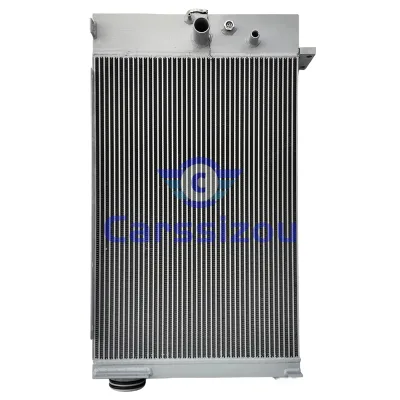
Hot sale bulldozer excavator construction machinery radiator for shantui 160
$480.00 - $500.00
MOQ: 1 pieces


Customized Construction Machinery Bar-Plate Radiator Cooler Heat Exchanger
$100.00 - $1000.00
MOQ: 5 Pieces

Construction Machinery Bar-Plate Radiator Cooler Heat Exchanger by Aluminum
$30.00 - $1000.00
MOQ: 5 Pieces


Aluminum Construction Machinery Bar-Plate Radiator Cooler Heat Exchanger
$10.00 - $100.00
MOQ: 5 Pieces


Comprehensive Sourcing Guide
Strategic Sourcing Guide for Construction Radiators
Understanding Technical Specifications and Core Components
When sourcing construction radiators, buyers must first establish a clear understanding of the technical architecture that defines performance in heavy-duty environments. The core of these heat exchangers typically relies on a finned tube design, which is critical for maximizing surface area to facilitate efficient heat dissipation. The material composition is a primary determinant of thermal conductivity and corrosion resistance. In the current market, the predominant materials observed are copper and aluminum, each offering distinct advantages in weight and thermal efficiency. Copper brazing and aluminum brazing are the standard craftsmanship methods utilized to join these components, ensuring structural integrity under high thermal stress.
The physical dimensions and connection types vary significantly based on the specific machinery requirements. Buyers should verify that the product specifications align with the host equipment, as models are often customized to fit specific chassis or engine layouts. Connection interfaces are generally available in flange or thread configurations, providing flexibility for integration into existing hydraulic or cooling systems. The design principles often involve a mixing heat exchanger principle, which optimizes the flow dynamics between the coolant and the ambient air. Furthermore, the fin structure itself can vary, with options including wavy-fin (Bw), serrated-fin (Jc), and perforated-fin (Dk) designs, each influencing airflow resistance and heat transfer rates differently.
| Component Feature | Common Observation | Verification Requirement |
|---|---|---|
| Core Material | Copper / Aluminum | Confirm alloy grade and purity for thermal efficiency. |
| Craftsmanship | Copper Brazing / Aluminum Brazing | Inspect joint quality for leaks and structural strength. |
| Connection Type | Flange or Thread | Match thread standards (DIN, ANSI, JIS) to existing ports. |
| Fin Design | Bw, Jc, Dk, P | Select based on dust load and airflow velocity of the site. |
| Principle | Mixing Heat Exchanger | Ensure flow path matches engine cooling requirements. |
Compliance, Certification, and Standard Adherence
Navigating the regulatory landscape is essential for procurement in the global construction sector. While specific certification statuses can vary by batch, high-confidence data indicates that many units in this category carry CE and ISO 9001 certifications. These marks suggest adherence to European safety standards and international quality management systems, respectively. Some listings also reference RoHS compliance, which is crucial for restricting hazardous substances in electronic and mechanical components. Buyers must treat these certifications as observations of specific product batches rather than universal guarantees for all inventory.
Beyond general certifications, the manufacturing standards applied to these radiators are diverse. The supply chain often references a wide array of international standards, including DIN, ASTM, GOST, GB, JIS, ANSI, BS, ASME, and AISI. This breadth indicates that suppliers may produce to the specific standard required by the destination market or the original equipment manufacturer (OEM). For instance, a radiator intended for a Komatsu D65 excavator might adhere to specific OEM tolerances, while a universal model might conform to general industrial standards. The product standard itself can be customized, with dimensions such as 2501160 mm or 341150*357 mm appearing in technical descriptions.
Buyers should verify that the supplier can provide documentation proving compliance with the specific standard required for their project. This includes checking if the product meets the mechanical test report requirements and if the video output inspection is available to validate the manufacturing process. The condition of the product is typically listed as "New," but the verification of this status through factory inspection videos is a prudent step. Additionally, the powder coating process, often available in black, silver, or customized colors, serves as a protective layer against corrosion, which is vital for the harsh environments typical of construction and mining sites.
Cost Drivers and Pricing Dynamics
The pricing structure for construction radiators is influenced by a complex interplay of material costs, customization levels, and order volume. The observed price range in the market spans from 1 to 4200 USD, reflecting the vast difference between small, off-the-shelf units and large, custom-engineered heat exchangers. The primary cost driver is the material composition; copper is generally more expensive than aluminum, yet it offers superior thermal conductivity. The choice between copper brazing and aluminum brazing also impacts the final price, as the former often requires more labor-intensive processes.
Order volume plays a significant role in determining the unit cost. The minimum order quantity (MOQ) ranges from 1 to 100 units, suggesting that buyers can source single units for replacement or small-scale projects, while bulk orders may unlock better pricing tiers. However, the "Customization" attribute is a critical factor; highly customized models, such as those with specific dimensions like 341150357 mm or tailored for specific brands like Komatsu, will command a premium over universal models. The complexity of the fin design, whether wavy, serrated, or perforated, also adds to the manufacturing cost due to the specialized tooling required.
Buyers should also consider the packaging and logistics costs. The standard packing methods include export standard solid wood packing, export wooden packing, and export carton packing. These options are selected based on the fragility of the unit and the shipping distance. The origin of the products, often listed as Shandong, China, or generally China, influences the base manufacturing cost but also introduces variables related to shipping and import duties. When evaluating cost, it is essential to look beyond the unit price and consider the total cost of ownership, which includes the long service life and the availability of after-sales service.
Typical Applications and Adaptability
Construction radiators are engineered to operate in some of the most demanding environments on the planet. The primary applicable scenarios identified include construction machinery and mining machinery. In these sectors, equipment such as excavators, loaders, and heavy-duty trucks generate immense heat that must be managed efficiently to prevent engine failure. The adaptability of these radiators is a key selling point, with some models designed specifically for brands like Komatsu, while others are labeled as "Universal" to fit a broader range of machinery.
The specific application dictates the required specifications. For example, a radiator designed for a 162KW engine will have different flow rates and heat rejection capabilities compared to one for an 110KW engine. The model numbers, such as KF0010, KF0581, KF952, KF0315, and KF0582, often correspond to specific engine power ratings or machine types. The "Application" field frequently lists "Excavator" or "Cooler," indicating the primary function. In mining scenarios, the radiators must withstand higher dust loads and more abrasive conditions, making the choice of fin design and protective coating critical.
Buyers must ensure that the radiator they select matches the operational profile of their fleet. A unit designed for a stationary application may not perform adequately in a mobile excavator subject to constant vibration and shock. The "Core Selling Point" of a long service life is particularly relevant here, as downtime in construction and mining projects is extremely costly. The ability of the radiator to handle the specific thermal load of the engine, combined with its resistance to the environmental conditions of the job site, determines its suitability.
Supplier Evaluation and Verification Protocols
Evaluating a supplier for construction radiators requires a rigorous approach that goes beyond simple price comparison. Buyers should prioritize suppliers who demonstrate transparency in their manufacturing processes. The availability of a "Video Factory Inspection" is a strong indicator of a supplier's confidence in their production capabilities. This allows the buyer to visually verify the assembly line, the quality of the brazing process, and the final testing procedures before committing to a large order.
The "Quality" attribute, often stated as "100% Tested," should be backed by tangible evidence. Buyers should request mechanical test reports to confirm that the radiators have undergone pressure testing and thermal performance validation. The "After-Sales Service Provided" attribute is another critical factor; a supplier that offers robust support can mitigate risks associated with potential defects or installation issues. The presence of a "Professional Design Team" suggests that the supplier can offer engineering support for customizations, which is valuable for non-standard applications.
When assessing the supplier's location, the origin is frequently listed as Shandong, China, or generally China. While this provides a baseline for logistics planning, the buyer should verify the specific factory location to ensure it aligns with their supply chain strategy. The "Condition" of the product being "New" is standard, but the verification of this status through inspection videos is necessary. Buyers should also check if the supplier can provide the "Video Output-Inspection" to ensure the product meets the specific requirements of the project before shipment.
Quality Control and Long-Term Procurement Considerations
Maintaining quality control throughout the procurement lifecycle is essential for ensuring the reliability of construction radiators. The manufacturing process, which includes casting and brazing, must be tightly controlled to prevent defects such as leaks or weak joints. The "Welding" quality is described as "Good Quality," but this should be verified through the mechanical test reports and visual inspections. The "Craftsmanship" involving copper or aluminum brazing must be consistent across all units to ensure uniform performance.
Long-term procurement considerations extend beyond the initial purchase to include the durability and maintenance requirements of the radiators. The "Core Selling Point" of a long service life is a significant factor in the total cost of ownership. Buyers should evaluate the materials and coatings used to ensure they can withstand the corrosive and abrasive conditions of construction sites. The "Powder Coating" options, available in black, silver, or customized colors, provide an additional layer of protection against rust and physical damage.
The "Standard" of the product, whether it is customized or adheres to specific international standards like DIN or ASTM, plays a crucial role in long-term compatibility. As machinery ages or is replaced, having a radiator that conforms to widely accepted standards ensures easier sourcing of replacement parts. The "Connection" type, whether flange or thread, must remain consistent to avoid the need for expensive adapters or modifications. Finally, the "After-Sales Service" provided by the supplier is a key consideration for long-term procurement, as it ensures that any issues can be resolved quickly, minimizing downtime and maintaining operational efficiency.
FAQs
What certifications do construction radiators typically have?
Many units carry CE and ISO 9001 certifications, with some also listing RoHS compliance. These marks indicate adherence to safety and quality standards, but buyers should verify specific batch documentation rather than assuming universal coverage for all inventory.
Which materials are used for Construction Radiator cores?
The core materials are predominantly copper or aluminum, selected for their thermal conductivity and corrosion resistance. Craftsmanship typically involves copper brazing or aluminum brazing to ensure structural integrity under high thermal stress in heavy-duty environments.
Can I find radiators customized for specific machinery brands?
Yes, customization is available for specific brands like Komatsu or universal models to fit various chassis. Buyers should verify that dimensions and connection types, such as flange or thread, align with the host equipment requirements before ordering.
How are construction radiators tested before shipment?
Products are listed as 100% tested, with mechanical test reports and video factory inspections available upon request. Buyers should verify these quality checks to confirm pressure testing and thermal performance validation before committing to large orders.
What packaging options are available for export?
Export standard solid wood packing, export wooden packing, and export carton packing are commonly used options. The choice depends on the unit fragility and shipping distance, ensuring protection against damage during transit to international destinations.
Where are these construction radiators manufactured?
Products originate from locations such as Shandong, China, or generally China. This origin influences base manufacturing costs and logistics planning, requiring buyers to consider shipping distances and import duties when evaluating the total cost of ownership.
What is the minimum order quantity for these units?
The minimum order quantity ranges from 1 to 100 units, allowing for single replacements or bulk procurement. This flexibility supports both small-scale projects and large fleet upgrades, though customization levels may affect the final unit pricing.