Source Contactless Handheld Laser Tachometer for Motors, Fans, and Vehicles
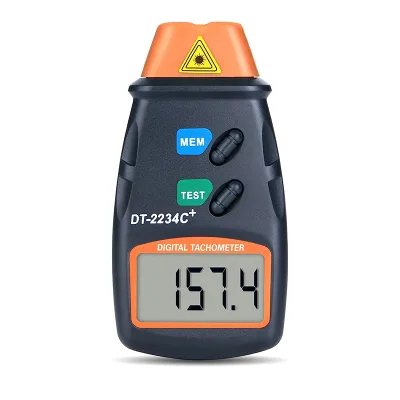
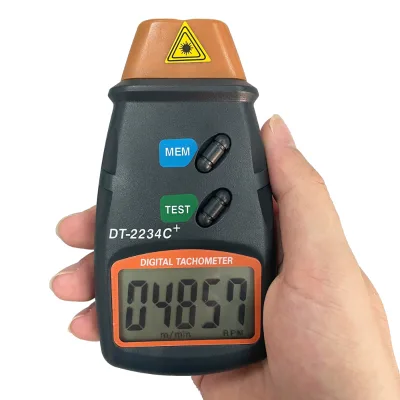
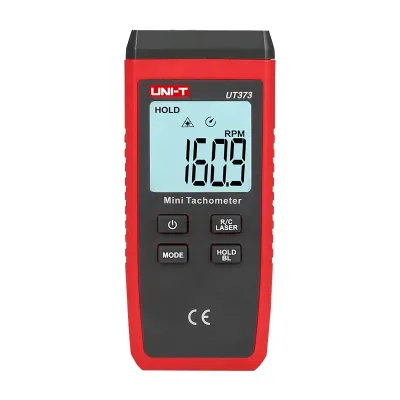
Find 30 Contactless Handheld Laser Tachometer options for industrial and automotive applications. Compare models like AT-136PC and DT2234C, featuring digital displays, wireless connectivity, and non-contact detection methods for precise RPM measurement; compare the available evidence and request quotations based on your requirements.
Key considerations
Products List


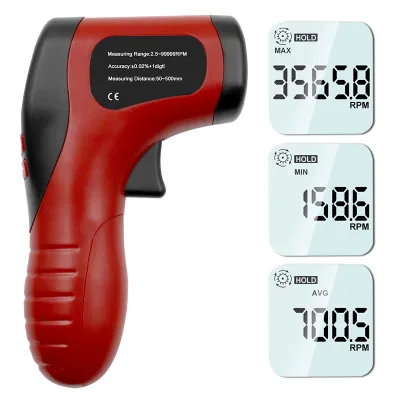
$13.77 - $14.28
MOQ: 20 Minimum
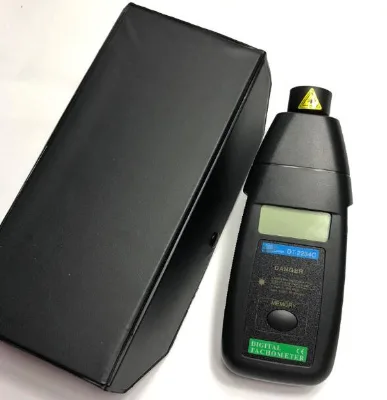


Industrial 0.1 Level High Precision Digital Tachometer Photoelectric Tachometer
$57.00 - $95.00
MOQ: 10 Pieces


Photoelectric Tachometer, Digital Tachometer, Photo Tachometer Sm2234 Plus
$20.00 - $30.00
MOQ: 10 Pieces





Comprehensive Sourcing Guide
Contactless Handheld Laser Tachometer Sourcing Guide
Procurement teams must first distinguish between contact and non-contact measurement needs when selecting a handheld laser tachometer. The available market data indicates a clear split in detection methods, with some units relying on physical contact probes while others utilize optical laser beams for non-invasive readings. Buyers should verify the specific detection method required for their application, as contact models typically offer a range of 0.5 to 1999 revolutions per minute, whereas laser-based units can measure speeds up to 99,999 revolutions per minute without touching the rotating surface.
Understanding the intended application environment is critical for selecting the correct device configuration. While some models are designed for general net speed or vehicle testing, others are optimized for specific industrial machinery where high-speed rotation is common. The observed product attributes suggest that certain units feature automatic test range selection and memory functions for storing maximum, minimum, and last values. Buyers must ensure the chosen device aligns with their operational frequency, as sampling times and resolution capabilities vary significantly between different model numbers and measurement technologies.
Product Scope and Observed Listing Signals
The current market listings reveal a diverse range of product models, including specific identifiers like AT-136PC, AT-137P, and DT-2234C, each catering to different operational requirements. These devices generally feature digital displays and are packaged in portable plastic cases or gift boxes, indicating a focus on field usability and professional presentation. The observed price range spans from 4.5 to 229 USD, reflecting variations in feature sets, build quality, and brand positioning. Buyers should carefully review the specific model number to confirm that the listed attributes match their technical needs rather than assuming all units in a category share identical specifications.
Minimum order quantities and selling units vary across suppliers, with some offering single-item purchases while others may require bulk commitments. The observed minimum order quantity ranges from one to sixty units, providing flexibility for both small-scale testing and larger industrial deployments. Packaging standards also differ, with some products including carrying cases alongside gift boxes, which can influence logistics and storage planning. Procurement teams should verify the exact selling units and packaging details for each supplier to ensure the total cost of ownership, including shipping and storage, aligns with the project budget.
Technical Specifications to Verify
Accuracy and resolution are paramount when evaluating laser tachometers for precision tasks. The observed data highlights specific accuracy claims of plus or minus 0.05 percent plus one digit, alongside resolution settings that can switch between 0.01, 0.1, and 1 depending on the speed range. Buyers must confirm that the device's resolution meets the tolerance requirements of their specific application, as a 1 Rpm resolution may be insufficient for high-precision machinery monitoring. Additionally, the sampling time, which can range from 0.8 to 1.0 seconds, impacts the ability to capture transient speed fluctuations, making it a critical factor for dynamic testing scenarios.
The physical measurement capabilities, including detecting distance and range, must be validated against the target machinery dimensions. Laser tachometers typically offer a detecting distance between 50 and 600 millimeters, with some models specifying a typical range of 50 to 250 millimeters. It is essential to verify the laser range and contact range specifications, as some units support both contact and non-contact methods with distinct ranges. Buyers should also check the time base, which often utilizes a quartz crystal for stability, and ensure the device can handle the maximum expected speed without saturation or loss of data integrity.
Compliance and Safety Documentation
Regulatory compliance is a non-negotiable aspect of sourcing industrial measurement tools, particularly those involving laser technology. The available product information indicates that certain models adhere to CE and ROHS standards, which are critical for market access in Europe and general environmental safety. Procurement teams must request and verify current certification documents for every batch purchased, as compliance status can vary by production run and region. Relying solely on general product descriptions without physical certification proof can expose the organization to regulatory risks and potential safety liabilities in the workplace.
Safety features regarding laser classification and operational warnings should be explicitly documented before deployment. While the provided facts do not specify laser class ratings, buyers must ensure the device includes appropriate safety warnings and that the laser output remains within safe limits for human exposure. The absence of waterproof or shakeproof ratings in some observed models suggests that these devices are intended for controlled indoor environments. Buyers should confirm the environmental durability of the unit to ensure it can withstand the specific conditions of their facility, such as dust, vibration, or temperature fluctuations, without compromising measurement accuracy or safety.
Cost Drivers and Commercial Terms
Pricing for these devices is influenced by a combination of technical complexity, brand reputation, and included accessories. The wide price range observed suggests that higher-cost units likely offer superior accuracy, extended memory functions, or more robust packaging solutions. Buyers should analyze the total value proposition rather than focusing solely on the unit price, considering factors such as the inclusion of carrying cases, calibration certificates, and extended warranty options. Understanding the cost drivers helps in negotiating better terms and selecting a device that offers the best balance between performance and budget constraints.
Commercial terms, including minimum order quantities and payment structures, vary significantly among suppliers and can impact cash flow planning. The observed minimum order quantities range from single items to sixty units, allowing for flexible procurement strategies based on immediate needs and inventory capacity. Buyers should clarify whether the listed prices are inclusive of shipping, taxes, and duties, as these hidden costs can substantially alter the final expenditure. Establishing clear commercial terms early in the negotiation process ensures transparency and prevents unexpected financial burdens during the procurement lifecycle.
Supplier Qualification and Quality Control
Supplier qualification requires a thorough assessment of their manufacturing capabilities and quality assurance processes. The observed data indicates that products originate from specific regions in China, such as Guangdong, which is a known hub for electronic manufacturing. Buyers should verify the supplier's production capacity, quality control protocols, and history of delivering consistent product specifications. Requesting samples for independent testing is a prudent step to validate claims regarding accuracy, sampling time, and durability before committing to a larger order.
Quality control measures should extend beyond the initial product inspection to include ongoing monitoring of production batches. Suppliers should provide detailed test reports that confirm the device meets the specified accuracy and resolution standards. Buyers must ensure that the supplier has a robust system for handling defects and returns, as well as a clear process for maintaining product consistency over time. Establishing a strong relationship with a qualified supplier helps mitigate risks associated with supply chain disruptions and ensures a steady supply of reliable measurement tools for critical operations.
Long-Term Procurement Checks
Sustaining a reliable supply chain for laser tachometers involves regular performance audits and supplier relationship management. Buyers should schedule periodic reviews to assess whether the devices continue to meet operational requirements and if the supplier maintains their quality standards. This proactive approach helps identify potential issues early, such as drift in accuracy or changes in component quality, allowing for timely corrective actions. Maintaining open communication with suppliers ensures that any updates to product specifications or regulatory requirements are promptly addressed.
Future-proofing procurement strategies requires staying informed about technological advancements and market trends in the tachometer industry. As measurement technologies evolve, buyers should evaluate whether their current devices remain competitive or if upgrades are necessary to maintain efficiency. Regularly reviewing the product portfolio and comparing it against emerging standards ensures that the organization remains equipped with the most effective tools for their applications. This continuous improvement mindset supports long-term operational excellence and helps the organization adapt to changing industrial demands.
FAQs
How does the contactless laser tachometer measure speed?
It measures speed using a non-contact laser method with a detection range of 50 to 600mm. The device captures rotational data without physical contact, offering a resolution of 0.01 to 1 Rpm depending on the speed range selected for accurate readings.
What is the maximum measuring range for this device?
The maximum measuring range reaches 99,999 Rpm using the laser method. For contact measurements, the range extends up to 19,999 Rpm. This dual-mode capability allows users to select the appropriate method based on the specific application requirements and target speed.
Which models are available for this handheld tachometer?
Available models include AT-136PC, AT-137P, AT-137PC, DT2234C, BE8905, and DT-2859. These units feature digital displays and come in portable plastic cases or gift boxes. They are manufactured in Guangdong, China, with varying specifications for different industrial needs.
Can the device store measurement data for later review?
Yes, the device stores Last Value, Max Value, and Min Value data in its memory. This feature allows users to review peak and minimum speeds after testing. The sampling time is approximately one second, ensuring efficient data capture during operation.
How accurate is the speed measurement provided by this tool?
The accuracy is specified as plus or minus 0.05 percent plus one digit. This high precision ensures reliable readings across the full operating range. The device uses a quartz crystal time base to maintain stability and consistency during various measurement tasks.
What is the weight and packaging of the handheld unit?
The unit weighs between 50 and 100 grams, making it lightweight for handheld use. It is packaged in a portable plastic case or a gift box with a carrying case. This design ensures the device remains protected during transport and storage in various environments.
Does the tachometer support customization for specific needs?
Customization is available for this product line to meet specific buyer requirements. Buyers should contact the supplier directly for more details regarding available options. This flexibility allows for tailored solutions that align with unique industrial applications and operational standards.