Source Continuous Loss Dosing Conveyor Scale for Food, Pharma, Chemical
Find 30 Continuous Loss Dosing Conveyor Scale options for food, pharmaceutical, and chemical processing. Compare specifications like accuracy, speed, and material features to select the right equipment for your production line needs; compare the available evidence and request quotations based on your requirements.
Key considerations
Products List


Direct Sales Professional Engineering Transportation Machinery Scale Conveyor
$1000.00 - $100000.00
MOQ: 1 Sets


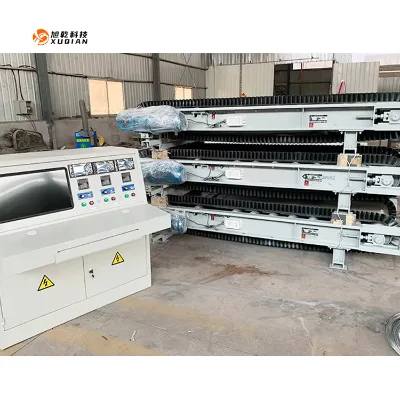


Weight Check Weighing Dynamic Weighting Sorting Food Conveyor Belt Scale Checkweigher
$4650.00 - $5500.00
MOQ: 1 Pieces

Reliable Conveyor Belt Scale for Heavy Duty Weighing in Mining Operations
$501.00 - $2000.00
MOQ: 1 Pieces

Heavy Duty Conveyor Belt Scale Designed for Mining and Construction Sites
$501.00 - $2000.00
MOQ: 1 Pieces


Dynamic for Food Industry Conveyor Belt Weighing Scale Check Weigher
$2690.00 - $3990.00
MOQ: 1 Pieces


Stainless Steel Twin Screw Dosing Conveyor for Efficient Granular Transport
$2800.00 - $8000.00
MOQ: 1 Pieces


Comprehensive Sourcing Guide
Continuous Loss Dosing Conveyor Scale Sourcing Guide
Procurement professionals must first distinguish between general weighing systems and specialized continuous loss dosing conveyors, as the supplied data highlights a mix of high-accuracy checkweighers and heavy-duty roller conveyors. While the observed product list includes units with ±0.1g accuracy and touch screens, these are often configured for health and medicine applications rather than the bulk material handling typical of loss-in-weight dosing. Buyers should verify if the specific unit supports the continuous flow required for their process, rather than assuming a standard checkweigher can perform precise dosing functions.
The observed market signals indicate a wide range of capabilities, from 80bpm sorting speeds to heavy industrial applications in power plants and mining. This variance suggests that a single supplier may offer diverse product lines, requiring careful filtering to isolate equipment designed for continuous loss dosing. Buyers must scrutinize the "Type" and "Application Area" fields to ensure the machinery aligns with their specific material flow rates and dosing precision requirements, avoiding the confusion between simple weighing and active dosing control systems.
Product Scope and Observed Listing Signals
The available inventory features distinct product models such as the PCW-03H and CZJ, which serve different operational niches ranging from electronic components to chemical industries. The presence of "Wide-range Series" and "Blow" sorting methods indicates that some units are optimized for high-speed separation rather than the steady, controlled feeding necessary for loss-in-weight dosing. Procurement teams must carefully map these observed attributes to their specific process needs, ensuring the selected conveyor can maintain the consistent feed rate required for accurate dosing calculations.
Material construction is a critical signal, with listings specifying stainless steel, SS304, and carbon steel options to meet varying environmental demands. The observed "Fire Resistant" and "Heat Resistant" features suggest suitability for harsh industrial environments, yet buyers must confirm if these materials are integrated into a dosing-specific frame. The "Wooden Case" and "Box Pack" shipping methods further indicate that these are heavy, industrial-grade units requiring specialized logistics planning, which should be factored into the total cost of ownership before finalizing a purchase order.
Technical Specifications to Verify
Buyers must rigorously verify the accuracy specifications, as the observed data lists both ±0.1g and a "Best Accuracy" of ±0.05g, which may apply to different models or conditions. For continuous loss dosing, the stability of this accuracy under load is paramount, and the "80bpm" speed rating observed in some listings may be insufficient for high-throughput dosing lines. It is essential to confirm the dynamic accuracy of the scale under actual operating conditions, rather than relying on static test results or best-case scenarios provided in the product summary.
The structural design, including "Roller Conveyor" and "Conveyor System" configurations, must be evaluated for compatibility with the specific bulk material being dosed. The observed "Chain Pitch" options and "Plate Thickness" variations indicate a high degree of customization, which is beneficial for adapting to unique material characteristics. However, the "Core Components" like "Plate Belt" and "Electric Motor" specifications require validation to ensure they can handle the continuous torque and wear associated with dosing applications, particularly in heavy industrial sectors like mining or chemical processing.
Compliance and Safety Documentation
Safety compliance is a primary concern, especially given the observed applications in power plants, mining, and chemical industries where hazardous materials are common. The "ISO" certification mentioned in the data provides a baseline for quality management, but buyers must request specific safety documentation for electrical motors and conveyor systems operating in explosive or dusty environments. The "1 Year" warranty on electric motors and "3 Months" warranty on core components highlight the need for clear liability terms regarding safety-critical failures in continuous operation.
Documentation regarding the "Sorting Standard" and "Online Checking Product Weight" capabilities must be reviewed to ensure the system meets local regulatory requirements for trade and process control. The "New" condition of the listed products suggests they are ready for immediate deployment, yet buyers should verify that all safety guards, emergency stops, and interlocks are installed according to the specific standards of their region. Without explicit safety certifications for the dosing mechanism itself, the risk of non-compliance in regulated industries remains a significant procurement hurdle.
Cost Drivers and Commercial Terms
The observed price range of 55 to 100,000 USD reflects the vast difference between basic conveyor components and fully integrated, high-accuracy dosing systems. Buyers should anticipate that the cost is driven heavily by the "Customization" level, as the "Width" and "Diameter" are often customized to fit specific production lines. The "Free" maintenance claim observed in some listings requires careful verification, as it may apply only to specific periods or conditions, and long-term operational costs for parts like the "Plate Belt" and "Electric Motor" must be calculated separately.
Commercial terms regarding delivery and customization are critical, with some listings requiring a "Separate Delivery Date for Customized PRO" and others offering immediate shipment. The "OEM, ODM" support for electric motors indicates that supply chain flexibility is available, but this often extends lead times and complicates cost forecasting. Buyers must clarify the "MOQ" of 1 unit against the potential for bulk discounts and ensure that the "Wooden Case" or "Box Pack" shipping costs are included in the final landed cost analysis to avoid budget overruns.
Supplier Qualification and Quality Control
Supplier qualification should focus on the "Electric Motor Professional Factory" and "Electric Motor Professional Supplier" designations observed in the data, as these entities likely control the core performance of the dosing system. The "CNC Milling Machine Manufacturer" origin for motors suggests a high level of precision in component fabrication, which is essential for maintaining the consistency required in loss-in-weight dosing. Buyers must verify the supplier's track record in the "Heavy Industrial Manufacturing" sector to ensure they can support complex, continuous operation environments.
Quality control processes must be validated through the "Stamping" processing technology and the specific "Material Feature" claims of fire and oil resistance. The "Hebei" origin and "China" general location indicate a specific manufacturing ecosystem, where buyers should request third-party inspection reports for the "Stainless Steel" and "Carbon Steel" components. Ensuring that the "Condition: New" status is verified upon arrival and that the "3mm" standard thickness is met is crucial for maintaining the structural integrity of the conveyor system over its operational lifespan.
Long-Term Procurement Checks
Long-term procurement success depends on the availability of spare parts for the "Chain Pitch" and "Diameter of The Piercing Rod" specifications observed in the listings. The "3 Months" warranty on core components is relatively short for continuous industrial use, necessitating a robust maintenance plan that includes regular inspections of the "Plate Belt" and "Electric Motor". Buyers should establish a relationship with the supplier for timely access to replacement parts to minimize downtime in critical dosing operations.
Future scalability is another key consideration, as the "Customization" and "OEM/ODM" capabilities allow for system upgrades as production needs evolve. The "Nature" color and "High Efficiency" features suggest a focus on operational performance, but buyers must ensure the system can be integrated with future automation or data logging requirements. Regular performance audits against the "Weight" sorting standard and accuracy benchmarks will help maintain the system's efficiency and ensure it continues to meet the stringent demands of the health, medicine, and heavy industrial sectors.
FAQs
What accuracy can a Continuous Loss Dosing Conveyor Scale achieve?
The best accuracy listed for this checkweigher type is ±0.05g, with general accuracy stated below ±0.1g. Real-world results depend on product weight, belt speed, and environmental vibration. For dosing applications, confirm your target tolerance with the supplier so the weighing and feeding units are configured to hold that accuracy during continuous operation.
How fast can the checkweigher sort products on the line?
The listed speed is 80bpm, meaning up to 80 weighings or sorting events per minute. Actual throughput depends on package size, required accuracy, and how quickly the rejection or dosing mechanism reacts. Higher speeds can reduce accuracy margins, so balance the two when planning your line and request trials with representative products before committing.
Can the dosing conveyor scale be customized for specific applications?
Yes, customization is available. Listed applications include meat, electronic components, and hardware fittings, and the machine serves the health and medicine industry. You can typically specify belt width, frame material such as stainless steel grade, and integration with existing lines. Provide your product dimensions, target weight range, and environment so the supplier can quote a suitable configuration.
Which material is used for the conveyor scale frame and belt?
The machine is listed as stainless steel, with belt material options of SS304, SS201, or carbon steel. Stainless construction suits food, health, and medical environments where washdown or corrosion resistance matters, while carbon steel can lower cost for dry industrial use. Choose the grade based on your hygiene requirements, cleaning chemicals, and the products handled on the line.
What certification and packaging should buyers expect?
The product carries ISO certification and is packed in a wooden case for export shipping. Wooden case packaging protects the frame, weighing cell, and conveyor during long transit. If your destination country has ISPM fumigation rules for wood packaging, confirm heat treatment of the case with the supplier before shipment so customs clearance is not delayed.
How does the sorting method work for rejected or off-weight items?
The listed sorting method is blow, meaning off-weight items are rejected by an air blast rather than a pusher or drop flap. Blow rejection suits lightweight products that could deform under mechanical contact and allows very fast removal at 80bpm. It works best for small items; heavier products may need a different rejection mechanism, so verify suitability with your product weight.