Source Continuous Veterinary Syringe for Cattle Pig Sheep
Find a Continuous Veterinary Syringe for Livestock among 30 available options. Buyers can compare models like KD108 and Hor-1, featuring ISO certifications, various volumes, and manual operation for cattle, pig, and sheep applications.
Key considerations
Products List

Automatic Vaccine Syringe Vet Vaccine Syringe Continuous Syringe for Animal
$10.00 - $11.00
MOQ: 100 Pieces

1/2/5/Ml Continuous Vaccine Syringe for Animals, Poultry and Livestock
$10.00 - $11.00
MOQ: 100 Pieces

Veterinary Continuous Injector for Animal Injection Treatment Vaccine Syringe
$10.00 - $11.00
MOQ: 100 Pieces

Veterinary Instrument Automatic Syringe Injectors Continuous Syringe for Animal Use
$10.00 - $11.00
MOQ: 100 Pieces

New Type Automatic Continuous Vaccine Syringe 2ml 5ml for Animal Vet Syringe
$10.00 - $11.00
MOQ: 100 Pieces


$3.00 - $10.00
MOQ: 2000 Pieces

$3.00 - $10.00
MOQ: 2000 Pieces


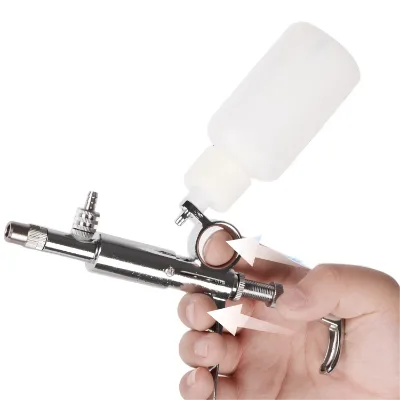
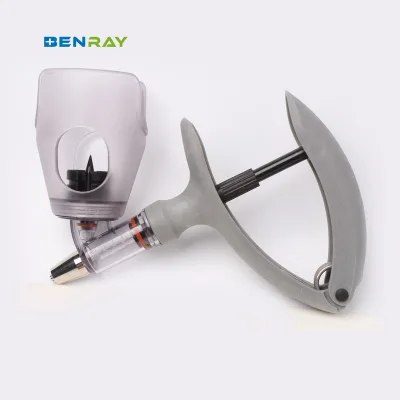
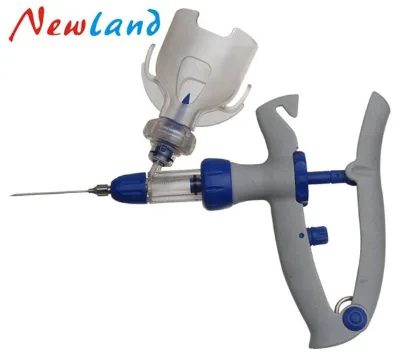


Automatic Vaccine Syringe for Livestock and Fowl
$7.00 - $10.00
MOQ: 10000 Pieces
Sainty International Group Jiangsu Yangzhou Sumex Imp. & Exp. Co., Ltd.

50ml Revolver Veterinary Syringe for Livestock and Fowl
$10.00 - $15.00
MOQ: 10000 Pieces
Sainty International Group Jiangsu Yangzhou Sumex Imp. & Exp. Co., Ltd.

Veterinary Automatic Syringe for Livestock and Fowl, 1ml
$10.00 - $15.00
MOQ: 10000 Pieces
Sainty International Group Jiangsu Yangzhou Sumex Imp. & Exp. Co., Ltd.

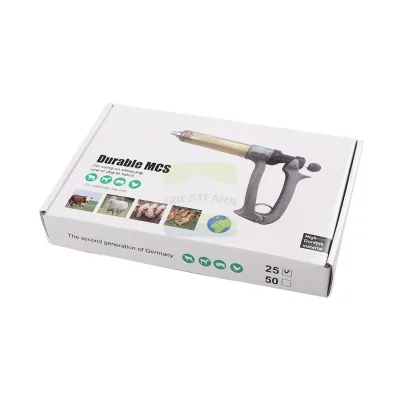
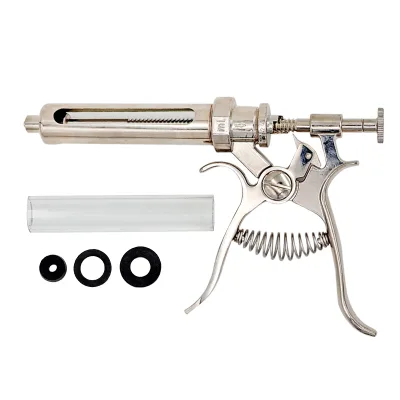
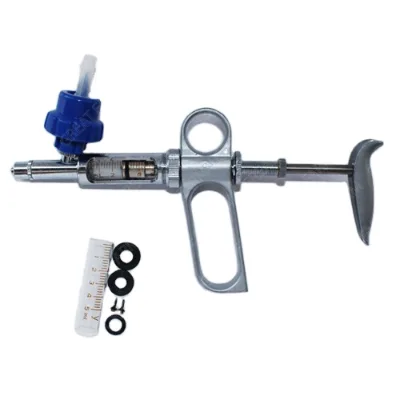
Comprehensive Sourcing Guide
Strategic Sourcing Guide for Continuous Veterinary Syringes for Livestock
Procuring continuous veterinary syringes for livestock operations requires a nuanced understanding of mechanical reliability, material compatibility, and regulatory compliance. These devices are critical for administering precise dosages to large animals such as cattle, pigs, and sheep, where efficiency and animal welfare are paramount. The market offers a variety of configurations, ranging from manual modes to specialized continuous syringe systems. Buyers must navigate a complex landscape of specifications, including volume capacities, material compositions, and certification standards, to ensure the selected equipment meets the rigorous demands of modern veterinary practices. This guide provides a structured approach to evaluating suppliers and products, ensuring that procurement decisions are grounded in verified data and industry best practices.
Technical Specifications and Mechanical Configuration
The core functionality of a continuous veterinary syringe relies on its ability to deliver medication steadily and accurately without the need for repeated manual actuation for every dose. In the context of livestock management, the syringe must operate in a manual mode, driven by human labor, yet designed to facilitate continuous flow. The primary mechanical observation for these devices is the "Continuous Syringe" classification, which distinguishes them from standard single-dose units. The material composition is predominantly nylon, selected for its durability and chemical resistance against various veterinary pharmaceuticals. This material choice ensures that the syringe barrel and plunger maintain structural integrity under pressure and during repeated use cycles.
Volume capacity is a critical variable in the selection process. The observed market data indicates a wide range of standard specifications, including 0.5ml, 1ml, 2ml, 5ml, 6ml, 30ml, and 50ml options. For large livestock applications, the 1ml, 2ml, and 5ml variants are frequently cited as standard sizes, while larger volumes like 30ml and 50ml serve specific therapeutic needs. The dosage form is strictly defined as injection, specifically tailored for intramuscular administration. This application requires a needle configuration that is often supplied without a needle, allowing the end-user to attach the appropriate gauge and length based on the specific animal's size and the injection site. The temperature resistance of these devices is a vital technical parameter, with observed ranges spanning from -30 ℃ to 120 ℃. This broad thermal tolerance ensures the syringes remain functional in diverse environmental conditions, from cold storage to sterilization processes involving heat.
Compliance and Certification Verification
In the medical and veterinary device sector, compliance is not merely a formality but a prerequisite for market entry and operational safety. Buyers must rigorously verify that suppliers adhere to recognized international standards. The most prominent certification observed in this category is ISO13485, which specifically addresses quality management systems for medical devices. This certification indicates that the manufacturer has established processes to ensure consistent product quality and safety. Additionally, ISO 9001 is frequently referenced as a standard for general quality management, with some suppliers claiming compliance with ISO 9001/9002 standards. The presence of SGS ISO certification further suggests that independent third-party testing has been conducted to validate product specifications.
When evaluating a supplier, the buyer should request current certification documents rather than relying on marketing claims. The verification process should confirm that the certification is active and covers the specific manufacturing site. For products originating from China, particularly from regions like Zhejiang, Shaoxing, and Wangtan, the adherence to these international standards is a key differentiator. The standard product models, such as Hor-1, KD108, KD104, KD130, and KD115-C, often serve as identifiers for specific compliance configurations. Buyers must ensure that the specific model they intend to purchase is covered under the supplier's quality management system certificate. The absence of these certifications should be treated as a significant risk factor, potentially indicating non-compliance with safety regulations.
Cost Drivers and Economic Considerations
The pricing structure for continuous veterinary syringes is influenced by several factors, including material costs, manufacturing complexity, and order volume. The observed price range in the market spans from 3 to 20 USD per unit, though this figure is highly dependent on the specific volume, customization level, and packaging requirements. The Minimum Order Quantity (MOQ) is a significant economic driver, with observed ranges extending from as low as 1 unit to as high as 10,000 units. Typical MOQs for established suppliers often sit at 500, 2,000, or 5,000 pieces, reflecting the economies of scale required for efficient production.
Customization is a major cost variable. While standard models are available, the option for customization allows buyers to tailor the syringe to specific operational needs, such as unique volume markings or specialized packaging. However, custom orders typically incur higher unit costs and may require longer lead times. The packaging method also impacts the final cost; options range from cardboard boxes and paper cartons to bulk packing of 50 pieces per carton or box. Buyers should calculate the total cost of ownership, including shipping and handling, which can vary significantly based on the origin location, such as Wangtan, Shaoxing, or general Zhejiang regions. Understanding these cost drivers helps in negotiating better terms and aligning procurement budgets with actual operational requirements.
Typical Applications and Operational Context
The primary application for continuous veterinary syringes is in the livestock sector, specifically for cattle, pigs, and sheep. These devices are designed for intramuscular injection, a common method for administering vaccines, antibiotics, and other therapeutic agents. The "Livestock" and "Veterinary Injection" classifications highlight the specific target demographic for these products. The ability to handle continuous flow makes these syringes particularly useful for mass vaccination campaigns or treating herds where speed and consistency are essential. The manual labor power source indicates that these devices are designed for portability and use in field conditions where electricity may not be readily available.
The operational context often involves varying environmental conditions, necessitating the high temperature resistance observed in the product specifications. The syringes must withstand cold storage temperatures for pharmaceuticals and high temperatures during sterilization or transport. The color of the devices, often observed as orange or grey, serves as a visual cue for identification and inventory management. The condition of the product is typically "New," and many suppliers offer a one-year warranty, providing assurance of product longevity. After-sales service availability is another critical factor, ensuring that buyers have support for any operational issues or maintenance needs.
Supplier Evaluation and Quality Control
Evaluating a supplier requires a multi-faceted approach that goes beyond price and basic specifications. Buyers should assess the supplier's production capacity, quality control protocols, and track record in the veterinary market. The origin of the product, specifically from Zhejiang, China, suggests a mature manufacturing hub with established supply chains. However, the specific location, such as Wangtan, Shaoxing, should be verified to ensure the supplier has the infrastructure to meet the required standards. Quality control should be a continuous process, with suppliers expected to adhere to ISO standards and provide test results or batch certifications upon request.
The packaging method is an indicator of the supplier's attention to detail. Options like "Paper Carton Packing or as Your Request" demonstrate flexibility, but the standard 50PCS/CTN or 50PC/Box configurations suggest a commitment to standardized logistics. Buyers should verify that the packaging protects the syringes from damage during transit, especially given the nylon material's sensitivity to physical stress. The "Reusable" feature observed in some listings requires careful evaluation; while it may reduce long-term costs, it necessitates robust sterilization protocols to prevent cross-contamination. The buyer must ensure that the supplier provides clear guidelines on the reusability and cleaning procedures for these devices.
Long-Term Procurement Considerations
Sourcing continuous veterinary syringes is a long-term strategic decision that impacts the efficiency and safety of veterinary operations. Buyers should consider the scalability of the supply chain, ensuring that the supplier can meet increasing demand as the livestock operation expands. The availability of customization allows for future-proofing the procurement strategy, enabling adjustments to product specifications as veterinary protocols evolve. The warranty period, typically one year, offers a safety net for early product failures, but the long-term reliability of the nylon material and mechanical components is the ultimate determinant of value.
Furthermore, the after-sales service provided by the supplier is crucial for maintaining operational continuity. A supplier that offers responsive support can mitigate downtime caused by equipment failure or supply chain disruptions. The standard product models, such as KD108 and KD130, serve as benchmarks for compatibility and interchangeability, which is essential for maintaining a consistent supply of medical equipment. Buyers should also monitor changes in international standards and certifications, ensuring that their suppliers remain compliant with evolving regulatory requirements. By focusing on these long-term factors, buyers can build a resilient supply chain that supports the health and productivity of their livestock operations.
Comparative Analysis of Product Attributes
To facilitate informed decision-making, the following table summarizes key attributes observed across the product range, highlighting the variability and commonalities that buyers should consider.
| Attribute | Observed Range / Options | Relevance to Procurement |
|---|---|---|
| Volume Capacity | 0.5ml, 1ml, 2ml, 5ml, 6ml, 30ml, 50ml | Determines suitability for specific animal sizes and drug dosages. |
| Material | Nylon | Ensures chemical resistance and durability for repeated use. |
| Certification | ISO13485, ISO 9001, SGS ISO | Critical for regulatory compliance and quality assurance. |
| MOQ | 1 to 10,000 (Typical: 500, 2000) | Impacts initial capital outlay and inventory management. |
| Packing | Cardboard Box, Paper Carton, 50PCS/CTN | Affects shipping costs and storage efficiency. |
| Temperature Range | -30 ℃ to 120 ℃ | Ensures functionality in diverse storage and sterilization environments. |
| Application | Cattle, Pig, Sheep (Livestock) | Confirms target species compatibility. |
| Needle | Without Needle | Allows for flexible needle selection based on injection site. |
| Power Source | Manual Labour | Indicates portability and suitability for field use. |
This comparative overview underscores the importance of aligning specific product attributes with operational needs. Buyers should prioritize the attributes that directly impact their daily workflows, such as volume capacity and certification, while considering secondary factors like packaging and color for logistical efficiency. By systematically evaluating these factors, buyers can select the most appropriate continuous veterinary syringes for their livestock operations, ensuring both compliance and operational excellence.
FAQs
What certifications do continuous veterinary syringes typically hold?
These syringes typically hold ISO13485 certification for medical device quality management. Some suppliers also provide ISO 9001 or SGS ISO standards to ensure regulatory compliance and product safety for livestock applications.
Which volume capacities are available for these syringes?
Available volume capacities include 0.5ml, 1ml, 2ml, 5ml, 6ml, 30ml, and 50ml options. The 1ml, 2ml, and 5ml sizes are frequently cited as standard specifications for intramuscular injections in cattle, pigs, and sheep.
Can these syringes be customized for specific needs?
Yes, customization is available for these syringes to meet specific operational requirements. Buyers can request tailored packaging or specifications, though custom orders may involve different pricing and lead times compared to standard models.
What is the minimum order quantity for purchasing these items?
The minimum order quantity ranges from 1 to 10,000 units depending on the supplier. Typical MOQs observed for established manufacturers are 500 or 2,000 pieces, reflecting the economies of scale required for production.
How are these syringes packaged for shipment?
Packaging options include cardboard boxes, paper cartons, or bulk configurations like 50 pieces per carton. Some suppliers offer custom packing requests, while standard logistics often utilize 50PC/Box or 50PCS/CTN formats.
What material are these continuous syringes made from?
These syringes are predominantly made from nylon to ensure durability and chemical resistance. This material allows the devices to withstand temperature ranges from -30 to 120 degrees Celsius during storage and sterilization.
Where are these syringes manufactured?
These products are manufactured in China, with specific origins in Zhejiang, Shaoxing, and Wangtan. The location indicates a mature manufacturing hub capable of meeting international quality standards for veterinary equipment.