Source Water and Air Cooling RF Slimming Machine for Salon, Home, Spa
Compare 30 water and air cooling RF slimming machines designed for salon, home, and spa applications. Buyers can evaluate specifications including power, cooling output, and model variants to find suitable options for weight loss and slimming treatments.
Key considerations
Products List


RF Cavitation Machine Fat Freezing Fat Freezing Device Cool Slimming Machine
$3100.00 - $3300.00
MOQ: 1 Pieces
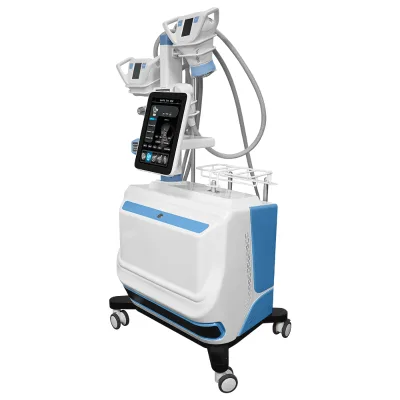


High Quality CE Approved 3 Years Warranty Freeze Fat Procedure Slimming Machine for Weight Loss
$4600.00 - $5800.00
MOQ: 1 Pieces

Fat Freezing Lower Abdomen Body Slimming and Shaping Cryolipolysis 4 Handles Fat Freezing Machine
$4600.00 - $5800.00
MOQ: 1 Pieces


7D Roller Slimming Machine Therapy Machine Cellulite Reduction RF Machine
$2299.00 - $2499.00
MOQ: 1 Pieces

EMS Water Cooling System RF Sculpt Build Muscle Body Slimming Medical Equipment
$2100.00 - $3900.00
MOQ: 1 Pieces

Comprehensive Sourcing Guide
Strategic Sourcing Guide for Water and Air Cooling RF Slimming Machines
Understanding the Technical Architecture of RF Slimming Systems
When sourcing equipment under the core keyword of water and air cooling RF slimming machines, buyers must first distinguish between the fundamental operating principles that define the product category. The primary technology relies on Radio Frequency (RF) energy to stimulate collagen production and target adipose tissue. In the specific context of the available product data, the RF frequency is observed at 5MHz, a parameter critical for deep tissue penetration without causing surface burns. This frequency works in tandem with cryolipolysis, a process that utilizes controlled cooling to freeze fat cells while the RF energy simultaneously tightens the skin.
The cooling mechanism is a defining characteristic of high-end units in this sector. The supplied facts indicate a dual-mode cooling system described as "Water + Wind." This hybrid approach ensures that the applicator head remains at a safe temperature for the patient while delivering the necessary thermal energy for fat reduction. The observed cooling output temperature ranges vary significantly across different models, with specific units reporting a range of -10 to 4°C, while others achieve temperatures from -14 to 10°C, and some even reaching from 15 to negative 15 degrees. These variations suggest that buyers must verify the specific cooling capacity required for their intended treatment protocols.
Furthermore, the vacuum component plays a vital role in the efficacy of these machines. The data shows a vacuum pressure range of 0-106kpa and a specific vacuum measurement of 650mm Hg. This suction capability is essential for drawing the tissue into the applicator, ensuring consistent contact between the skin and the cooling surface, and enhancing the circulation of blood and lymphatic fluid. The combination of RF, vacuum, and cryolipolysis creates a comprehensive slimming solution, often marketed as a multi-modal approach to body contouring.
Compliance and Certification Verification Protocols
In the medical and aesthetic device sector, compliance is not merely a formality but a prerequisite for market entry and liability protection. The product data explicitly lists "ISO Ce RoHS" as the certification standard for the available units. Buyers should treat this as a baseline requirement and verify the validity of these certificates with the issuing bodies. The presence of CE marking indicates conformity with health, safety, and environmental protection standards for products sold within the European Economic Area, while RoHS compliance ensures the restriction of hazardous substances.
However, the presence of a certification label on a product listing does not automatically guarantee that every unit in a batch meets the standard. Buyers must request current, valid copies of the ISO and CE certificates directly from the supplier. It is crucial to confirm that the certificate covers the specific model number being purchased, such as the RL-L02, RL-H02, or RL-G01 variants. The data also notes a "Natural Product Extraction" pharmaceutical technology, which may imply the use of specific gels or topical agents, though the machine itself is a non-disposable device.
Safety standards are further reinforced by the "No Side Effect" attribute listed in the product descriptions. While this is a marketing observation, buyers must independently verify the safety profile through clinical data or third-party testing reports. The device is designed for external use only, and the gender specification is listed as unisex, indicating broad applicability. However, the absence of specific safety warnings in the provided text does not replace the need for a thorough risk assessment by the end-user.
Cost Drivers and Pricing Structure Analysis
The pricing landscape for RF slimming machines is highly variable, influenced by the complexity of the cooling system, the power output, and the inclusion of additional features like touch screens or laser pads. The observed price range in the market spans from $1 to $8,109.16 USD. This wide disparity suggests that the lower end of the spectrum may represent basic units, accessories, or older models, while the higher end likely corresponds to fully integrated systems with advanced features.
Several specific attributes drive the cost of these machines. The power rating is a significant factor; for instance, one model is listed with an 800W power output, while another is noted as having "Less Than 500W." Higher wattage generally correlates with faster treatment times and deeper tissue penetration, which can command a premium price. Additionally, the inclusion of an 8.0-inch touch screen display, as seen in the RL-G01 model, adds to the manufacturing cost and user interface sophistication.
The packaging and shipping logistics also contribute to the final cost. The data indicates different packing standards, ranging from aluminum boxes to wooden packing boxes, with dimensions varying from 454040cm to 5306001100mm. Larger, heavier units with wooden crates will incur higher shipping fees and may require specialized freight handling. The "Non Portable" designation for certain models, such as the RL-G01, implies that these units are designed for fixed installation in a salon, potentially reducing the cost of mobility features like wheels or compact folding mechanisms found in portable units.
Typical Applications and Operational Scope
The primary application for these devices is clearly defined as "Salon" and "Home" use, with a specific focus on "Weight Loss & Slimming." The versatility of the technology allows for a wide range of body contouring treatments. The "4 in 1 Laser+Cyrolipolysis Slimming Machine" example demonstrates the multi-functional nature of these systems, combining laser therapy with cryolipolysis and RF to address different aspects of body shaping.
The operational scope is further defined by the specific treatment parameters. The cavitation frequency of 40kHz is a standard for breaking down fat cells through ultrasonic vibration, which is often integrated with the RF and cooling systems. The cooling liquid is specified as "Pure Water," which is a critical detail for maintenance and safety, ensuring that no chemical residues are introduced into the cooling loop. The device is non-disposable, meaning the applicator heads and internal components are designed for repeated use, requiring proper sterilization and maintenance protocols between clients.
For salon operators, the "Unisex" nature of the device allows for a broad client base, treating both male and female customers for various body areas. The "Vertical Cryo + RF + Cavitationa Slimming" configuration suggests a specialized approach to vertical body contours, such as the abdomen or thighs. The "Supersonic" operation system mentioned in one model implies a high-speed, efficient workflow, which is essential for high-volume salon environments.
Supplier Evaluation and Origin Considerations
When evaluating potential suppliers, the origin of the product is a key data point. The supplied facts consistently identify the product origin as "China." This is a common origin for aesthetic medical equipment, offering a competitive advantage in manufacturing costs. However, buyers must conduct due diligence to ensure that the Chinese manufacturer adheres to international quality standards. The presence of ISO and CE certifications is a positive indicator, but it should be cross-referenced with the manufacturer's business license and export history.
The distinction between portable and non-portable models is also a critical factor in supplier selection. The data shows that some models, like the RL-L02, are classified as "Portable," while others, such as the RL-G01, are "Non Portable." This distinction affects the logistics of the purchase. Portable units require robust packaging to withstand travel, while non-portable units may be heavier and require more careful handling during installation. The packing size and weight, such as the 5954127cm dimensions for the RL-H02, must be considered when planning the physical space in a salon or clinic.
Buyers should also scrutinize the "Warranty" terms provided. The observed warranty period is listed as "1 Year." This is a standard duration for such equipment, but buyers should clarify what is covered under this warranty, including parts, labor, and shipping costs for repairs. The "No Side Effect" claim should be backed by the supplier's technical documentation and user manuals, which should provide clear guidelines on contraindications and safety precautions.
Quality Control and Long-Term Procurement Strategy
Quality control in the procurement of RF slimming machines involves rigorous verification of technical specifications and performance consistency. The cooling output temperature is a critical quality metric; buyers must ensure that the machine can consistently maintain the specified temperature range, such as -10 to 4°C or -14 to 10°C, under continuous operation. Fluctuations in temperature can compromise the efficacy of the treatment and potentially cause skin damage.
Long-term procurement considerations include the availability of replacement parts and consumables. The "Non-Disposable" nature of the device means that the applicator heads and cooling systems will require regular maintenance. Buyers should verify the lead time for spare parts and the cost of consumables like the cooling liquid or laser pads. The RL-G01 model, for instance, includes 8 laser pads, which are likely consumable items that will need replacement over time.
The "Natural Product Extraction" technology mentioned in the pharmaceutical technology section suggests that the machine may be compatible with specific topical agents. Buyers should ensure that the supplier provides a list of compatible products and that these products meet local regulatory standards. Additionally, the "Aluminum" and "Wooden Packing Box" options indicate different levels of protection during transit, which can impact the initial condition of the machine upon arrival.
Final Procurement Recommendations and Verification Steps
To conclude the sourcing process, buyers should adopt a systematic approach to verification. First, confirm the exact model number and its corresponding specifications, such as the RF frequency of 5MHz and the vacuum pressure of 650mm Hg. Second, request and validate all certification documents, ensuring they are current and applicable to the specific model. Third, assess the total cost of ownership, including the initial purchase price, shipping costs based on the packing dimensions, and the cost of maintenance and consumables.
Buyers should also evaluate the supplier's after-sales support capabilities. A 1-year warranty is standard, but the responsiveness of the support team and the availability of technical training are crucial for the long-term success of the equipment. Finally, consider the specific needs of the target market, whether it is a high-volume salon requiring a non-portable, high-power unit, or a home-use scenario where portability and ease of operation are paramount. By adhering to these verification steps and focusing on the technical and compliance data provided, buyers can make informed decisions that ensure the acquisition of high-quality, effective RF slimming machines.
FAQs
What certifications do these machines hold?
The available units hold ISO, CE, and RoHS certifications as stated in the product facts. Buyers must verify current certificate copies directly from the supplier to ensure validity for the specific model purchased.
How does the cooling system operate?
The machines utilize a dual-mode Water and Wind cooling system to maintain safe applicator temperatures. This hybrid approach allows for controlled cooling output temperatures ranging from negative 15 to positive 15 degrees Celsius depending on the model.
What is the RF frequency used?
The observed RF frequency for these slimming machines is 5MHz. This frequency is critical for deep tissue penetration while working in tandem with cryolipolysis to target adipose tissue without causing surface burns.
Are these machines portable?
Portability varies by model, with some units listed as portable and others as non-portable. For example, the RL-L02 is portable while the RL-G01 is non-portable, affecting packaging and installation requirements.
What is the warranty period?
The standard warranty period listed for these devices is 1 year. Buyers should clarify what parts, labor, and shipping costs are covered under this warranty before finalizing the procurement agreement.
Can the device be used at home?
Yes, the product attributes indicate applications for both salon and home use. The device is designed for external use only and is suitable for unisex clients seeking weight loss and slimming treatments.