Source Copper Wire Concrete Vibrator for Foundations, Walls, and Piles
Explore 30 listings for the Copper Wire Concrete Vibrator to compare specifications like vibrating frequency, amplitude, and productivity. Buyers can evaluate wet shotcrete types, cylinder or rotor structures, and flexible shaft options from suppliers in China.
Key considerations
Products List


Vibrator Concrete External Backpack Type High Frequency Concrete Vibrator
$70.00 - $300.00
MOQ: 1 Pieces


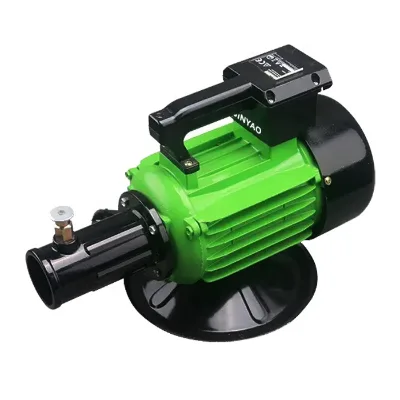

Concrete Vibrating Internal Electric Concrete Vibrator Mechanical Vibrator
$52.00 - $55.00
MOQ: 10 Pieces

High-Frequency Internal Concrete Vibrator Quick Simple Flexible Independent Operation
$460.00 - $463.00
MOQ: 10 Pieces


Comprehensive Sourcing Guide
Strategic Sourcing Guide for Copper Wire Concrete Vibrators
Understanding Product Variants and Core Specifications
The procurement of concrete vibrators requires a nuanced understanding of the specific mechanical configurations available in the market, particularly when the core keyword involves "copper wire" applications. In the context of industrial construction equipment, the term "copper wire" often refers to the specific material composition of flexible shafts or the color coding used for identification in high-performance units, rather than the primary structural material of the vibrator itself. The supplied data indicates a diverse range of product models, including the YFJ, YFJS, YFBF, YFMS, and YFPJ series, each designed for distinct operational needs.
Buyers must distinguish between different structural types, such as Cylinder Type and Rotor Type, as these dictate the internal mechanics and durability of the unit. The Cylinder Type models are often associated with higher productivity rates, with observed specifications reaching up to 240 cubic meters per hour, whereas other configurations may operate at 25 cubic meters per hour. The feeding height is a critical dimension for operator ergonomics and site integration, with specific models listed at 1400mm. Furthermore, the vibrating amplitude varies significantly across the product range, with observed values of 2.6mm, 2.2mm, and 2.0mm. These variations directly influence the depth of penetration and the density of the concrete compaction achieved.
The rotational speed is another pivotal specification, typically ranging between 3000 and 3600 rpm. This high-speed operation is essential for effective air bubble removal in fresh concrete. The power source is consistently identified as Electricity, ensuring a stable and controllable energy supply for continuous operation. When evaluating the "copper wire" aspect, procurement teams should look for units where the flexible shaft or specific internal components utilize high-conductivity materials, often indicated by color codes such as Copper/Black or Blue, which may denote specific material grades or safety standards. The material composition for certain shafts is explicitly noted as Carbon Steel, with specific hardness standards ranging from 70# to 75# high carbon steel wire, ensuring the necessary tensile strength for demanding applications.
Technical Performance and Operational Parameters
Evaluating the technical performance of a concrete vibrator involves a deep dive into the interaction between frequency, amplitude, and the specific concrete mix being processed. The vibrating frequency for the observed models falls within the 9000 to 12500 vibrations per minute (vpm) range. This high-frequency range is crucial for liquefying concrete and ensuring a uniform distribution of aggregates without segregation. The amplitude, which determines the intensity of the vibration, is observed at 2.6mm, 2.2mm, and 2.0mm. A higher amplitude generally allows for deeper penetration into the concrete mass, which is vital for large-scale structural pours.
The machining process utilized in the manufacturing of these units is Hydraulic, suggesting a high degree of precision in the assembly of moving parts. This process contributes to the "High Performance" and "Long Lifetime" features frequently cited in product descriptions. The flexibility of the shaft is a key attribute, with options described as "Soft" or "Flexible," allowing the operator to navigate around reinforcement bars and into tight corners. The shaft shape is further detailed as either a Straight Shaft or a Stepped Shaft, with the latter offering specific advantages in torque transmission for different diameters. The journal diameter dimensional accuracy is specified within the IT6-IT range, and the journal surface roughness is maintained between 0.63 and 0.16 micrometers, indicating a high standard of manufacturing precision that minimizes friction and wear.
The product models also include specific diameter specifications such as 28mm, 32mm, 38mm, 45mm, and 60mm, with some ranges extending from 1mm to 60mm. This wide range of diameters allows for versatility in application, from small residential projects to massive infrastructure developments. The "Pendulum" standard and "Spring or No-Spring" configurations offer different mechanical responses to the load, allowing buyers to select a unit that best matches the specific viscosity and flow characteristics of their concrete mix. The "Drive Shaft" load capacity is a critical factor in determining the maximum operational stress the unit can withstand without failure.
Compliance, Certification, and Safety Standards
In the global B2B market, compliance with international safety and quality standards is non-negotiable. The supplied data confirms that the majority of the observed products carry CE and ISO9001 certifications. The CE mark indicates conformity with health, safety, and environmental protection standards for products sold within the European Economic Area, while ISO9001 certifies that the manufacturer adheres to a quality management system. It is important to note that these certifications are listed alongside specific product conditions, such as "New" or "Used," and color variations like White, Yellow, and Blue. Buyers must verify that the certification applies to the specific unit being purchased, as the status of a product (new vs. used) can impact the validity of certain warranty terms or compliance guarantees.
Safety design is a paramount consideration, with features explicitly described as "Easy Working." This suggests that the ergonomic design of the handle and the control mechanisms are intended to reduce operator fatigue and minimize the risk of injury. The "Wear Resistant" and "Wear-Resisting" attributes highlight the durability of critical components, which is essential for maintaining safety over the long term. A unit that wears down quickly may develop leaks or mechanical failures that pose a safety hazard. The material used, such as Carbon Steel, must be verified against the specific hardness standards (70#~75#) to ensure it meets the required safety thresholds for the intended load.
When sourcing from regions like Shandong, China, buyers should be aware that while the origin is clearly stated, the specific factory certifications and the scope of the ISO9001 or CE coverage should be confirmed with the supplier. The "Color: White," "Color: Yellow," and "Color: Blue" designations may also serve as visual indicators of compliance with specific safety color codes used in industrial settings, though these should be cross-referenced with local regulations. The "Unique Selling Point" of "High Operating Frequency" must be validated through independent testing if the application involves sensitive structural elements where vibration frequency is critical.
Cost Drivers and Procurement Economics
The cost of a concrete vibrator is influenced by a complex interplay of factors, including the condition of the unit, the complexity of the mechanical design, and the specific specifications required. The observed price range in the market spans from 0.8 to 1900 USD, a vast disparity that reflects the difference between basic components and fully integrated, high-performance units. This range suggests that buyers can find options for both small-scale, low-budget projects and large-scale industrial applications. The condition of the product, whether "New" or "Used," is a primary driver of this price variance. Used units may offer a lower upfront cost but could incur higher maintenance expenses and carry a higher risk of premature failure.
The MOQ (Minimum Order Quantity) ranges from 1 to 500 units, indicating that the market supports both single-unit procurement for specific projects and bulk purchasing for large contractors. The packing method, whether "Pallet," "Box," or "Carton /Palet," also affects the logistics cost. Bulk packing on pallets is generally more efficient for shipping large quantities, while individual box packing may be necessary for smaller orders or for protecting sensitive components during transit. The "Long Lifetime" and "High Performance" features, while increasing the initial unit cost, can significantly reduce the total cost of ownership by minimizing downtime and replacement frequency.
Buyers should also consider the cost of the specific materials used, such as the high carbon steel wire (70#~75#) and the carbon steel construction. These materials are more expensive than standard alternatives but provide superior durability and resistance to wear. The hydraulic machining process adds to the manufacturing cost but ensures the high precision required for the IT6-IT dimensional accuracy. When evaluating the cost, it is essential to look beyond the sticker price and consider the productivity metrics, such as the 240m³/h or 25m³/h rates, as these directly impact the labor efficiency and project timeline.
Typical Applications and Industry Use Cases
Concrete vibrators are indispensable in the construction industry, serving a wide array of applications from residential foundations to massive bridge piers. The "Cylinder Type" and "Rotor Type" structures are suited for different types of concrete pours. The high productivity models, capable of 240m³/h, are ideal for large-scale infrastructure projects where speed and volume are critical. These units are often used in the construction of dams, highways, and large commercial buildings. The "Wet" shotcrete type specification suggests that certain models are specifically designed for shotcrete applications, which involve spraying concrete onto surfaces, a common technique in tunneling and slope stabilization.
The flexible shaft design, described as "Soft" and "Flexible," makes these units particularly suitable for confined spaces and complex reinforcement layouts. The ability to navigate around steel rebar is crucial in reinforced concrete construction, where the vibrator must penetrate deep into the mix without damaging the structural framework. The specific diameters, ranging from 28mm to 60mm, allow for the selection of the appropriate tool based on the size of the concrete element being poured. Smaller diameters are used for thin walls and slabs, while larger diameters are necessary for deep foundations and massive columns.
The "High Operating Frequency" and "High Performance" attributes make these vibrators ideal for high-strength concrete mixes, which are often more difficult to compact. The "Wear Resistant" nature of the components ensures that the equipment can withstand the abrasive nature of concrete, which contains aggregates that can cause significant wear on standard machinery. The "Easy Working" safety design is particularly beneficial for operators who must work for extended periods, reducing the physical strain and improving the overall quality of the work.
Supplier Evaluation and Quality Assurance
Selecting the right supplier is as critical as selecting the right product. Buyers should prioritize suppliers who can provide clear documentation of their CE and ISO9001 certifications. The origin of the products, specifically Shandong, China, is a known hub for heavy machinery, but the specific manufacturer's reputation and track record must be verified. The condition of the product, whether "New" or "Used," should be clearly stated and verified through visual inspection or third-party testing. For used units, a detailed history of maintenance and operational hours is essential.
Quality control should focus on the mechanical specifications provided, such as the vibrating amplitude, frequency, and rotational speed. Buyers should request test reports or certification of these parameters to ensure they match the claimed values. The dimensional accuracy of the journal diameter (IT6-IT) and the surface roughness (0.63-0.16μm) are indicators of manufacturing quality that should be verified. The material composition, specifically the use of high carbon steel wire (70#~75#), should be confirmed to ensure the unit meets the required durability standards.
The "Unique Selling Point" of "High Operating Frequency" should be validated through independent testing if the application involves sensitive structural elements. The "Long Lifetime" and "High Performance" claims should be supported by warranty terms and customer references. The packing method, whether "Pallet," "Box," or "Carton /Palet," should be evaluated to ensure the product arrives in good condition. The "Color: Copper/Black" or other color codes may serve as visual indicators of specific material grades, but these should be cross-referenced with the technical specifications.
Long-Term Procurement and Maintenance Strategies
Sourcing concrete vibrators is not just a one-time transaction but a long-term investment in the operational efficiency of a construction project. The "Long Lifetime" and "Wear Resistant" attributes suggest that these units are designed for extended use, but proper maintenance is essential to realize these benefits. Buyers should establish a maintenance schedule that includes regular inspections of the flexible shaft, the motor, and the vibration mechanism. The "Hydraulic" machining process implies that the internal components are precision-engineered, and any deviation from the specified parameters should be addressed immediately.
The "Flexible Shaft" and "Soft" attributes require careful handling to prevent kinking or damage. Operators should be trained to use the equipment correctly, ensuring that the shaft is not bent beyond its design limits. The "Easy Working" design should be leveraged to reduce operator fatigue, which can lead to errors and accidents. The "High Operating Frequency" and "High Performance" features should be monitored to ensure they remain within the specified range, as a drop in frequency can indicate wear or mechanical failure.
The "Condition: New" or "Used" status should be factored into the long-term cost analysis. New units offer the full warranty and the highest reliability, while used units may require more frequent maintenance and replacement of parts. The "Pallet" or "Box" packing should be considered for storage and transport, ensuring that the units are protected from environmental factors that could cause corrosion or damage. The "Carbon Steel" material should be inspected for signs of rust or wear, and appropriate protective measures should be taken to extend the life of the equipment.
Comparative Analysis of Product Models
To assist buyers in making informed decisions, the following table summarizes the key differences between the observed product models and specifications. This comparison highlights the variations in structure, productivity, and specifications that are critical for selection.
| Feature | Model A (Cylinder Type) | Model B (Rotor Type) | Model C (Flexible Shaft) | Model D (Shotcrete) |
|---|---|---|---|---|
| Structure | Cylinder Type | Rotor Type | Flexible Shaft | Wet Shotcrete |
| Productivity | 240m³/h | 25m³/h | Variable | Variable |
| Vibrating Amplitude | 2.6mm | 2.2mm | 2.0mm | Variable |
| Rotational Speed | 3000~3600rpm | 3000~3600rpm | 3000~3600rpm | Variable |
| Feeding Height | 1400mm | Variable | Variable | Variable |
| Certification | CE, ISO9001 | CE, ISO9001 | CE, ISO9001 | CE, ISO9001 |
| Condition | New | New | New | New |
| Material | Carbon Steel | Carbon Steel | Carbon Steel | Carbon Steel |
| Origin | Shandong, China | China | China | Shandong, China |
| Packing | Pallet | Box | Carton /Palet | Pallet |
| Standard | Spring/No-Spring | Pendulum | 70#~75# Steel | Spring/No-Spring |
This table illustrates the diversity of options available to buyers. The Cylinder Type model offers the highest productivity, making it suitable for large-scale projects, while the Rotor Type model may be more appropriate for smaller, more specialized applications. The Flexible Shaft model provides the versatility needed for complex reinforcement layouts, and the Shotcrete model is specifically designed for spraying applications. By carefully evaluating these specifications against the project requirements, buyers can select the most appropriate unit for their needs.
FAQs
What certifications do copper wire concrete vibrators have?
These units typically carry CE and ISO9001 certifications to ensure safety and quality compliance. Buyers should verify that these certifications apply to the specific condition, whether new or used, and the color variant like white, yellow, or blue.
Which specifications define the shaft dimensions for these vibrators?
The product models offer shaft diameters ranging from 28mm to 60mm, with some models covering 1mm to 60mm. These dimensions allow for versatile applications, from small residential projects to massive infrastructure developments requiring specific penetration depths.
How does the vibrating frequency affect concrete compaction performance?
The vibrating frequency ranges between 9000 and 12500 vibrations per minute to effectively liquefy concrete. This high-frequency operation is crucial for removing air bubbles and ensuring uniform aggregate distribution without causing segregation in the mix.
Can buyers find customized Copper Wire Concrete Vibrator options?
Yes, customization is available for these units to meet specific operational needs. Buyers can select from different structural types like cylinder or rotor configurations and choose between spring or no-spring standards to match their concrete viscosity.
What is the typical productivity rate for these concrete vibrators?
Productivity rates vary by model, with some reaching up to 240 cubic meters per hour while others operate at 25 cubic meters per hour. The higher capacity units are ideal for large-scale infrastructure projects requiring rapid concrete placement.
Where are these concrete vibrators manufactured and sourced from?
The products originate from Shandong, China, with some listings simply stating China as the origin. Buyers should confirm the specific factory location and verify the scope of certifications when sourcing from this region for international projects.