Source Corn Embryo Mixer for Powder, Granules, and Liquid Applications
Find 30 Corn Embryo Mixer units available for industrial and experimental use. Buyers can compare models with forced or spiral stirring types, varying capacities, and certifications like CE and ISO for mixing powders, granules, and liquids with suspended solids.
Key considerations
Products List


$10200.00 - $39520.00
MOQ: 1 Pieces


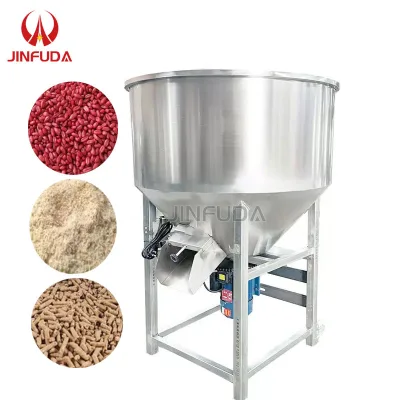


Agricultural Seed Laboratory Powder Pellet Feed Mixer Small Drum Mixer
$299.00 - $998.00
MOQ: 1 Pieces


Pig Mixing Machine Cattle Animal Feed Mixer Machine Feed Mixer for Sale
$458.00 - $698.00
MOQ: 1 Pieces
Comprehensive Sourcing Guide
Strategic Sourcing Guide for Corn Embryo Mixers
Understanding the Technical Landscape of Industrial Mixing
When sourcing equipment for corn embryo processing, buyers must first distinguish between general mixing capabilities and the specific mechanical requirements of handling biological granules and powders. The core keyword "Corn Embryo Mixer" implies a need for equipment capable of handling materials that are often granular, powdery, or liquid with suspended solids. Based on observed market data, the machinery available for this application falls into distinct categories defined by their stirring type and layout.
The technical specifications for these mixers vary significantly. Some units utilize a Forced stirring type, which is essential for ensuring uniform distribution of ingredients in dense or cohesive mixtures. In contrast, other models employ a Spiral stirring mechanism, often found in vertical configurations designed for specific granulation needs. The layout of the machine is equally critical; buyers will encounter both Horizontal and Verticle (Vertical) layouts. Horizontal mixers often feature a Drum shape, while vertical units may utilize a Circular Groove or a V-Mixer configuration.
The working principle is another key differentiator. The market offers Shear Mixers and High Speed Mixers, each serving different processing speeds and intensity levels. For corn embryo applications, the Operating type can be either Continuous Operating or Cycle Operating. Continuous operation is typically preferred for high-volume production lines, whereas cycle operating might be more suitable for experimental or smaller batch setups. The material composition of the mixer itself is predominantly Stainless Steel, ensuring resistance to corrosion and maintaining hygiene standards required for agricultural and feed processing.
Compliance and Certification Verification
In the industrial machinery sector, particularly for equipment used in chemical and engineering applications, compliance is not merely a formality but a prerequisite for operational safety and market access. When evaluating potential suppliers for corn embryo mixers, buyers must rigorously verify the certification status of the equipment. The observed data indicates that a significant portion of available units carry the CE certification, which is a mandatory conformity mark for products sold within the European Economic Area.
Beyond the CE mark, the market data reveals the presence of ISO certifications. Specifically, some listings reference ISO 9001 standards, with variations including ISO 9001: 2000 and ISO 9001: 2008. While these are listed as standards in the product attributes, buyers should note that the specific version of the standard (e.g., 2000 vs. 2008) may vary by manufacturer and batch. Additionally, GOST certification is mentioned in some contexts, which is relevant if the equipment is intended for use in regions adhering to Commonwealth of Independent States standards.
It is crucial for buyers to understand that the presence of a certification label on a product listing does not guarantee that every unit in a specific order meets that standard without verification. The observed data shows a mix of certifications, including ISO, GOST, CE and CE, ISO 9001. Therefore, procurement teams must request current, valid certification documents directly from the supplier for the specific model number being purchased. The standard CE and ISO 9001 are the most frequently cited, but the exact scope of these certifications must be confirmed to ensure they cover the specific manufacturing processes and safety protocols relevant to corn embryo handling.
Cost Drivers and Pricing Structures
The financial aspect of sourcing industrial mixers involves analyzing a wide range of price points and minimum order quantities (MOQ). The observed listed price range for these units spans from 1 USD to 100,000 USD, reflecting the vast difference between small-scale experimental mixers and large-scale industrial processing units. This broad spectrum indicates that cost is heavily influenced by the machine's capacity, power rating, and complexity.
Power consumption is a primary cost driver. The data shows that power ratings for these mixers range from 35 kW to 150 kW. Higher power ratings generally correlate with higher unit costs but also with increased throughput and efficiency for large-volume corn embryo processing. The Model Number also plays a significant role in pricing. Models such as LDH, WHJ500, WHJ1000, WHJ5000, and the HL-9TMR series (ranging from HL-9TMR-5 to HL-9TMR-27) represent different tiers of capability. The HL-9TMR series, for instance, is associated with capacities ranging from 5 cbm to 27 cbm, suggesting that larger capacity models command a premium price.
The MOQ for these industrial machines is observed to be between 1 and 10 units. This flexibility allows buyers to start with a single unit for pilot testing or order a batch of ten for immediate deployment. However, the More Capacity Models listed, such as 5cbm, 7cbm, 9cbm, 12cbm, 18cbm, 21cbm, 27cbm, suggest that pricing may also be tiered based on volume capacity. Buyers should be aware that while the base price might appear low, the total cost of ownership includes shipping, installation, and the specific Packing requirements. The observed packing methods include Standard Wooden Case, Wooden Box, Wooden Crate, and in Nude (unpackaged) options. The choice of packing can impact the final landed cost, as specialized wooden crates for heavy machinery add to the shipping weight and volume.
Typical Applications and Operational Scope
The versatility of corn embryo mixers extends across multiple industrial sectors. The observed Application Area data highlights Engineering & Construction and Chemical industries as primary users. However, the specific Application attributes point to a strong focus on Powder, Liquid with Suspended Solids, and Granules. This confirms that these mixers are well-suited for processing corn embryos, which often exist in granular or powdered forms, or as part of a liquid suspension in feed production.
The Product Type is explicitly listed as Fertilizer and Feed Mixer, indicating that these machines are integral to the agricultural supply chain. The Usage is categorized as Industrial and Experimental, meaning the equipment can serve both large-scale commercial production and smaller-scale research and development facilities. The Additional Capabilities of these mixers include Coating and Granulating, which are essential for enhancing the quality of corn embryo products. For example, the ability to coat granules ensures that nutrients or protective agents are evenly distributed, while granulating capabilities allow for the formation of uniform particle sizes.
The Blade configuration is another factor influencing application suitability. Some models feature 10 PCS blades, while others offer up to 30 PCS, affecting the mixing intensity and uniformity. The Speed (R/Min) is observed at 26, which suggests a specific operational velocity for certain models, though this may vary across the HL-9TMR series. Buyers should match the mixer's speed and blade configuration to the specific viscosity and density of the corn embryo material to ensure optimal processing results.
Supplier Evaluation and Origin Verification
When evaluating suppliers, the prod_origin is a critical data point. The observed data indicates that the majority of these mixers originate from China, with specific mentions of Laizhou as a production hub. This geographic concentration suggests a specialized supply chain for this type of industrial machinery. Buyers should verify the specific factory location within China to assess the supplier's logistical capabilities and potential for site visits.
The Condition of the equipment is consistently listed as New, which is standard for industrial procurement. However, buyers must ensure that "New" refers to the manufacturing condition and not a refurbished unit. The Warranty period is observed to be 1 Year, which serves as a baseline for after-sales support. Buyers should negotiate for extended warranty periods or specific service level agreements (SLAs) that cover critical components like the motor and mixing blades.
Supplier reliability can also be gauged by their Customization capabilities. The data confirms that Customization is Available, allowing buyers to tailor the mixer to specific corn embryo processing needs. This could include modifications to the Layout Type, Mixer Type, or Operating type. Suppliers offering customization should be able to provide detailed engineering drawings and timelines for the modified units. Additionally, the prod_packing options, ranging from Standard Wooden Case to as required, indicate that suppliers are flexible in meeting specific shipping and handling requirements.
Quality Control and Long-Term Procurement Considerations
Ensuring the long-term reliability of corn embryo mixers requires a robust quality control strategy. The prod_standard listed includes CE, ISO 9001, and ISO 9001: 2000/2008, but buyers must verify that these standards apply to the specific manufacturing batch. Quality control should extend beyond the initial certification to include factory acceptance tests (FAT) and site acceptance tests (SAT). The Material of construction, primarily Stainless Steel, must be verified for grade and thickness to ensure durability against the abrasive nature of corn embryos.
The Model Number consistency is vital for long-term maintenance. Models like QB70, LDH, and the HL-9TMR series have specific part requirements. Buyers should ensure that the supplier provides a comprehensive spare parts list, including blades, bearings, and seals. The Operating type (Continuous vs. Cycle) also impacts maintenance schedules; continuous operation units may require more frequent inspections and lubrication.
Finally, buyers should consider the Additional Capabilities such as Coating and Granulating when planning for future expansion. A mixer that can be upgraded or reconfigured for additional processes offers better long-term value. The Warranty of 1 Year should be supplemented with a clear service protocol for troubleshooting and repairs. By focusing on these quality control measures and long-term considerations, buyers can secure a reliable supply of corn embryo mixers that meet their operational needs and regulatory requirements.
FAQs
What certifications do corn embryo mixers typically have?
Most units carry CE certification, with some models also holding ISO and GOST marks. Buyers should verify specific certification documents for the exact model number, as standards like ISO 9001 may vary between versions such as 2000 or 2008.
Which stirring types are available for corn embryo processing?
Available stirring types include Forced and Spiral mechanisms. Forced stirring ensures uniform distribution in dense mixtures, while Spiral types are often found in vertical configurations designed for specific granulation needs in agricultural applications.
Can I customize the layout type of the mixer?
Yes, customization is available for layout types such as Horizontal or Vertical. Horizontal mixers often feature a drum shape, whereas vertical units may utilize a circular groove or V-Mixer configuration to suit specific processing requirements.
What is the minimum order quantity for these mixers?
The minimum order quantity ranges from 1 to 10 units. This flexibility allows buyers to start with a single unit for pilot testing or order a batch of ten for immediate deployment in industrial or experimental settings.
How are corn embryo mixers typically packed for shipping?
Packing options include standard wooden cases, wooden boxes, wooden crates, or nude shipping. The choice of packing can impact the final landed cost, as specialized wooden crates for heavy machinery add to the shipping weight and volume.
What materials are used to construct these mixers?
The material of construction is predominantly stainless steel. This ensures resistance to corrosion and maintains hygiene standards required for agricultural and feed processing applications involving corn embryos and similar granular materials.
What is the warranty period for these industrial mixers?
The standard warranty period is 1 year. Buyers should negotiate for extended warranty periods or specific service level agreements that cover critical components like the motor and mixing blades to ensure long-term operational reliability.