Source Corrosion Protection Mezzanine Floor Racking for Warehouse, Supermarket, and Industrial Use
Explore 30 options for Corrosion Protection Mezzanine Floor Racking designed for warehouse, supermarket, and industrial environments. Buyers can compare adjustable and fixed structures, various heights, and custom sizes from suppliers in China.
Key considerations
Products List

Corrosion Protection Warehouse Mezzanine Floor Racking Panels/Mezzanine Racking
$35.50 - $110.50
MOQ: 20 Pieces


Powder Coated Anti Rust High Load Bearing Mezzanine Floor Racking
$25.00 - $80.00
MOQ: 500 Square Meters

Heavy Duty Multi Tier Space Saving Q235 Steel Warehouse Mezzanine Floor Racking
$25.00 - $80.00
MOQ: 500 Square Meters
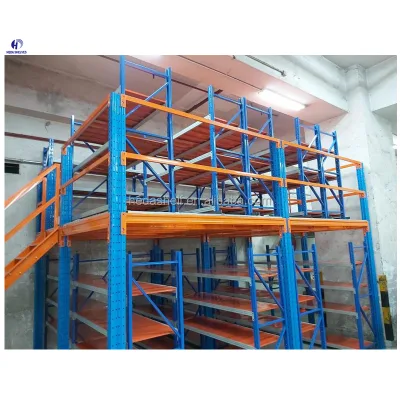


Storage Rack Supported Steel Mezzanine Floor for Industrial Warehouse
$180.00 - $200.00
MOQ: 10 Pieces


Steel Duty Mezzanine Racking with Double Columns for Warehouse Storage
$70.00 - $100.00
MOQ: 100 Square Meters


for Various Industry Applications Steel Mezzanine Racking Storage Rack
$70.00 - $100.00
MOQ: 100 Square Meters

Heavy Duty Pallet Racking Supported Mezzanine Floor Rack / Mezzaine Racking
$6000.00 - $8000.00
MOQ: 1 Pieces


Mezzanine Floor Racking System for Warehouse Storage/Storage Rack
$30.00 - $80.00
MOQ: 1 Square Meters


Heavy Duty Warehouse Steel Storage Mezzanine Floor Racks/Storage Rack
$30.00 - $80.00
MOQ: 1 Square Meters

Medium Duty Attic Floor Storage Rack /Steel Storage Mezzanine Floor Rack/Pallet Rack
$30.00 - $80.00
MOQ: 100 Square Meters

Heavy Duty Pallet Racking Supported Mezzanine Floor Racks/Storage Rack
$30.00 - $80.00
MOQ: 1 Square Meters
Comprehensive Sourcing Guide
Strategic Sourcing Guide for Corrosion Protection Mezzanine Floor Racking
Understanding the Technical Landscape of Mezzanine Racking Systems
When sourcing Corrosion Protection Mezzanine Floor Racking, buyers must first distinguish between the various structural configurations available in the current market. The core keyword implies a specific need for durability in environments where moisture, humidity, or chemical exposure might compromise structural integrity. Based on observed product attributes, the market offers distinct variations in mobility and structural design. One prevalent configuration is the "Mezzanine Rack" which often utilizes a "Layer Frame" structure. These systems are designed to maximize vertical storage capacity within industrial facilities, transforming single-level warehouses into multi-tiered operational spaces.
The material composition is a primary determinant of corrosion resistance. The supplied data indicates that while some systems utilize a combination of "Steel and Wood," others rely exclusively on "Steel" for the entire structural framework. For environments demanding high corrosion protection, the all-steel construction is generally preferred due to the uniformity of the protective coating application. The weight capacity for these units varies significantly, with observed ranges spanning from 150kg to 500kg per unit, and specific models capable of supporting up to 500kg. This variance necessitates a precise calculation of load requirements before procurement.
Height is another critical technical specification that influences the corrosion protection strategy. Systems are available in two primary height categories: those ranging from 0 to 5 meters and those extending from 5 to 15 meters. Taller structures, particularly those in the 5-15 meter range, often require more robust surface treatments to withstand environmental stressors over a larger surface area. The "Layer Board" material is frequently specified as "Galvanized Steel Plate," which serves as the primary defense against rust on the walking and storage surfaces. Additionally, the "Closed" status of the racking varies between "Semi-closed" and "Open" configurations, affecting airflow and the potential for dust or moisture accumulation within the structure.
Surface Treatments and Corrosion Defense Mechanisms
The effectiveness of corrosion protection in mezzanine racking is largely dictated by the surface treatment processes employed during manufacturing. The observed data highlights two dominant treatment methods: "Galvanizing" and "Powder Coating." Galvanization involves coating the steel with a layer of zinc, providing a sacrificial barrier that prevents rust even if the coating is scratched. This is particularly vital for mezzanine floors in food processing, beverage storage, or outdoor-adjacent warehouse zones where humidity is a constant factor. Powder coating, on the other hand, offers a thick, uniform layer of polymer that can be applied in various colors, including "Blue, Orange, Green, Grey," or within the "Ral System."
The choice between galvanizing and powder coating often depends on the specific application environment. For heavy industrial use or harsh chemical environments, hot-dip galvanizing is typically the superior choice for long-term structural integrity. However, for general warehouse use where aesthetics and moderate protection are required, powder coating provides a cost-effective solution with a wide range of color options. The "Colour" attribute is noted as "Accoding to Your Request" or "Customized," allowing buyers to match facility safety standards or branding requirements. It is essential to verify that the surface treatment covers all weld points and cut edges, as these are common initiation points for corrosion.
Furthermore, the integration of a "Lighting System" within the mezzanine structure adds a layer of complexity to the corrosion protection strategy. Electrical components must be properly sealed and coated to prevent moisture ingress, which could lead to short circuits or accelerated corrosion of the metal framework. The presence of lighting systems suggests that these mezzanine floors are designed for active, high-traffic environments where visibility is paramount. Buyers should ensure that the specified surface treatments are compatible with the installation of electrical conduits and fixtures without compromising the protective barrier.
Compliance, Certification, and Standard Verification
Navigating the compliance landscape for mezzanine racking requires a clear understanding of the standards and certifications that validate product safety and quality. While the provided data mentions "ISO9001" and "ISO14001" as background standards, these should be treated as general industry expectations rather than guaranteed attributes of every listed product. Buyers must explicitly request and verify the specific certification status of the supplier for the models they intend to purchase. The absence of a specific certification claim in the product listing does not imply non-compliance, but it does require the buyer to initiate a verification process.
The "prod_standard" attribute reveals that many suppliers offer "OEM Size" or "OEM, ODM" capabilities, indicating a high degree of customization. This flexibility is beneficial for tailoring the racking to specific facility dimensions but introduces the need for rigorous engineering validation. The "Standard" section also notes "Customized" as a standard for certain models, reinforcing the need for buyers to ensure that custom designs meet local building codes and safety regulations. In the context of corrosion protection, compliance often extends to environmental regulations regarding the chemicals used in surface treatments.
Buyers should also look for evidence of "CE" certification, which is a common requirement for products entering the European market. Although listed as low-confidence background information, the presence of CE marking is a strong indicator that the product meets essential health, safety, and environmental protection requirements. For exports to "America, Europe, Asia, and Overseas," verifying that the supplier has a track record of meeting these regional standards is crucial. The "prod_model" numbers, such as "TU-R11," "EBIL-MR," and "JH-GPT," serve as unique identifiers that buyers can use to cross-reference specific compliance documentation with the manufacturer.
Cost Drivers and Procurement Economics
The cost of Corrosion Protection Mezzanine Floor Racking is influenced by a complex interplay of material selection, surface treatment, and customization levels. The observed price range in the market spans from $0.5 to $8,000, a wide spectrum that reflects the diversity of product configurations. Lower-priced items likely represent smaller, simpler units with standard surface treatments, while higher-priced units may include complex engineering, extensive galvanization, or custom dimensions. The "MOQ" (Minimum Order Quantity) ranges from 1 to 1000 units, offering flexibility for both small-scale projects and large-scale industrial deployments.
Material costs are a primary driver, with "Steel" being the dominant material. The use of "Galvanized Steel Plate" for layer boards adds to the cost but provides essential corrosion resistance. The "Weight" of the unit, ranging from 150kg to 500kg, also impacts shipping and handling costs, which are significant factors in the total cost of ownership. Additionally, the "Delivery Time" of 5-20 days suggests that lead times can vary based on the complexity of the order and the current production capacity of the supplier. Buyers should factor in these lead times when planning their procurement schedules to avoid project delays.
Customization is another significant cost driver. While "Customization" is listed as "Available," the extent of customization required will directly affect the final price. Models with "OEM, ODM" capabilities allow for tailored solutions but may incur higher engineering and setup costs. The "prod_packing" methods, such as "Carton," "Film + Hardboard," or "Simple Export Packing," also influence logistics costs. Buyers should evaluate the trade-off between the cost of specialized packaging and the risk of damage during transit, especially for units with delicate surface treatments.
Typical Applications and Operational Environments
The versatility of mezzanine racking systems is evident in their diverse range of applications. The "Usage" attribute lists a broad spectrum of industries, including "Warehouse Rack," "Industrial," "Food," "Supermarket," "Tools," "Clothing," "Beverage," and "Tool Rack." This wide applicability underscores the importance of selecting the right corrosion protection strategy for each specific environment. For instance, "Food" and "Beverage" applications often require stringent hygiene standards and resistance to moisture and cleaning chemicals, making galvanization or high-quality powder coating essential.
In "Industrial" and "Tool Rack" settings, the focus is often on durability and load-bearing capacity. The "Layer Frame" structure and "Rack" type designs are well-suited for these heavy-duty applications. The "Mezzanine Rack" configuration is particularly effective in "Supermarket" environments where maximizing storage space in the back-of-house areas is critical. The "Open" and "Semi-closed" configurations allow for varying degrees of visibility and airflow, which can be tailored to the specific needs of the operation.
The "Lighting System" integration suggests that these mezzanine floors are designed for active workspaces where employees need to navigate and operate safely. In "Clothing" and "Tool" storage, the ability to customize the "Color" can help in organizing inventory and improving workplace safety. The "Dimension" being "Customized" allows for the creation of mezzanine floors that fit perfectly within existing warehouse footprints, maximizing the utility of every square meter.
Supplier Evaluation and Quality Assurance
Evaluating suppliers for Corrosion Protection Mezzanine Floor Racking requires a systematic approach to verifying their capabilities and track record. The "prod_origin" data points to suppliers located in "China, Suzhou," "Nanjing, China," and "Shandong Province, China." While these regions are known for manufacturing expertise, buyers should not assume uniform quality across all suppliers. Instead, they should conduct due diligence by requesting samples, reviewing past project portfolios, and verifying the specific surface treatment processes used.
The "Development" attribute distinguishes between "New Type" and "Conventional" products. "New Type" developments may offer advanced corrosion protection features but should be scrutinized for proven reliability. "Conventional" products, while less innovative, may have a longer track record of performance in the field. Buyers should prioritize suppliers who can demonstrate a clear understanding of the specific corrosion challenges associated with their intended application.
Quality assurance should also extend to the "prod_packing" and "Delivery Time" aspects. "Tray Packaging" or "Film + Hardboard" packing methods can provide additional protection against scratches and damage during transit, which is crucial for maintaining the integrity of the surface treatment. A reliable supplier will offer a clear "Delivery Time" window, such as the observed 5-20 days, and provide tracking information to ensure timely receipt of goods.
Long-Term Procurement and Maintenance Considerations
Sourcing mezzanine racking is not a one-time transaction but a long-term investment that requires consideration of maintenance and lifecycle costs. The "Mobility" attribute, ranging from "Adjustable" to "Fixed," impacts the flexibility of the system over time. "Adjustable" systems allow for reconfiguration as storage needs change, but they may require more frequent maintenance to ensure that moving parts remain free of corrosion. "Fixed" systems, while more stable, offer less flexibility but may have lower long-term maintenance requirements.
The "High" attribute, noted as "Customizable," suggests that the height of the mezzanine can be tailored to future expansion needs. However, buyers should consider the potential for future upgrades and ensure that the initial installation allows for such modifications without compromising the structural integrity or corrosion protection. The "Sell to" regions, including "America, Europe, Asia, and Overseas," indicate that suppliers with a global presence may offer better support and spare parts availability.
Finally, buyers should establish a clear maintenance protocol for the mezzanine racking. Regular inspections for signs of corrosion, especially in the "Galvanized Steel Plate" layer boards and weld points, are essential. Any damage to the surface treatment should be repaired promptly to prevent the spread of rust. By selecting a supplier with a strong commitment to quality and offering comprehensive after-sales support, buyers can ensure that their mezzanine racking systems remain safe and functional for years to come.
Comparative Analysis of Key Product Attributes
To facilitate a clearer understanding of the available options, the following table summarizes the key attributes observed in the market for Corrosion Protection Mezzanine Floor Racking. This comparison highlights the variations in structure, material, and customization that buyers should consider during the sourcing process.
| Attribute | Option A (Standard/Conventional) | Option B (Custom/New Type) | Option C (Heavy Duty/Industrial) |
|---|---|---|---|
| Structure | Layer Frame | Rack | Layer Frame |
| Material | Steel and Wood | Steel | Steel |
| Surface Treatment | Powder Coating | Galvanizing, Powder Coating | Galvanizing |
| Mobility | Adjustable | Fixed | Adjustable |
| Height Range | 0-5m | 5-15m | 0-5m |
| Weight Capacity | 150-500kg | 500kg | 150-500kg |
| Customization | Available | OEM, ODM | Customized |
| Origin | Suzhou, China | Nanjing, China | Shandong Province, China |
| Packing | Carton | Film + Hardboard | Tray Packaging |
| Color Options | Accoding to Your Request | Blue, Orange, Green, Grey | Accoding to Your Request |
This table illustrates that while there is significant overlap in product attributes, the specific combination of features will determine the suitability of a racking system for a particular application. Buyers must carefully match their operational requirements with the specific attributes of the products they are evaluating to ensure optimal performance and longevity.
FAQs
What surface treatments protect mezzanine racking from corrosion?
Galvanizing and powder coating are the primary treatments used for corrosion protection. Galvanizing provides a zinc sacrificial barrier ideal for humid environments, while powder coating offers color options like blue or orange for general warehouse use.
Which materials are used for constructing these mezzanine racks?
The racks are constructed using steel or a combination of steel and wood. The layer boards are often made of galvanized steel plate to ensure durability and resistance against rust in industrial or food storage settings.
Can the dimensions and colors be customized for specific needs?
Yes, customization is available for dimensions, colors, and standard sizes. Buyers can request specific heights ranging from 0 to 15 meters and choose colors from the Ral system or other custom requests to match facility requirements.
How long does it take to receive the ordered racking systems?
The delivery time typically ranges from 5 to 20 days depending on the order complexity. This lead time accounts for the manufacturing process and packaging methods such as carton or film plus hardboard protection.
What is the weight capacity of the standard mezzanine units?
The weight capacity varies between 150kg and 500kg per unit depending on the model. Specific models like the Steel Platform are designed to support up to 500kg, ensuring stability for various industrial and tool storage applications.
Where are these mezzanine racking systems manufactured?
These systems are manufactured in China, specifically in locations like Suzhou, Nanjing, and Shandong Province. Buyers can source products from these regions which offer OEM and ODM capabilities for tailored solutions.