Source Corridor Smart Tube Light for Hallways, Stairwells, and Offices
Find 30 options for Corridor Smart Tube Light suitable for hallways, stairwells, and offices. Buyers can compare specifications like voltage, color temperature, and installation styles from verified suppliers.
Key considerations
Products List


Comprehensive Sourcing Guide
Strategic Sourcing Guide for Corridor Smart Tube Lights
Understanding Product Definitions and Technical Variability
The term "Corridor Smart Tube Light" represents a complex category where procurement teams must distinguish between general corridor lighting and specialized smart tube solutions. In the current market, product attributes often vary significantly between listings, requiring buyers to verify specific technical parameters rather than relying on generic titles. Based on observed product data, the category encompasses a wide range of specifications, from low-voltage DC systems to high-voltage AC inputs.
A critical observation in the current supply landscape is the divergence in power requirements. Some listed units operate on a DC 6 V input, which is typical for battery-operated or low-voltage sensor-based systems, while others are designed for standard AC mains voltages ranging from 200-240V or 100-277V at 50/60Hz. This distinction is vital for corridor applications, as the choice between AC and DC determines the complexity of the installation, the need for transformers, and the overall safety profile of the system. Furthermore, the light source technology varies, with some products utilizing SMD2835 LEDs, while others are categorized under energy-saving lamps or general LED sources.
The color temperature and rendering capabilities also show significant variability. While some units are specified with a fixed 2700K Soft Warm White output, others offer a broad spectrum ranging from 2200K to 6500K, including RGB capabilities. This flexibility is essential for corridor environments that may require different moods or visibility levels. The Color Rendering Index (Ra) is another key metric; observed data indicates an Ra of 80, which is standard for general commercial lighting but may require verification for high-precision corridor applications where color accuracy is paramount.
Compliance and Certification Verification Protocols
When sourcing corridor lighting, compliance with international and regional safety standards is non-negotiable. Buyers must rigorously verify that suppliers provide valid documentation for certifications such as CE, RoHS, FCC, and CCC. These certifications are not merely marketing claims but indicate adherence to specific electromagnetic compatibility, safety, and environmental directives. For instance, the presence of CE and RoHS marks suggests compliance with European Union standards regarding hazardous substances and electromagnetic interference, which is critical for electronic lighting products.
In addition to general certifications, specific product standards must be evaluated. The observed data references standard dimensions of 609/914/1219/1524mm*40mm, which aligns with common T8 or T12 tube profiles. However, buyers should not assume all "smart tube" products adhere to these exact dimensions without confirmation. The IP Rating is another critical compliance factor; while some observed units carry an IP54 rating, indicating protection against dust and water jets, others are explicitly marked as "Not Waterproof." For corridor applications, especially in areas prone to cleaning or humidity, the IP rating must be matched to the environmental conditions. An IP54 rating is generally sufficient for dry indoor corridors, but wet areas may require higher ratings.
The IEC 62471 standard, often referenced in the broader context of lamp safety, should be considered when evaluating photobiological safety. While specific test results for this standard are not universally provided in every listing, buyers should request evidence of compliance to ensure the light source does not pose a risk to human eyes or skin. Similarly, the IK09 impact resistance rating observed in some products indicates a high level of mechanical durability, which is beneficial for high-traffic corridor areas where accidental impacts are possible.
Cost Drivers and Pricing Structure Analysis
The pricing structure for corridor smart tube lights is influenced by several dynamic factors, including power rating, smart features, and build quality. The observed price range in the market spans from $0.67 to $20.00 USD, a wide variance that reflects differences in specifications and volume. Lower-priced units often correspond to basic LED strips or low-wattage fixtures with minimal smart functionality, whereas higher-priced items typically include advanced drivers, higher efficacy ratings, and robust smart control integration.
Wattage is a primary cost driver. The market lists options ranging from 2W to 40W, with specific mentions of 15W, 22W, 30W, and 40W configurations. Higher wattage units generally command a higher price due to increased material costs and more complex thermal management requirements. Additionally, the luminous efficacy, measured in lumens per watt (lm/W), significantly impacts value. Products with a high efficacy of 120lm/W offer better energy efficiency and long-term cost savings, justifying a potentially higher upfront investment compared to units with lower efficiency, such as those rated at 55lm/W.
The Minimum Order Quantity (MOQ) also plays a crucial role in the total cost of ownership. The observed MOQ range is extensive, from 1 unit to 3,000 units. Buyers seeking to test a new product line may find suppliers with an MOQ of 1, but these units will likely carry a higher per-unit cost. Conversely, bulk procurement at an MOQ of 3,000 can drastically reduce the unit price, making it essential for buyers to align their order volume with their budget and storage capabilities. Customization options, such as specific color temperatures or dimensions, may also incur additional costs, which should be factored into the total procurement budget.
Typical Applications and Functional Requirements
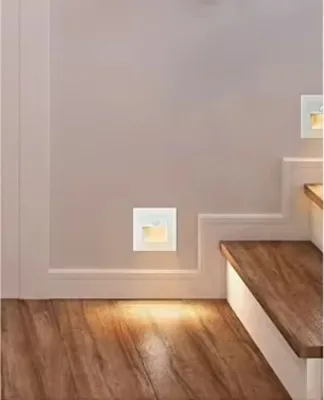
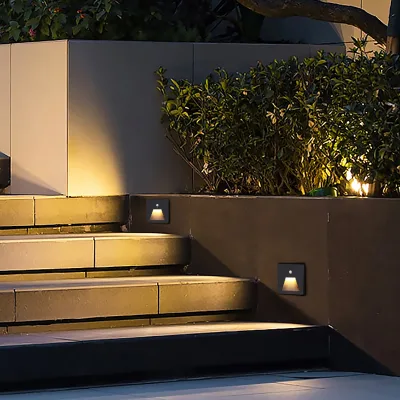
Corridor smart tube lights are designed for a variety of commercial and residential applications, with the primary use case being the illumination of hallways, walkways, and transitional spaces. The observed data highlights applications in bedrooms and corridors, indicating versatility in placement. The installation style is predominantly wall-mounted, which is ideal for corridor environments where ceiling mounting may be impractical or aesthetically unappealing.
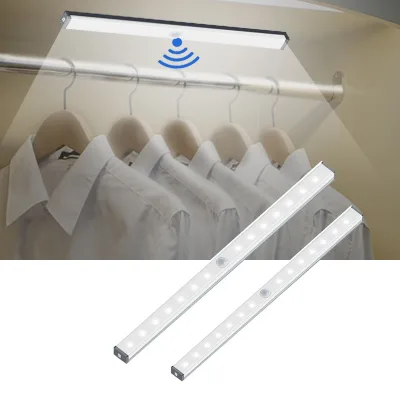
Smart functionality is a defining feature of these products. Many units incorporate optical sensors or motion detection, allowing for automatic activation when movement is detected. This feature is particularly valuable in corridors to ensure safety and energy efficiency, as lights only operate when needed. The "led sensor light" and "led closet light" attributes observed in the data suggest that these products are often marketed for specific niches but are adaptable for general corridor use. The inclusion of a touch on/off switch provides manual override capabilities, which is essential for maintenance or specific user preferences.
Lighting solutions services, such as project installation and lighting and circuitry design, are available from some suppliers. This indicates that the procurement process may extend beyond the purchase of the physical unit to include professional design and installation support. For large-scale corridor projects, this service can be a significant value-add, ensuring that the lighting system is integrated seamlessly with the building's existing infrastructure. The design style is typically modern, aligning with contemporary architectural trends that favor sleek, minimalist fixtures.
Supplier Evaluation and Quality Assurance
Evaluating suppliers for corridor smart tube lights requires a multi-faceted approach that goes beyond price comparison. Buyers should prioritize suppliers who demonstrate transparency in their product attributes and provide clear documentation for all technical specifications. The origin of the product is a key factor; the observed data indicates that many products originate from Guangdong, China, a major manufacturing hub. While this region is known for its extensive supply chain, buyers should verify the specific factory capabilities and quality control processes.
Quality assurance should focus on the durability and performance of the light source. The working time of 40,000 hours is a standard benchmark for LED products, but buyers should verify if this is a guaranteed minimum or a theoretical maximum. The warranty period is another critical indicator of supplier confidence; observed warranties range from 1 year to 5 years. A longer warranty period often suggests a higher quality product and a more reliable supplier. Additionally, the lamp body color options, such as Tenhu Grey, Jazz White, Rose Gold, and Dark Grey, should be evaluated for their ability to match the corridor's aesthetic requirements.
The power factor is another technical metric that should be scrutinized. A power factor of 0.95, as observed in some listings, indicates high electrical efficiency and reduced strain on the power grid. Buyers should request power factor data for all prospective suppliers to ensure compliance with local electrical codes and to optimize energy consumption. The beam angle of 120 degrees is also a standard specification that ensures wide coverage, which is ideal for corridor lighting where uniform illumination is necessary.
Long-Term Procurement and Maintenance Considerations
Long-term procurement strategies for corridor smart tube lights must account for maintenance, energy efficiency, and scalability. The high efficacy of 120lm/W observed in some products suggests significant energy savings over the product's lifespan, which can result in substantial cost reductions for facility managers. However, buyers should also consider the compatibility of the smart features with existing building management systems. The ability to support dimming and the presence of changeable emitting colors (Warm White, Cold White, RGB) offer flexibility for future lighting scenarios.
The packaging and shipping logistics are also important considerations. The standard packing method observed is carton packaging, which provides basic protection during transit. For large orders, buyers should negotiate for reinforced packaging to prevent damage during shipping. The selling units are typically single items, which simplifies inventory management but may require careful planning for bulk orders to ensure consistent quality across all units.
Finally, the customization options available from suppliers should be leveraged to meet specific project requirements. Whether it is adjusting the dimensions to fit unique corridor profiles or selecting specific color temperatures, the ability to customize can enhance the overall performance and aesthetic of the lighting system. Buyers should establish clear communication channels with suppliers to ensure that customization requests are accurately fulfilled and that the final product meets all technical and functional requirements. By focusing on these long-term factors, procurement teams can secure a reliable and efficient lighting solution for corridor applications.
FAQs
What input voltage options are available for corridor smart tube lights?
Products support both DC 6 V and standard AC inputs ranging from 200-240V or 100-277V at 50/60Hz. Buyers must verify the specific voltage requirement of their corridor infrastructure before selecting a unit to ensure safe and compatible installation.
Which certifications should I verify for corridor lighting safety compliance?
Verified listings include CE, CCC, RoHS, and FCC certifications for safety and environmental compliance. These marks indicate adherence to international standards for electromagnetic compatibility and hazardous substances, which are essential for commercial corridor installations.
How long is the typical working life for these LED corridor lights?
The observed working time for these LED units is up to 40,000 hours. This duration represents a standard benchmark for LED longevity, though actual lifespan may vary based on usage conditions and thermal management in the specific corridor environment.
Can I find corridor smart tube lights with customizable dimensions?
Customization is available for products with standard dimensions like 609mm, 914mm, 1219mm, or 1524mm in length. Buyers should confirm specific size requirements with suppliers to ensure the customized units fit their corridor profiles and mounting constraints.
What is the minimum order quantity for purchasing these lighting fixtures?
The observed minimum order quantity ranges from 1 unit to 3,000 units depending on the supplier. Lower MOQs allow for testing new designs, while higher volumes typically reduce the per-unit cost for large-scale corridor projects.
Which color temperature options are supported for corridor ambiance?
Available options include fixed 2700K Soft Warm White or variable ranges from 2200K to 6500K with RGB capabilities. This flexibility allows buyers to select warm tones for residential corridors or cooler tones for commercial hallways requiring high visibility.