Source Corrosion-Resistant Epoxy FRP Fiberglass Fan for Air Conditioner, Manufacture, Refrigerate
Find 30 corrosion-resistant epoxy FRP fiberglass fan options for air conditioners, manufacturing, and refrigeration. Compare specifications like airflow, motor power, and mounting types to select the right industrial ventilation solution.
Key considerations
Products List


FRP Roof Ventilation Fan Roof Fop Ventilation Fan Fiberglass Roof Fan
$280.00 - $350.00
MOQ: 10 Pieces


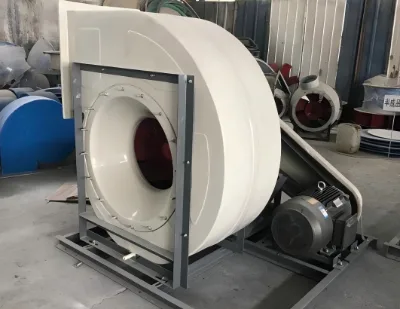


Comprehensive Sourcing Guide
Strategic Sourcing Guide for Corrosion-Resistant Epoxy FRP Fiberglass Fans
Understanding Material Composition and Structural Integrity
When sourcing corrosion-resistant epoxy FRP fiberglass fans, the primary focus must be on the material composition that defines the product's longevity in harsh environments. The supplied product data explicitly identifies Fiberglass Reinforced Plastic (FRP) as a core material attribute, often listed alongside specific mentions of FRP as a general material category. This material choice is critical for applications involving high humidity, chemical exposure, or saline environments where metal components would rapidly degrade. The structural integrity of these units relies heavily on the reinforcement method, ensuring the fan blades and housing can withstand operational stresses without compromising the epoxy resin matrix.
The blade material is a distinct variable that buyers must verify against their specific application needs. While the FRP housing provides the primary corrosion resistance, the supplied facts indicate that Stainless Steel is a documented blade material for certain models, such as the 1460 series. This suggests a hybrid construction approach where the housing offers chemical resistance while the blades provide high-strength mechanical performance. Conversely, other entries list FRP as the general material, implying fully composite units. Buyers should not assume all listed products use stainless steel blades; the specific model configuration dictates whether the blades are composite or metallic. The frame material is also a key differentiator, with Hot-DIP Galvanized Steel cited in the specifications. This combination of FRP and galvanized steel offers a balanced approach, utilizing the corrosion resistance of the plastic for the air path while maintaining structural rigidity in the mounting frame.
Technical Specifications and Performance Parameters
Evaluating the technical specifications requires a granular look at the airflow, power, and dimensional data provided in the product listings. The airflow capacity is a significant performance metric, with observed ranges spanning from 44,000 to 48,000 M³/H for specific industrial models. However, broader market data referenced in the standards section suggests a much wider potential range of 800 to 1,200,000 m³/h, indicating that the "corrosion-resistant epoxy FRP" category encompasses everything from small ventilation units to massive industrial exhaust systems. Buyers must align their specific volume requirements with the correct model series, such as the 850/1060/1260/1460 series, which likely correspond to the fan diameter or model designation.
The physical dimensions are equally critical for installation planning. The standard product size is listed as 12601260560mm, while other configurations, such as the 1460 model, may have a fan diameter of 1460 mm and a blade diameter of 1270 mm. Another standard dimension cited is 13801380450mm. These variations highlight the necessity of verifying the exact model number before procurement to ensure the unit fits the designated mounting space. The motor power is another variable, with observed ratings including 1.1 Kw, 0.75kw, and a broader range of 0.75-5kw or 0.75-1.5kw. This variance suggests that power consumption is directly tied to the airflow capacity and the specific application intensity.
Electrical compatibility is a frequent point of confusion in international sourcing. The voltage specifications are diverse, listing 380/220V, 220V / 380V / 415V, and Customized options. This indicates that these fans are designed for global deployment but require careful verification of the local grid voltage. The motor type is consistently noted as a 100% Copper Wire Motor, which is a positive indicator of efficiency and thermal stability compared to aluminum alternatives. The drive mode is specified as Belt Drive for the larger industrial units, which allows for variable speed control and reduced motor stress, while the mounting type is predominantly Wall Mounted or Wall Fan style.
Compliance, Certification, and Regulatory Standards
Navigating the compliance landscape for industrial fans requires strict adherence to the certifications listed in the product data. The most frequently observed certifications are ISO, CE, and CCC. The presence of CE and CCC certification suggests that the products meet specific European and Chinese safety and quality standards, respectively. It is important to note that while ISO is listed, the specific ISO standard number (e.g., ISO 9001) is not provided in the source data. Buyers must request the specific certificate documentation to verify the scope of the certification.
The SGS standard is also mentioned in the context of product standards, likely referring to third-party inspection or testing protocols rather than a manufacturing standard itself. The product standard dimensions are explicitly defined, such as 12601260560mm and 13801380450mm, which serve as the baseline for physical compliance. Noise levels are a critical regulatory factor in many jurisdictions, with observed data indicating a noise level of ≤65 Db. This is a relatively low noise output for industrial fans, but buyers should verify if this applies to the specific model they are purchasing, as larger units with higher airflow often generate more noise.
The origin of the products is consistently listed as Shandong or China, which provides context for the manufacturing base but does not inherently guarantee quality. The trade terms provided are EXW/Fob/CIF, offering flexibility in logistics management. Buyers should be aware that the CCC certification is specific to the Chinese market, while CE is required for the European Economic Area. If the destination market has different regulatory requirements, such as UL in North America or specific local environmental standards, the buyer must confirm if the supplier can provide additional testing or documentation beyond the listed CE and CCC marks.
Cost Drivers and Procurement Economics
The cost of sourcing corrosion-resistant epoxy FRP fiberglass fans is influenced by several dynamic factors, including material composition, motor specifications, and order volume. The observed price range in the market data is extensive, spanning from 11 to 1500 USD. This wide disparity indicates that the category includes both small, lightweight units and large, heavy-duty industrial systems. The lower end of the price spectrum likely corresponds to smaller models with lower power ratings, while the higher end reflects the 1.1 Kw or larger motors, Stainless Steel blades, and complex Belt Drive systems.
The Minimum Order Quantity (MOQ) is another significant cost driver, with observed values ranging from 1 to 985 units. An MOQ of 1 suggests that suppliers are willing to accommodate sample orders or small-scale projects, which is beneficial for initial testing or pilot installations. However, for large-scale deployments, the MOQ of up to 985 units may be required to achieve the most favorable unit pricing. Buyers should negotiate based on their total volume requirements, as the price per unit often decreases significantly as the order quantity approaches the higher end of the MOQ range.
Packaging and logistics also contribute to the total cost of ownership. The product packing methods vary, including Carton, Wood Case, Standard Ocean Freight Packaging, and Standard Exporting. The choice of packaging depends on the size and fragility of the unit. For instance, the Wood Case is likely used for the larger, heavier models to prevent damage during ocean freight, while Carton packaging is sufficient for smaller units. The trade terms EXW/Fob/CIF further influence the final landed cost. Under EXW (Ex Works), the buyer assumes all costs and risks from the factory gate, whereas CIF (Cost, Insurance, and Freight) includes shipping and insurance costs up to the destination port. Buyers must calculate the total landed cost, including freight, insurance, and customs duties, rather than focusing solely on the unit price.
Typical Applications and Operational Environments
The versatility of corrosion-resistant epoxy FRP fiberglass fans is evident in the diverse range of applications listed in the product data. These units are specifically designed for environments where moisture, chemicals, or corrosive gases are present. The primary usage categories include Air Conditioner systems, Manufacture processes, and Refrigerate applications. This suggests that the fans are integral to HVAC systems in industrial settings, where maintaining air quality and temperature control is critical.
Specific industrial sectors are also highlighted, with the Application Area explicitly listing Poultry Farm, Greenhouse, Factory, and Warehouse. In poultry farms, the fans are essential for ventilation to manage ammonia levels and temperature, where the FRP material resists the corrosive effects of animal waste. Greenhouses benefit from the corrosion resistance to handle high humidity and potential chemical fertilizers. Factories and warehouses utilize these fans for general ventilation, dust extraction, and heat removal, particularly in processes involving chemicals or high heat.
The Shutter Type is another application-specific feature, with Automatic Push Pull shutters listed. This mechanism is crucial for energy efficiency, preventing cold air infiltration when the fan is not in operation, which is vital for maintaining temperature control in greenhouses and warehouses. The Flow Direction is identified as both Centrifugal and Axial Flow, indicating that the supplier offers different aerodynamic designs for different pressure requirements. Centrifugal fans are typically used for higher pressure applications, such as ducted systems, while axial flow fans are better suited for high-volume, low-pressure ventilation like wall-mounted exhaust.
Supplier Evaluation and Quality Assurance Protocols
Evaluating a supplier for FRP fiberglass fans requires a multi-faceted approach that goes beyond the basic product listing. The Customization attribute is listed as Available, which is a strong indicator of a supplier's flexibility. Buyers should leverage this to request specific modifications, such as custom voltage ratings, specialized blade materials, or unique mounting configurations. The ability to customize is often a sign of a mature manufacturing operation capable of handling complex orders.
Quality control should be a primary focus during the supplier evaluation process. While the SGS standard is mentioned, buyers should request detailed quality control reports for the specific batch they intend to purchase. The Motor Type being 100% Copper Wire Motor is a positive attribute, but buyers should verify the insulation class and thermal protection ratings of the motor to ensure it can handle the specific duty cycle of their application. The Drive Mode being Belt Drive requires attention to belt tensioning and pulley alignment, which are critical for long-term reliability. Buyers should ask for maintenance manuals and spare parts availability, particularly for belts and bearings.
The Product Origin is consistently listed as Shandong or China. While this provides a geographical context, it does not guarantee a specific quality level. Buyers should verify the supplier's manufacturing capabilities, including their facility size, production capacity, and history of exporting to their target market. The Trade Terms of EXW/Fob/CIF suggest that the supplier is experienced in international logistics, but buyers should confirm the reliability of their shipping partners and the accuracy of their documentation.
Long-Term Procurement and Maintenance Considerations
Long-term procurement success depends on understanding the lifecycle of the FRP fiberglass fan and the maintenance requirements associated with it. The Corrosion-Resistant nature of the epoxy FRP material is a key selling point, but it does not eliminate the need for regular maintenance. The Belt Drive system, while efficient, requires periodic inspection and replacement of belts to prevent failure. The Automatic Push Pull shutters also have moving parts that may require lubrication or adjustment over time.
The Voltage variability, ranging from 220V to 415V and Customized, means that buyers must ensure the electrical infrastructure at the installation site is compatible. If the site voltage changes or if the fan is moved to a different location, the motor may require rewinding or replacement, which can be costly. Buyers should consider the availability of replacement motors and the ease of sourcing compatible parts. The Noise Level of ≤65 Db is a desirable feature, but it is essential to verify if this level is maintained over the life of the fan, as wear and tear on the bearings or blades can increase noise.
Finally, the Product Packing method, whether Carton, Wood Case, or Standard Ocean Freight Packaging, impacts the condition of the unit upon arrival. Buyers should inspect the packaging upon delivery to ensure there is no damage to the FRP housing or the motor. The Standard Exporting packaging suggests a focus on protecting the product during transit, but buyers should still verify the integrity of the unit before installation. By focusing on these long-term considerations, buyers can ensure that their investment in corrosion-resistant epoxy FRP fiberglass fans delivers reliable performance and value over its intended lifespan.
FAQs
What certifications do these fans have?
These fans hold ISO, CE, and CCC certifications. Buyers should verify specific certificate documents to confirm the scope of compliance for their target market, as ISO standards are listed without specific numbers.
Can I customize the voltage for these units?
Yes, customization is available for voltage requirements. The standard options include 220V, 380V, and 415V, but buyers must confirm the exact electrical specifications match their local grid before ordering.
Which materials are used for the blades?
Blade materials vary by model, with some using Stainless Steel and others using FRP. Buyers must check the specific model configuration, such as the 1460 series, to determine if the blades are composite or metallic.
How much airflow do these fans provide?
Airflow capacity ranges from 44,000 to 48,000 cubic meters per hour for specific industrial models. Broader market standards indicate a potential range up to 1,200,000 cubic meters per hour depending on the model selected.
What is the noise level of these fans?
The observed noise level is less than or equal to 65 decibels. This low noise output is typical for these units, but buyers should verify the specific rating for the model they intend to purchase.
Can I find suppliers in Shandong province?
Yes, the product origin is listed as Shandong or China. Buyers can expect manufacturing facilities in this region, which influences logistics and lead times for international orders.