Source Corrosion Resistant Forged Flange for Oil Gas Chemical
Compare 30 Corrosion Resistant Forged Flange options from Chinese manufacturers. Buyers can evaluate materials like stainless steel and carbon steel, standards including ANSI and DIN, and sealing surfaces such as RJ and FF for industrial applications.
Key considerations
Products List


Corrosion Resistant Stainless Steel Flat Welding Sealing Forged Flanges
$1.00 - $1000.00
MOQ: 1 Pieces

Stainless Steel Flanges Carbon Steel Welded Flange Threaded Forged Ring
$1.00 - $1000.00
MOQ: 1 Pieces


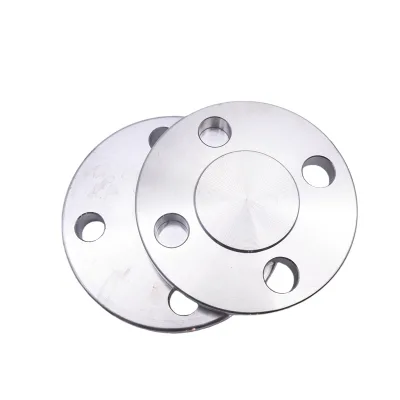


Customized Flange Forging with Carbon Steel/Alloy Steel/Stainless Steel
$1.00 - $200.00
MOQ: 500 Pieces


Comprehensive Sourcing Guide
Strategic Sourcing Guide for Corrosion Resistant Forged Flanges
Understanding the Technical Architecture of Forged Flanges
When sourcing corrosion-resistant forged flanges, the primary objective is to secure components that maintain structural integrity under high pressure and aggressive chemical environments. The core manufacturing method for these critical pipeline components is forging, a process that aligns the grain structure of the metal to enhance strength and ductility compared to casting. In the current market, the observed product attributes indicate that these flanges are predominantly available in a "Welding Flange" type with a "Round" structure, designed specifically for welding applications.
The material composition is a decisive factor in corrosion resistance. While the supply chain offers various grades, the most relevant for corrosion resistance are Stainless Steel variants. Specific model numbers observed in the market include 201, 202, 301, 304, 309S, 310S, 316, 317, 321, and 347. Among these, grades like 304, 316, and 317 are frequently selected for their superior resistance to oxidation and chemical attack. The physical dimensions are equally critical; the nominal bore (NB) typically ranges from 1/2" to 48", while the outer diameter (OD) can extend up to 100". Wall thickness is generally available in schedules ranging from Sch5 to Sch160, allowing buyers to select the appropriate pressure rating for their specific system.
The sealing surface is another technical parameter that dictates the flange's performance. The market data reveals two primary sealing surface types: Ring Joint (RJ) and Flat Face (FF). The RJ surface is often preferred for high-pressure applications where a metal-to-metal seal is required to prevent leakage, whereas the FF surface is common in lower-pressure scenarios. Buyers must verify the specific sealing requirement against their piping design to ensure compatibility. Furthermore, the manufacturing process often includes surface treatments such as annealing, pickling, bright finishing, or sandblasting. These treatments are essential for removing impurities and enhancing the passive layer on stainless steel, thereby maximizing the corrosion-resistant properties of the final product.
Compliance, Standards, and Certification Verification
Navigating the complex landscape of international standards is essential for ensuring that purchased flanges meet regulatory and safety requirements. The observed product facts list a diverse array of recognized standards, including GOST, GB, DIN, ANSI, BSW, and JIS. This indicates that suppliers are capable of producing to various regional and international specifications. For instance, some listings explicitly reference ANSI and GB standards, while others mention specific certifications like ISO 9001, which is noted in the context of forging tolerances of +/-0.2mm.
Buyers must exercise caution when interpreting certification claims. While "in ASME GB JIS Bswd" is listed as a certificate type, it is crucial to distinguish between the standards the product is manufactured to and the specific third-party certifications held by the supplier. The supply chain data also mentions TUV as a standard or certification reference, suggesting that some suppliers may offer third-party inspection reports. However, without explicit verification documents, these should be treated as potential attributes rather than guaranteed facts for every unit.
The following table outlines the standard variations observed in the market to assist buyers in their specification checks:
| Standard Category | Observed References | Typical Application Context |
|---|---|---|
| International | ANSI, DIN, JIS, BSW | General industrial, Oil & Gas, Chemical |
| Regional (China) | GB, GOST | Domestic Chinese projects, Russian markets |
| Specific Grades | ASME (implied via certs) | High-pressure piping systems |
| Quality Systems | ISO 9001 (Forging Tolerance) | Quality management system verification |
When evaluating compliance, buyers should request mill test certificates (MTC) that explicitly state the material grade, heat number, and mechanical properties. The presence of a standard like "GB" or "DIN" on a product listing does not automatically guarantee that the specific item meets the latest revision of that standard. Therefore, the procurement strategy must include a clause requiring the supplier to confirm the specific version of the standard applicable to the order. Additionally, the "Customized" nature of some product standards suggests that non-standard requirements can be met, but this necessitates a rigorous review of the technical drawings and tolerance limits before production begins.
Cost Drivers and Pricing Dynamics
The pricing of corrosion-resistant forged flanges is influenced by a complex interplay of material costs, manufacturing complexity, and logistical factors. The observed price range in the market spans from $0.1 to $3,000 USD, a vast disparity that reflects differences in size, material grade, and order volume. A flange with a 1/2" nominal bore made of 304 stainless steel will naturally cost significantly less than a 48" NB flange made of 316L or a specialized alloy.
Material cost is the most significant variable. Stainless steel prices fluctuate based on global commodity markets, particularly for nickel and chromium, which are key alloying elements. The "Stock: Yes" attribute indicates that some suppliers maintain inventory of common sizes and grades, which can reduce lead times and potentially lower costs compared to made-to-order items. However, custom orders involving specific models like "F-6" or "F-9" or OEM requirements may incur higher unit costs due to the setup time and specialized tooling required.
Manufacturing costs are driven by the forging process itself. The "Forging" method is more expensive than casting but yields superior mechanical properties. The weight of the flange, ranging from Sch5 to Sch160, directly impacts the raw material consumption. Heavier flanges require more steel and more energy for heating and forging. Additionally, surface treatments like pickling and annealing add to the processing cost.
Logistics and trade terms also play a pivotal role in the final landed cost. The observed price terms include EXW, FOB, CIF, CNF, CFR, and DDU. Buyers must understand that an EXW price only covers the cost at the factory gate in locations like Hebei, Tianjin, or Jiangyin, China. Shipping costs, insurance, and import duties are excluded and can vary significantly depending on the destination. The "Transport: Shipping" attribute suggests that ocean freight is the primary mode, which is cost-effective for heavy flanges but requires careful planning for lead times.
The Minimum Order Quantity (MOQ) is another critical cost driver. The observed MOQ range is 1 to 10,000 units. For buyers requiring small quantities, the unit price may be higher due to the fixed costs of setup and handling. Conversely, bulk orders can leverage economies of scale. Buyers should negotiate based on their volume requirements, keeping in mind that some suppliers may have different MOQs for different material grades or sizes.
Typical Applications and Industry Suitability
Corrosion-resistant forged flanges are indispensable in industries where fluid transport involves aggressive chemicals, high temperatures, or high pressures. The observed application data explicitly points to the "Oil and Gas Industry" and the "Chemical Industry" as primary use cases. In these sectors, the failure of a flange can lead to catastrophic leaks, environmental damage, and significant financial loss. Therefore, the selection of the correct material and standard is non-negotiable.
In the Oil and Gas sector, flanges are used in upstream drilling operations, midstream pipelines, and downstream refineries. The RJ (Ring Joint) sealing surface is particularly common here due to the high-pressure requirements of wellheads and pipelines. The ability to withstand corrosive elements like hydrogen sulfide (H2S) and carbon dioxide (CO2) is critical, making grades like 316 and 317 highly desirable.
The Chemical Industry relies heavily on these components for processing reactors, storage tanks, and piping systems that handle acids, alkalis, and solvents. The "Annealing" and "Pickling" surface treatments observed in the product data are specifically designed to enhance the corrosion resistance required in these environments. Furthermore, the "Instrument Accessories" application suggests that smaller, precision flanges are used in instrumentation lines where leak-tightness is paramount.
The versatility of the product, with options ranging from 1/2" to 100" OD and various standards, allows these flanges to be used in a wide array of settings. Whether it is a small-scale laboratory setup or a massive offshore platform, the forged construction ensures that the flange can withstand the mechanical stresses of the system. The "Customization" availability further supports their use in unique or legacy systems where standard off-the-shelf components may not fit.
Supplier Evaluation and Geographic Considerations
Evaluating suppliers for forged flanges requires a thorough understanding of the geographic distribution of manufacturing hubs in China. The observed product origins include Hebei, Tianjin, Jiangyin, and Shandong. Each of these regions has its own industrial strengths. Hebei and Shandong are known for their heavy industrial base and steel production, making them suitable for large-scale forging operations. Tianjin, with its major port, is often a hub for export-oriented manufacturing, which can facilitate smoother logistics for international buyers. Jiangyin is another significant industrial center in the Yangtze River Delta, known for its metallurgical capabilities.
When assessing a supplier, buyers should look beyond the origin and examine the manufacturing capabilities. The "Forging" method is a key indicator of quality, but the specific equipment and expertise of the supplier matter. Suppliers offering "Customized" models and "OEM" services demonstrate flexibility and technical competence. The presence of "Stock" indicates a mature supply chain with the ability to fulfill urgent orders, while "Customized" options suggest a capacity for project-based manufacturing.
Certification and quality management systems are also vital evaluation criteria. While the data mentions ISO 9001 and TUV, buyers should verify the validity of these certifications through official databases. A supplier with a robust quality control process will provide detailed inspection reports and adhere strictly to the agreed-upon standards. The "Forging Tolerance:+/-0.2mm" specification is a concrete metric that buyers can use to benchmark supplier capabilities.
Quality Control and Long-Term Procurement Strategy
Ensuring the quality of forged flanges requires a multi-layered approach to quality control. The manufacturing process involves several critical steps, from raw material selection to final surface treatment. Buyers should insist on a comprehensive quality assurance plan that includes material verification, dimensional inspection, and non-destructive testing (NDT) where applicable. The "Surface" attributes like "Sand Blast" and "Bright" are not just aesthetic; they are functional requirements that affect the flange's resistance to corrosion and fatigue.
Long-term procurement strategies should focus on building relationships with reliable suppliers who can consistently deliver high-quality products. The "Price Term" flexibility (EXW, FOB, CIF, etc.) allows buyers to manage their supply chain risks and costs effectively. For example, using CIF terms can simplify the logistics process for buyers who lack experience in international shipping, while EXW terms offer maximum control for those with established logistics networks.
The "Packing" methods observed, such as "Plywoods/Pallet," "Woven Bag," "Wooden Box," and "Cartons Load Onto Crate," are designed to protect the flanges during transit. Proper packaging is essential to prevent damage, especially for flanges with machined sealing surfaces. Buyers should specify packaging requirements in their purchase orders to ensure that the goods arrive in pristine condition.
Finally, the "Stock: Yes" attribute suggests that buyers can benefit from just-in-time inventory strategies if they work with suppliers who maintain a robust stock of common items. However, for specialized or large-scale projects, lead times must be carefully managed. The "Lead Time" is not explicitly provided in the data, so buyers must negotiate this explicitly with suppliers to avoid project delays. By combining technical due diligence, supplier evaluation, and strategic planning, buyers can successfully source corrosion-resistant forged flanges that meet their rigorous operational requirements.
FAQs
What standards do corrosion resistant forged flanges meet?
These flanges comply with GOST, GB, DIN, ANSI, BSW, and JIS standards. Suppliers can also produce to custom orders or specific model requirements like F-6 and F-9 for specialized applications.
Which materials are used for corrosion resistant forged flanges?
Stainless steel is the primary material, including grades 201, 304, 316, and 317. Carbon steel options are also available depending on the specific application requirements and pressure ratings.
Can I find flanges with Ring Joint sealing surfaces?
Yes, Ring Joint (RJ) sealing surfaces are available for high-pressure applications. Flat Face (FF) surfaces are also offered for lower-pressure scenarios in oil and gas or chemical industries.
What is the typical manufacturing process for these flanges?
The primary manufacturing method is forging, which enhances strength and ductility. Surface treatments like annealing, pickling, and sandblasting are applied to ensure corrosion resistance and remove impurities.
Where are these flanges manufactured and shipped from?
Products originate from manufacturing hubs in Hebei, Tianjin, Jiangyin, and Shandong, China. They are packed in plywood cases, wooden boxes, or woven bags suitable for seafreight and airfreight transport.
What are the available size specifications for forged flanges?
Nominal bore sizes range from 1/2 inch to 48 inches, with outer diameters up to 100 inches. Wall thickness is available in schedules from Sch5 to Sch160 to meet various pressure needs.
Are custom orders and OEM services available for these flanges?
Customization is available for specific models, dimensions, and standards. Suppliers offer OEM services and can accommodate unique requirements with flexible packaging and production timelines.