Source Corrosion Resistant Polypropylene Anodizing Tank for Storage, Surface Treatment, Electroplating
Find 30 Corrosion Resistant Polypropylene Anodizing Tank options for storage, surface treatment, and electroplating applications. Compare specifications including wall thickness, material grades, and customization features from verified suppliers in Guangdong and Shandong.
Key considerations
Products List


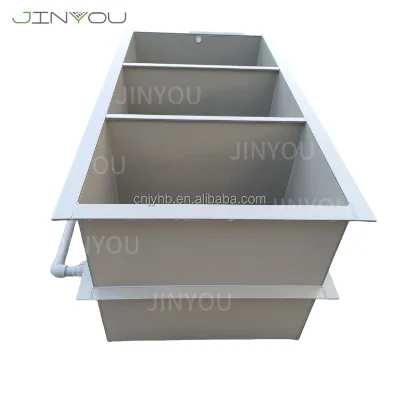


Oxidation Tank Corrosion Resistance to Acid and Alkali PP Tank Pickling Tank
$290.00 - $330.00
MOQ: 100 Pieces


Chemical Storage Tank Customized PP Chemical Tank Electroplating Tank
$399.00 - $9999.00
MOQ: 1 Pieces


Plating Barrels Chemical Plant Use Acid Washing Water Tank Anodizing Plastic Tanks
$399.00 - $9999.00
MOQ: 1 Pieces


PP Material Electroplating Tank Customized Size Acid and Alkali Resistant Electroplating Tank
$399.00 - $9999.00
MOQ: 1 Pieces

Versatile Polypropylene Storage Tank for Corrosive Liquid Storage
$1500.00 - $20000.00
MOQ: 1 Pieces
Dayu County Hailong Environmental Protection Equipment Co., Ltd.

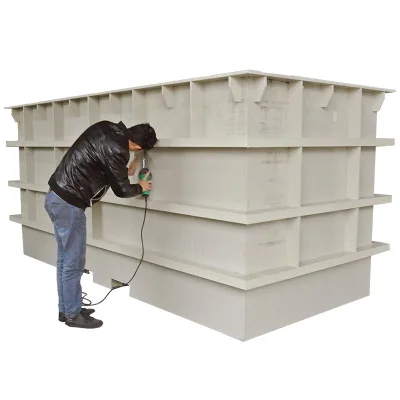
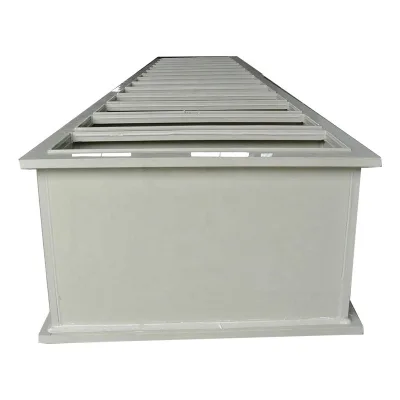


Customized Aluminium Anodizing Machine Anodizing Tank Electroplating Equipment
$10000.00 - $120000.00
MOQ: 1 Set

Comprehensive Sourcing Guide
Strategic Sourcing Guide for Corrosion Resistant Polypropylene Anodizing Tanks
Understanding Technical Specifications and Material Integrity
When sourcing a corrosion-resistant polypropylene anodizing tank, the primary objective is to secure equipment capable of withstanding aggressive chemical environments while maintaining structural integrity over extended operational cycles. The core material for these units is typically polypropylene (PP), often supplemented with stainless steel or iron components depending on the specific application requirements. Buyers must verify the material composition, as the supplied data indicates that tanks may be constructed from PP, stainless steel, or iron, with the polypropylene offering critical resistance to acids and alkalis.
A critical technical parameter to evaluate is the wall thickness, which directly correlates with the tank's durability and pressure resistance. Observed specifications for these units range from 10mm to 15mm, with options for customization to meet specific load-bearing needs. A thickness of 10mm is a standard baseline, while 15mm offers enhanced protection for high-stress applications. The physical dimensions are rarely fixed; the product model and size are frequently customizable, allowing for tailored Length, Width, and Height configurations to fit existing facility layouts. The shape of the tank is another variable, available in round, square, or fully customized geometries to optimize space utilization and fluid dynamics within the plating bath.
The operational environment of an anodizing tank demands specific functional attributes. The equipment is designed for surface treatment applications, specifically serving as a plating bath for rack plating or barrel plating processes. The tank must accommodate various heating models, including electronic, steam, and hot water systems, ensuring precise temperature control which is a key selling point for these units. Furthermore, the surface treatment process often involves reinforcement techniques to enhance the tank's longevity. Buyers should note that the "Easy to Operate" attribute is frequently highlighted, though specific performance metrics like 3500 MPa may refer to specific component strengths rather than the tank's overall structural rating, requiring careful interpretation of technical datasheets.
Compliance, Certification, and Regulatory Standards
Navigating the regulatory landscape is essential for ensuring that purchased equipment meets international safety and environmental standards. The supplied product data confirms the availability of several critical certifications, including CE, ISO, RoHS, and GS. These certifications indicate that the manufacturing process adheres to specific European and international safety, health, and environmental protection requirements. The CE mark, in particular, is a mandatory conformity mark for products sold within the European Economic Area, signifying that the tank meets EU safety, health, and environmental requirements.
Buyers must verify that the specific unit they intend to purchase carries the relevant certification documentation. While the general product line may offer ISO and RoHS compliance, it is imperative to confirm that the specific batch or model (such as wb-t-08101 or wb-r-05132) has undergone the necessary testing procedures. The availability of a machinery test report is a significant indicator of quality assurance; this document should be requested to validate the tank's performance under stress and chemical exposure. Additionally, the "prod_standard" is often listed as "Customization," which implies that the manufacturing process can be adapted to meet specific client standards, but this does not replace the need for third-party verification of the final product's compliance.
The origin of the product also plays a role in regulatory compliance. The supply chain data points to origins in Guangdong and Shandong, China. While these regions are major manufacturing hubs, buyers should ensure that the supplier provides clear documentation regarding the country of origin to satisfy customs and import regulations in their target market. The "Export Packing" and "Export Standard Package" attributes suggest that the units are prepared for international shipping, which often includes compliance with international transport safety standards. However, buyers must not assume that all listed products automatically satisfy every standard; verification of the specific certification for the ordered model is a necessary step in the procurement process.
Cost Drivers and Pricing Dynamics
The pricing structure for corrosion-resistant polypropylene anodizing tanks is influenced by a complex array of factors, resulting in a wide observed range from $30 to $200,000 USD. This vast disparity is not indicative of inconsistent quality but rather reflects the diversity in customization, size, material composition, and included features. The base cost is driven by the raw material volume, with thicker walls (15mm vs. 10mm) and larger dimensions significantly increasing the material cost. Customization of the shape, size, and heating models adds a premium to the final price, as these require specialized manufacturing processes and engineering time.
The Minimum Order Quantity (MOQ) is another critical cost driver. The data indicates an MOQ range of 1 to 100 pieces, with some listings specifying an MOQ of just 1 piece. This flexibility allows small-scale operations or pilot projects to procure single units without incurring the costs associated with bulk manufacturing. However, larger orders often benefit from economies of scale, potentially reducing the unit cost. The "Selling Units" are typically listed as single items, suggesting that the pricing is per unit rather than per batch, which simplifies budgeting for individual acquisitions.
Additional cost factors include the complexity of the ancillary equipment. The "Equipment Type" list includes rectifiers, filters, chillers, pipes, and air blowers. If the procurement package includes these integrated components, the price will naturally be higher. The warranty period also influences cost; listings show warranties ranging from 1 to 2 years. A longer warranty often implies a higher initial investment but reduces the total cost of ownership by mitigating future repair risks. Buyers should analyze the total cost of ownership, factoring in the "Low Maintenance Cost" and "Long Service Life" attributes, rather than focusing solely on the initial purchase price.
Typical Applications and Functional Versatility
Corrosion-resistant polypropylene anodizing tanks are designed for a broad spectrum of industrial applications, with a primary focus on surface treatment and electroplating processes. The "Application" field explicitly mentions "Storage" and "Surface Treatment Industry," highlighting their dual utility. In the surface treatment sector, these tanks serve as the vessel for chemical baths used in anodizing, plating, and etching processes. The material's inherent resistance to acids and alkalis makes it ideal for holding aggressive chemical solutions without degrading or contaminating the bath.
The versatility of these tanks extends to their ability to handle various plating types. The "Plating Type" is specified as Rack/Hanging, and the "Electroplating Machine Plating Bath/Tank" supports both Rack Plating and Barrel Plating. This flexibility allows a single facility to process different types of components, from large structural parts hung on racks to smaller items processed in barrels. The "Feature" list further details the tank's capabilities, including embalming, acid and alkali resistance, and ultraviolet resistance. While "embalming" may seem specific, in an industrial context, it often relates to preservation or specific chemical treatment processes where the tank's inertness is crucial.
The "Key Selling Points" such as "Accurate Temperature Control," "High Productivity," and "Energy Saving" suggest that these tanks are integral to high-efficiency production lines. The integration of heating models (Electronic, Steam, Hot Water) allows for precise thermal management, which is vital for maintaining the chemical reaction rates in anodizing and plating baths. The "Automatic Grade" attribute indicates that these tanks can be integrated into automated production systems, supporting continuous operation and reducing manual intervention. This makes them suitable for industries ranging from automotive manufacturing to jewelry production, where precision and consistency are paramount.
Supplier Evaluation and Operational Considerations
Evaluating a supplier for polypropylene anodizing tanks requires a rigorous assessment of their technical capabilities, production standards, and after-sales support. The "Brand Name" Jinyou is mentioned in the data, but buyers should not rely on a single brand; instead, they should evaluate multiple suppliers based on their ability to meet specific customization requirements. The "Customization" attribute is available across most listings, indicating that suppliers are generally willing to adapt the product to client needs. However, the extent of this customization, including the "Plating Style" and "Color" options (yellow, grey, white, blue, or customized), should be clearly defined in the contract.
The "Core Components" of the tank, such as the "pp sheet," are critical for quality assessment. Buyers should request details on the grade and source of the polypropylene sheets used, as the quality of the raw material directly impacts the tank's resistance to chemical attack and mechanical stress. The "Weight" of the tank, listed as 50 kg with a single gross weight of 60.0 kg, provides a baseline for logistics planning, but actual weights will vary based on the customized dimensions and wall thickness.
After-sales support is another vital consideration. The "Warranty" period, ranging from 1 to 2 years, is a key indicator of the supplier's confidence in their product. Buyers should clarify the terms of the warranty, including what is covered (e.g., material defects, manufacturing errors) and what is excluded. The availability of a "Machinery Test Report" is a strong positive signal, suggesting that the supplier conducts rigorous quality checks before delivery. Additionally, the "Single Package Size" of 100x100x100 cm provides insight into the packaging standards, ensuring that the tank is protected during transit.
Quality Control and Long-Term Procurement Strategy
Implementing a robust quality control (QC) strategy is essential for ensuring the longevity and performance of the anodizing tanks. The "Feature" of "Low Noise Level" and "High Safety Level" suggests that the tanks are designed with operational safety in mind, but these attributes must be verified through on-site testing or third-party inspection. The "Surface" treatment, described as "Reinforcement," should be inspected to ensure it meets the required standards for chemical resistance and structural integrity.
For long-term procurement, buyers should consider the "Long Service Life" and "Low Maintenance Cost" attributes as key value drivers. While the initial investment may be higher for tanks with thicker walls and advanced heating systems, the reduced frequency of replacement and lower maintenance requirements can lead to significant cost savings over time. The "Flexible Manufacturing" capability of the supplier ensures that the equipment can be adapted to changing production needs, reducing the risk of obsolescence.
Buyers should also establish a clear protocol for receiving and inspecting the tanks upon delivery. This includes verifying the "Product Name" (pp tank), "Model" (e.g., wb-t-08101), and "Certification" documents against the purchase order. The "Place of Origin" (Guangdong or Shandong) should be confirmed to ensure compliance with import regulations. Finally, maintaining a relationship with the supplier for spare parts and technical support is crucial for minimizing downtime and ensuring the continued efficiency of the anodizing process.
Comparative Analysis of Tank Specifications
To assist buyers in making informed decisions, the following table summarizes the key specifications observed in the market for polypropylene anodizing tanks. This comparison highlights the variability in critical parameters and the importance of selecting the right configuration for specific needs.
| Specification Category | Standard/Observed Range | Customization Options | Key Considerations |
|---|---|---|---|
| Material | PP, Stainless Steel, Iron | Custom blend or specific grade | Verify chemical compatibility with process fluids. |
| Wall Thickness | 10mm - 15mm | Fully customizable | Thicker walls offer higher pressure resistance but increase cost. |
| Dimensions | Custom (LWH) | Any size within manufacturing limits | Ensure fit within existing facility footprint. |
| Shape | Round, Square | Custom geometries | Optimize for fluid dynamics and space efficiency. |
| Heating Model | Electronic, Steam, Hot Water | Specific model selection | Match heating source to facility utilities. |
| Certification | CE, ISO, RoHS, GS | Verify per batch | Essential for regulatory compliance in target markets. |
| Warranty | 1 - 2 Years | Negotiable terms | Longer warranties often indicate higher quality confidence. |
| MOQ | 1 - 100 pcs | Flexible based on order size | Lower MOQ allows for pilot testing and smaller orders. |
| Application | Surface Treatment, Storage | Specific industry focus | Ensure tank design matches the specific plating process. |
This comparative overview underscores the necessity of a detailed requirements analysis before engaging with suppliers. By understanding the range of available specifications and the extent of customization, buyers can effectively navigate the market to secure equipment that meets their precise operational and compliance needs. The strategic selection of a polypropylene anodizing tank involves balancing technical performance, regulatory compliance, and cost efficiency to achieve optimal long-term value.
FAQs
What certifications do these tanks hold?
These tanks hold CE, ISO, RoHS, and GS certifications. Buyers must verify that the specific model carries the relevant certification documentation before purchase.
How thick are the tank walls?
Wall thickness ranges from 10mm to 15mm with customization options. A 10mm thickness serves as a standard baseline while 15mm offers enhanced protection for high-stress applications.
Can I customize the tank size and shape?
Yes, dimensions and shapes like round or square are fully customizable. The product model and size are frequently adjustable to fit specific facility layouts and fluid dynamics needs.
What is the minimum order quantity?
The minimum order quantity ranges from 1 to 100 pieces depending on the supplier. Some listings specify an MOQ of just 1 piece, allowing for small-scale acquisitions.
Which materials are used for construction?
Tanks are constructed from PP, stainless steel, or iron materials. The polypropylene core offers critical resistance to acids and alkalis required for surface treatment processes.
What heating models are available?
Available heating models include electronic, steam, and hot water systems. These options ensure precise temperature control which is vital for maintaining chemical reaction rates in plating baths.
How long is the warranty period?
Warranty periods range from 1 to 2 years depending on the specific listing. A longer warranty often implies a higher initial investment but reduces the total cost of ownership.