Source Cosmetic Ingredient Copper Peptide for Anti-Aging, Hair Growth, and Skincare
Compare 30 verified listings for Cosmetic Ingredient Copper Peptide suitable for anti-aging skincare, hair growth serums, and general cosmetic raw materials. Buyers can review specifications including purity, packaging, and origin from China-based suppliers.
Key considerations
Products List




Comprehensive Sourcing Guide
Strategic Sourcing Guide for Cosmetic Grade Copper Peptide Ingredients
Understanding the Technical Profile of Copper Tripeptide-1
When sourcing cosmetic ingredients, specifically copper peptides, buyers must first distinguish between the various forms available in the market. The core keyword "Cosmetic Ingredient Copper Peptide" often refers to Copper Tripeptide-1, also known by its INCI name and common abbreviation, GHK-Cu. This molecule is distinct from other copper peptides like AHK-Cu, which may appear under different model numbers or specifications in supplier catalogs. The technical profile of GHK-Cu is defined by its molecular weight of 402.9 g/mol and a specific chemical formula, C14H24N6O4, which dictates its solubility and interaction with skin proteins.
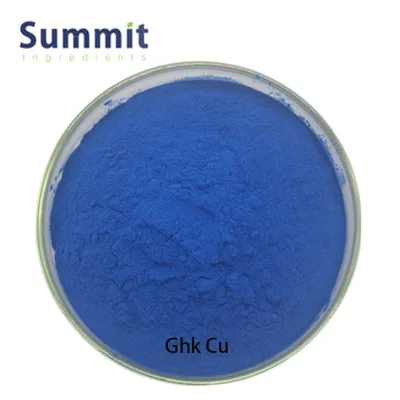
A critical observation in the current market data is the variance in physical appearance. While some listings describe the product as a liquid, others specify it as a powder, and in certain contexts, a blue powder is noted. This discrepancy suggests that the physical state of the ingredient can vary based on the specific formulation, the stage of processing, or the specific product model (e.g., models 046, 059, 064, 0017, 0016, or 069) being offered. Buyers must verify the exact physical form required for their manufacturing process, as solubility characteristics differ between the liquid and powder states. The standard solubility profile indicates that the ingredient is soluble in water, a fundamental requirement for aqueous-based skincare formulations.
The purity of the ingredient is a primary technical differentiator. High-grade sourcing requires verifying that the purity meets or exceeds 99.0%, with some market data citing 99% as a standard benchmark. The copper content within the peptide complex is another vital specification, typically ranging between 8% and 16%. This range ensures the biological activity required for anti-aging and hair growth applications without introducing excessive free copper that could cause oxidative stress. The molecular weight and elemental composition must align with the CAS number 89030-95-5 for GHK-Cu, distinguishing it from other copper compounds like those with CAS number 49557-75-7, which may have different applications or safety profiles.
Compliance Framework and Certification Verification
Navigating the regulatory landscape for cosmetic raw materials requires a rigorous verification of certifications and standards. The supply chain for cosmetic-grade copper peptides is heavily influenced by the origin of the product, with China, specifically the Shaanxi region, emerging as a significant production hub. Buyers must ensure that suppliers operating from this region adhere to international quality management systems. The presence of ISO9001 certification is a baseline expectation, indicating a standardized approach to quality management. Furthermore, for products intended for global distribution, particularly in markets with specific dietary or religious restrictions, certifications such as ISO22000, HALAL, and KOSHER are essential. These certifications are not merely marketing labels but are indicators of a supplier's ability to maintain hygiene and traceability throughout the production process.
The grade of the material is equally critical. The market data explicitly identifies "Cosmetic Grade" as the standard specification for these products. This designation implies that the raw material has been processed to meet safety thresholds suitable for topical application, distinguishing it from industrial or pharmaceutical grades which may have different impurity profiles. The storage conditions provided in the product specifications, such as 2-8°C, sealed, and protected from light, are not optional suggestions but mandatory compliance requirements to maintain the integrity of the peptide bonds. Failure to adhere to these storage conditions during transit or warehousing can lead to degradation, rendering the ingredient ineffective.
Buyers should also scrutinize the testing methodologies employed by the supplier. High-performance liquid chromatography (HPLC) is the standard test method cited for verifying purity and composition. This analytical technique is crucial for confirming that the copper content falls within the 8-16% range and that the molecular weight aligns with the theoretical value of 402.9 g/mol. Additionally, heavy metal testing is a non-negotiable aspect of compliance. The observed limits for lead (≤10 ppm), arsenic (≤2 ppm), mercury (≤1 ppm), and cadmium (≤5 ppm) represent the safety thresholds that must be met. These limits are strict and reflect the sensitivity of cosmetic ingredients to heavy metal contamination, which can pose significant health risks if the product is used on the skin over extended periods.
Cost Drivers and Economic Factors in Procurement
The pricing structure for cosmetic copper peptides is influenced by a complex interplay of factors, including purity levels, packaging formats, and order volumes. The observed price range in the market spans from $3 to $97 USD, a significant variance that reflects differences in product concentration, packaging size, and the specific model or grade of the peptide. Lower prices often correlate with smaller packaging units or bulk liquid forms, while higher price points may indicate specialized packaging, higher purity certifications, or customized formulations.
Minimum Order Quantity (MOQ) is another critical economic driver. The market data indicates an MOQ range of 1 to 10 units, with specific listings citing "1 Box" as the standard entry point. This flexibility allows small to medium-sized brands to enter the market without committing to massive inventory levels. However, buyers must be aware that the "Box" unit may vary in weight or volume depending on the supplier's internal packaging standards, which are often listed as 1g, 10g, or 100g. Understanding the actual weight per box is essential for calculating the true cost per gram, which is the standard metric for comparing supplier quotes.
Customization availability is a significant value-add that impacts cost. The data confirms that customization is available for these products, which can include tailored packaging, specific concentration levels, or branded labeling. While customization offers flexibility, it often incurs additional costs or higher MOQs compared to standard off-the-shelf products. The transit time, observed at 5-9 days, also plays a role in the total cost of ownership. Shorter lead times reduce the need for large safety stock inventories, thereby lowering warehousing costs and reducing the risk of product expiration. Buyers should factor in the shelf life of 24 months (or 2 years) when calculating the economic viability of their orders, ensuring that the procurement volume aligns with their sales velocity to prevent waste.
Typical Applications and Formulation Considerations
The primary applications for cosmetic copper peptides are well-established in the industry, focusing on anti-aging skincare and hair growth serums. The biological activity of GHK-Cu is driven by its ability to stimulate collagen production, promote wound healing, and reduce inflammation. These properties make it a highly sought-after ingredient for formulations targeting fine lines, wrinkles, and skin texture improvement. In hair care, the peptide is utilized to support hair follicle health and encourage growth, making it a key component in serums designed for thinning hair.
Formulators must consider the physical state of the ingredient when designing their products. If the supplier provides the ingredient as a liquid, it may be easier to incorporate into aqueous-based serums. However, if the product is a powder, particularly the blue powder variant noted in some listings, it may require specific dissolution protocols to ensure complete solubility in water. The stability of the peptide in the final formulation is also a concern. Given the storage requirements of 2-8°C and protection from light, the final product packaging must be designed to maintain these conditions, or the formulation must include stabilizers that protect the peptide from degradation at room temperature.
The specific model numbers associated with the product, such as 046, 059, 064, 0017, 0016, and 069, may indicate different formulations or concentrations tailored for specific applications. For instance, a model designated for hair growth might have a different copper-to-peptide ratio compared to one designed for general anti-aging. Buyers should request detailed specification sheets for each model to understand the exact composition and recommended usage levels. The "Cosmetic Grade" designation ensures that the ingredient is safe for these applications, but the final product's efficacy depends on the correct incorporation of the peptide at the optimal concentration.
Supplier Evaluation and Quality Control Protocols
Evaluating a supplier for cosmetic copper peptides requires a multi-faceted approach that goes beyond price and lead time. The first step is verifying the supplier's origin and production capabilities. With the majority of the supply originating from Shaanxi, China, buyers should assess the supplier's ability to maintain consistent quality across batches. The presence of ISO9001 and ISO22000 certifications is a strong indicator of a robust quality management system, but buyers should also request recent audit reports to ensure these certifications are current and valid.
Quality control protocols are the backbone of a reliable supply chain. Buyers must insist on seeing Certificate of Analysis (CoA) documents for every batch purchased. These documents should verify the purity (≥99.0%), copper content (8-16%), and heavy metal limits (Lead ≤10, Arsenic ≤2, Mercury ≤1, Cadmium ≤5). The use of HPLC as the test method should be confirmed, as this is the industry standard for accurate quantification. Additionally, the "Refined" quality designation suggests a high level of processing, but buyers should verify the specific refining steps to ensure no contaminants are introduced during the process.
The packaging and storage conditions provided by the supplier are also critical indicators of quality. The data mentions packaging options ranging from 1g to 100g, as well as specialized packaging like "Incubator" or specific volume containers (5ml, 10ml). Buyers should evaluate whether the supplier's packaging is designed to protect the ingredient from light and moisture, as the storage condition of 2-8°C and protection from light is essential for maintaining stability. If the supplier uses standard packaging that does not meet these requirements, the buyer may need to invest in additional storage solutions, which could impact the overall cost and logistics.
Long-Term Procurement and Supply Chain Resilience
Establishing a long-term relationship with a supplier of cosmetic copper peptides requires a focus on reliability, scalability, and adaptability. The market data indicates that customization is available, which is a significant advantage for brands looking to differentiate their products. However, buyers should negotiate clear terms regarding customization lead times and costs to avoid delays in product launches. The transit time of 5-9 days is relatively short, but buyers should plan for potential variations due to logistics disruptions or seasonal demand spikes.
Scalability is another key consideration. As a brand grows, the demand for copper peptides will increase. Buyers should assess the supplier's capacity to scale production without compromising quality. The MOQ of 1 Box suggests that the supplier is flexible for small orders, but larger volume orders may require different terms or pricing structures. Buyers should discuss volume discounts and long-term contracts to secure favorable pricing and ensure priority production slots.
Finally, buyers must consider the regulatory landscape of their target markets. As regulations evolve, particularly regarding heavy metal limits and purity standards, suppliers must be able to adapt quickly. A supplier with a strong track record of compliance and a proactive approach to regulatory changes will be a valuable partner. Regular communication and periodic quality audits can help maintain the integrity of the supply chain and ensure that the cosmetic copper peptide ingredient continues to meet the high standards required for safe and effective skincare and hair care products.
FAQs
What is the purity level of cosmetic grade copper peptide?
The purity level is at least 99.0 percent. This high standard ensures the ingredient meets cosmetic grade requirements for safe topical application in skincare formulations.
How should copper peptide be stored to maintain stability?
Store the product at 2 to 8 degrees Celsius in a sealed container protected from light. These specific conditions prevent degradation and ensure the peptide remains effective for its 24-month shelf life.
Which certifications are available for this cosmetic raw material?
Available certifications include ISO9001, ISO22000, Halal, and Kosher. These credentials verify that the supplier adheres to international quality management and hygiene standards for global distribution.
Can buyers customize the packaging or formulation of the peptide?
Yes, customization is available for specific product needs. Buyers can request tailored packaging sizes like 1g or 100g, or specific concentrations to match their manufacturing requirements.
What is the minimum order quantity for purchasing this ingredient?
The minimum order quantity is one box. This low entry point allows small to medium brands to source the ingredient without committing to large inventory volumes immediately.
How long does transit typically take for this product?
Transit time is typically between 5 to 9 days. This relatively short duration helps reduce warehousing costs and minimizes the risk of product expiration during shipping.
What is the copper content percentage in the peptide complex?
The copper content ranges from 8 to 16 percent. This specific range ensures biological activity for anti-aging applications while avoiding excessive free copper that could cause oxidative stress.