Source Countryside Style Glass Jars for Home, Office, and Decor
Explore 30 listings of Countryside Style Glass Jars suitable for home storage, office use, and decorative purposes. Buyers can compare specifications like capacity, shape, and customization options to find the right fit for their needs.
Key considerations
Products List


Wholesale Handcrafted Large Glass Jar with Wooden Lid for Kitchen Storage
$3.63 - $5.69
MOQ: 500 Pieces


Household Sealed Jars Glass Bottle Storage Jars Tea Canisters Food Organizer
$0.39 - $0.99
MOQ: 1000 Pieces


High Quality Canning Jar 4oz 8oz 12oz 16oz 25oz 32oz Glass Mason Jar with Lid
$0.29 - $0.30
MOQ: 2000 Pieces


Wholesale Price Top Quality Available Different Sizes Glass Bird Nest Bottle
$0.29 - $0.32
MOQ: 1000 Pieces


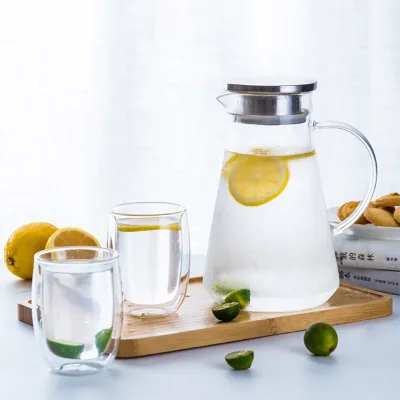

Factory Supply Round Glass Jar Child Resistant Glass Jar Custom Glass Jar
$0.12 - $0.15
MOQ: 5000 Pieces
Comprehensive Sourcing Guide
Strategic Sourcing Guide for Countryside Style Glass Jars
The global market for glass packaging has seen a significant shift toward rustic and countryside aesthetics, driven by consumer demand for artisanal presentation in food, beverage, and decorative sectors. Sourcing "Countryside Style Glass Jars" requires a nuanced understanding of material properties, manufacturing techniques, and regulatory compliance. Unlike mass-produced industrial containers, these items often blend functional utility with specific design attributes that evoke a handcrafted feel. This guide provides a comprehensive framework for buyers to navigate the procurement process, ensuring that selected products meet both aesthetic expectations and rigorous quality standards without relying on unverified supplier claims.
Understanding Material Composition and Glass Types
The foundation of any countryside style glass jar lies in its material composition. The supply chain data indicates that the primary material is consistently identified as glass, specifically categorized under types such as "Melt Glass" and "Clear Glass." When sourcing for a rustic aesthetic, buyers must distinguish between these variations. Clear glass is often preferred for showcasing the contents, such as jams, honey, or artisanal spirits, allowing the product's natural color to remain visible. Conversely, melt glass may offer a slightly more textured or organic appearance, aligning with the "hand-blown" or "handmade" attributes observed in certain product listings.
The manufacturing process plays a critical role in achieving the desired countryside look. The data highlights "Screen Printing," "Hot Stamp," "Flame Plating," and "Frosting" as common surface treatments. These processes are essential for adding the visual depth associated with rural styles. For instance, frosting can create a matte finish that mimics the look of aged glass, while screen printing allows for custom labels or decorative motifs that fit a farm-to-table theme. Buyers should verify that the specific glass type selected supports these surface treatments without compromising structural integrity. The "Craft" attribute of "Handmade/Hand Blown" suggests that some suppliers offer artisanal production methods, which can command a different price point and require different quality control measures compared to fully automated molding.
Technical Specifications and Dimensional Standards
Precision in dimensions is vital for both the aesthetic appeal and the functional utility of glass jars. The provided specifications reveal a range of standard dimensions, including specific height and width measurements such as 9.7 cm in thickness, 5 cm in width, and 14.2 cm in height for certain models. Other entries list capacity standards like 100ml, 150ml, 200ml, and 480ml, with some products offering a selection of 200ml or 16 oz capacities. When sourcing, buyers must ensure that the dimensional tolerance aligns with their packaging machinery or retail display requirements. The data notes a dimensional tolerance of less than ±1mm, which is a critical benchmark for ensuring that lids fit securely and that jars stack uniformly on pallets.
Weight tolerance is another often-overlooked specification that impacts logistics and cost. The observed data indicates a weight tolerance of less than ±1%, ensuring consistency across batches. This consistency is particularly important for automated filling lines where weight discrepancies can cause jams or misalignment. Furthermore, the product models vary significantly, ranging from "BDP" and "YLP" to "B5" and "1140," with some designated as "Glass Tank" or "Glass Jar." Buyers should cross-reference these model numbers with their specific volume and shape requirements. The "Shape" attribute is predominantly "Round," which is standard for jars, but the "Sets" attribute indicates that some products are sold in configurations of 1 to 3 pieces, which may influence packaging and shipping strategies.
Compliance, Certification, and Safety Standards
In the B2B procurement of glass containers intended for food and beverage use, compliance with safety certifications is non-negotiable. The supply data explicitly lists "LFGB" (German Food and Feed Code) and "ISO" as certifications associated with these products. LFGB is a stringent standard that ensures the glass does not leach harmful substances into food products, making it a crucial verification point for buyers targeting the European market or high-end domestic consumers. While "FSC" and "CE" are mentioned in background contexts, they should not be assumed as standard certifications for every glass jar without direct verification from the supplier.
Buyers must also consider the "Usage" attributes, which range from "Food," "Juice," and "Coffee" to "Decorative" and "Glass Office Cup." Products intended for direct food contact must strictly adhere to the LFGB and ISO standards. For decorative items, the regulatory burden may be lower, but the "Material" and "Glaze Type" must still be safe for handling. The "Glaze Type" is noted as "as Shown in The Picture," which implies that visual inspection is necessary to confirm that any decorative coatings are non-toxic and durable. When evaluating suppliers, request specific test reports for LFGB compliance rather than relying solely on marketing claims. The "Standard" attribute also includes specific size configurations, which should be matched against local regulatory requirements for labeling and capacity declaration.
Cost Drivers and Pricing Dynamics
The pricing structure for Countryside Style Glass Jars is influenced by several variables, including customization, production method, and order volume. The observed price range in the market spans from $0.05 to $5.69 USD, a wide spectrum that reflects the diversity of product complexity. Lower prices typically correspond to standard, mass-produced clear glass jars with minimal surface treatment. Higher price points are associated with specialized features such as "Handmade/Hand Blown" craftsmanship, complex surface treatments like "Flame Plating," or custom branding via "Screen Printing."
The "Minimum Order Quantity" (MOQ) is a significant cost driver, with observed ranges from 24 to 10,000 units. Suppliers offering lower MOQs, such as 100 units, may be more suitable for startups or businesses testing new product lines, but they often carry a higher unit cost. Conversely, bulk orders of 10,000 units can leverage economies of scale to reduce the per-unit price. The "Sales Unit" is listed as "Individual Commodity," suggesting that pricing is calculated per piece, but the "Sets" attribute indicates that some suppliers offer bundled pricing for multi-piece orders. Buyers should also factor in the "prod_packing" costs, which vary between "Carton," "Pallet," "Boxes," and "Foam Box." Protective packaging like foam boxes is essential for fragile glass items but adds to the overall landed cost.
Supplier Evaluation and Production Capabilities
Evaluating suppliers requires a deep dive into their production capabilities and geographic location. The data indicates that the primary origin is "China," with specific mentions of "Foshan, China" as a manufacturing hub. Foshan is known for its ceramics and glass industries, suggesting a concentration of expertise in this region. When assessing potential partners, buyers should verify the supplier's ability to handle the specific "Technics" required, such as screen printing or hot stamping. The "Customization" attribute is marked as "Available," which is a positive indicator for buyers seeking unique designs, but it necessitates a clear communication of design specifications to avoid production errors.
The "Application" of the product is listed as "Home," "Office," and "Food," indicating versatility. A supplier capable of serving multiple sectors often has more robust quality control systems. Buyers should also examine the "Cup Accessories" attribute, noting the presence of both "with Handle" and "without Handle" options. This suggests that the supplier offers a diverse catalog, but buyers must specify their exact requirements to ensure the correct configuration is delivered. The "Style" attribute, described as "Fashion" and "Modern," implies that the supplier keeps up with current design trends, which is essential for maintaining a competitive edge in the countryside aesthetic market.
Quality Control and Long-Term Procurement Strategy
Quality control for glass jars must address both structural integrity and aesthetic consistency. The "Dimensional Tolerance" of ±1mm and "Weight Tolerance" of ±1% provide a baseline for acceptable variation, but buyers should implement additional inspection protocols. Visual inspection for surface defects, such as bubbles, scratches, or uneven frosting, is critical given the "Handmade/Hand Blown" nature of some products. The "Gross Weight of a Single Item" is recorded as 0.364kg for specific models, which serves as a reference point for verifying shipment weights and detecting potential damage during transit.
For long-term procurement, establishing a consistent supply chain is paramount. The "prod_packing" options, including "Carton or Pallet" and "Foam Box," should be standardized to minimize damage rates. Buyers should also consider the "Lead Time" and "Capacity Selection" when planning inventory. While specific lead times are not provided in the data, the variability in MOQs suggests that production schedules can be flexible. To mitigate risks, buyers should maintain a relationship with multiple suppliers and conduct regular audits to ensure that certifications like LFGB remain valid. Finally, the "Age" attribute of "Modern" indicates that these products are current and relevant, but buyers should monitor for shifts in consumer preferences toward different styles or materials to ensure their inventory remains competitive.
Comparative Analysis of Product Attributes
To facilitate decision-making, the following table summarizes key attributes observed in the supply data, highlighting the variations buyers may encounter.
| Attribute Category | Observed Variations | Procurement Consideration |
|---|---|---|
| Glass Type | Melt Glass, Clear Glass | Verify suitability for intended contents (e.g., acidic foods). |
| Surface Treatment | Screen Printing, Hot Stamp, Flame Plating, Frosting | Confirm compatibility with custom branding requirements. |
| Capacity/Volume | 100ml, 150ml, 200ml, 480ml, 16 oz | Match to product formulation and consumer serving sizes. |
| Certification | LFGB, ISO | Mandatory for food-grade applications; verify test reports. |
| MOQ Range | 24 - 10,000 units | Align with budget and inventory turnover expectations. |
| Origin | China, Foshan | Consider logistics costs and supply chain resilience. |
| Packaging | Carton, Pallet, Boxes, Foam Box | Select based on fragility and shipping method. |
| Craft | Handmade/Hand Blown, Standard | Higher cost for artisanal; ensure quality consistency. |
This comparative view underscores the importance of detailed specification checks. By systematically evaluating these attributes, buyers can source Countryside Style Glass Jars that not only meet aesthetic goals but also adhere to the rigorous standards required for successful B2B transactions. The diversity in options allows for tailored solutions, but it demands a disciplined approach to verification and quality assurance.
FAQs
What certifications do Countryside Style Glass Jars typically have?
These jars typically hold LFGB and ISO certifications for food safety. The data confirms LFGB compliance for products used with food and beverages. Buyers should verify specific test reports to ensure the glass does not leach harmful substances into contents.
Which glass types are available for rustic style jars?
Available glass types include Melt Glass and Clear Glass. Clear glass is often used to showcase contents like jams, while Melt Glass may offer a textured appearance. The choice depends on whether the buyer prioritizes visibility or a handcrafted aesthetic.
Can I customize the surface treatment on these glass jars?
Yes, customization is available for surface treatments like Screen Printing and Hot Stamp. Other options include Flame Plating and Frosting to create a matte finish. Buyers must specify exact design requirements to ensure the supplier applies the correct decorative process.
What is the minimum order quantity for these glass containers?
The minimum order quantity ranges from 24 to 10,000 units depending on the supplier. Some listings specify an MOQ of 100 units for individual commodities. Lower MOQs may suit startups, while bulk orders leverage economies of scale for better pricing.
How are these glass jars packaged for shipping?
Packaging options include Cartons, Pallets, Boxes, and Foam Boxes. Foam boxes are essential for fragile glass items to prevent damage during transit. The specific packing method affects the overall landed cost and should be selected based on shipping requirements.
What capacity sizes are offered for these glass jars?
Standard capacities include 100ml, 150ml, 200ml, 480ml, and 16 oz. Some models offer specific dimensional standards like 9.7 cm thickness and 14.2 cm height. Buyers must match these volumes to their product formulation and consumer serving sizes.