Source Cross Strap Mini Casual Dress for Daily Wear, Summer Events, and Youth Outfits
Find 30 listings for the Cross Strap Mini Casual Dress with varying styles like square neck, V-neck, and loose fits. Buyers can compare prices, MOQs, and materials such as cotton or polyester across multiple suppliers.
Key considerations
Products List


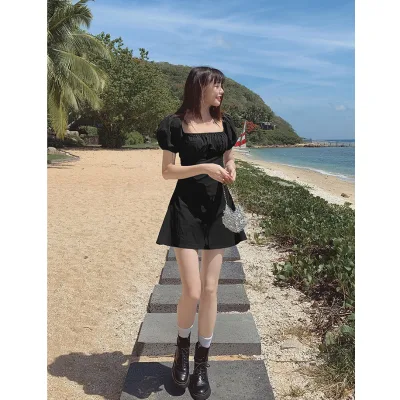
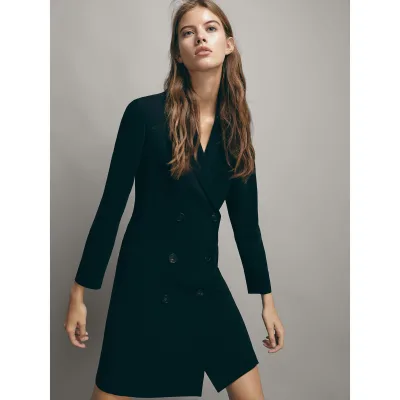


2024 Summer Casual Mini Dress with Bow Square Collar Design Casual Dress Elegant
$10.40 - $12.80
MOQ: 100 pieces


Comprehensive Sourcing Guide
Strategic Sourcing Guide for Cross Strap Mini Casual Dresses
Understanding Product Specifications and Variability
When sourcing a Cross Strap Mini Casual Dress, buyers must first navigate the inherent variability in product attributes found within the current market supply. The term "Cross Strap Mini Casual Dress" describes a specific silhouette and style, yet the technical specifications provided by suppliers often diverge significantly. An evidence-based approach requires acknowledging that not every listed product satisfies every attribute associated with this core keyword. For instance, while the target style implies a casual aesthetic, the observed product data reveals a spectrum of style classifications ranging from "Casual" to "Sexy," "Loose," and "Pleated." This indicates that the "casual" descriptor is a broad market category rather than a rigid technical constraint.
Length is another critical variable. The supplied facts indicate a mix of "Short" and "Long" length specifications, alongside specific model codes like "Mini Dress-052X" and "Mini Dress-042E" which explicitly suggest a mini length. However, other entries list "Long" length or "Medium" length attributes. A buyer must verify that the specific SKU selected matches the "mini" requirement, as the general category may include full-length variations. Similarly, sleeve types vary from "Sleeveless" to "Short Sleeve" and even "Long Sleeve." The "cross strap" feature typically aligns with sleeveless or short-sleeve designs, but the presence of "Long Sleeve" entries in the data suggests that some suppliers may use the term loosely or offer variations that deviate from the traditional cross-strap silhouette.
Neckline and waist construction also present significant diversity. The data lists "Square Neckline," "V-Necked," and "Turn-Down Collar" as distinct attributes. While a cross-strap dress often features a square or V-neck to accommodate the strap geometry, the presence of a "Turn-Down Collar" in the dataset suggests a different structural approach that may not align with the standard cross-strap design. Furthermore, waist types range from "High-Waisted" to "Low-Waisted" and "Natural." A buyer seeking a specific fit must explicitly confirm the waistline position, as a high-waisted mini dress offers a different silhouette and comfort profile than a low-waisted alternative.
Material Composition and Standard Verification
The material composition of a Cross Strap Mini Casual Dress is a primary determinant of its drape, durability, and suitability for specific occasions. The supplied facts reveal a fragmented landscape of material standards. Some entries specify "Polyester/Elastane," while others list "Cotton" or "Polyester" individually. The presence of "customized" as a standard in one entry suggests that material blends are often negotiable rather than fixed. For a casual dress, the choice between cotton and polyester blends impacts breathability and maintenance. Cotton is generally preferred for summer wear due to its breathability, whereas polyester offers durability and wrinkle resistance.
Buyers must treat the "Polyester/Elastane" and "Cotton" entries as observations of specific supplier capabilities rather than universal standards for the category. The "prod_standard" field also contains non-textile data, such as "30305," which likely refers to packaging dimensions or a specific internal coding system rather than a fabric quality standard. This highlights the need for rigorous verification of material composition. A buyer should request a mill certificate or a physical swatch to confirm the fiber content percentage, especially when the listing mentions "customized" standards. Relying solely on the listed "standard" field without physical verification can lead to discrepancies between the expected fabric hand-feel and the actual product received.
Additionally, the "prod_packing" attributes vary from "Polybag, Carton" to "Each Packed in a Polybag" and "OPP Bag." These packaging specifications can influence the final cost and the condition of the garment upon arrival. For a casual dress intended for retail, the packaging must protect the garment from creasing and dust, which is particularly important for delicate cross-strap designs. The variation in packing methods suggests that buyers should include specific packaging requirements in their purchase orders to ensure consistency across the supply chain.
Cost Drivers and Economic Parameters
The economic landscape for sourcing cross strap mini casual dresses is defined by a wide range of price points and minimum order quantities (MOQs). The observed price range in the market spans from $0.50 to $62.70 USD. This extreme variance indicates that price is not a reliable indicator of quality without further context. The lower end of the spectrum likely corresponds to basic polyester blends with simple construction, while the higher end may reflect premium cotton blends, intricate detailing, or specialized customization.
MOQs also present a significant barrier to entry for smaller buyers. The observed MOQ range is 1 to 500 units, yet one specific entry lists an MOQ of 10,000 units. This discrepancy suggests that suppliers operate on different scales. Some may cater to drop-shippers or small boutique orders with low MOQs, while others are geared toward large-scale wholesale or OEM production. The "OEM: Yes" attribute confirms that many suppliers are willing to customize designs, but this service often comes with a higher MOQ threshold. Buyers must balance their budget against their volume requirements. A low MOQ might result in a higher unit cost, whereas a high MOQ could secure a lower price but requires significant capital commitment and storage capacity.
The "prod_model" codes, such as "XH-098" and "sz25032742349808924," serve as unique identifiers that help in tracking specific cost structures. However, these codes do not inherently convey pricing information. Buyers should request a detailed price breakdown that separates material costs, labor, and packaging. The "Place of Origin" is listed as "China" and "Guangdong, China," which are major manufacturing hubs known for competitive pricing in the apparel sector. However, logistics costs, tariffs, and lead times can significantly affect the landed cost, making the FOB price only one component of the total expenditure.
Compliance, Certification, and Risk Management
Navigating compliance and certification requirements is essential for importing apparel into international markets. The supplied facts mention "OEKO-TEX" in the low-confidence background section, but this should not be treated as a verified attribute for the products listed. The absence of explicit certification data in the high-confidence facts means that buyers cannot assume any product is OEKO-TEX certified or compliant with specific chemical safety standards without direct verification.
Buyers must actively request documentation for chemical restrictions, such as REACH compliance for the European market or CPSIA compliance for the United States. The "prod_standard" field contains entries like "30305," which do not represent safety certifications. Instead, these likely refer to packaging dimensions or internal product codes. Relying on such entries for compliance purposes would be a critical error. The "customized" standard entry further complicates matters, as it implies that the product specifications can be altered, potentially affecting compliance status if the customization involves new materials or dyes.
Risk management also extends to the "Place of Origin." While "China" and "Guangdong" are identified, geopolitical factors and trade policies can impact supply chain stability. Buyers should verify the specific factory location and ensure that the supplier has a track record of meeting international labor and environmental standards. The "prod_packing" details, such as "Polybag" or "OPP Bag," should be checked for compliance with plastic reduction regulations in target markets. A failure to meet these environmental standards can result in customs delays or fines, making early verification of packaging materials a crucial step in the procurement process.
Supplier Evaluation and Quality Control Protocols
Evaluating suppliers for cross strap mini casual dresses requires a multi-faceted approach that goes beyond the basic attributes listed in product catalogs. The presence of "OEM: Yes" and "Customization: Available" indicates that many suppliers are capable of adapting to buyer needs, but this capability must be validated through a rigorous vetting process. Buyers should assess the supplier's production capacity, quality control systems, and responsiveness to sample requests.
Quality control should focus on the specific construction elements of the cross-strap design. The "Sleeve Type" and "Collar Type" variations suggest that the structural integrity of the straps and neckline is a potential point of failure. Buyers should request physical samples to test the tensile strength of the straps and the durability of the stitching. The "Style" attributes, ranging from "Casual" to "Sexy," imply different construction techniques, and the quality of these techniques must be consistent. For example, a "Pleated" style requires precise pleating to maintain the intended look, while a "Loose" style must ensure that the fabric drapes correctly without excessive wrinkling.
The "prod_model" codes serve as a reference for tracking quality consistency. Buyers should ensure that the supplier can maintain the same quality across different model numbers, especially when ordering large quantities. The "prod_packing" variations also offer a glimpse into the supplier's attention to detail. A supplier that offers "Each Packed in a Polybag" demonstrates a higher level of care than one that simply uses a generic "Package" label. This attention to detail often correlates with overall product quality.
Long-Term Procurement and Market Adaptation
Sourcing cross strap mini casual dresses is not a one-time transaction but a strategic relationship that requires long-term planning. The "Season" attributes, listed as "Summer" and "Spring/Summer," indicate that these products are highly seasonal. Buyers must align their procurement schedules with the demand cycle to avoid overstocking or stockouts. The "Occasion" attribute, listed as "Daily," suggests that these dresses are intended for everyday wear, which implies a need for consistent quality and comfort over time.
The "Suitable for: Youth" attribute highlights the target demographic, which can influence design trends and marketing strategies. As consumer preferences shift, suppliers must be able to adapt their designs quickly. The "Customization: Available" and "OEM: Yes" attributes are crucial for this adaptability. Buyers should establish a clear communication channel with suppliers to discuss future design iterations and material changes.
Furthermore, the "prod_standard" entries, such as "30305," may evolve as packaging regulations change. Buyers should stay informed about regulatory updates and ensure that their suppliers can comply with new standards. The "Place of Origin" in "Guangdong, China" suggests a robust supply chain, but buyers should also consider diversifying their supplier base to mitigate risks associated with regional disruptions. Long-term success in sourcing cross strap mini casual dresses depends on building a resilient supply chain that can adapt to changing market conditions, regulatory requirements, and consumer preferences.
FAQs
What customization options are available for cross strap mini casual dresses?
Customization is available for these dresses, allowing buyers to tailor specific attributes. Suppliers offer OEM services and can adjust styles, materials, and packaging to meet unique requirements. Buyers should verify specific model capabilities before ordering.
Which materials are commonly used for cross strap mini casual dresses?
Common materials include Polyester, Cotton, and Polyester/Elastane blends. Some listings specify customized material standards, so buyers must confirm fiber content. The choice impacts breathability and durability for summer or daily wear occasions.
How do MOQs vary for Cross Strap Mini Casual Dress orders?
Minimum order quantities range from 1 to 500 units, with some suppliers requiring 10,000 units. Lower MOQs suit small boutiques, while higher thresholds often apply to OEM customization. Buyers must check specific model codes for exact volume requirements.
Can buyers find cross strap mini casual dresses with specific necklines?
Yes, available necklines include Square Neckline, V-Necked, and Turn-Down Collar. The specific style depends on the model code selected. Buyers should verify the exact neckline attribute to ensure it matches the desired cross-strap silhouette.
What are the typical packing methods for cross strap mini casual dresses?
Packing methods vary from Polybag and Carton to OPP Bag or individual Polybag packaging. Some entries list generic packaging, while others specify detailed protection. Buyers should request specific packing standards to prevent damage during transit.
Where are cross strap mini casual dresses typically manufactured?
Products originate from China, specifically Guangdong. This region is a major manufacturing hub for apparel. Buyers should verify the exact factory location to assess logistics costs and supply chain stability for their specific order.
What length options exist for cross strap mini casual dresses?
Lengths include Short, Long, and Medium, with specific models labeled as Mini Dress. Buyers must confirm the length specification for each SKU to ensure it meets the mini requirement. Variations exist across different product models and styles.