Source Cruelty-Free Natural Long Individual Eyelashes for Makeup, Festival, Daily
Compare 30 listings for Cruelty-Free Natural Long Individual Eyelashes from verified suppliers. Buyers can review materials, lengths, and customization options for makeup, emulation, and festival applications. Explore various styles including synthetic hair and fur options with hand-made techniques. Check specifications like 10-25mm lengths and natural thickness. Review packaging details and delivery times from China-based manufacturers offering OEM services.
Key considerations
Products List


False Eyelash Extension Individual Eyelash Personal Label with Wholesale Price
$2.00 - $2.10
MOQ: 100 Pieces
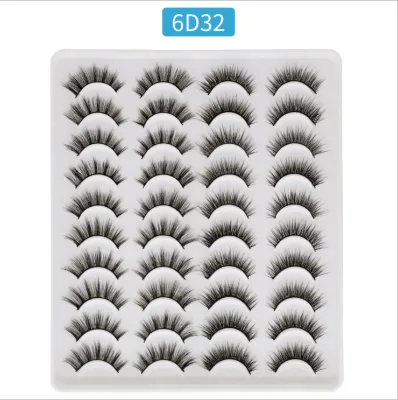


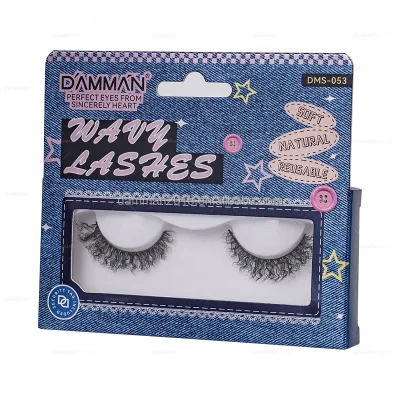


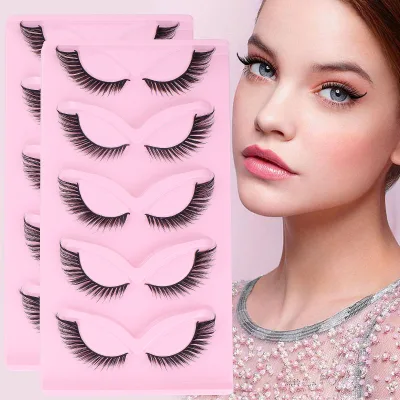
Long-Lasting, Best-Selling Natural, Realistic and Slender False Eyelashes
$0.36 - $0.39
MOQ: 2535 Pieces


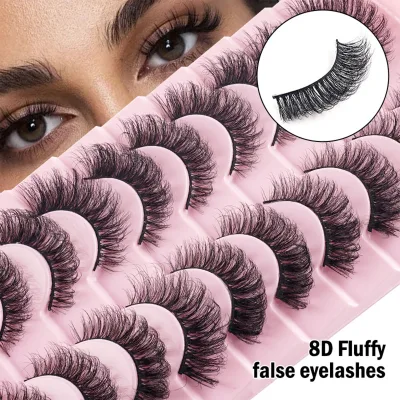
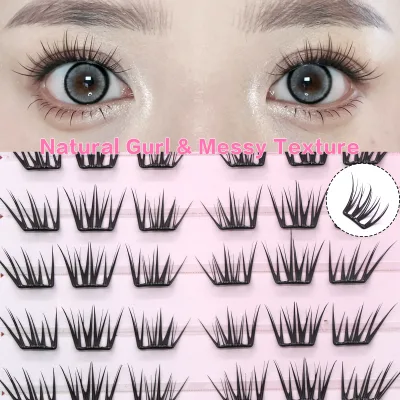

Comprehensive Sourcing Guide
Cruelty-Free Natural Long Individual Eyelashes Sourcing Guide
Cruelty-Free Natural Long Individual Eyelashes sit at the intersection of two procurement priorities: ethical material sourcing and precise technical performance. Buyers in this category typically serve beauty brands, salons, festival and daily-wear retailers, and media or television makeup applications, all of which demand lashes that look natural, hold a curl, and can be documented as free from animal-derived fur. The listed products in this space span synthetic hair, chemical fiber, and fishing line or cotton terrier constructions, with lengths ranging from short clusters to extended 25mm and 30mm styles. Because "cruelty free" is a claim rather than an inherent product attribute, buyers must confirm the material basis of every SKU before committing to a program.
This guide walks through the full sourcing cycle: interpreting listing signals, verifying specifications, assembling compliance documentation, understanding cost drivers, qualifying suppliers, and setting up long-term quality checks. Each section addresses one decision point, using only attributes observed in the supplied product data—such as model numbers SMG652, LYS134, DH02, and 1D#20C9—and flagging where the buyer must request evidence rather than assume it. Treat every listed attribute as an observation about a specific listing, not a guarantee across a supplier's entire catalog.
Product Scope and Observed Listing Signals
The observed listings cover several distinct product families. Individual and cluster-style lashes appear with volume notations such as 10D, 20D, 30D, and 40D (model DH02), signaling fan-density options for volume styling. Length bands vary considerably: one listing specifies 15mm to 30mm with custom specifications accepted (SMG652), another covers 6mm to 16mm (SMG620), and a fur-based listing is standardized at 14mm (LYS134). One multi-style offering packages 20 pairs per pack with a stated MOQ of 100, while a single-item listing (model 6D32) ships 5 pairs per pack. Thickness options include "natural thickness" and a specific 0.15 measurement, and sizes span 7mm through 17mm plus other options.
Usage attributes across listings include daily wear, festival, emulation, ragdoll styling, and television applications, confirming this category serves both retail consumers and professional makeup artists. Customization is explicitly available, custom packaging is offered, and OEM branding with customized logos is accepted. Origin data points to China broadly, with Qingdao and Guangdong specifically named, and one listing identifies Shenzhen as the port of dispatch. Buyers should treat these as per-listing facts and reconfirm each attribute for any new SKU.
Technical Specifications to Verify
Before ordering samples, build a specification sheet covering the parameters observed in the listings. Length should be pinned to an exact band—whether that is 6mm–16mm, 15mm–30mm, or a single 14mm standard—rather than accepting vague "long" descriptors, and custom specifications should be confirmed in writing. Curl type is listed as "according to the styles," so request the curl chart (C, D, or equivalent) for each style and verify consistency across production batches. For volume lashes, confirm the D-count (10D through 40D in the observed data) and cluster base diameter, since these determine both application speed and the final look.
Material identification is the core cruelty free verification. Listings reference synthetic hair, chemical fiber, fishing line terrier, cotton terrier, and fur. A listing that says "fur" may mean faux fur, but the buyer must obtain a written material declaration stating the product contains no mink, sable, or other animal hair—especially because one keyword literally reads "Mink False Eyelashes." Also verify thickness (e.g., 0.15 or natural thickness), band flexibility, and knot size for individual clusters, requesting physical samples of each SKU before mass production.
Compliance and Safety Documentation
Cruelty free positioning creates a documentation burden that buyers should plan for at the quotation stage, not after production. Request a signed material declaration for each SKU confirming the absence of animal-derived hair, and ask what supporting evidence the manufacturer can provide for the synthetic or chemical fiber composition. Note that the supplied data includes no certification claims—no leaping bunny, vegan, or animal-testing attestations appear in the listings—so any certification must be independently requested and verified with the issuing body rather than assumed from marketing copy.
Beyond cruelty free claims, gather documentation appropriate to your destination market: ingredient or material safety data for adhesives if lashes are sold with glue, labeling compliance for the destination country, and any test reports the factory holds for the chemical fiber content. Because packaging is customizable, confirm that carton markings, artwork, and regulatory labeling can be applied per your market's requirements. Keep copies of every declaration tied to a model number (such as SMG628 or 1D#20C9) so that audits trace documents to the exact SKU shipped, and re-collect declarations whenever materials or factories change.
Cost Drivers and Commercial Terms
Price in the observed listings ranges from $0.15 to $8, a spread wide enough to signal meaningful differences in material, construction, and packaging. Expect hand-made technics, finer synthetic hair, higher D-count volume fans, and longer lengths (toward 25mm–30mm) to sit at the upper end, while basic chemical fiber strips in multi-pair packs sit lower. Packaging choices—1 pair per case versus 4 pairs per case, custom boxes, or 5-pair and 20-pair packs—directly affect unit cost, so quote packaging variants separately rather than bundling them into a single模糊 price.
Observed commercial terms to work with include MOQs from 1 (sample-friendly single items) up to 2,535, with a stated MOQ of 100 on the 20-pair multi-style listing and supply capacity quoted at 99,999 pieces per month. Delivery time on one listing is 7–10 days, and the port of dispatch is Shenzhen. Negotiate tiered pricing against these MOQ breakpoints, clarify whether OEM logo printing and custom packaging carry tooling or plate fees, and confirm Incoterms and payment terms in writing. Never let a low headline price obscure missing specification or documentation commitments.
Supplier Qualification and Quality Control
Qualify suppliers against the attributes that matter most for this category. First, verify that the claimed material matches the cruelty free requirement: ask each candidate to state in writing whether its lashes use synthetic hair, chemical fiber, fishing line, or faux fur, and to confirm no animal hair in any component including the terrier (band) material. Second, test customization capability with a small run—custom logo, custom packaging, and custom length or curl—since listings advertise these services but execution quality varies. Third, check production capacity against your forecast; the quoted 99,999 pieces per month applies to one listing only.
Build a QC protocol around hand-made production realities. Because technics are hand made, expect batch variation in knot placement, curl retention, and band strength; define acceptable tolerances in an inspection standard before the first PO. Inspect incoming samples for length accuracy against the agreed band, fiber softness, band flexibility, and symmetry between left and right pieces. Use pre-shipment inspection on each order, checking packaging counts (1 pair, 4 pairs, 5 pairs, or 20 pairs per pack as contracted) and label accuracy. Document defects with photos tied to model numbers so corrective actions are traceable.
Long-Term Procurement Checks
Sustain the program with recurring verification rather than one-time approvals. Re-confirm material declarations annually or whenever the supplier changes fiber lots, factories, or sub-suppliers, since cruelty free status depends on continuous input control, not a single certificate. Track batch consistency by retaining sealed reference samples of each approved SKU—model numbers like DH02, SMG652, and LYS134 make good tracking anchors—and comparing every new production lot against them for curl, thickness, and band performance. Monitor delivery performance against the 7–10 day benchmark and adjust safety stock if lead times drift.
Also revisit commercial terms as volumes grow. Renegotiate pricing tiers once cumulative volume passes your original MOQ assumptions, and confirm that custom packaging artwork is version-controlled so reorders do not print obsolete labels. Keep the supply capacity figure (99,999 pieces per month on one observed listing) validated with the supplier each quarter, especially before peak festival and gifting seasons when usage spikes. Finally, maintain a documented escalation path for quality disputes, including photo evidence standards and replacement or credit terms, so long-term supply remains predictable and your cruelty free claim stays defensible in every market you sell into.
FAQs
What materials are used for these eyelashes?
The eyelashes are crafted from synthetic hair, fur, and chemical fiber materials. These options provide a natural look while ensuring durability for daily use. Buyers can select the material that best suits their specific application needs, whether for ragdoll emulation, television, or general festival and daily wear purposes.
Can I customize the packaging for my brand?
Yes, customization is available for both the product and its packaging. Suppliers offer custom packaging options to help you establish your brand identity. You can also request customized logos on the products. This flexibility allows businesses to tailor the final output to their specific marketing and distribution requirements effectively.
What is the typical lead time for orders?
The typical delivery time for these orders is 7-10 days. This timeframe allows for efficient processing and dispatch from the origin locations in China. Buyers should plan their inventory accordingly to ensure timely receipt of goods, especially when coordinating with global supply chains and managing stock levels for retail or wholesale needs.
What specifications are available for eyelash lengths?
Available specifications include lengths ranging from 6mm to 30mm, with standard options like 10-25mm and 14mm. Custom specifications are also accepted to meet unique requirements. Thickness options vary, including natural thickness and specific denier ratings like 10D, 20D, 30D, and 40D, allowing for precise selection based on desired volume and style.
What is the minimum order quantity for these items?
The minimum order quantity varies, with some items starting at just 1 piece, while others require 100 pieces. The observed range spans from 1 to 2535 units depending on the specific product model and supplier. Buyers should check the specific MOQ for their chosen model to ensure it aligns with their purchasing volume and budget.
Where are these eyelashes manufactured?
These eyelashes are manufactured in China, with specific origins noted in Qingdao and Guangdong. This location allows for access to established manufacturing hubs and supply chains. Buyers can leverage these regional advantages for sourcing, keeping in mind the logistical implications of shipping from these specific Chinese provinces to their target markets.