Source Cryogenic Horizontal Industrial Nitrogen Plant for Food, Medical, and General Industrial Uses
Find 30 Cryogenic Horizontal Industrial Nitrogen Plant options featuring low noise, ISO certifications, and customization. Compare specifications for oxygen and nitrogen purity ranging from 99.6% to 99.999% across food, medical, and general industrial applications.
Key considerations
Products List

Industrial Oxygen Nitrogen Gas Filling Plant Cryogenic Liquid Nitrogen Plant
$100000.00 - $1500000.00
MOQ: 1 Pieces
Hangzhou Chenrui Air Separator Installation Manufacture Co., Ltd

Industrial Cryogenic Air Separation Plant Medical Liquid Oxygen Nitrogen Plant
$100000.00 - $1500000.00
MOQ: 1 Pieces
Hangzhou Chenrui Air Separator Installation Manufacture Co., Ltd

Cryogenic Nitrogen Equipment Liquid Nitrogen Manufacturing Plant
$100000.00 - $1500000.00
MOQ: 1 Pieces
Hangzhou Chenrui Air Separator Installation Manufacture Co., Ltd


Advanced Cryogenic Oxygen Generation Plant for Industrial Use
$100000.00 - $1500000.00
MOQ: 1 Pieces
Hangzhou Chenrui Air Separator Installation Manufacture Co., Ltd

Cryogenic Liquid Oxygen Plants/Air Separation Nitrogen Plant
$100000.00 - $1500000.00
MOQ: 1 Pieces
Hangzhou Chenrui Air Separator Installation Manufacture Co., Ltd


Cryogenic Oxygen Generating Plant and Cryogenic Nitrogen Generating Plant
$98000.00 - $528000.00
MOQ: 1 Sets


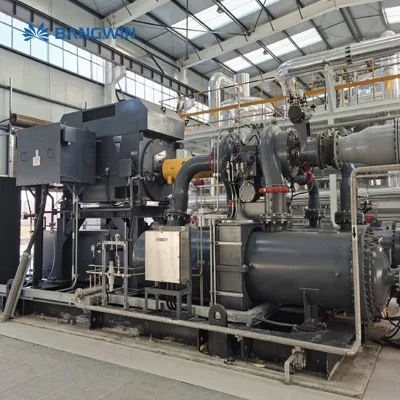


CE Certificate Nitrogen Making Machine Industrial Size Oxygen and Nitrogen Plants
$1000.00 - $20000.00
MOQ: 1 Pieces

Comprehensive Sourcing Guide
Strategic Sourcing Guide for Cryogenic Horizontal Industrial Nitrogen Plants
Procuring a Cryogenic Horizontal Industrial Nitrogen Plant represents a significant capital investment for facilities requiring high-purity gases for manufacturing, medical, or food processing applications. The complexity of these systems demands a rigorous evaluation of technical specifications, operational capabilities, and supplier reliability. This guide provides a structured approach for buyers to navigate the market, focusing on verified attributes such as the cryogenic air separation technology, horizontal installation configurations, and the specific purity standards observed in current product listings. By adhering to evidence-based criteria, procurement teams can mitigate risk and ensure the selected equipment aligns with long-term operational goals.
Technical Architecture and Operational Specifications
The core of a cryogenic nitrogen plant lies in its ability to separate atmospheric components through deep cooling and fractional distillation. Based on observed product data, the primary technology employed is the Cryogenic Air Separator Plant, which operates on a continuous type basis. This continuous operation mode is essential for industrial applications where a steady, uninterrupted supply of nitrogen is required to maintain production line efficiency. The system is designed as a horizontal installation, a configuration that often optimizes space utilization and simplifies maintenance access compared to vertical tower designs.
When evaluating technical specifications, buyers must scrutinize the production rate and capacity ranges. The market data indicates a broad spectrum of capabilities, with standard flow rates ranging from 50 to 3000 Nm3/h for certain models, and extended capacities reaching up to 100 to 10,000 Nm3/h for larger industrial units. These figures are critical for matching the plant's output to the facility's consumption profile. Furthermore, the purity of the output gas is a primary performance metric. Verified product attributes specify nitrogen purity levels between 99.99% and 99.999%, while oxygen purity is noted at 99.6%. These standards align with the general industrial field requirements, though specific applications like medical usage may demand stricter adherence to the higher end of these purity ranges.
The physical configuration of the plant is equally important. The equipment is characterized as a large machine size, often featuring a modular design that allows for scalability and easier transportation. The color of the unit is typically white, though customized color options are available to meet specific facility aesthetic or safety coding requirements. The operating pressure is generally classified as low pressure, which influences the safety protocols and piping requirements of the installation site. Understanding these baseline specifications ensures that the procurement team selects a unit that fits both the physical footprint and the technical demands of the intended application.
Compliance, Certification, and Safety Standards
In the realm of industrial gas generation, regulatory compliance and safety certifications are non-negotiable. The supplied product facts highlight that manufacturers in this sector frequently hold ISO and CE certifications. These credentials indicate that the equipment meets international quality management standards and European safety directives, respectively. For buyers operating in regulated environments, verifying the presence of these certifications is the first step in the due diligence process. The data also notes that some units carry a "Nonstandard" classification, which implies that the equipment may be built to custom specifications rather than a rigid, off-the-shelf standard. In such cases, the buyer must ensure that the custom design still adheres to local safety codes and industry best practices.
Beyond the basic certifications, the procurement process should include a verification of the specific standards applied to the manufacturing and testing of the plant. While the general standard for product purity is observed as 95-99.999% for certain applications, the exact standard for a specific order should be confirmed in the contract. The "Customized" standard noted in the data suggests that many plants are tailored to the buyer's specific gas composition needs. Therefore, the buyer should not assume a universal standard applies but rather demand a detailed specification sheet that defines the exact purity, flow rate, and pressure limits for their specific order. Additionally, the "New Product 2022" marketing tag indicates that the technology is relatively modern, which may imply updated safety features and efficiency improvements over older generations of cryogenic plants.
Cost Drivers and Financial Considerations
The financial landscape of sourcing a cryogenic nitrogen plant is influenced by several distinct variables. The observed price range in the market is vast, spanning from $320 to $1,600,000. This extreme variance is not indicative of pricing errors but rather reflects the difference between small-scale, portable units and massive, fully integrated industrial air separation plants. The primary cost driver is the production capacity and the resulting complexity of the distillation equipment. A unit capable of producing 10,000 Nm3/h will naturally command a significantly higher price than a 50 Nm3/h unit due to the scale of the compressors, heat exchangers, and distillation columns required.
Other factors influencing the total cost of ownership include the level of customization. While the "Accept Custom" attribute is widely available, customizing the plant for specific purity levels, flow rates, or installation types adds to the engineering and manufacturing costs. The "Modular" feature mentioned in the product attributes can also impact pricing; while modularity offers flexibility, the engineering required to integrate these modules seamlessly may carry a premium. Furthermore, the "After-Sales Service" package, which often includes field installation, commissioning, and training, is a significant component of the initial investment. Buyers should evaluate whether the quoted price includes these services or if they are line-item add-ons. The "Sustainable and Cost-Effective" advantage noted in the data suggests that while the upfront capital expenditure may be high, the long-term operational efficiency and energy savings of cryogenic plants can result in a favorable return on investment over the equipment's service life, which is often cited as more than 20 years.
Typical Applications and Industry Use Cases
The versatility of cryogenic horizontal industrial nitrogen plants allows them to serve a diverse array of industries. The primary application fields identified in the product data include the Food and Medical sectors. In the food industry, nitrogen is utilized for inerting, packaging, and freezing processes to extend shelf life and preserve quality. The low noise level of these plants is a specific advantage for facilities where acoustic pollution is a concern, such as food processing plants located in urban or mixed-use zones.
In the medical sector, the requirement for high-purity gases is paramount. The observed nitrogen purity of 99.99%-99.999% is particularly relevant for medical applications where gas quality directly impacts patient safety and equipment functionality. The "Usage" attribute explicitly lists "Medical" alongside "Nitrogen, Oxygen, Nitrogen/Oxygen," indicating that these plants are often designed to produce multiple gases simultaneously or can be configured for specific medical gas needs. Beyond these primary sectors, the "General Industrial Field" application covers a wide range of uses, including metal fabrication, electronics manufacturing, and chemical processing, where nitrogen is used for blanketing, purging, and cooling. The "High Productivity" advantage of these plants makes them suitable for high-volume manufacturing environments where downtime is costly.
Supplier Evaluation and Service Capabilities
Selecting the right supplier is as critical as selecting the right equipment. The data indicates that suppliers provide "After-Sales Service" which encompasses field installation, commissioning, and training. This comprehensive service package is a key differentiator, as cryogenic plants require specialized knowledge to install and operate safely. Buyers should prioritize suppliers who can demonstrate a track record of successful field installations and provide detailed training programs for their operational staff. The "Provided" status of after-sales service suggests that this is a standard expectation in the market, but the depth and quality of these services should be evaluated on a case-by-case basis.
Another critical factor in supplier evaluation is the "Customization" capability. The "Accept Custom" attribute confirms that suppliers are willing to tailor their products to specific buyer requirements. However, buyers must assess the supplier's engineering capabilities to ensure they can deliver on complex customizations without compromising the integrity of the cryogenic process. The "Production Rate: 100%" attribute may imply a high reliability in meeting delivery schedules, but this should be verified against the supplier's current order book and lead times. Additionally, the "Service Life: More Than 20 Years" claim highlights the durability of the equipment, but it also places a premium on the supplier's ability to provide long-term support and spare parts availability. A supplier that offers a robust warranty and a clear roadmap for long-term maintenance is essential for ensuring the plant remains operational throughout its intended lifespan.
Quality Control and Long-Term Procurement Strategy
Ensuring the quality of a cryogenic nitrogen plant requires a proactive approach to quality control. Buyers should verify that the manufacturing process adheres to the stated certifications, such as ISO and CE, and that the final product undergoes rigorous testing before shipment. The "Packaging That Meets Domestic and International Shipping" standard indicates that the supplier is aware of the logistical challenges associated with transporting large industrial equipment. The "Wooden Case or Naked" packaging options suggest flexibility, but buyers should specify the packaging requirements to ensure the equipment arrives without damage.
For long-term procurement, the "Modular" nature of the equipment offers a strategic advantage. As a facility's nitrogen demand grows, the modular design allows for the addition of new modules rather than replacing the entire plant. This scalability supports a phased investment strategy, allowing the buyer to align capital expenditure with actual growth. The "Low Pressure" operating type also contributes to long-term safety and reduced maintenance costs, as lower pressure systems generally experience less stress on components. Finally, buyers should consider the "Sustainable and Cost-Effective" attributes when planning for the future. A plant that minimizes energy consumption and waste aligns with modern environmental standards and can help the facility meet its sustainability goals while reducing operational expenses over the 20+ year service life. By focusing on these long-term factors, buyers can secure a reliable and efficient nitrogen supply that supports their operations for decades.
FAQs
What technology powers these nitrogen plants?
These plants utilize Cryogenic Air Separator Plant technology to separate atmospheric gases. The system operates continuously to ensure a steady supply of high-purity nitrogen for industrial applications.
Which purity levels are available for nitrogen output?
Verified product attributes specify nitrogen purity levels between 99.99% and 99.999%. Oxygen purity is noted at 99.6%, meeting standards for both medical and general industrial fields.
Can the equipment be customized for specific needs?
Yes, customization is available and accepted for these units. Buyers can request tailored specifications, and the standard classification may be set to customized to meet unique operational requirements.
How is the installation configuration designed?
The equipment is designed for horizontal installation to optimize space and maintenance access. The large machine size often features a modular design that allows for scalability and easier transportation.
What certifications do the manufacturers hold?
Manufacturers frequently hold ISO and CE certifications to indicate compliance with international quality and safety standards. Some units may also be classified as nonstandard if built to custom specifications.
What is the expected service life of the plant?
The equipment has a service life of more than 20 years. This long lifespan is supported by the durable construction and the availability of after-sales services including field installation and training.
Which industries utilize this gas separation equipment?
Primary application fields include the food and medical sectors, as well as general industrial fields. The low noise level makes it suitable for facilities where acoustic pollution is a concern.