Source Curved Chemical Tempered Stair Handrails for Building, Furniture, and Home Appliance
Find and compare 30 listings for Curved Chemical Tempered Stair Handrails suitable for building, furniture, and home appliance applications. Evaluate options featuring flat tempered glass, high class flatness, and customizable standards to meet specific project requirements.
Key considerations
Products List


Stylish Curved Tempered Glass Stair Handrails for Showcase and Shower Use
$5.00 - $22.00
MOQ: 500 Square Meters

High-Quality Curved Tempered Glass Stair Handrails for Partition Solutions
$5.00 - $22.00
MOQ: 500 Square Meters


Aluminum Handrail Stainless Steel Railings Balcony Glass Balustrades Stair Handrails Stair
$40.00 - $80.00
MOQ: 10 Square Meters


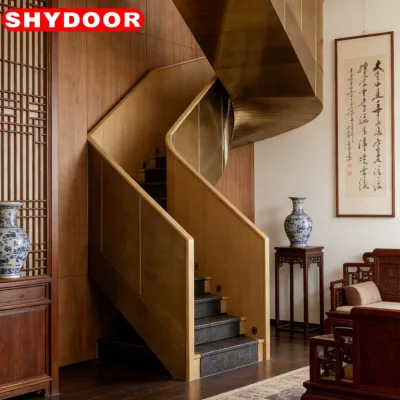


Luxury Design Curved Stainless Steel and Glass Villa Rotating Stair Handrail
$39.00 - $54.00
MOQ: 10 Square Meters

90mm Width Weather-Resistant Aluminum Stair Handrail for Outdoor Stair
$39.00 - $54.00
MOQ: 10 Square Meters

Laminated Safety Glass Railing Handrail Balcony Stair Railing Handrail
$70.00 - $85.00
MOQ: 100 Meters


Comprehensive Sourcing Guide
Curved Chemical Tempered Stair Handrails Sourcing Guide
Sourcing curved chemical tempered glass for stair handrails requires a nuanced understanding of both the material science involved and the specific structural demands of architectural applications. Unlike standard flat tempered glass, curved variants undergo a complex thermal or chemical process that alters their stress distribution, making verification of the tempering method critical for safety and longevity. Buyers must distinguish between physical (heat) tempering and chemical tempering, as the latter offers superior strength and optical clarity but comes with distinct handling and cost implications. This guide provides a structured approach to evaluating suppliers, verifying technical specifications, and ensuring compliance with safety standards for these specialized components.
The procurement process for these items is heavily influenced by customization requirements, as curved glass is rarely a stock item. Suppliers typically offer high-class flatness and specific thicknesses, such as 5mm for flat sections or 6mm for curved segments, which must be aligned with the design intent. Buyers should focus on verifying the fragment state, ensuring it meets safety classifications like Fragment State I, which minimizes the risk of injury upon breakage. Additionally, the choice of frame materials, such as stainless steel grades 304 or 316L, and finishing techniques like powder coating, plays a significant role in the overall durability and aesthetic integration of the handrail system.
Product Scope and Observed Listing Signals
The market for Curved Chemical Tempered Stair Handrails encompasses a variety of product configurations, ranging from simple railings to complex partition systems. Observed listings indicate a wide price range, from approximately $0.80 to over $1,000 USD, reflecting differences in glass thickness, curvature complexity, and frame material quality. The minimum order quantity (MOQ) typically starts at 1 unit but can scale up to 1,000 units, suggesting that suppliers cater to both bespoke architectural projects and larger commercial installations. Buyers should note that while some products are listed as "flat tempered," others are explicitly described as "curve tempered," indicating that the manufacturing process and resulting mechanical properties differ significantly between these categories.
Appearance and workmanship are key differentiators in this segment, with suppliers offering options such as "flat tempered" finishes or "mild physique" workmanship that aligns with modern or European design styles. The shape of the glass is predominantly curved, but the accompanying hardware may include round, square, or rectangular stainless steel profiles. Packing methods vary from plywood cases to sea-worthy wooden crates, which is crucial for preventing damage during transit, especially given the fragility of tempered glass. Buyers must carefully review the product model numbers, such as FF. 02 or HS-628F, to understand the specific dimensions and structural capabilities of each offering, as these codes often correspond to distinct design templates or curvature radii.
Technical Specifications to Verify
When evaluating technical specifications, the thickness of the glass is a primary determinant of structural integrity and safety. For curved applications, a thickness of 6mm is commonly observed, providing the necessary rigidity to withstand lateral loads while maintaining the desired aesthetic curvature. In contrast, flat tempered glass sections may be thinner, around 5mm, depending on the span and support structure. Buyers must verify that the supplier explicitly states the tempering technique, as "chemical tempered" glass offers higher surface compression and better resistance to thermal shock compared to physically tempered glass, making it preferable for complex curves that might be prone to breakage during the bending process.
The standard dimensions and tolerances are equally critical, with some listings specifying sizes up to 4 meters per piece or maximum dimensions of 3000x9000mm. The flatness class should be confirmed as "High Class" to ensure a seamless visual appearance, particularly in large-scale installations where distortions are easily noticeable. Additionally, the fragment state must be verified to meet safety standards, typically requiring a classification that ensures small, granular fragments rather than sharp shards upon impact. Buyers should also check the compatibility of the glass with the chosen frame material, such as 201, 304, or 316L stainless steel, to prevent galvanic corrosion and ensure long-term stability in both indoor and outdoor environments.
Compliance and Safety Documentation
Compliance with national and international safety standards is non-negotiable for stair handrails, which are subject to rigorous testing for impact resistance and structural load. The GB15763.2 standard is a key reference for tempered glass in China, indicating that the product meets specific safety requirements for architectural glass. Buyers should request certification documents that confirm the glass has undergone proper tempering and fragmentation testing, ensuring that it meets the required fragment state. While certifications like CE, ISO9001, and ISO45001 are often mentioned in the background, buyers must verify that these apply to the specific product line and manufacturing facility, rather than assuming blanket compliance across all supplier offerings.
Safety documentation should also include detailed installation guidelines and load-bearing calculations, particularly for applications in hospitals, sanatoriums, or high-traffic commercial buildings. The use of chemical tempered glass is often preferred in these settings due to its enhanced strength and safety profile. Buyers must ensure that the supplier provides evidence of compliance with local building codes, which may dictate specific height requirements, load capacities, and edge finishing standards. Additionally, the choice of frame material, such as stainless steel, should be accompanied by material certificates that confirm the grade and corrosion resistance, ensuring that the entire handrail system meets safety and durability expectations.
Cost Drivers and Commercial Terms
The cost of Curved Chemical Tempered Stair Handrails is influenced by several factors, including the complexity of the curve, the thickness of the glass, and the quality of the accompanying hardware. Customization is a significant cost driver, as each unique curvature requires specific tooling and processing time. Buyers should expect higher prices for complex shapes or larger dimensions, such as pieces up to 4 meters in length. The MOQ also plays a role in pricing, with smaller orders often incurring higher per-unit costs due to setup fees and material waste. Understanding these variables allows buyers to negotiate more effectively and budget accurately for their projects.
Commercial terms, including payment methods and shipping arrangements, vary among suppliers. Common payment options include T/T, L/C, PayPal, and credit card, with online trade platforms offering additional security for international transactions. Shipping times typically range from 10 to 15 days, but this can be extended for custom orders or during peak production periods. Buyers should clarify the packing method, as secure packaging in plywood cases or sea-worthy crates is essential to prevent damage during transit. Additionally, buyers should inquire about warranty policies and after-sales support, particularly for large-scale installations where replacement parts or adjustments may be needed.
Supplier Qualification and Quality Control
Supplier qualification is a critical step in ensuring the reliability and quality of Curved Chemical Tempered Stair Handrails. Buyers should verify the supplier's manufacturing capabilities, including their ability to perform precise bending, welding, and cutting processes. The origin of the product, such as Xiaogan, Hubei, or Jinan, China, can provide insights into the local supply chain and logistical advantages. Buyers should also assess the supplier's quality control processes, including in-line inspections and final product testing, to ensure that each piece meets the specified standards for flatness, thickness, and fragment state.
Quality control should extend to the finishing of the frame, with powder-coated surfaces offering enhanced durability and aesthetic appeal. Buyers should request samples or visit the facility if possible to inspect the workmanship and material quality firsthand. Additionally, suppliers should provide detailed documentation of their production processes, including the tempering cycle and curve bending parameters, to ensure consistency and repeatability. By thoroughly vetting suppliers, buyers can mitigate the risk of receiving substandard products and ensure that the final installation meets their design and safety requirements.
Long-Term Procurement Checks
Long-term procurement success depends on establishing a robust relationship with suppliers who can consistently deliver high-quality products. Buyers should implement regular quality audits and performance reviews to monitor supplier reliability and product consistency. This includes tracking defect rates, delivery times, and customer feedback to identify areas for improvement. Additionally, buyers should stay informed about changes in industry standards and technological advancements, such as new tempering techniques or frame materials, to ensure that their procurement strategy remains competitive and compliant.
Maintenance and support are also key considerations for long-term procurement. Buyers should ensure that suppliers provide clear maintenance guidelines and readily available replacement parts, particularly for stainless steel frames and glass components. This includes access to technical support for installation issues or repairs. By focusing on these long-term factors, buyers can minimize downtime and maintenance costs, ensuring that their stair handrail installations remain safe, functional, and aesthetically pleasing for years to come.
FAQs
What customization options are available for Curved Chemical Tempered Stair Handrails?
Customization is available for these products to meet specific buyer requirements. The standard thickness for flat tempered glass is 5MM, while curve tempered glass is 6MM. Buyers can request specific dimensions and finishes to suit their building or furniture projects.
Which standards do these Curved Chemical Tempered Stair Handrails meet?
These products comply with the GB15763.2 standard for tempered glass. The standard classification indicates a steel degree of tempered glass. This ensures the fragments remain in a safe state I condition when broken, providing necessary safety for indoor and outdoor applications.
How is the product packed for shipment to international destinations?
Packaging varies by product model but includes plywood cases, cartons, or sea-worthy strong wooden crates. Some items are wrapped by fibre bags and placed into one box. This ensures the glass remains protected during transit from origins like Xiaogan, Hubei, or Guangdong, China.
Can I order a small quantity of Curved Chemical Tempered Stair Handrails?
Yes, the minimum order quantity can be as low as 1 unit for some items. However, specific listings may require a minimum of 100 meters. Buyers should verify the exact MOQ for their selected model before placing an order to ensure feasibility.
What are the typical lead times for shipping these handrails?
The shipment time is typically 10 to 15 days after order confirmation. This duration applies to standard orders from suppliers located in regions like Jinan or Guangdong. Lead times may vary based on the specific customization and packaging requirements of the buyer.
Which materials are used for the optional components of these handrails?
Optional materials include stainless steel grades such as 201, 304, 304L, 316, and 316L. The frame finishing is often powder coated aluminum. These materials support various styles including European, modern, simplicity, and pastoral designs for diverse architectural needs.