Source Curved Glass Beverage Cooler Showcase for Fruit Beer Milk
Compare 30 Curved Glass Beverage Cooler Showcase units with capacities from 150L to 1000L. Buyers can evaluate options featuring single or double doors, mechanical thermostats, and various cooling types for fruit, beer, and milk display applications.
Key considerations
Products List

Upright Glass Door Beer Cooler Glass Door Beverage Display Refrigerator Showcase
$115.00 - $350.00
MOQ: 50 Pieces


Beverage Cooler Energy Drink Display Refrigerator Glass Door Showcase
$199.00 - $2515.00
MOQ: 2 Pieces


Solar Glass Display Bottle Cooler Commercial Beverage Cooler Showcase Cooler
$480.00 - $550.00
MOQ: 5 Pieces


Vertical Glass Door Drink Milk Cooler Refrigerator Fridge Display Showcase
$480.00 - $550.00
MOQ: 5 Pieces


Four Sides Glass Vertical Cake Display Cooler or Beverage Showcase 550L
$485.72 - $571.43
MOQ: 1 Pieces


$400.00 - $1000.00
MOQ: 1 Pieces
Guangzhou Junjian Kitchen Appliances & Refrigeration Equipment Co., Ltd.
Comprehensive Sourcing Guide
Curved Glass Beverage Cooler Showcase Sourcing Guide
Sourcing curved glass beverage coolers requires a nuanced understanding of both aesthetic integration and mechanical reliability. These units are designed to blend seamlessly into modern retail environments, offering high visibility for products while maintaining precise temperature control. Buyers must navigate a market where visual appeal often competes with energy efficiency and durability, making it essential to evaluate suppliers based on transparent technical specifications rather than marketing imagery alone. The following guide provides a structured approach to evaluating these units, ensuring that procurement decisions are grounded in verifiable data and industry best practices.
The procurement process for display refrigeration involves balancing multiple variables, including capacity, cooling technology, and compliance standards. While the visual design of a curved glass unit is a primary driver for retail placement, the internal components determine long-term operational success. This guide focuses on the critical aspects of supplier evaluation, technical verification, and commercial terms, providing buyers with the tools to mitigate risk and secure high-quality inventory. By adhering to the evidence-based insights provided, procurement teams can make informed decisions that align with their specific operational needs and budget constraints.
Product Scope and Observed Listing Signals
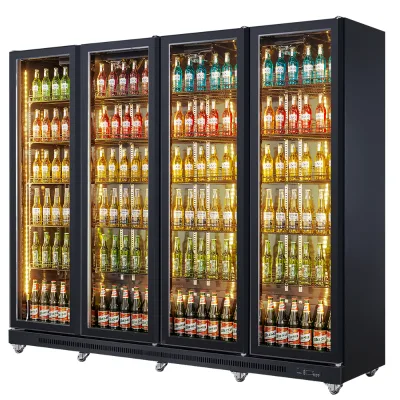
The market for curved glass beverage coolers encompasses a wide range of capacities and configurations, typically spanning from 150 to 1000 liters. Listings often indicate that these units are available in various door configurations, including single, double, or triple doors, with options for swing, folding, or sliding mechanisms. The observed product range suggests that manufacturers offer significant customization, allowing buyers to tailor the unit to specific retail layouts. It is crucial to verify the exact capacity and door type for each specific model, as these factors directly impact the unit’s footprint and product display density.
Temperature control and cooling methods are central to the functionality of these showcases. Most observed units utilize direct cooling or air cooling systems, with mechanical thermostats providing precise temperature regulation within the 0-10℃ range. Some models may feature auto defrost capabilities, while others rely on manual defrost processes. Buyers should carefully review the defrost type and cooling method to ensure compatibility with their maintenance protocols and energy efficiency goals. The availability of optional parts, such as LED lighting, shelves, and handles, further allows for customization to meet specific branding and merchandising requirements.
Technical Specifications to Verify
When evaluating the technical specifications of a curved glass beverage cooler, the compressor and refrigerant choices are paramount. Commonly observed compressors include brands such as Huayi, Wanbao, Gmcc, and Donper, which are known for their reliability in commercial refrigeration. The refrigerant types typically include R134A, R600A, and R290, each with distinct environmental and performance characteristics. Buyers must verify the specific compressor model and refrigerant type to ensure compliance with local environmental regulations and to assess the unit’s energy efficiency. The condenser configuration, whether inside or outside, also affects cooling performance and maintenance accessibility.
The construction materials and structural integrity of the unit are equally important for long-term durability. The external material is often PCM (Polymer Concrete Material) or similar durable finishes, while the frame may be constructed from plastic or metal. The glass door is typically made of tempered low-E glass, which provides safety and thermal insulation. Additionally, the evaporator is commonly constructed with copper tube and aluminum fin technology, which enhances heat exchange efficiency. Buyers should verify the presence of castors with brakes for mobility and stability, as well as the type of wind blades, which are often made of aluminum leaf for consistent air circulation.
Compliance and Safety Documentation
Compliance with international and regional safety standards is a critical requirement for commercial refrigeration equipment. Observed certifications for these units often include CE, RoHS, ISO, CCC, CB, EMC, GS, and ETL. These certifications indicate that the product meets specific safety, electromagnetic compatibility, and environmental standards. Buyers must verify that the specific model they intend to purchase holds the necessary certifications for their target market. For instance, the CE mark is essential for sales in the European Union, while the CCC certification is required for the Chinese market.
In addition to product-level certifications, buyers should inquire about the manufacturer’s quality management systems. While ISO 9001:2000 is mentioned in some contexts, it is important to confirm the current version of the certification, as standards evolve over time. The presence of SASO certification may also be relevant for sales in certain Middle Eastern markets. Buyers should request copies of the relevant certificates and verify their validity with the issuing bodies. Ensuring that the supplier can provide up-to-date and accurate documentation is a key step in mitigating regulatory risks and ensuring smooth customs clearance.
Cost Drivers and Commercial Terms
The cost of a curved glass beverage cooler is influenced by several factors, including capacity, compressor brand, and optional features. The observed price range for these units varies significantly, reflecting the diversity in specifications and quality levels. Buyers should expect prices to range from approximately $90 to $2515, depending on the specific configuration and volume of the order. The minimum order quantity (MOQ) typically ranges from 1 to 50 units, offering flexibility for both small retailers and large chains. Understanding these cost drivers helps buyers budget effectively and negotiate favorable terms.
Packaging and logistics are also significant components of the total cost. Units are often packed in foaming material, five-layer cartons, and wooden base pallets to ensure safe transportation. The standard packaging dimensions and weight should be verified to calculate shipping costs accurately. Buyers should also consider the lead time for production and delivery, as these factors can impact inventory planning. Clear communication regarding payment terms, warranty coverage, and after-sales support is essential to avoid unexpected costs and ensure a smooth procurement process.
Supplier Qualification and Quality Control
Selecting a qualified supplier is crucial for ensuring the quality and reliability of the curved glass beverage cooler. Buyers should verify the supplier’s manufacturing capabilities, including their production capacity and quality control processes. The origin of the products, often Qingdao for many manufacturers, can provide insights into the supply chain and logistics advantages. Buyers should request information about the supplier’s experience in exporting to their target market and their ability to handle custom orders. A supplier with a strong track record and positive customer feedback is more likely to deliver high-quality products on time.
Quality control measures should be clearly defined and agreed upon before placing an order. Buyers should inquire about the testing procedures used to verify the performance of the compressors, cooling systems, and electrical components. It is advisable to request sample units for inspection before committing to a large order. Additionally, buyers should establish clear criteria for acceptable quality levels and define the process for handling defects or non-conforming products. A robust quality control framework helps minimize risks and ensures that the purchased units meet the specified standards.
Long-Term Procurement Checks
Long-term procurement success depends on establishing a sustainable relationship with the supplier and ensuring ongoing product support. Buyers should verify the availability of spare parts, such as compressors, thermostats, and glass doors, to facilitate maintenance and repairs. A clear warranty policy and responsive after-sales service are essential for minimizing downtime and extending the lifespan of the units. Buyers should also consider the supplier’s ability to provide technical support and training for their staff, which can enhance operational efficiency.
Regular performance monitoring and feedback loops are important for continuous improvement. Buyers should track the performance of the units in their retail environment, noting any issues related to temperature control, energy consumption, or durability. This data can be used to negotiate better terms with the supplier or to inform future purchasing decisions. By maintaining open communication and fostering a collaborative relationship, buyers can ensure that their procurement strategy remains aligned with their business goals and market demands.
FAQs
What cooling types are available for these showcases?
Direct cooling and air cooling are available options for these units. The specific cooling method depends on the model selected, with direct cooling being a standard feature for many display coolers in this category.
Can I customize the door type for this beverage cooler?
Yes, customization is available for door types including swing, folding, and sliding doors. Buyers can choose between single, double, or triple door configurations based on their specific display needs and space constraints.
Which certifications do these refrigeration units hold?
These units hold multiple certifications including CE, RoHS, ISO, CCC, CB, EMC, GS, and ETL. Some models also carry SASO certification, ensuring compliance with various international safety and quality standards for export markets.
How is the temperature controlled in these display coolers?
Temperature control is managed via a mechanical thermostat for precise regulation. The units typically maintain a temperature range between 0 to 10 degrees Celsius, suitable for storing fruits, beverages, and dairy products effectively.
What compressor brands are used in these coolers?
The coolers utilize compressors from reputable brands such as Huayi, Wanbao, Gmcc, and Donper. These components ensure reliable performance and energy efficiency for continuous operation in commercial display environments.
What is the capacity range for these beverage centers?
The capacity ranges from 150 to 1000 liters, with specific models available in the 301-400 liter and 501 liter plus ranges. This variety allows buyers to select units that fit their storage volume requirements precisely.