Source Customizable Soft Plush Toy for Gifts, Keychains, and Promotions
Find and compare 25 Customizable Soft Plush Toy options for gifts, keychains, and promotional items. These hand-made dolls feature soft cotton fabric, various certifications, and OEM/ODM support with low MOQs starting from 1 piece.
Key considerations
Products List


Custom Soft Plush Toy Pillow Dolls Plushie Custom Plush Toys Manufacturer
$1.50 - $3.00
MOQ: 100 Pieces




Comprehensive Sourcing Guide
Customizable Soft Plush Toy Sourcing Guide
Sourcing customizable soft plush toys requires a strategic balance between creative flexibility and rigorous quality control. These products are frequently utilized as promotional gifts, corporate merchandise, or personalized retail items, where brand visibility and tactile appeal are paramount. Buyers must navigate a market characterized by high variability in materials, manufacturing techniques, and compliance requirements. The core value proposition lies in the ability to tailor every aspect of the product, from the initial design concept to the final packaging, ensuring the item aligns perfectly with brand identity and target audience expectations.
This guide provides evidence-based procurement advice for buyers seeking to source these items efficiently. It focuses on verifying technical specifications, ensuring regulatory compliance, and managing commercial terms effectively. By understanding the specific attributes observed in current listings—such as customization options, material compositions, and certification standards—buyers can mitigate risks associated with inconsistent quality and non-compliant products. The following sections detail the critical steps for successful sourcing, emphasizing verification over assumption.
Product Scope and Observed Listing Signals
The market for customizable soft plush toys encompasses a wide range of products, including keychains, dolls, and animal figures, often categorized by size and intended use. Observed listings indicate that these items are frequently marketed as gifts, with a strong emphasis on being soft, comfortable, and suitable for unisex audiences. The typical age range for these products is cited as 3-8 years, suggesting a focus on children’s toys, although the "gift" usage attribute implies broader applicability for adults as well. Buyers should recognize that while the core product is a plush toy, the specific form factor—whether a short plush toy, a medium-sized doll, or a keychain—significantly impacts production complexity and cost.
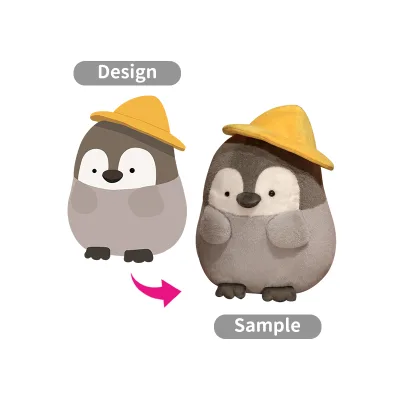
Customization is a defining feature of this product category, with suppliers offering extensive options for personalization. Attributes such as "Customized Plush Doll," "Custom Designs," and "Customers Logo" indicate that buyers can modify the appearance, branding, and even the physical dimensions of the product. The modeling source is often listed as "Custom," and weights are described as "Custom," highlighting the bespoke nature of many orders. However, buyers must be cautious; while customization is available, it introduces variability into the supply chain. It is essential to clarify the extent of customization allowed, including whether the supplier provides design assistance or if the buyer must supply complete technical packs.
Technical Specifications to Verify
Technical verification begins with material composition and filling, which directly influence the product’s safety, durability, and tactile quality. Observed specifications list materials such as "Cotton Fabric," "Plush+PP Cotton," and fillings of "Cotton." Buyers must verify the exact type of plush fabric and the quality of the PP cotton filling, as these determine the softness and resilience of the toy. The height range of 11-30cm suggests a variety of sizes are available, but buyers should confirm the exact dimensions for their specific order, as "Medium" or "Short Plush Toys" are relative terms. Additionally, the production method is noted as "Hand-Made" in some listings, which can affect consistency and lead times compared to machine-made alternatives.
Packaging and labeling are critical technical aspects that impact logistics and retail readiness. Listings indicate packaging options such as "Boxed" or "OPP Bag," with carton quantities ranging from 30-40 pieces. Buyers must specify their preferred packaging method, as this affects both the unit cost and the protection of the product during shipping. Furthermore, labels and hang tags can be customized, allowing for brand integration. However, buyers should verify the durability of the stitching and the security of any attached components, especially for products intended for younger children. The "Washing Instructions" of "Hand Wash" suggest that the materials may not be suitable for machine washing, a detail that should be clearly communicated to end-users.
Compliance and Safety Documentation
Compliance is non-negotiable for plush toys, particularly those marketed for children. Observed certifications include CE, EN71, ASTM, CPSIA, and REACH, which are critical for market access in various regions. Buyers must verify that the supplier holds valid certificates for the specific products being ordered, as certifications are often product-specific and not blanket approvals. The test standards mentioned, such as ASTM and EN71, refer to safety requirements for mechanical and physical properties, flammability, and chemical content. It is essential to request recent test reports from accredited laboratories to ensure that the products meet the current regulatory standards of the destination market.
In addition to product-specific certifications, supplier-level certifications such as BSCI and ISO9001 indicate a commitment to social responsibility and quality management systems. While these do not guarantee product safety, they suggest a more structured and reliable manufacturing process. Buyers should confirm the validity of these certifications and understand their scope. For instance, ISO9001 relates to quality management, while BSCI focuses on social compliance. Understanding the distinction helps buyers assess the overall risk profile of their supplier. It is also important to note that some listings mention "Quality: High Quality," which is a subjective claim and should be backed by objective test data and consistent production records.
Cost Drivers and Commercial Terms
Costs for customizable soft plush toys are influenced by several factors, including material selection, customization complexity, and order quantity. Observed price ranges vary significantly, from $0.5 to $9 per unit, reflecting the diversity in product types and quality levels. The minimum order quantity (MOQ) ranges from 1 piece to 5000 pieces, offering flexibility for both small-scale trials and large-volume orders. Buyers should be aware that lower MOQs often come with higher unit costs due to setup fees and reduced economies of scale. Conversely, larger orders may benefit from volume discounts but require greater upfront investment and storage capacity.
Commercial terms such as sample time and production time are critical for planning. Sample times are listed as 3-7 working days or 10-20 working days, depending on the complexity of the customization. Buyers should budget for these timelines when planning product launches. Production times are estimated at about 20 days, or according to order quantity, indicating that lead times can extend with larger orders. It is crucial to clarify these timelines in the purchase agreement to avoid delays. Additionally, buyers should inquire about any additional costs for design services, mold creation, or special packaging, as these can significantly impact the total landed cost.
Supplier Qualification and Quality Control
Supplier qualification is a multi-step process that goes beyond checking certifications. Buyers should assess the supplier’s capability to handle customization, including their design team’s expertise and their ability to translate concepts into production-ready files. The "OEM/ODM: Yes!" attribute suggests that many suppliers offer original equipment and design manufacturing services. Buyers should evaluate the supplier’s portfolio to ensure they have experience with similar products and customization levels. It is also important to verify the supplier’s production capacity and their ability to maintain consistent quality across large batches.
Quality control measures should be established before production begins. Buyers should define clear quality standards, including acceptable tolerances for dimensions, color matching, and stitching quality. Given the "Hand-Made" nature of some products, variability is inherent, so buyers must establish acceptable limits for this variability. Pre-production samples are essential for verifying that the final product meets expectations. Buyers should conduct thorough inspections of these samples, checking for defects, safety hazards, and compliance with specifications. Post-production inspections, such as random sampling from finished goods, can help ensure that the bulk order meets the agreed-upon quality standards.
Long-Term Procurement Checks
Long-term procurement success depends on continuous monitoring and relationship management. Buyers should regularly review supplier performance metrics, including on-time delivery rates, defect rates, and responsiveness to issues. Consistent quality and reliable lead times are key indicators of a strong supplier relationship. Buyers should also stay updated on changes in regulatory requirements, as standards for plush toys can evolve. Regular audits or third-party inspections can help identify potential issues before they become major problems.
Furthermore, buyers should consider the sustainability and ethical aspects of their supply chain. Certifications like BSCI indicate a focus on social compliance, but buyers should verify the supplier’s actual practices. Engaging in open communication with suppliers about sustainability goals can drive improvements in material sourcing and manufacturing processes. Finally, buyers should diversify their supplier base to mitigate risks associated with single-source dependencies. Building relationships with multiple qualified suppliers ensures continuity of supply and provides leverage in negotiations. By maintaining a proactive approach to supplier management, buyers can secure a steady supply of high-quality, compliant customizable soft plush toys.
FAQs
Can I customize the logo on the plush toy?
Yes, customers can provide their own logo for customization. The product supports OEM and ODM services, allowing for personalized branding on the plush doll or keychain according to your specific design requirements.
What certifications do these plush toys hold?
The products hold CE, EN71, ASTM, CPSIA, and Reach certifications. They also comply with BSCI and ISO9001 standards, ensuring safety and quality for international markets and specific age groups like children aged 3 to 8 years.
How long does it take to produce an order?
Production time is about 20 days or depends on the order quantity. Sample time ranges from 3 to 7 working days for initial prototypes, while full production follows the agreed schedule based on the number of products ordered.
What is the minimum order quantity for this item?
The minimum order quantity can be as low as 1 piece for some listings. Other options may require up to 5000 pieces, allowing flexibility for both small trial orders and large bulk purchases from the manufacturer.
How are the plush toys packaged for shipping?
Packaging options include boxed units or OPP bags depending on the specific product type. Standard cartons typically contain 30 to 40 pieces, ensuring safe transport while allowing for customized labeling or hang tags upon request.
What materials are used to make the plush toy?
The main material is plush fabric filled with PP cotton or cotton fabric. The filling ensures a soft and comfortable feel, and the toys are designed to be hand-washed to maintain their quality and appearance over time.
Can I request a custom design for the plush doll?
Yes, custom designs are welcomed for the modeling source and overall product name. The product is hand-made with customizable weight and dimensions, allowing buyers to specify unique features for their personalized plush toy requirements.