Source Customized Leather Printing Diary for Gift, Promotion, School
Compare 30 listings for Customized Leather Printing Diary options featuring PU or leather covers, various sizes, and spiral or hardcover bindings. Buyers can evaluate customization, packing, and origin details from suppliers in China.
Key considerations
Products List




Comprehensive Sourcing Guide
Customized Leather Printing Diary Sourcing Guide
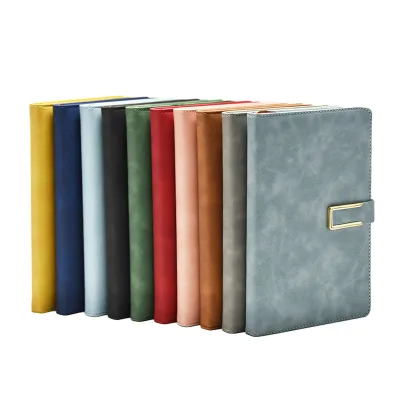
The market for customized leather printing diaries offers a diverse range of options tailored for corporate gifting, promotional campaigns, and educational institutions. Based on observed listings, these products frequently feature PU leather covers, though some variants utilize genuine leather or other materials to meet specific aesthetic and durability requirements. Buyers can expect to find models designed as both standard diaries and functional organizers or planners, with customization available for cover printing, interior layouts, and binding styles. The primary use cases identified include pocket-sized gifts, school supplies, and corporate promotions, indicating that the product category serves both personal and B2B procurement needs.
When sourcing these items, it is critical to recognize that product attributes vary significantly between suppliers, even within the same category. While some listings specify a "Without Lock" configuration, others offer models equipped with locks for enhanced security. Similarly, interior page counts can range from 40 to 60 sheets, and binding methods may include spiral or hardcover options. The availability of customization extends to dimensions, with standard sizes like 21x28cm and 19.5x26.5cm appearing alongside fully custom specifications. This variability requires buyers to clearly define their functional requirements before engaging with potential suppliers to ensure the selected product aligns with their specific operational or gifting goals.
Product Scope and Observed Listing Signals
Buyers should first analyze the observed listing signals to understand the breadth of the available inventory, noting that price points and minimum order quantities (MOQs) fluctuate based on material and customization depth. The observed price range spans from $0.30 to $3.65 USD, suggesting a wide spectrum from basic promotional items to higher-end leather-bound planners. Correspondingly, the MOQs observed range from as low as 1 piece to 1,000 units, offering flexibility for small-batch testing or large-scale distribution. This data indicates that suppliers are willing to accommodate diverse order sizes, but the unit cost will likely increase as the order volume decreases, a factor that must be weighed against the total budget.
The product scope also encompasses specific packaging and origin details that influence logistics and presentation. Many suppliers offer customized packing solutions, ranging from shrink-wrapped sets of three pieces to bulk carton boxes containing 60 units, while others provide palletized shipping for large orders. The geographic origin of these products is primarily concentrated in China, with specific manufacturing hubs noted in Hefei, Guangzhou, and Guangdong. Understanding these origin points is essential for estimating lead times and shipping costs, as well as for verifying the supply chain's stability. Buyers must verify if the "Customized" packing option aligns with their branding requirements or if standard bulk packaging is sufficient for their distribution channels.
Technical Specifications to Verify
Technical verification begins with the physical dimensions and structural integrity of the diary, as these directly impact usability and storage. Listings indicate standard sizes such as 21.6x14.2cm and 19.5x26.5cm, but many suppliers also offer fully custom dimensions to fit specific branding or ergonomic needs. Buyers must confirm the exact size requirements with the supplier, as the "Custom" standard listed in some catalogs implies a bespoke manufacturing process that may affect lead times and tooling costs. Additionally, the distinction between hardcover and spiral binding is a critical technical decision, as hardcover models often provide a more premium feel suitable for executive gifts, while spiral bindings offer superior lay-flat functionality for daily note-taking.
Interior specifications and surface finishes are equally vital for ensuring the product meets the intended application. The observed data highlights that inside pages can be printed with horizontal lines, and the page count typically falls between 40 and 60 sheets, though this can vary. Surface finishes such as embossing are available to add texture and visual appeal to the cover, enhancing the perceived value of the item. Buyers should also verify the printing type, with offset printing being a common method for high-quality image reproduction on the cover. Confirming these details ensures that the final product will not only look professional but also function effectively for its intended purpose, whether it is a school planner or a corporate agenda.
Compliance and Safety Documentation
While specific certification data is limited in the provided listings, buyers must proactively request compliance documentation to ensure the products meet international safety and environmental standards. The category knowledge suggests that materials like PU leather and paper should be free from harmful substances, and suppliers should be able to provide test reports verifying the absence of heavy metals, phthalates, or other regulated chemicals. Even if a specific certification like FSC is not explicitly confirmed in the current data, buyers should inquire about the sourcing of paper and the environmental impact of the leather alternatives used. This due diligence is crucial for companies with strict sustainability mandates or those exporting to regions with rigorous chemical regulations.
Safety documentation also extends to the manufacturing process and the final product's physical safety. Buyers should verify that the binding materials and any metal components, such as locks or spiral coils, are securely attached and do not pose a choking hazard or sharp edge risk. For products intended for school use or children, additional safety checks regarding the durability of the cover and the non-toxic nature of the inks used for printing are mandatory. Although some listings mention a "30 Days" guarantee, this typically refers to a warranty period for defects rather than a safety certification. Therefore, relying solely on a guarantee is insufficient; explicit safety test reports from accredited laboratories should be requested before finalizing any large order.
Cost Drivers and Commercial Terms
The cost of customized leather printing diaries is driven primarily by the choice of cover material, the complexity of the printing process, and the volume of the order. PU leather is a common and cost-effective option, but genuine leather or specialized finishes like embossing will increase the unit price. The observed price range of $0.30 to $3.65 reflects these material and process variations, with higher prices likely corresponding to premium materials or intricate custom designs. Buyers must balance their budget constraints with the desired quality, understanding that a lower price point may necessitate compromises on material durability or print resolution.
Commercial terms regarding payment and lead times are flexible but require clear negotiation to avoid misunderstandings. The observed data indicates that payment terms are "Can Discuss," suggesting that suppliers are open to various arrangements, though standard practices often involve a deposit followed by a balance before shipment. Lead times can vary significantly, with sample times noted as 7-10 days, but full production runs will depend on the complexity of the customization and the current factory workload. Buyers should explicitly agree on delivery schedules and payment milestones in the contract, ensuring that the "Customized" nature of the order does not result in unexpected delays or cost overruns.
Supplier Qualification and Quality Control
Supplier qualification should focus on their experience and capacity to handle customized orders consistently. The observed listings mention suppliers with over 10 years of experience, which is a strong indicator of their ability to manage complex production runs and maintain quality standards. However, experience alone is not a guarantee of performance; buyers must verify the supplier's track record with similar projects, particularly those involving custom printing and specific material requirements. Requesting references or case studies from previous clients can provide insight into the supplier's reliability and their ability to meet tight deadlines.
Quality control measures must be established before production begins to ensure the final product matches the approved samples. Buyers should insist on a pre-production sample approval process, where the physical prototype is checked for color accuracy, binding strength, and material quality. The observed "30 Days" guarantee suggests a willingness to address defects, but it is more effective to implement a rigorous inspection protocol during the production phase. This may include third-party inspections or in-house quality checks at critical stages, such as after the cover printing and before the final assembly. Clear quality acceptance criteria should be defined in the purchase agreement to minimize the risk of receiving substandard goods.
Long-Term Procurement Checks
Establishing a long-term procurement relationship requires regular performance reviews and continuous quality monitoring. Buyers should track key performance indicators such as on-time delivery rates, defect rates, and responsiveness to issues to ensure the supplier remains a reliable partner. Consistent communication is essential, especially when scaling up orders or introducing new product variations. Regular audits of the supplier's facilities and processes can help identify potential risks early and ensure that quality standards are maintained over time. This proactive approach helps build a resilient supply chain capable of adapting to market changes and demand fluctuations.
Sustainability and ethical sourcing should also be part of the long-term evaluation criteria. As environmental regulations tighten and consumer awareness grows, buyers must ensure their suppliers adhere to ethical labor practices and sustainable material sourcing. This includes verifying that the leather alternatives and paper products are sourced responsibly and that the manufacturing process minimizes environmental impact. By incorporating these factors into the supplier evaluation process, buyers can future-proof their procurement strategy and align their supply chain with broader corporate social responsibility goals. Continuous engagement with suppliers on these topics fosters a partnership based on shared values and long-term mutual success.
FAQs
What customization options are available for the diary cover?
Customization is available for the diary cover, allowing buyers to select specific materials and finishes. The products feature PU or leather covers with embossing surface finishes. Buyers can request printed styles or specific branding to meet their promotional or gift requirements. This flexibility ensures the final product aligns with unique corporate or personal design needs.
What are the standard sizes for the customized diaries?
Standard sizes vary by model, including dimensions like 21x28cm, 19.5x26.5cm, and 21.6x14.2cm. Some models offer A5 or A4 customized standards. Buyers can also request fully customized sizes to fit specific organizational needs. These dimensions cater to various uses, from pocket-sized notes to larger planners, ensuring practicality for school or office environments.
Can I order a small quantity of customized diaries?
Yes, small quantity orders are accepted for these customized diaries. The observed MOQ range spans from 1 to 1000 units, providing flexibility for different budget levels. This allows buyers to test market response or fulfill small-scale promotional needs without committing to large bulk purchases. Payment terms can also be discussed to accommodate specific financial arrangements.
What materials are used for the diary covers?
The diary covers are primarily made from PU leather or genuine leather materials. These materials provide durability and a professional appearance suitable for gifts or promotions. The choice of cover material contributes to the overall quality and tactile experience of the product. Buyers can select based on their preference for texture, cost, and aesthetic appeal.
What is the sample time for customized orders?
The sample time is typically 7-10 days for customized orders. This period allows manufacturers to prepare the specific design, material, and printing requirements requested by the buyer. It ensures that the final product meets the agreed-upon specifications before bulk production begins. Buyers should plan their procurement timeline accordingly to account for this preparation phase.
Are the diaries suitable for promotional gifts?
Yes, these diaries are explicitly listed for use as gifts, promotions, and school supplies. Their customizable nature makes them ideal for branding with company logos or event details. The variety of styles, from hardcover to spiral-bound, allows for versatile promotional strategies. They serve as practical and lasting items for recipients, enhancing brand visibility in professional or educational settings.