Source Customized Logo Artpaper Exercise Book for School, Gift, Promotion
Find 30 options for Customized Logo Artpaper Exercise Book with varying sizes and binding styles. Buyers can compare features like soft or hard covers, page counts, and printing types to select the best fit for school, gift, or promotional needs.
Key considerations
Products List


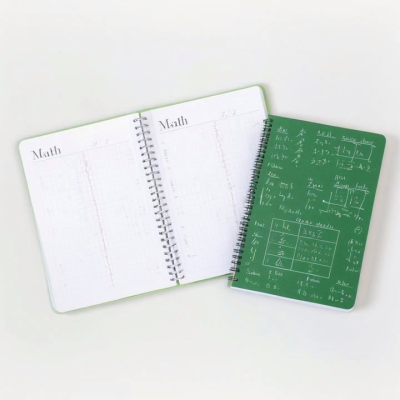


Hot Sell Custom Book Printing Children Activity Workbook Exercise Book Text Book
$0.50 - $1.50
MOQ: 500 pieces


Comprehensive Sourcing Guide
Strategic Sourcing Guide for Customized Logo Artpaper Exercise Books
The procurement of customized logo artpaper exercise books represents a specialized segment within the broader stationery and promotional materials market. Buyers seeking this specific product category must navigate a landscape defined by variable material compositions, diverse binding techniques, and flexible customization parameters. The core keyword "Customized Logo Artpaper Exercise Book" implies a need for a product that combines the visual appeal of art paper with the functional utility of an exercise book, enhanced by branding capabilities. This guide provides a structured approach to evaluating suppliers, verifying technical specifications, and managing the procurement lifecycle for these items without relying on unverified external claims.
Technical Specifications and Material Composition
Understanding the physical attributes of the product is the first step in defining a precise requisition. The supplied data indicates a wide variance in product configurations, suggesting that "artpaper exercise book" is not a monolithic item but a category with distinct sub-types. A critical observation from the available product facts is the diversity in cover materials. Some listings specify "Soft Paper" covers, while others explicitly state "Hard Paper" or "Cardboard." This distinction is vital for buyers, as the structural integrity and perceived value of the book depend heavily on the cover choice. The material specification also includes "Art Paper," "Coated Paper," and "Paperboard," which directly influences the print quality and durability of the customized logo.
The internal structure of these books varies significantly as well. The observed data points to two primary configurations for inner pages: one range specifies 40-60 sheets, while another indicates 80-120 sheets. This difference impacts the total page count and the thickness of the final product. Furthermore, the printing layout on the inside pages is noted as "Horizontal Line," which is a standard requirement for exercise books intended for writing. However, buyers must verify if this is consistent across all suppliers or if lined, grid, or blank options are available, as the provided facts only confirm the horizontal line attribute for specific models.
Binding methods are another critical technical variable. The data reveals the existence of both "Saddle Stitched" and "Spiral" binding options. Saddle stitching is typically used for thinner booklets, often associated with the 40-60 sheet range, whereas spiral binding is common for heavier, more durable exercise books that need to lay flat. The choice of binding affects the production process, the cost, and the user experience. Additionally, the surface finish is listed as "Film Lamination" or "Embossing" in different contexts. Lamination provides a protective layer against moisture and wear, while embossing adds a tactile dimension to the cover, which can enhance the visibility of a customized logo.
Compliance, Certification, and Standard Verification
When sourcing customized products, compliance with safety and quality standards is paramount, particularly for items used in educational settings. The supplied facts mention "Eco" as a feature, suggesting that some suppliers may offer environmentally friendly materials or processes. However, this is a general attribute and does not constitute a specific certification like FSC (Forest Stewardship Council) or ISO 14001. Buyers must not assume that a product labeled "Eco" automatically meets specific regulatory requirements for school supplies in their target market. Instead, the procurement strategy should involve a direct request for certification documentation from the supplier.
Regarding physical standards, the data presents a fragmented view of sizing. Observed dimensions include 1722CM, 16.524 cm, 2129.7CM (which corresponds to A4), and 1924.5CM. There is also a mention of "Custom Size" and "A4" as standard options. This variability indicates that there is no single universal standard for "exercise book" dimensions in this context. Buyers must clearly define their required dimensions in the purchase order. The absence of a single dominant standard means that buyers should verify the exact tolerance levels for the size, as a deviation of even a few millimeters can affect the fit of custom covers or the stacking of inventory.
The origin of the products is noted as Hefei, China, and Guangdong, China. While these are known manufacturing hubs, the specific location does not inherently guarantee compliance with international safety standards. Buyers should verify that the inks used for the customized logo and the paper materials comply with relevant regulations such as REACH in Europe or CPSIA in the United States, especially if the books are intended for children. The provided facts do not list specific test results or compliance certificates, so due diligence in this area is essential to avoid regulatory hurdles.
Cost Drivers and Pricing Dynamics
The pricing for customized logo artpaper exercise books is influenced by several interconnected factors, as evidenced by the observed price range of 0.03 to 7.88 USD. This wide disparity suggests that the final unit cost is highly dependent on the complexity of the customization and the volume of the order. The minimum order quantity (MOQ) data shows a range from 1 piece to 50,000 pieces. This flexibility allows buyers to test the market with small quantities or secure bulk pricing for large campaigns. However, the unit price will inevitably decrease as the order volume increases, a standard economic principle in manufacturing.
Material costs are a primary driver. The use of "Art Paper" and "Coated Paper" generally commands a higher price than standard newsprint due to the superior print quality and finish. The choice between "Soft Paper" and "Hard Paper" covers also impacts the cost, with hard covers typically requiring more material and labor. Additionally, the surface finish plays a role; "Film Lamination" and "Embossing" are value-added processes that increase the production cost compared to uncoated or matte finishes.
The customization of the logo is another significant cost variable. The data confirms that "Customized Logo" and "Customized Slogan" are accepted services. The complexity of the logo design, the number of colors used, and the printing technique (e.g., offset printing vs. digital) will affect the setup costs and the per-unit price. Suppliers may charge a one-time setup fee for creating the printing plates or molds, which can be amortized over larger orders. Buyers should also consider the "Payment" terms, which are listed as "Can Discuss," indicating that financial arrangements are negotiable and may influence the overall cost structure.
Typical Applications and Usage Scenarios
The versatility of customized logo artpaper exercise books makes them suitable for a broad spectrum of applications. The observed usage categories include "Pocket," "Gift," "Promotion," and "School." This diversity allows buyers to target different market segments with a single product type, adapting the specifications to fit the intended use.
For the "School" segment, the product must prioritize durability and functionality. The "Horizontal Line" inside pages and the "Spiral" or "Saddle Stitched" binding are particularly relevant here. The "Hard Paper" cover option is likely preferred for school workbooks to withstand daily handling. The "Eco" feature may also be a selling point for educational institutions looking to reduce their environmental footprint.
In the "Promotion" and "Gift" sectors, the aesthetic appeal is paramount. The "Art Paper" cover and "Film Lamination" finish provide a premium look that enhances brand perception. The ability to customize the logo and design allows companies to create unique promotional items that stand out. The "Pocket" size variants, such as those measuring 1722CM or 16.524 cm, are ideal for portable notebooks that can be easily carried in bags or pockets, making them effective for trade shows or corporate events.
The "School Exercise Book" and "Workbook" applications specifically benefit from the "Customized" nature of the product. Schools can brand their own workbooks with their logos, fostering a sense of identity and professionalism. The "Small Quantity Accepted" attribute mentioned in the data is particularly useful for schools or organizations that need to order specific batches without committing to massive volumes.
Supplier Evaluation and Selection Criteria
Selecting the right supplier requires a rigorous evaluation process based on the capabilities observed in the market. The data indicates that suppliers offer a wide range of customization options, including "Custom Size," "All Colors," and "Accept Customized Logo." This suggests a high level of flexibility, but it also means that buyers must clearly communicate their requirements to avoid misunderstandings.
Buyers should prioritize suppliers who demonstrate transparency in their production capabilities. The mention of "OEM" (Original Equipment Manufacturer) as a brand name indicates that suppliers are capable of manufacturing products under the buyer's brand. However, buyers should verify the supplier's capacity to handle the specific materials and finishes required, such as "Embossing" or "Film Lamination." The location of the suppliers, primarily in Hefei and Guangdong, China, should be considered in terms of logistics and lead times, although specific lead time data is not provided in the facts.
The "Payment" terms being "Can Discuss" is a positive indicator of supplier flexibility. Buyers should negotiate terms that align with their cash flow, potentially requesting a deposit structure that minimizes risk. Additionally, the ability to accept "Small Quantity" orders suggests that suppliers are willing to work with diverse order sizes, which is beneficial for buyers testing new markets or fulfilling niche demands.
Quality Control and Long-Term Procurement Considerations
Ensuring consistent quality is critical for maintaining brand reputation, especially when the product features a customized logo. The "Surface Finish" options like "Embossing" and "Film Lamination" require precise manufacturing control. Buyers should establish clear quality control protocols that specify acceptable tolerances for color matching, binding strength, and page alignment. The "Inner Pages" count must be verified to ensure it matches the ordered specification, whether it is the 40-60 sheet range or the 80-120 sheet range.
Long-term procurement considerations involve building a sustainable relationship with suppliers. The "Customization" availability suggests that suppliers can adapt to changing needs, but buyers should document all specifications to ensure consistency across future orders. The "Product Material" of "Paper & Paperboard" should be sourced from reliable suppliers to ensure that the quality remains stable over time.
Buyers should also consider the environmental impact of their procurement. The "Eco" feature mentioned in the data offers an opportunity to align with sustainability goals. However, buyers must verify the specific eco-friendly attributes, such as the use of recycled paper or soy-based inks, rather than relying on general claims. Establishing a long-term contract with a supplier who can consistently deliver high-quality, eco-friendly products will help streamline the procurement process and reduce the administrative burden of sourcing new vendors for each order.
Comparative Analysis of Product Configurations
To assist in decision-making, the following table summarizes the key variations observed in the product data. This comparison highlights the trade-offs between different configurations and helps buyers identify the most suitable option for their specific needs.
| Feature | Configuration A | Configuration B | Configuration C |
|---|---|---|---|
| Cover Material | Soft Paper | Hard Paper | Cardboard |
| Binding Type | Saddle Stitched | Spiral | Not Specified |
| Inner Pages | 40-60 Sheets | 80-120 Sheets | Variable |
| Standard Size | 17*22 CM | 16.5*24 CM | A4 (21*29.7 CM) |
| Surface Finish | Film Lamination | Embossing | Standard |
| Primary Usage | Pocket, Gift | School, Workbook | General Promotion |
| Customization | Logo, Size | Logo, Size | Logo, Size |
This table illustrates that no single configuration fits all use cases. Configuration A, with its soft cover and saddle stitching, is ideal for lightweight promotional items. Configuration B, featuring a hard cover and spiral binding, is better suited for durable school workbooks. Configuration C, with A4 sizing, targets users requiring standard document sizes. Buyers must weigh these factors against their specific application requirements and budget constraints.
Conclusion
Sourcing customized logo artpaper exercise books requires a nuanced understanding of the diverse product attributes available in the market. By carefully evaluating technical specifications, verifying compliance, analyzing cost drivers, and selecting suppliers based on their flexibility and quality control capabilities, buyers can secure products that meet their specific needs. The wide range of options, from soft to hard covers and various binding methods, offers significant opportunities for differentiation. However, the lack of standardized dimensions and certifications necessitates a proactive approach to specification and verification. Ultimately, successful procurement in this category depends on clear communication, rigorous quality assurance, and a strategic approach to supplier relationships.
FAQs
What binding options are available for these exercise books?
Both saddle stitched and spiral binding options are available for these exercise books. The choice depends on the inner page count, with saddle stitching typically used for thinner 40-60 sheet models and spiral binding suited for heavier 80-120 sheet workbooks.
Can I order a customized logo on these art paper books?
Yes, customized logos and slogans are accepted for these products. Suppliers offer OEM services allowing you to brand the cover with your specific design, often utilizing film lamination or embossing to enhance the visual appeal of the logo.
What are the standard dimensions for these customized exercise books?
Standard dimensions vary, including sizes like 17*22CM, 16.5*24 cm, and 21*29.7CM which corresponds to A4. Custom sizes are also available, allowing buyers to specify exact requirements beyond the standard 19*24.5CM or A4 options found in the catalog.
What is the minimum order quantity for these products?
The minimum order quantity ranges from 1 piece to 50,000 pieces depending on the supplier and specific configuration. Some vendors accept small quantities for testing, while bulk orders may require higher volumes to achieve optimal pricing tiers.
Which cover materials can be selected for these books?
Buyers can choose between soft paper, hard paper, cardboard, or art paper covers. The material selection impacts durability and cost, with hard paper preferred for school workbooks and soft paper often used for promotional pocket-sized notebooks.
How are these books packaged for shipping?
Packaging configurations vary by model, with options like 3 pieces per shrink wrap and 60 pieces per carton, or 12 pieces per shrink wrap and 96 pieces per carton. The specific packing method depends on the product model and size ordered.