Source Customized Logo Leather Notebook for Gift, School, and Promotion
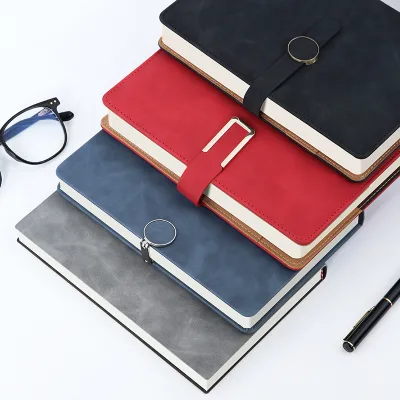
Compare 30 Customized Logo Leather Notebook options featuring glue binding, magnetic locks, and embossed logos. Buyers can evaluate variations in paper weight, size, and customization services from suppliers in China.
Key considerations
Products List


Unionpromo Custom Leather Notebook Diary Book Business Leather Notebook
$10.47 - $13.95
MOQ: 500 Pieces


Hot Selling Customized PU Leather Cover Diary Notebook with Good Quality
$2.34 - $2.46
MOQ: 600 Pieces




Comprehensive Sourcing Guide
Strategic Sourcing Guide for Customized Logo Leather Notebooks
Understanding Product Variants and Technical Specifications
When sourcing customized logo leather notebooks, buyers must first navigate the diverse landscape of technical specifications available in the market. The core keyword implies a specific aesthetic and material composition, yet the actual product offerings vary significantly in construction and function. Based on observed market data, the "leather" designation often encompasses genuine leather as well as high-quality PU (Polyurethane) alternatives. The market data indicates that cover materials are frequently listed as either Leather or PU, suggesting that buyers should verify the exact material composition to ensure it aligns with brand expectations and durability requirements.
The binding methods observed in the supply chain are equally varied, ranging from Glue Bound to Thread Sewing. Thread sewing generally offers superior longevity for frequently used planners, while glue binding is common for cost-effective diary styles. Inside page configurations also differ; some products feature horizontal lines for structured note-taking, while others offer blank pages for creative freedom. The paper quality is a critical technical differentiator, with observed GSM (grams per square meter) values ranging from 80 GSM to 160 GSM. A standard observation includes 80 GSM Offset Creamy paper for general use, while premium options may utilize 100 GSM Ivory Offset Paper. Buyers must specify the desired paper weight, as this directly impacts the feel of the notebook and the suitability for different writing instruments.
Furthermore, the customization of the logo is a central feature. The market supports multiple application techniques, including Embossed, Debossed, Printed, and Hot Stamped options. The choice between these methods affects the tactile experience and visual impact of the branding. While some products feature a simple embossed logo, others allow for complex printed designs. The physical dimensions of the notebooks also vary, with standard sizes including A5, A6, and A7 formats, as well as specific measurements like 19.526.5cm or 2128cm. Understanding these technical variables is the first step in defining a precise procurement requirement that prevents mismatched expectations.
Compliance, Certification, and Material Verification
In the B2B procurement of branded stationery, compliance and material verification are paramount, especially when the product is intended for corporate gifting or promotional use. While the supply data highlights the availability of customization, it does not explicitly confirm universal certification status for all listed items. Buyers should be aware that while some market segments reference certifications such as FSC (Forest Stewardship Council) for paper sourcing, this is not a guaranteed attribute for every leather notebook listed. Therefore, the procurement strategy must include a specific verification step for environmental claims.
When evaluating suppliers, it is essential to request documentation regarding the origin of the leather or PU materials. If the product claims to be made from genuine leather, buyers should inquire about the tanning process and the environmental impact of the chemicals used. For PU covers, verifying the absence of harmful substances like phthalates is a standard due diligence step. Although the data mentions a "Custom" standard for production, it does not list specific international safety standards as a universal baseline. Consequently, buyers should explicitly ask suppliers to confirm compliance with relevant safety regulations for the destination market, such as REACH in Europe or CPSIA in the United States, rather than assuming compliance based on general product descriptions.
The paper used inside the notebook also requires verification. The observed range of 80 GSM to 160 GSM Offset paper suggests a variety of sources. If sustainability is a key procurement goal, the buyer must specifically request FSC-certified paper options, as this is not an inherent feature of all "customized logo leather notebooks." Additionally, the production origin, observed in the data as Shenzhen and Hefei in China, implies that logistics and supply chain transparency are critical. Buyers should verify the factory's ability to provide traceability for raw materials, ensuring that the leather or synthetic alternatives meet the ethical sourcing standards required by their corporate social responsibility policies.
Cost Drivers and Pricing Structure Analysis
The pricing structure for customized logo leather notebooks is influenced by a complex interplay of material costs, customization complexity, and order volume. The observed price range in the market spans from $0.05 to $13.95, a significant variance that reflects differences in quality, material authenticity, and order quantity. The lower end of this spectrum typically corresponds to PU covers with basic glue binding and simple printed logos, often produced in high volumes. Conversely, the upper end of the price range likely reflects genuine leather covers, thread-sewn binding, and multi-step logo application processes like hot stamping or deep embossing.
Order Volume is a primary cost driver. The observed Minimum Order Quantity (MOQ) ranges from 1 to 1000 units. For buyers seeking the lowest unit price, negotiating an MOQ closer to the 1000-unit mark is generally necessary to access the most competitive rates. However, for smaller promotional campaigns or pilot programs, suppliers offering lower MOQs are available, albeit at a higher per-unit cost. The customization level also significantly impacts the final price. Adding a logo via embossing or debossing incurs additional tooling and setup costs compared to standard printing. Furthermore, the choice of paper weight and cover thickness adds to the material cost; a 160 GSM inner page is more expensive than 80 GSM, and a 2mm thickness cover requires more material than a standard thin cover.
Payment terms are another factor to consider in the total cost of ownership. The market data indicates that payment terms are often "Can Discuss," suggesting flexibility for established buyers. Buyers should negotiate terms that align with their cash flow, potentially seeking letters of credit or staged payments for large orders. It is crucial to understand that the base price of the notebook is only one component; shipping costs, which depend on the origin location (Shenzhen or Hefei), and any duties or tariffs imposed by the destination country must be factored into the total budget. A comprehensive cost analysis should compare the total landed cost rather than just the FOB price to ensure accurate budgeting.
Typical Applications and Usage Scenarios
Customized logo leather notebooks serve a versatile range of applications, making them a staple in corporate gifting, educational institutions, and promotional campaigns. The observed usage categories include Gift, School, Promotion, and Office Work. In the corporate sector, these notebooks are frequently used as executive gifts or conference swag. The "Gift" and "Promotion" tags in the data highlight their suitability for brand visibility. A leather notebook with an embossed company logo projects a sense of professionalism and quality, making it an effective tool for client retention or employee appreciation.
The "School" usage category indicates that these products are also popular in the educational sector. Students and educators often prefer leather-bound planners for their durability and aesthetic appeal. The availability of different styles, such as "Mini" or "Hardcover," allows buyers to select products that fit specific user needs. For instance, a "Mini" style might be ideal for students carrying a backpack, while a "Hardcover" style with a ribbon bookmark is better suited for office professionals who need a durable, long-lasting planner. The inclusion of accessories like ribbon bookmarks further enhances the utility of these notebooks for daily planning, as noted in the "Daily Weekly Monthly Planner Notebook" feature.
Additionally, the "Office Work" function suggests that these notebooks are designed for professional environments where organization is key. The presence of features like "Magnetic" locks or "Thread Sewing" binding caters to users who require a secure and robust writing surface. The versatility of the product allows it to be adapted for various specific needs, from daily diaries to project planners. Buyers should consider the specific context in which the notebook will be used to select the appropriate style, binding, and paper type. For example, a notebook intended for heavy daily use should prioritize thread sewing and high-GSM paper, while a promotional giveaway might prioritize cost-effectiveness and visual impact.
Supplier Evaluation and Selection Criteria
Selecting the right supplier for customized logo leather notebooks requires a rigorous evaluation process that goes beyond price comparisons. The market data reveals that suppliers are located in specific hubs like Shenzhen and Hefei, China. While these locations are known for manufacturing capabilities, buyers must verify the specific factory's capacity to handle custom orders. Key evaluation criteria should include the supplier's experience with leather and PU materials, their ability to execute complex logo customization techniques, and their track record for on-time delivery.
Buyers should request samples to assess the quality of the leather or PU cover, the smoothness of the binding, and the clarity of the logo application. The observed variation in binding methods (Glue Bound vs. Thread Sewing) means that a sample review is essential to ensure the product meets durability expectations. Additionally, the supplier's responsiveness to customization requests is critical. The data indicates that "Complete Customization" is available, but the extent of this customization varies. A reliable supplier should be able to provide design support, offer material samples, and guide the buyer through the selection of paper weights and cover styles.
Transparency in the supply chain is another vital factor. Buyers should ask for details about the production process, including lead times and quality control measures. Although specific lead times are not provided in the data, the ability of the supplier to provide a realistic timeline is a strong indicator of reliability. Furthermore, the supplier's willingness to discuss payment terms and their flexibility in handling different order sizes (from 1 to 1000 units) can be a deciding factor. A supplier that offers clear communication and demonstrates a commitment to quality will be better equipped to handle the nuances of a custom order than one that simply offers a low price.
Quality Control and Long-Term Procurement Considerations
Implementing a robust quality control (QC) protocol is essential for ensuring that customized logo leather notebooks meet the buyer's standards. Given the observed variations in materials and construction, a pre-shipment inspection is highly recommended. Buyers should verify the consistency of the leather or PU finish, checking for defects such as scratches, discoloration, or uneven coloring. The binding should be inspected for strength, ensuring that pages do not detach easily. For notebooks with printed logos, the color accuracy and registration must be checked against the approved proof.
Long-term procurement considerations involve building a sustainable relationship with a supplier who can maintain consistent quality over multiple orders. The "Custom" standard mentioned in the data implies that each order may have unique requirements, making it difficult to rely on a single "off-the-shelf" product. Buyers should establish clear quality benchmarks and communicate them effectively to the supplier. This includes defining acceptable tolerances for dimensions, paper weight, and logo placement. Regular audits or third-party inspections can help maintain these standards over time.
Finally, buyers should consider the scalability of their procurement strategy. As the demand for customized notebooks grows, the supplier must be able to scale production without compromising quality. The observed MOQ range of 1 to 1000 suggests that suppliers can handle both small and large orders, but the buyer should confirm the supplier's capacity for larger volumes. Additionally, the ability to adapt to changing market trends, such as new logo application techniques or sustainable material options, is a key indicator of a supplier's long-term viability. By focusing on quality, communication, and scalability, buyers can ensure a successful and sustainable sourcing strategy for customized logo leather notebooks.
FAQs
Can I get a customized logo on a leather notebook?
Yes, customization is available for logo application. You can choose from embossed, debossed, printed, or hot stamped techniques to match your brand identity on the cover material.
What paper weights are available for the inside pages?
The product range includes paper weights from 80 GSM to 160 GSM. Common options are 80 GSM Offset Creamy or 100 GSM Ivory Offset Paper depending on your specific needs.
Which binding methods are offered for these notebooks?
Both glue bound and thread sewing binding methods are available. Thread sewing offers superior durability for frequent use, while glue binding is common for cost-effective diary styles.
What are the standard sizes for these planners?
Standard sizes include A6, A5, and A7 formats. Specific dimensions observed are 19.5 by 26.5 cm, 21 by 28 cm, and 21.6 by 14.2 cm for various models.
Where are these notebooks manufactured?
Manufacturing locations include Shenzhen and Hefei in China. Buyers should verify specific factory details as origins vary between these two major production hubs.
What is the minimum order quantity for these items?
The minimum order quantity ranges from 1 to 1000 units. Lower MOQs are available for pilot programs, while higher volumes typically secure better per-unit pricing.
Are these notebooks suitable for school and office use?
Yes, they are designed for school, office work, and promotional gifts. Features like ribbon bookmarks and durable covers make them ideal for daily planning and professional environments.