Source Customized Logo Luxury Porcelain Plate for Weddings, Hotels, and Daily Dining
Compare 30 listings for Customized Logo Luxury Porcelain Plate options featuring FDA-certified ceramics and eco-friendly designs. Buyers can evaluate sizes ranging from 5 to 18 inches, various models like RY2530, and MOQs starting at 10 pieces for wedding, hotel, or daily use applications.
Key considerations
Products List

Customized Logo Decal Printing Ceramic Plate/Soup Plate/Rice Plate/Porcelain Plate
$0.50 - $1.00
MOQ: 2000 Pieces


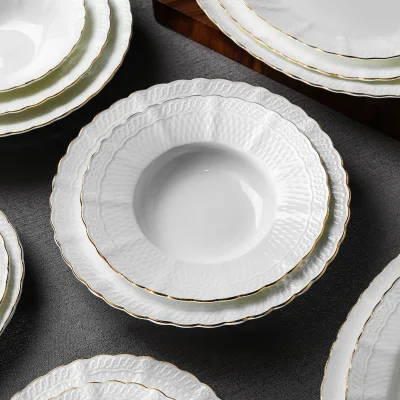


Luxury Ceramic Dinner Plate Round Ceramic Fruit Plate Custom Porcelain Food Plate
$1.00 - $5.00
MOQ: 5000 Sets
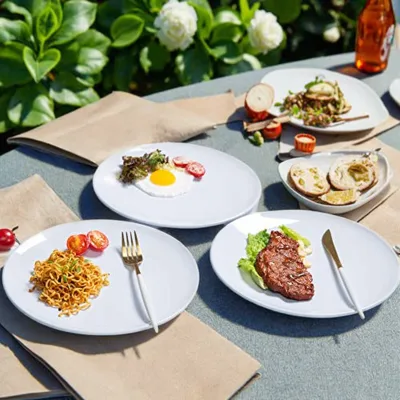


Comprehensive Sourcing Guide
Strategic Sourcing Guide for Customized Logo Luxury Porcelain Plates
Understanding the Material Foundation and Technical Specifications
The foundation of any successful procurement of customized logo luxury porcelain plates lies in a precise understanding of the raw materials and technical specifications that define the product's quality. In the current market, the primary material composition for these items is consistently identified as ceramic and porcelain, with specific references to high-grade porcelain as the raw material. This distinction is critical because the term "porcelain" implies a specific firing temperature and density that differentiates it from standard earthenware, directly influencing the plate's durability, translucency, and acoustic properties. Buyers must verify that the supplier explicitly states the use of porcelain rather than generic ceramic to ensure the "luxury" designation is substantiated by the material's inherent characteristics.
Technical specifications for these dinnerware sets often vary significantly based on the intended application and the customization requirements. Observed data indicates a wide range of standard sizes, including specific measurements such as 9cm, as well as broader size ranges like 6-16 inches. The market also features specific standard designations such as 7#, 8#, and 9#, which are traditional sizing metrics often used in Asian manufacturing contexts to denote plate diameter and depth. Furthermore, specific model numbers like RY2530, RY1136, and RY1121 serve as unique identifiers for different product lines, each potentially carrying distinct dimensional profiles. When sourcing, buyers should not assume a single standard size applies to all luxury options. Instead, the procurement strategy must account for a spectrum of sizes, from small appetizer plates (5", 7", 9") to large dinner and serving plates (12", 14", 16", 18"). The ability to customize these dimensions is a key feature, allowing buyers to tailor the product to specific table settings or branding requirements.
The production technique is another vital technical parameter. The observed market data highlights "glazed" techniques and "handmade" methods as prevalent in this category. A glazed finish is essential for luxury porcelain as it provides a smooth, non-porous surface that is easy to clean and enhances the visual appeal of the custom logo. The handmade aspect suggests a higher level of craftsmanship, which often correlates with a more unique aesthetic and a higher price point. However, buyers must balance the "handmade" claim with the need for consistency, especially when ordering large quantities. The production origin, frequently cited as Linyi City in Shandong Province or Chazhou in Guangdong Province, China, indicates specific regional manufacturing hubs known for ceramic production. These regions possess the necessary infrastructure and expertise to handle the complex firing processes required for high-quality porcelain.
Compliance, Certification, and Safety Standards
For luxury dinnerware intended for daily use or high-end hospitality, compliance with international safety standards is non-negotiable. The primary certification observed in the market for these porcelain plates is the FDA (Food and Drug Administration) certification. This certification is a critical benchmark for products intended for food contact, ensuring that the materials used, including the glaze and the body of the porcelain, do not leach harmful substances into food. Buyers must explicitly request and verify current FDA compliance documentation for the specific model they intend to purchase, as certification status can vary between production batches or specific product lines.
Beyond FDA, the market context mentions BSCI (Business Social Compliance Initiative) as a relevant background standard, though it is noted with lower confidence in the immediate product data. This suggests that while social compliance is a consideration in the broader industry, the primary focus for the buyer should remain on food safety certifications. When evaluating suppliers, the procurement team should prioritize those who can provide clear, verifiable documentation for FDA compliance. It is also prudent to inquire about other potential certifications relevant to the target market, such as LFGB for European markets or specific lead and cadmium leaching test results, even if not explicitly listed in the initial product data. The "Eco-Friendly" attribute observed in the product features further supports the need for environmentally responsible manufacturing practices, which often align with stricter safety and material purity standards.
The "Health Care" function listed in the product attributes implies that the porcelain may offer additional benefits beyond basic food safety, such as being free from heavy metals or having specific thermal properties. However, buyers should treat these as observations rather than guaranteed claims without independent verification. The "Stocked" feature indicates that some suppliers may offer ready-to-ship inventory, which can be advantageous for urgent orders, but it also necessitates a check on the freshness and storage conditions of the stock to ensure no quality degradation has occurred.
Cost Drivers and Pricing Dynamics
The pricing structure for customized luxury porcelain plates is influenced by a complex interplay of factors, including material grade, customization complexity, order volume, and packaging requirements. The observed price range in the market spans from $0.40 to $19.85 USD, a significant variance that reflects the diversity of product offerings. The lower end of this range likely corresponds to standard, non-customized, or mass-produced items, while the higher end reflects the premium associated with "Morden Luxury" styles, handmade techniques, and specific customization requests.
One of the primary cost drivers is the customization of the logo. While the "Customization" and "Customized" attributes are widely available, the extent of this customization significantly impacts the unit cost. Simple screen printing or decal application may be less expensive than intricate hand-painting or high-resolution transfer printing that requires multiple firing cycles. The "Grade: AB Grade" specification suggests that there are tiers of quality within the porcelain itself, with Grade A representing the highest quality and Grade B potentially having minor cosmetic imperfections. Buyers must clarify which grade is being supplied, as this directly affects the price and the suitability for luxury branding.
Minimum Order Quantity (MOQ) is another critical cost factor. The observed MOQ range is vast, spanning from 1 piece to 5,000 pieces. For buyers seeking to test the market or launch a new brand, suppliers offering an MOQ of 10 pieces or even single units provide a low-risk entry point. However, the unit price will be significantly higher at these lower volumes. As the order quantity increases, economies of scale typically kick in, reducing the per-unit cost. The "MOQ: 10pcs" observed for specific luxury items indicates that some suppliers are willing to accommodate smaller orders for high-value products, but this flexibility often comes with a premium.
Packaging costs also play a substantial role in the final landed cost. The standard packaging described includes "Inner Box + Carton" and "Standard Export Carton," with specific single package sizes noted, such as 42x35x18 cm. Custom packaging, which is often required for luxury branding to reinforce the brand identity, will add to the overall cost. Buyers should factor in the cost of custom-printed boxes and the associated labor for packing when calculating the total budget. Additionally, the "Fob" (Free on Board) term mentioned in the product attributes indicates that the price may not include shipping and insurance, requiring buyers to budget separately for logistics.
Typical Applications and Market Segmentation
Customized logo luxury porcelain plates serve a diverse range of applications, extending beyond simple household use. The observed "Usage" categories include "Dinnerware," "Daily Use," and specific event-based applications such as "Wedding," "Hotel," "Restaurant," and "Party." This versatility allows buyers to target multiple market segments with a single product line, provided the customization aligns with the specific needs of each segment.
For the hospitality industry, including hotels and restaurants, the plates must meet rigorous standards for durability, aesthetics, and stackability. The "Thermostability" function is particularly important here, as plates must withstand rapid temperature changes without cracking or discoloring. The "Eco-Friendly" attribute is increasingly valuable in this sector, as many establishments are seeking sustainable options to appeal to environmentally conscious consumers. The "Morden Luxury" style suggests a design aesthetic that appeals to high-end dining experiences, where the presentation of food is as important as the taste.
In the retail and corporate gifting sectors, the "Customized" aspect is paramount. Businesses often order these plates with their own logos for promotional events, corporate gifts, or branded merchandise. The ability to create a unique, branded product helps companies reinforce their identity and provide a tangible, high-quality item that reflects their brand values. The "Stocked" availability mentioned in the product features can be a significant advantage for businesses with tight deadlines, allowing them to receive branded products quickly without waiting for a long production run.
For the wedding and event industry, the plates serve as both functional dinnerware and decorative elements. The "Unicolor" attribute and the range of available sizes allow for cohesive table settings that match specific wedding themes. The "Handmade" nature of the product adds a touch of exclusivity and artistry that is highly valued in these contexts. Buyers targeting this segment should focus on suppliers who can offer a high degree of customization in terms of shape, size, and logo placement to ensure the plates perfectly match the event's aesthetic.
Supplier Evaluation and Quality Control Protocols
Selecting the right supplier is a critical step in the procurement process, requiring a thorough evaluation of their capabilities, reputation, and quality control systems. Given the "Handmade" nature of the products, buyers should assess the supplier's ability to maintain consistency across large production runs. While the "Customization" feature is available, the execution of a custom logo on a handmade product requires skilled artisans and precise quality control to ensure the logo is centered, clear, and free of defects.
Buyers should verify the supplier's production capacity and lead times, even though specific lead time data is not provided in the initial facts. The "Production Name: Dinnerware Sets" and the variety of model numbers suggest that suppliers may have multiple production lines. It is essential to confirm that the supplier can handle the specific order volume required, whether it is a small batch of 10 pieces or a large order of 5,000. The "Standard Export Carton" packaging indicates a level of professionalism in logistics, but buyers should still inspect the packaging quality to ensure it protects the fragile porcelain during transit.
Quality control protocols should be a central part of the supplier evaluation. Buyers should request samples before placing a large order to assess the physical quality of the porcelain, the clarity of the glaze, and the accuracy of the custom logo. The "FDA" certification should be verified through official documentation, and buyers should consider conducting their own third-party testing to ensure compliance with local regulations. The "Grade: AB Grade" specification highlights the importance of inspecting for cosmetic defects, as even minor imperfections can detract from the "luxury" appeal of the product.
Long-Term Procurement Considerations and Strategic Planning
Sourcing customized luxury porcelain plates is not merely a transactional activity but a strategic decision that can impact a brand's long-term success. Buyers should consider the scalability of their supplier relationship. As the business grows, the ability to increase order volumes without compromising quality or lead times is crucial. The wide MOQ range observed in the market suggests that many suppliers are flexible, but buyers should negotiate terms that allow for gradual scaling.
Sustainability is another long-term consideration. The "Eco-Friendly" attribute is a growing trend in the industry, and buyers should prioritize suppliers who demonstrate a commitment to sustainable practices. This includes using eco-friendly materials, reducing waste in the production process, and employing energy-efficient firing techniques. The "Health Care" function also aligns with long-term consumer trends towards wellness and safety, making it a valuable selling point for the final product.
Finally, buyers should plan for the lifecycle of the product. The "Non-Disposable" nature of the plates indicates that they are designed for long-term use, which requires durable materials and robust construction. However, the "Customized" aspect means that the product may become obsolete if the brand changes its logo or design. Buyers should consider the flexibility of the customization process to allow for updates or variations in future orders. By focusing on these long-term factors, buyers can build a sustainable and profitable supply chain for their customized luxury porcelain plates.
FAQs
Can I customize the logo on these porcelain plates?
Yes, customization is available for these luxury porcelain plates. Suppliers offer options to add specific logos or designs, with production methods including glazed techniques and handmade finishing to ensure high-quality branding on the ceramic surface.
What certifications do these ceramic dinnerware sets have?
These porcelain plates carry FDA certification to ensure food contact safety. This standard verifies that the materials and glazes used do not leach harmful substances, making them suitable for daily use in hotels, restaurants, and private homes.
Which sizes are available for the custom porcelain plates?
Available sizes range from 9cm up to 18 inches depending on the specific model. Options include standard designations like 7#, 8#, and 9#, as well as specific inch measurements such as 10, 12, 14, and 16 inches for various table settings.
What is the minimum order quantity for these dinnerware sets?
The minimum order quantity varies significantly, ranging from 1 piece to 5,000 pieces depending on the supplier. Some vendors offer low MOQs of 10 pieces for testing, while larger orders typically secure better unit pricing and standard export packaging.
How are these luxury plates packaged for export?
Products are packed in inner boxes combined with standard export cartons for protection. Specific package dimensions can reach 42x35x18 cm per unit, ensuring the glazed ceramic and custom logos remain intact during international shipping from China.
Where are these ceramic plates manufactured?
These porcelain plates originate from manufacturing hubs in China, specifically Linyi City in Shandong Province and Chazhou in Guangdong Province. These regions are known for their expertise in producing high-grade ceramic and porcelain tableware with various finishing techniques.
What is the price range for these customized dinnerware items?
The observed price range spans from 0.40 to 19.85 USD per unit based on the specific model and customization level. Lower prices typically reflect standard mass-produced items, while higher costs correspond to handmade, luxury-grade porcelain with complex branding.