Source Customized Paper Honeycomb Ball for Party Decor
Find 30 listings for Customized Paper Honeycomb Ball options suitable for holiday parties and indoor decorations. Compare specifications like size, material, and printing techniques to select the right party decoration supplies for your event needs; compare the available evidence and request quotations based on your requirements.
Key considerations
Products List
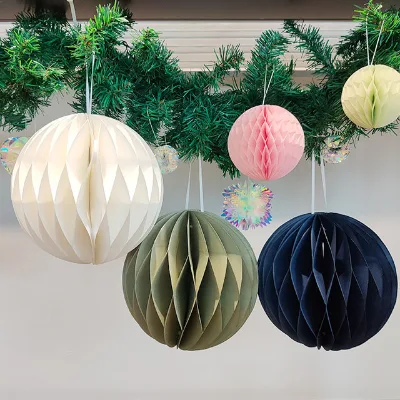
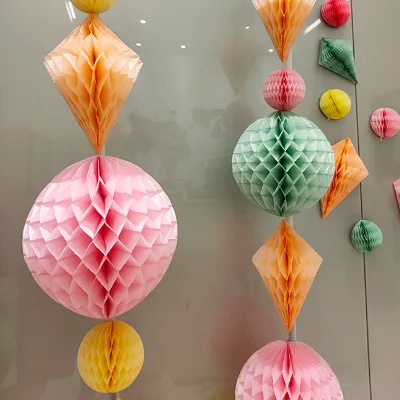
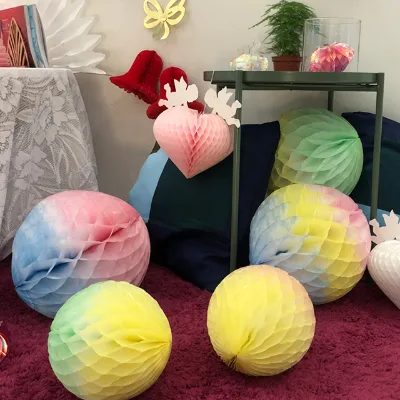

Honeycomb Balls Round Tissue Paper Honeycomb Ball for Wedding Party Decor
$0.25 - $0.28
MOQ: 2000 Pieces


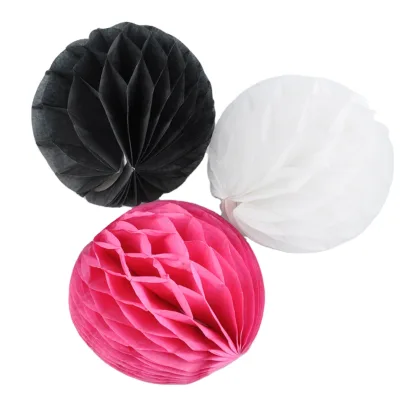


Multi Size and Color Party Event Decoration Tissue Paper Honeycomb Balls
$1.10 - $1.30
MOQ: 500 Pieces


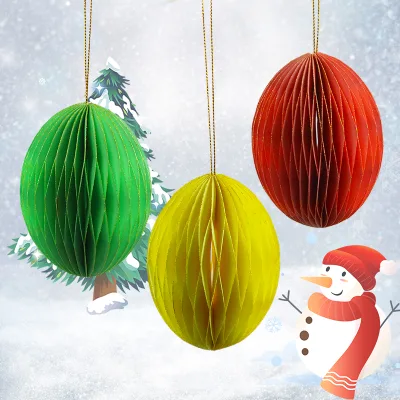


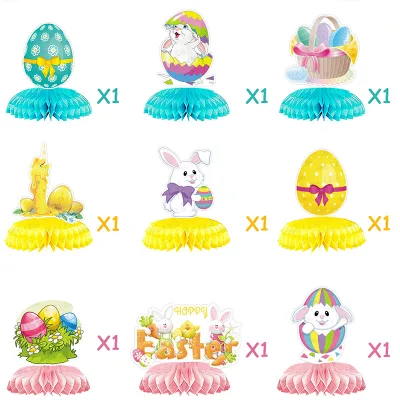
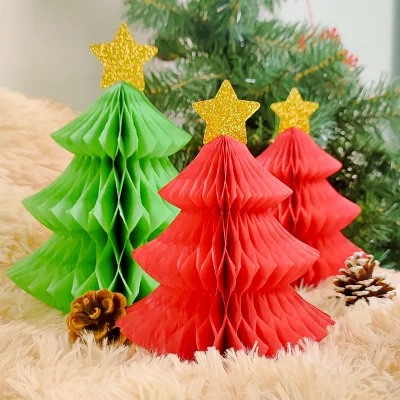
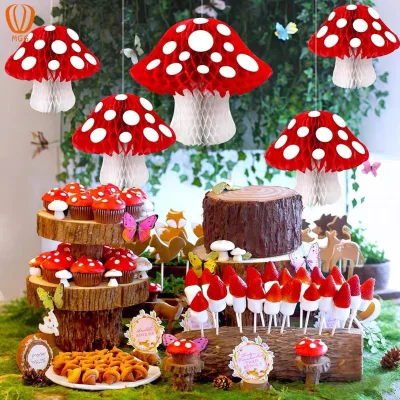
Comprehensive Sourcing Guide
Customized Paper Honeycomb Ball Sourcing Guide
Buyers evaluating this category must first distinguish between standard party decorations and specialized holiday items, as the supply chain often groups them under broad "Christmas Decoration Supplies" or "Party Decoration Supplies" labels. The observed market data indicates a diverse range of sizes, from compact 8cm units to large 30cm diameter spheres, which directly impacts packaging logistics and shipping costs. Procurement teams should verify whether the specific listing refers to a 20cm height art paper product or a 12-inch dip-dyed ball, as these distinct specifications dictate the required raw material volume and structural integrity.
The customization landscape for these items is defined by the availability of OEM and ODM services, allowing for tailored color schemes like green, navy, white, or pink to match specific event themes. While some listings explicitly state "Customized" as a feature, others may only offer standard color options, requiring buyers to confirm if the supplier can accommodate specific design requests for tissue paper or art paper variants. Understanding the distinction between a flat-packed 21x14x2.5 cm unit and a larger 30x15x30 cm package is essential for accurate freight estimation and warehouse planning before finalizing any order.
Product Scope and Observed Listing Signals
When analyzing product listings, buyers should note that the core material is consistently identified as either art paper or tissue paper, which influences the final texture and durability of the honeycomb structure. The observed data highlights specific model numbers such as CE-2P111 and CE-2P050, which serve as unique identifiers for different production runs or design iterations. It is critical to verify the "Single Package Size" and "Single Gross Weight" for each model, as a 0.130 kg unit requires different handling protocols compared to a lighter 0.025 kg item, affecting both unit shipping rates and palletization strategies.
The visual and functional scope extends to various shapes and styles, including "Cuté" designs and Western-style decorations suitable for holiday parties. Buyers must scrutinize the "Printing Method" details, as some products utilize offset printing with four-color capabilities while others may rely on dip-dyeing techniques. This distinction is vital for ensuring brand consistency, especially when the product is intended for high-visibility events where color accuracy and print quality are paramount for the end-user experience.
Technical Specifications to Verify
Verification of physical dimensions is the first technical step, as the market presents conflicting size data ranging from 3 inches to 12 inches in diameter. Procurement teams must confirm the exact height or diameter required for their specific application, ensuring the supplier provides the correct single package dimensions, such as 21x14x2.5 cm or 30x15x30 cm. Misalignment in these specifications can lead to significant logistical errors, including the inability to fit products into standard shipping containers or the need for costly repackaging upon arrival.
The structural composition and finishing techniques also require rigorous validation to ensure the product meets performance expectations. Buyers should confirm the "Printing Techniques" used, specifically whether offset printing is employed for graphic clarity, and verify the "Shape" attributes to ensure the ball maintains its form during transport. Additionally, checking the "Power Source" designation as "Non Power" confirms the item is a passive decoration, which simplifies safety compliance but requires careful handling to prevent deformation of the paper honeycomb structure.
Compliance and Safety Documentation
Safety compliance is a primary concern for products marketed as suitable for children, requiring verification of material safety standards and non-toxic certifications. While specific certification statuses like FSC or REACH are noted in background data, buyers must explicitly request current test reports to confirm that the art paper and tissue paper materials meet the safety requirements for the intended market. Relying on general "Eco Friendly" claims without documented proof can expose the buyer to liability, particularly when the product is used in environments with young children or in regulated retail sectors.
Documentation regarding the "HS CODE" of 9505900000 is essential for accurate customs classification and duty calculation, ensuring that the product is correctly identified as a Christmas or party decoration. Buyers should also verify the "Product Standard" designation, which may be listed as "Customized," to understand if the supplier adheres to specific industry benchmarks or if the product is made to a unique buyer specification. Confirming these details early prevents delays at customs and ensures that the product can be legally sold in the target region without regulatory hurdles.
Cost Drivers and Commercial Terms
The commercial landscape for these items is influenced by the "MOQ" range, which can vary significantly from 1 unit to 2000 units depending on the supplier's capacity and the level of customization required. Buyers must negotiate terms that align with their inventory strategy, as high-volume orders may unlock better unit pricing but require larger upfront capital commitments. Understanding the "Sample Time" of 5 to 7 days is also crucial for project planning, as this lead time impacts the overall timeline from design approval to mass production and final delivery.
Lead times for mass production are another critical cost driver, with some suppliers indicating a standard duration of 35 days after sample approval. This timeline must be factored into the procurement schedule to avoid stockouts during peak holiday seasons or event dates. Additionally, the "Packaging Details," such as flat packing with PE/OPP polybags, affect the final landed cost, as efficient packaging reduces volumetric weight and shipping expenses, making it a key area for cost optimization discussions with potential suppliers.
Supplier Qualification and Quality Control
Supplier qualification should focus on verifying their capability to handle both OEM and ODM services, ensuring they can adapt to specific design changes or branding requirements. Buyers must assess the supplier's "Place of Origin," noting that products may originate from Taiwan or China, as this influences shipping routes, tariffs, and potential supply chain risks. Evaluating the supplier's track record in handling "Customized" orders is essential, as the ability to manage complex specifications like dip-dyeing or specific color matching indicates a higher level of manufacturing maturity.
Quality control protocols must be established to ensure consistency across the production run, particularly given the "Eco Friendly" and "Handicraft" features that may introduce variability. Buyers should request pre-shipment inspections to verify that the "Single Gross Weight" and "Single Package Size" remain consistent with the agreed specifications. Establishing clear acceptance criteria for print quality and structural integrity is necessary to prevent the receipt of defective goods, ensuring that the final product meets the aesthetic and functional standards expected by the end consumer.
Long-Term Procurement Checks
Sustaining a successful procurement relationship requires regular audits of the supplier's ability to maintain consistent lead times and quality standards over multiple production cycles. Buyers should monitor the "Sample Time" and "Lead Time" performance to ensure that the supplier can meet deadlines consistently, especially during peak demand periods when capacity constraints may arise. Establishing a feedback loop for quality issues allows for continuous improvement, ensuring that any deviations in material quality or print accuracy are addressed promptly before they impact future orders.
Long-term viability also depends on the supplier's flexibility in adapting to changing market trends and customization requests. Buyers should evaluate the supplier's willingness to innovate, such as introducing new colors or eco-friendly materials, to keep the product line competitive. Regularly reviewing the "Service" capabilities, including their support for retailers and wholesalers, ensures that the supplier remains a reliable partner capable of scaling operations as the buyer's business grows and their product requirements evolve.
FAQs
How long does sampling and bulk production take for Customized Paper Honeycomb Ball orders?
Sample time is usually 5 to 7 days, and bulk lead time is usually 35 days after sample approval. Total project timeline depends on how quickly artwork and samples are confirmed, so buyers should budget extra days for customization revisions. Confirm the schedule in writing before placing a purchase order.
What printing options are available for Customized Paper Honeycomb Ball decorations?
Offset printing is the listed technique for graphics, with 4-color printing supported for customized designs. This suits multi-color logos, patterns, and holiday artwork on paper surfaces. Provide print-ready artwork early, since color matching and sample approval happen before bulk production and affect the overall lead time.
What sizes are offered for Customized Paper Honeycomb Ball products?
Listed sizes include 3 inch (8 cm) height, 12 inch (30 cm) diameter, and 20 cm height variants. Customized sizes are available for some models, so buyers can request specific dimensions tied to their decoration plans. Size choice affects packaging dimensions and shipping volume per carton.
What materials are used to make Customized Paper Honeycomb Ball decorations?
The products are made from art paper or tissue paper, depending on the model, with tissue used for dip dyed ball styles. Paper honeycomb construction expands into a ball shape for hanging decoration. Buyers prioritizing eco-friendly features can note that the listing highlights eco-friendly and handicraft characteristics.
Can Customized Paper Honeycomb Ball orders be personalized with my own design?
Yes, customization is available, and services include OEM and ODM for retailers and wholesalers. You can supply your own artwork, choose colors such as green, navy, white, light green, or pink, and confirm a sample before mass production. Size can also be customized on applicable models, so discuss requirements with the factory first.
How are Customized Paper Honeycomb Ball products packed for shipping?
Products ship flat packed inside a PE or OPP polybag, typically one piece per polybag, which keeps expanded honeycomb tissue from being crushed. Single package sizes vary by model, such as 21 by 14 by 2.5 cm for smaller items and 30 by 15 by 30 cm for 12 inch balls. Single gross weight ranges from about 0.025 to 0.13 kg.
Which colors and styles can I choose for Customized Paper Honeycomb Ball decorations?
Observed color options include green, navy, white, light green, and pink, with some models offered in a single pink colorway. Styles include dip dyed ball designs and cute Western-style holiday looks suitable for children and holiday parties. Custom color requests are typically possible under OEM arrangements once artwork is approved.
What should B2B buyers check before ordering Customized Paper Honeycomb Ball products?
Confirm the model number, size, material, printing method, colors, packaging format, and lead time of 35 days after sample approval. Clarify whether you need OEM or ODM service, request a sample within the 5 to 7 day sampling window, and verify customization terms. Also confirm place of origin, since listings reference both Taiwan and China.