Source Customized Steel Mezzanine Shelving for Warehouse, Industrial, Supermarket
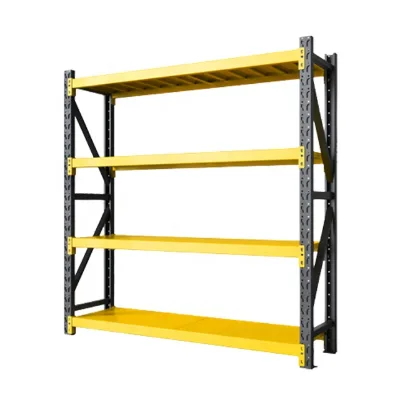
Compare 30 listings for Customized Steel Mezzanine Shelving designed for warehouse, industrial, and supermarket applications. Buyers can evaluate adjustable heights, load capacities, and surface treatments to find the right storage solution; compare the available evidence and request quotations based on your requirements.
Key considerations
Products List

OEM Customized Size 3000mm Length Steel Structure Mezzanine Floor Storage Shelving
$25.00 - $80.00
MOQ: 500 Square Meters

for Warehouse Expansion Solution Steel Mezzanine Racking Shelving
$70.00 - $100.00
MOQ: 100 Square Meters


Factory Price Industrial Warehouse Rack Shelf Mezzanine Storage Shelving
$6000.00 - $8000.00
MOQ: 1 Pieces




Comprehensive Sourcing Guide
Customized Steel Mezzanine Shelving Sourcing Guide
Buyers must first distinguish between the observed product variations, as the market lists both adjustable rack systems and fixed mezzanine platforms with distinct structural profiles. The available data indicates a split between selective pallet racking designed for high-bay storage and specialized steel platforms intended for multi-level industrial use, requiring clear definition of the intended load path before engaging suppliers.
Procurement teams should verify whether the requested solution requires a bolted, boltless, or welded connection type, as this decision dictates the assembly speed and future reconfigurability of the facility. The presence of both new type developments and conventional designs suggests that buyers need to explicitly state their preference for innovation versus proven, stable configurations to avoid receiving mismatched inventory.
Product Scope and Observed Listing Signals
The observed product range spans from lightweight warehouse racks to heavy-duty industrial shelving, with weight capacities varying significantly between 150kg and 2000kg per arm depending on the specific model configuration. Buyers should note that while some listings specify a weight range of 150-500kg for the entire unit, others highlight a per-arm capacity of up to 2000kg, necessitating a precise calculation of total system load before finalizing specifications.
Listing signals reveal that surface treatments include powder coating, galvanizing, and hot-dip galvanization, which directly influence the suitability of the equipment for food, beverage, or corrosive industrial environments. The availability of custom colors such as blue, orange, and grey, alongside custom RAL options, allows for facility branding but requires confirmation that the color choice does not compromise the underlying corrosion protection standards.
Technical Specifications to Verify
Technical verification must begin with the upright and beam dimensions, as the data shows specific profiles like 80×60×2.0mm and 70×90×2.0mm for uprights, paired with beams ranging from 50mm to 140mm in width. Buyers should confirm that the selected beam thickness of 1.5mm aligns with the intended load requirements, as thinner gauges may be insufficient for high-density storage applications in heavy industrial settings.
Height and structural configuration are critical variables, with observed listings offering heights from 0 to 5 meters for standard racks and extending up to 15 meters for specialized mezzanine systems. Procurement teams must validate that the double-column support structure and multi-level space design match the facility's ceiling constraints and that the assembly method, whether welding-free or welded, meets the site's safety and installation protocols.
Compliance and Safety Documentation
Safety documentation should explicitly address the load-bearing capabilities and the specific standards applied to the steel components, ensuring that the 300-2000kg per arm capacity is backed by verified engineering calculations. Buyers must request proof that the custom size acceptance policy does not bypass structural integrity checks, as non-standard dimensions often require unique stress analysis to prevent catastrophic failure under dynamic loading conditions.
Documentation regarding surface treatment processes is essential for verifying long-term durability, particularly for applications in food, beverage, or outdoor storage where corrosion resistance is paramount. Procurement teams should ensure that the supplier provides test results or material certificates confirming that the powder coating or galvanization processes meet industry standards for adhesion and thickness, rather than relying solely on general product descriptions.
Cost Drivers and Commercial Terms
Cost drivers are heavily influenced by the customization level, as the acceptance of special sizes and CAD drawing professional design services adds significant engineering and fabrication overhead compared to standard catalog items. Buyers should anticipate that the lead time of 5-20 days may fluctuate based on the complexity of the custom design and the specific surface treatment required, such as hot-dip galvanization which typically involves longer processing cycles.
Commercial terms must clearly define the packaging and delivery logistics, as the observed packing methods range from bubble wrap on pallets to tray packaging, which affects shipping volume and potential damage risks. The minimum order quantity of 1 to 1000 units suggests flexibility for small projects, but buyers should negotiate unit pricing tiers that reflect the economies of scale, especially when ordering large quantities of custom-configured mezzanine systems.
Supplier Qualification and Quality Control
Supplier qualification requires verifying the origin of the steel components, as the data indicates production from Hebei and Shandong Province, China, regions known for specific manufacturing capabilities and supply chain efficiencies. Buyers should assess the supplier's ability to handle the full scope of customization, from the initial CAD drawing professional design phase through to the final assembly of welding-free or bolted structures, ensuring a seamless transition from design to delivery.
Quality control protocols must include a rigorous inspection of the connection types and surface treatments to ensure consistency across the entire order. Procurement teams should mandate that the supplier provides pre-shipment inspections for critical dimensions like the 80×60×2.0mm uprights and verify that the color options and custom RAL shades match the approved samples before the goods leave the factory.
Long-Term Procurement Checks
Long-term procurement checks should focus on the serviceability and maintenance requirements of the installed systems, particularly for high-traffic warehouse and industrial environments where wear and tear are inevitable. Buyers need to confirm that the supplier offers ongoing support for the adjustable and customizable features, ensuring that the system can be reconfigured or expanded as storage needs evolve over time.
It is vital to establish a clear protocol for handling future repairs or replacements, given that the product range includes both new type developments and conventional designs with different lifecycle expectations. Procurement teams should verify the availability of spare parts for the specific connection types and beam sizes selected, ensuring that the facility can maintain operational continuity without significant downtime or costly custom fabrication delays.
FAQs
What customization options are available for steel mezzanine shelving?
Customization is available for dimensions, colors, and structural configurations. You can select from blue, orange, grey, or custom RAL colors. The design supports CAD drawing professional services to meet specific warehouse needs. Upright and beam sizes can be adjusted, and special sizes are accepted to fit your facility layout perfectly.
How is the steel platform assembled without welding?
The assembly is welding-free, utilizing bolted, boltless, or welded connection types for flexibility. This design allows for easy installation and reconfiguration in industrial settings. The structure relies on robust steel components, ensuring stability while enabling quick setup. This approach simplifies maintenance and allows for future expansion or modification of the storage system.
What is the typical lead time for delivery?
The delivery time typically ranges from 5 to 20 days. This timeframe depends on the order volume and specific customization requirements. Standard configurations may ship faster, while custom sizes or special surface treatments like hot-dip galvanizing might require additional processing time. Buyers should confirm exact timelines with suppliers based on their specific project schedule.
Can the loading capacity be customized for heavy loads?
Yes, the loading capacity can be customized to meet specific requirements. The arms can support between 300 to 2000 kilograms each. This flexibility allows the shelving to handle various industrial and warehouse applications. Buyers can specify the exact load needs during the design phase to ensure the structure meets their operational demands safely.
What surface treatments are offered for corrosion protection?
Surface treatments include powder coating, galvanizing, and hot-dip galvanizing. These options provide essential corrosion protection for steel components. Powder coating is available in various colors, while galvanizing offers enhanced durability for harsh environments. The choice depends on the installation setting, ensuring the shelving remains robust and long-lasting in industrial or food-grade facilities.
What are the standard upright and beam specifications?
Standard upright sizes include 80×60×2.0mm and 70×90×2.0mm. Beam sizes are available in 50*80/100/120/140*1.5mm configurations. These dimensions support selective pallet racking and multi-level storage needs. Custom sizes are also accepted to fit specific warehouse layouts. The structural design ensures stability and efficient space utilization for various storage applications.