Source Customized Straight Copper Heat Pipes for Water Heaters, Pipelines, and Cooling Systems
Explore 30 listings for Customized Straight Copper Heat Pipes with options for nickel plating, varying diameters, and RoHS compliance. Buyers can compare specifications like wall thickness, material grades, and packing standards to find suitable components for industrial applications.
Key considerations
Products List







Comprehensive Sourcing Guide
Strategic Sourcing Guide for Customized Straight Copper Heat Pipes
Procuring Customized Straight Copper Heat Pipes requires a rigorous approach that balances thermal performance requirements with precise manufacturing tolerances. The global market for these components is driven by the need for efficient thermal management in electronics, industrial piping, and specialized heating systems. Buyers must navigate a complex landscape of material grades, surface treatments, and certification standards to ensure that the selected heat pipes meet specific operational demands. This guide provides a structured framework for evaluating suppliers, verifying technical specifications, and managing the procurement lifecycle for high-quality copper heat pipes.
Technical Specifications and Material Composition
The foundation of a successful procurement strategy lies in a deep understanding of the technical specifications and material composition of the heat pipes. The core material for these components is predominantly copper, often specified as C1100 or red copper, which offers exceptional thermal conductivity. Buyers should verify that the copper purity meets the 99.9% threshold, as this directly influences the efficiency of heat transfer within the pipe. The mechanical properties are equally critical; the ultimate strength of the material typically ranges between 220 and 400 MPa, ensuring the pipe can withstand internal pressure and external handling stresses without deformation.
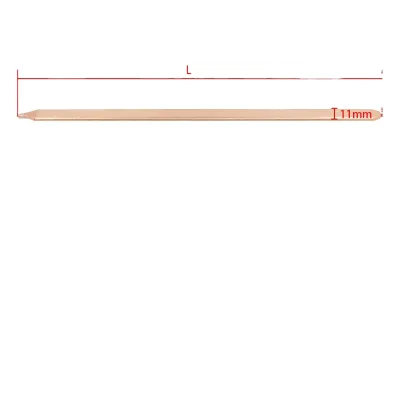
Dimensional precision is a primary differentiator in this market. The outer diameter of straight copper heat pipes generally spans from 3 mm to 16 mm, with specific applications requiring tighter tolerances such as 3-12.7 mm or 3-10 mm. Wall thickness is another variable that buyers must define clearly, with standard ranges often falling between 0.2 mm and 1 mm, or specifically 0.3 mm and 0.5 mm for lighter applications. The length of the pipes can vary significantly, typically ranging from 50 mm to 500 mm, though custom lengths are frequently available to match specific system designs. The shape is almost exclusively round, facilitating uniform heat distribution and compatibility with standard fittings.
| Specification Parameter | Observed Range / Common Value | Procurement Verification Point |
|---|---|---|
| Material Grade | C1100, Red Copper | Verify purity level (e.g., 99.9% Cu) |
| Outer Diameter | 3 mm – 16 mm | Confirm tolerance limits for fitment |
| Wall Thickness | 0.2 mm – 1 mm | Check for uniformity along the length |
| Length | 50 mm – 500 mm | Validate custom length capabilities |
| Surface Treatment | Nickel Plating | Inspect coating thickness and adhesion |
| Mechanical Strength | 220 – 400 MPa | Request tensile test reports |
Compliance and Certification Standards
Navigating the regulatory landscape is essential for ensuring that purchased heat pipes meet international safety and environmental standards. The most frequently observed certifications in the supply chain include RoHS, CE, ISO, and CCC. RoHS compliance is particularly vital for electronics applications, ensuring that the copper pipes and any associated materials are free from hazardous substances. Buyers should explicitly request documentation confirming that the product adheres to these standards, as the presence of certifications like CCC and CE indicates that the manufacturer has undergone rigorous testing for safety and electromagnetic compatibility.
In addition to product-specific certifications, buyers should be aware of the broader quality management systems that suppliers may operate under. While specific claims regarding ISO 9001:2015 or ISO 14001 should be treated as background information unless explicitly verified, the existence of a robust quality management system is a strong indicator of a reliable supplier. The standard for the copper material itself often references ASTM standards, which govern the chemical composition and mechanical properties of copper and copper alloys. It is crucial to verify that the supplier can provide a Certificate of Compliance (CoC) that explicitly links the delivered product to these standards, rather than relying on general marketing claims.
Cost Drivers and Pricing Dynamics
The pricing of Customized Straight Copper Heat Pipes is influenced by a complex interplay of factors, including raw material costs, manufacturing complexity, and order volume. The observed price range in the market is vast, spanning from $0.16 to $1800 per unit, reflecting the diversity of product sizes and customization levels. The primary cost driver is the material itself; as copper is a commodity with fluctuating market prices, the base cost of the pipe will vary. Furthermore, the surface treatment, such as nickel plating, adds a significant layer of processing cost that must be factored into the total price.
Order volume plays a pivotal role in determining the final unit price. The Minimum Order Quantity (MOQ) can range from a single item to 500 units, depending on the supplier's production capacity and the level of customization required. Suppliers offering "Single Item" selling units are typically geared towards prototyping or low-volume testing, whereas larger orders benefit from economies of scale. Buyers should also consider the cost of customization; features such as specific wall thicknesses, unique diameters, or tailored lengths often incur additional tooling or setup fees. It is advisable to request a detailed breakdown of costs, separating material, processing, and logistics expenses to understand the true value proposition of a supplier.
Typical Applications and Usage Scenarios
Understanding the intended application of the heat pipe is essential for selecting the correct specifications. The market data indicates that these components are widely used in pipeline transport and water heater systems. In the context of water heaters, the high thermal conductivity of copper ensures efficient heat transfer, while the mechanical strength (220-400 MPa) ensures durability under pressure. The "Straight Copper Pipe" product type is specifically noted for its suitability in these linear transport applications, where uniform heat distribution is critical.
Beyond industrial heating, the "Ultra Mute" characteristic and "Heatpipe & Air Cooling" type attributes suggest applications in electronic cooling systems where noise reduction and efficient thermal dissipation are paramount. The "Pipeline Transport" usage implies that these pipes may also be integrated into fluid transport systems where thermal management is required to maintain fluid temperature or prevent freezing. Buyers must align the product's physical attributes, such as the "Round" shape and specific diameter ranges, with the requirements of their specific system design. For instance, a heat pipe used in a compact electronic device may require a smaller diameter (3-6 mm) and thinner walls, whereas an industrial water heater application might necessitate larger diameters (up to 16 mm) and thicker walls for structural integrity.
Supplier Evaluation and Geographic Considerations
When evaluating potential suppliers, geographic origin and production capabilities are key indicators of reliability. The majority of the observed supply originates from Guangdong, China (Mainland), with specific hubs in Dongguan. This region is known for its robust manufacturing ecosystem and expertise in copper processing. However, some listings also indicate origins in Jiangsu, China, suggesting a broader distribution of manufacturing capabilities across the country. Buyers should verify the specific "Place of Origin" listed on the product documentation to ensure it matches the expected supply chain location.
Supplier evaluation should extend beyond location to include their customization capabilities. The availability of "Custom" packing, "Customized" product types, and adjustable specifications like wall thickness and diameter indicates a flexible manufacturing process. Buyers should assess whether the supplier can handle the specific "prod_model" or "Model Number" requirements, such as HP-022 or bw, and whether they can accommodate unique branding needs. The "Standard Export Packing" and "Blister and Protective Package" options suggest that the supplier has experience in handling delicate components for international shipping. It is crucial to verify that the supplier can maintain consistency across batches, especially when dealing with custom orders that deviate from standard models.
Quality Control and Long-Term Procurement
Ensuring long-term quality requires a proactive approach to quality control and supplier relationship management. The "Surface" treatment, specifically nickel plating, is a critical quality attribute that must be inspected for uniformity and adhesion to prevent corrosion and ensure long-term thermal performance. Buyers should request sample inspections or third-party testing reports to verify the mechanical properties, such as elongation (often around 40%) and tensile strength, before committing to large-scale orders. The "Elongation" value is particularly important for applications requiring flexibility or resistance to thermal expansion.
For long-term procurement, establishing clear communication channels regarding specifications and changes is vital. The "Customization" feature allows for adjustments, but these must be documented meticulously to avoid production errors. Buyers should also consider the "prod_packing" options, ensuring that the packaging protects the copper pipes from damage during transit and storage. Regular audits of the supplier's quality management system and adherence to standards like RoHS and CE will help mitigate risks. Finally, buyers should maintain a flexible inventory strategy, leveraging the wide range of MOQs (1-500) to balance stock levels with cash flow, while ensuring that the supply chain remains resilient to market fluctuations in copper prices and manufacturing lead times.
FAQs
What certifications do these copper heat pipes hold?
These products hold CCC, ISO, CE, and RoHS certifications. Buyers should verify specific documentation for each standard to ensure compliance with regional safety and environmental regulations before placing orders.
Which material grades are used for these heat pipes?
The pipes are made from C1100 red copper with a purity of 99.9%. This high-grade material ensures exceptional thermal conductivity and mechanical strength ranging from 220 to 400 MPa for durability.
Can I customize the wall thickness and diameter?
Yes, customization is available for wall thickness and outer diameter. Specifications can range from 3 to 16 mm in diameter and 0.2 to 1 mm in thickness to fit specific system designs.
How are these heat pipes packaged for shipping?
Packaging options include standard export packing, blister packs, and custom protective solutions. The chosen method ensures the round copper pipes remain undamaged during international transit and storage.
What is the typical length range for these pipes?
The standard length ranges from 50 mm to 500 mm. Custom lengths are frequently available to match specific system designs or application requirements for pipeline transport and water heater systems.
Which surface treatment is applied to the copper pipes?
The pipes feature a nickel plating surface treatment. This coating enhances corrosion resistance and ensures long-term thermal performance while maintaining the structural integrity of the copper material.
What is the minimum order quantity for these products?
The minimum order quantity ranges from 1 to 500 units depending on the supplier. Single item selling units are available for prototyping, while larger orders benefit from economies of scale.