Source Cutting Mitre Saw Blade for Stone, Wood, and Building Decoration
Find 30 Cutting Mitre Saw Blade options from verified Chinese manufacturers. Buyers can compare specifications like diameter, tooth form, and material across HSS and carbide models for stone, woodworking, and building decoration applications.
Key considerations
Products List


Miter Saw Blade for Cutting Marble, Granite, Ceramic Tiles, and Concrete Blocks
$15.90 - $18.90
MOQ: 10 Pieces


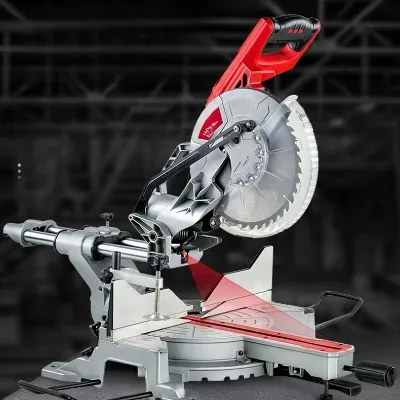
Comprehensive Sourcing Guide
Strategic Sourcing Guide for Cutting Mitre Saw Blades
Understanding Technical Specifications and Material Composition
When sourcing cutting mitre saw blades, the primary objective is to align the blade's physical characteristics with the specific demands of the material being processed. The market offers a diverse array of configurations, and a buyer must scrutinize the core specifications before placing an order. A critical observation from current market data indicates that blade diameters vary significantly, with specific listings noting a diameter of 110mm, while other standards range from 4 inches to 62 inches. This variance suggests that "mitre saw blade" is a functional category rather than a single uniform product, requiring precise matching to the saw's arbor capacity and cutting depth requirements.
Material composition is equally vital for performance and longevity. The supply chain presents blades constructed from High-Speed Steel (HSS), which is often associated with specific cutting applications, and others made from Cemented Carbide, a material typically preferred for its hardness and wear resistance in demanding environments. The manufacturing process further differentiates these products. Some blades are produced via sintering, a process that fuses powdered material under heat and pressure, while others utilize brazing techniques to attach the cutting teeth to the blade body. The choice between sintered and brazed blades often dictates the blade's ability to withstand high temperatures and the specific materials it can cut, such as stone or wood.
The tooth form is another decisive technical factor. Observations reveal the presence of "Dovetail Tooth" configurations, which are engineered to provide specific chip clearance and cutting stability. Additionally, the bore size is a non-negotiable specification; a common standard observed is Φ25.4mm, which must match the saw's spindle exactly to ensure safe operation. The blade's shape is consistently circular, but the specific model numbers, such as 305mm or 1102.020*40T-Standard, provide granular details regarding the thickness, bore, and tooth count that buyers must verify against their machinery's capabilities.
Compliance, Certification, and Safety Standards
In the B2B procurement landscape, compliance with international safety and quality standards is not merely a formality but a prerequisite for market access and operational safety. Buyers must verify that suppliers possess valid certifications that attest to the product's adherence to rigorous safety protocols. The available data highlights several key certifications, including ISO9001, which indicates a quality management system focused on consistent production standards. Furthermore, specific product attributes list CE marking, a mandatory conformity mark for products sold within the European Economic Area, ensuring the blade meets EU safety, health, and environmental requirements.
For markets requiring broader safety validation, certifications such as GS (Geprüfte Sicherheit) and RoHS (Restriction of Hazardous Substances) are critical indicators of compliance. The GS mark signifies that the product has been tested by a recognized body and meets German safety standards, which are often held as a benchmark globally. RoHS compliance ensures that the blade does not contain restricted hazardous materials, a crucial factor for environmentally conscious procurement and adherence to global environmental regulations.
It is essential to note that not every listed product in a general search will carry every certification. Buyers should treat the presence of certifications as specific product attributes rather than universal guarantees for the entire category. When evaluating a supplier, the procurement team must request current, valid certificates for the specific model being purchased. The standard for these blades often references dimensional ranges, such as 4 inch to 62 inch, or specific model standards like 305mm, but the actual safety compliance depends on the manufacturing process and the specific quality control measures implemented by the supplier.
Cost Drivers and Pricing Dynamics
The pricing structure for cutting mitre saw blades is influenced by a complex interplay of material costs, manufacturing complexity, and order volume. The observed price range in the market spans from 0 to 5000 USD, a wide spectrum that reflects the diversity of products from basic HSS blades to specialized, high-performance cemented carbide units. The material used is a primary cost driver; blades made from cemented carbide generally command a higher price point than those made from standard steel due to the raw material cost and the precision required in the brazing or sintering process.
Manufacturing processes also impact the final cost. Blades produced using advanced sintering techniques or those with complex tooth forms like the dovetail configuration may incur higher production costs compared to standard grinding and cutting blades. The level of customization available is another significant factor. While many suppliers offer standard sizes, the availability of customization—such as specific bore sizes, tooth counts, or coating treatments—often introduces a premium. The data indicates that customization is welcomed and allowed, with some suppliers specifying an ODM/OBM (Original Design Manufacturer/Original Brand Manufacturer) capability, which can further influence pricing based on the level of branding and design integration required.
Order volume plays a pivotal role in cost efficiency. The Minimum Order Quantity (MOQ) ranges from 1 to 500 units, with specific instances noting an MOQ of 20 pieces for customized orders. Buyers purchasing in bulk can often negotiate better unit prices, whereas small, one-off orders may carry a higher per-unit cost. Additionally, the lead time affects the overall cost structure; products that are "in stock for regular size" may offer immediate availability at a standard price, while custom orders with longer lead times might involve different pricing structures to account for production scheduling and material procurement.
Typical Applications and Usage Scenarios
The versatility of cutting mitre saw blades is evident in the wide range of applications they serve. The primary application observed is stone cutting, where the blade's hardness and tooth geometry are critical for maintaining a clean cut without chipping the material. For these applications, cemented carbide blades are often the preferred choice due to their superior abrasion resistance. The manufacturing process, whether sintered or brazed, must be robust enough to handle the high friction and heat generated during stone cutting.
Woodworking represents another major application sector. Blades designed for woodworking often feature specific tooth forms and bore sizes optimized for clean cuts in timber. The data points to "Woodworking" as a distinct usage category, suggesting that buyers should look for blades specifically engineered for this material, which may differ from those used for stone or general building decoration. The "Use Place" attribute further clarifies that these blades are suitable for building decoration tasks, implying their utility in renovation and construction projects where precision and finish quality are paramount.
The "Folded" attribute, listed as "Unfolded," suggests that some blades may have specific structural characteristics or packaging states that affect their handling and installation. Additionally, the "Adjusted" attribute indicates that some products come with pre-adjusted settings or features that enhance their usability in specific scenarios. Buyers must match the blade's application to the material; for instance, a blade with a "Dovetail Tooth" form might be optimized for specific cutting angles or materials, while a standard "Grinding and cutting blade" might serve a more general purpose. Understanding these nuances ensures that the selected blade delivers optimal performance in its intended environment.
Supplier Evaluation and Verification Protocols
Evaluating suppliers for cutting mitre saw blades requires a rigorous approach to verify their capabilities and reliability. The geographic origin of the products is a key indicator of the supply chain's structure. The data reveals origins in various regions of China, including Jiangxi, Huainan City in Anhui Province, and Zhejiang. While these regions are known for manufacturing, buyers should not assume uniform quality across all locations. Instead, they should investigate the specific factory's reputation, production capacity, and history of compliance.
Supplier evaluation should focus on their ability to meet customization requirements. The availability of ODM/OBM services suggests that suppliers can adapt their products to specific buyer needs, but this requires a thorough assessment of their design and engineering capabilities. Buyers should verify the supplier's track record in delivering customized orders, such as those with an MOQ of 20 pieces, to ensure they can handle both small and large volume requests effectively. The "Customization: Available" and "Customized" attributes highlight the flexibility of the market, but the buyer must confirm the supplier's ability to maintain quality standards during the customization process.
Lead time is another critical factor in supplier evaluation. The data indicates that regular sizes are often "in stock," which is advantageous for urgent procurement needs. However, for customized orders, the lead time may vary significantly. Buyers should establish clear expectations regarding delivery schedules and ensure that the supplier has the logistical capacity to meet these timelines. The "Advantage: Low Price & Long Life" attribute suggests that some suppliers compete on value, but buyers should verify these claims through independent testing or references rather than relying solely on marketing statements.
Quality Control and Long-Term Procurement Considerations
Implementing a robust quality control (QC) framework is essential for mitigating risks associated with cutting mitre saw blades. Buyers should insist on pre-shipment inspections that verify critical dimensions, such as the bore size of Φ25.4mm and the diameter of 110mm or other specified sizes. The manufacturing process, whether sintering or brazing, must be monitored to ensure consistency in tooth attachment and blade balance. Any deviation in these parameters can lead to operational hazards, including blade vibration or premature failure.
Long-term procurement considerations involve building a sustainable relationship with suppliers who can consistently deliver high-quality products. The "Product Grade: Standard Grade" attribute indicates that there are baseline quality expectations, but buyers should also inquire about higher-grade options if their applications demand superior performance. The "Handle Color: Pure" and "Product Brand: Pilihu" attributes suggest that branding and aesthetic consistency are part of the product identity, which can be important for brand alignment in the buyer's market.
Packaging is another aspect of long-term procurement that affects product integrity. The data lists various packaging methods, including "Carton Box," "Wood/Carton," and "Color Box." Proper packaging is crucial to prevent damage during transit, especially for blades with sharp edges or delicate coatings. Buyers should ensure that the packaging is robust enough to protect the blades and that it complies with any specific shipping regulations. Finally, the "MOQ: 20PCS for Customization" and "Lead Time: in Stock for Regular Size" details should be integrated into the procurement strategy to optimize inventory levels and minimize downtime. By focusing on these quality and logistical factors, buyers can secure a reliable supply chain for their Cutting Mitre Saw Blade needs.
FAQs
What certifications are available for cutting mitre saw blades?
Available certifications include ISO9001, CE, GS, and RoHS. Buyers must verify specific certificates for the model, as not every product carries all marks. These certifications ensure compliance with safety and quality standards for international markets.
Which materials are used to manufacture these saw blades?
Blades are commonly made from High-Speed Steel or Cemented Carbide. Cemented carbide is preferred for stone cutting due to hardness, while steel is often used for woodworking. The material choice directly impacts durability and cutting performance.
Can I customize the specifications of the Cutting Mitre Saw Blade?
Customization is available and welcomed for many models. Suppliers often require a Minimum Order Quantity of 20 pieces for custom orders. Options may include specific bore sizes, tooth counts, or packaging types like color boxes.
What is the typical lead time for regular size blades?
Regular sizes are often available in stock for immediate delivery. Customized orders may require a longer lead time depending on production scheduling. Buyers should confirm specific timelines with the manufacturer before placing an order.
How does the bore size affect the compatibility of the blade?
The bore size must match the saw spindle exactly, with a common standard of Φ25.4mm. Incorrect bore sizes can cause safety hazards and operational failure. Always verify the bore dimension against your machinery specifications before purchase.
Which manufacturing processes are used for these saw blades?
Manufacturing processes include sintering and brazing techniques. Sintering fuses powdered material under heat, while brazing attaches teeth to the blade body. The process choice influences the blade's ability to withstand high temperatures and specific material cuts.
What are the standard diameter ranges for these blades?
Diameters range from 4 inches to 62 inches, with specific models like 110mm or 305mm. Buyers must select a diameter that fits their saw's arbor capacity. The standard varies based on the intended application and machine type.