Source CV Joint for Automotive, Industrial, and Agricultural Use
Compare 30 CV Joint listings from verified manufacturers in Zhejiang, China. Buyers can evaluate specifications, OE numbers, and pricing for automotive, industrial, and agricultural applications. This collection includes outer C.V. joints made from alloy steel with ISO certification and OEM standards suitable for various vehicle models.
Key considerations
Products List
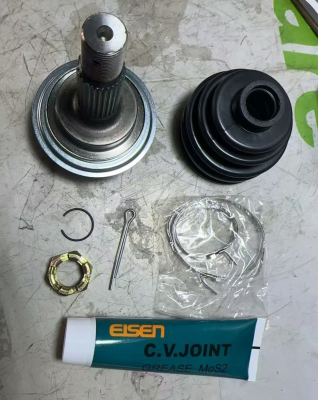
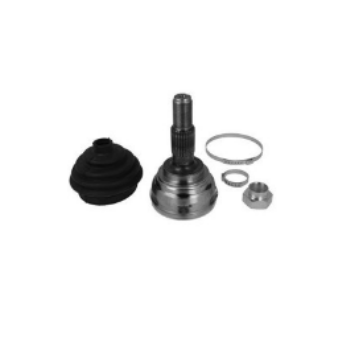


Auto Parts Customized Car Accessories Multi-Specification Flexibility CV Joint
$25.00 - $50.00
MOQ: 1000 Pieces


OEM Truck Auto Spare Part Suspension Joint with ISO9001 Certification
$25.00 - $50.00
MOQ: 1000 Pieces


Comprehensive Sourcing Guide
CV Joint Sourcing Guide
Sourcing replacement CV joints requires careful attention to vehicle compatibility and material integrity, as these components are critical for power transmission in automotive drivetrains. Buyers must prioritize parts that meet original equipment manufacturer standards to ensure seamless integration with existing suspension and axle systems. The market offers various options, including outer CV joints designed for specific European, Japanese, Russian, and Indian vehicle models, necessitating precise verification of the OE number against the target application.
Procurement decisions should also consider the intended use case, whether for repair, replacement, or industrial machinery applications. Observations indicate that suppliers often list products with a warranty period of six months and a condition marked as new, which serves as a baseline expectation for quality. However, buyers must verify that the specific part number, such as those corresponding to Audi or Santana models, matches their inventory requirements to avoid costly mismatches and operational downtime.
Product Scope and Observed Listing Signals
The current market landscape for CV joints reveals a diverse range of listings, with observed price points ranging from 0.98 to 50 USD and minimum order quantities varying between 1 and 1000 pieces. These signals suggest a flexible supply chain catering to both small-scale repair shops and larger industrial distributors. Buyers should note that while some listings highlight advantages like durability and stability, the actual performance claims must be validated through sample testing before committing to bulk orders.
Product attributes frequently mention materials such as alloy steel and standard steel, with colors listed as white, silver, or natural color. The structure is typically described as single, and the purpose is explicitly stated for replace or repair scenarios. It is crucial for buyers to distinguish between general automotive applications and specialized uses in mining, marine, or construction machinery, as the specifications for each sector differ significantly in terms of load-bearing capacity and environmental resistance.
Technical Specifications to Verify
Verifying the model number and OE number is the first step in ensuring compatibility, with common identifiers including 547682, 8ko498099yf, 191407331yf, and 1jo498103yf. Buyers must cross-reference these numbers with the specific car model, such as ALFASUD Sprint or Audi, to confirm fitment. The specification field often indicates "facing discuss," which implies that exact dimensional details may require direct communication with the supplier to ensure the part meets the precise engineering tolerances of the vehicle’s axle assembly.
Material composition is another critical technical factor, with listings specifying alloy steel or standard steel constructions. The NLGI grade and texture descriptions, such as "buttery," may refer to associated lubricants or packaging conditions rather than the joint itself, requiring clarification. Additionally, the use life is claimed to be more than 600,000 times, a metric that should be validated against industry standards for cyclic fatigue resistance to ensure long-term reliability in high-mileage applications.
Compliance and Safety Documentation
Compliance with international standards is essential for automotive parts, with ISO certification mentioned as a key quality indicator for suppliers. Buyers should request valid certification documents to verify that the manufacturing process adheres to recognized quality management systems. This documentation helps mitigate risks associated with substandard materials or poor manufacturing practices, ensuring that the CV joints meet the necessary safety and performance benchmarks for road vehicles.
The OEM standard is explicitly stated as yes in several listings, indicating that the parts are designed to match original equipment specifications. Buyers must confirm that the customization options available do not compromise these standards, especially when dealing with non-standard vehicle modifications. Additionally, the presence of a quality control system is noted, which suggests that suppliers have internal checks in place, but buyers should still require third-party inspection reports for critical batches to ensure consistent quality.
Cost Drivers and Commercial Terms
Cost variations in CV Joint sourcing are influenced by material costs, order volume, and packaging requirements. The observed MOQ range of 1 to 1000 pieces allows for flexibility, but buyers should negotiate better pricing for larger volumes to improve margins. Packaging is described as carton and plywood case or box, which affects shipping costs and protection during transit. Buyers should assess whether the packaging meets their logistical needs to prevent damage during storage and distribution.
Warranty terms, typically listed as six months, provide a safety net for defective parts, but buyers should clarify the scope of coverage and the process for claims. The selling unit is often a single item, which simplifies inventory management but may increase per-unit costs for small orders. Understanding these commercial terms helps buyers budget accurately and avoid unexpected expenses related to returns, replacements, or expedited shipping for urgent repair needs.
Supplier Qualification and Quality Control
Supplier qualification involves verifying their status as manufacturers and exporters, which can impact pricing and lead times. Buyers should assess the supplier’s production capacity and QC system to ensure they can meet demand without compromising quality. The attribute "strong enough" suggests durability, but this claim should be supported by technical data or customer references. Engaging with suppliers who provide detailed product parameters and OEM standard confirmations indicates a higher level of professionalism and reliability.
Quality control processes should be transparent, with buyers requesting information on inspection protocols and defect rates. The mention of a QC system as yes is a positive sign, but buyers should inquire about specific testing methods, such as dimensional checks or material analysis. Establishing a clear communication channel for addressing quality issues is crucial, as it ensures that any discrepancies are resolved promptly, maintaining the integrity of the supply chain and customer satisfaction.
Long-Term Procurement Checks
Long-term procurement success depends on continuous monitoring of supplier performance and product consistency. Buyers should track warranty claims and return rates to identify potential quality issues early. Regular audits of the supplier’s QC system and certification status help ensure ongoing compliance with industry standards. Building a relationship with reliable suppliers who offer customization options allows buyers to adapt to changing vehicle models and market demands effectively.
Additionally, buyers should stay informed about updates in automotive technology and material science that may affect CV Joint design and performance. Evaluating the supplier’s ability to provide updated product information and support for new vehicle models is essential for maintaining a competitive edge. By focusing on these long-term checks, buyers can build a resilient supply chain that supports their operational needs and customer expectations over time.
FAQs
What is a CV Joint and what does it do in a vehicle?
A CV Joint, or constant velocity joint, transfers engine torque from the transmission to the drive wheels while allowing smooth rotation at varying angles. It accommodates suspension movement and steering without losing power delivery. Outer CV joints typically handle steering angles, while inner joints manage suspension travel. Regular inspection of the boots and grease helps prevent premature wear and costly driveline repairs.
Can CV joints be replaced individually or must the whole axle be replaced?
In many cases the CV Joint can be replaced individually, which suits repair and replacement purposes, though some suppliers offer complete axle shafts as well. Whether a joint alone can be serviced depends on the axle design and whether the joint is staked or bolted. If the axle splines or boots are damaged, replacing the full assembly may be more practical and reliable.
What warranty and service life can I expect from these CV joints?
Listed products come with a warranty of 6 months and a stated use life of more than 600 thousand cycles, based on the product specifications provided by the supplier. Actual longevity depends on driving conditions, installation quality, and boot integrity. Buyers should confirm warranty terms, QC procedures, and any applicable OEM standard requirements directly with the supplier before ordering in volume.
Which vehicles and OE numbers do these CV joints fit?
The listings cover applications for European, Japanese, Russian, and Indian vehicles, with models such as Audi, Santana, and ALFASUD Sprint. Stated OE references include 547682, 8ko498099YF, 191407331YF, and 1JO498103YF. Always verify the OE number, model number such as TO-002, and size against your vehicle or sample before placing an order, since specifications are confirmed through discussion with the supplier.
What material and quality controls are used for these CV joints?
The joints are made from alloy steel or steel, and listings indicate ISO certification and OEM standard compliance. Suppliers state a QC system is in place, with features such as safe, stable, durable construction and quality assurance. For volume orders, request material certificates, inspection reports, and sample testing to confirm hardness, surface finish, and dimensional accuracy before mass production proceeds.
Can I order customized CV joints and what are the MOQ requirements?
Yes, customization is listed as available, with standards offered as standard or customized. MOQ values across the listings range widely, from as low as 1 piece to 1000 pieces, with one listing stating 200 pieces. Since size and specification are set through discussion, contact the supplier with your drawings, OE numbers, or samples to confirm feasibility, tooling needs, and the minimum order that applies to your requirement.
How are CV joints packed and shipped for export orders?
Packing is typically a carton and plywood case, with a transport package of box also listed. Each joint is sold as a single item. Confirm the packing layout, carton quantities, palletization, and marking requirements with the supplier before shipment, especially for sea freight. Proper grease fill and boot protection during transit help ensure the joints arrive clean, corrosion-free, and ready for installation or distribution.
Which applications beyond passenger cars use CV joints?
Listed applications include automotive, mining, marine, industrial machinery, construction, and agriculture equipment. Outer CV Joint types are common in passenger vehicles, while heavier machinery may require larger or differently designed joints depending on torque and articulation needs. When sourcing for non-automotive uses, provide operating torque, angle, and duty-cycle details so the supplier can recommend a suitable specification or a customized design.