Source CVT Automatic Transmission Filter for Toyota, VW, Mercedes
Compare 30 CVT Automatic Transmission Filter options from verified manufacturers in China. Buyers can evaluate models like 35330-K4100 and 46321-22050 with varying MOQs and delivery times to find the right fit for their needs.
Key considerations
Products List


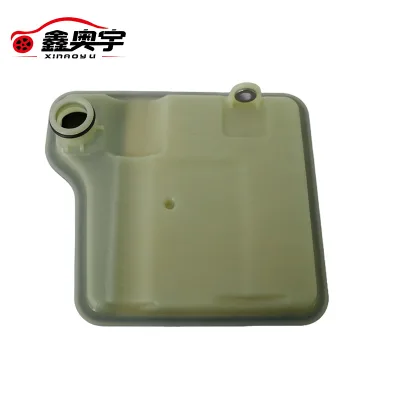
Transmission Filter Factory 01V325429 Transmission System Gearbox Parts
$1.90 - $10.90
MOQ: 100 Pieces
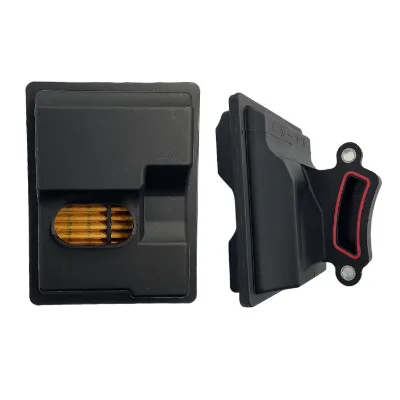
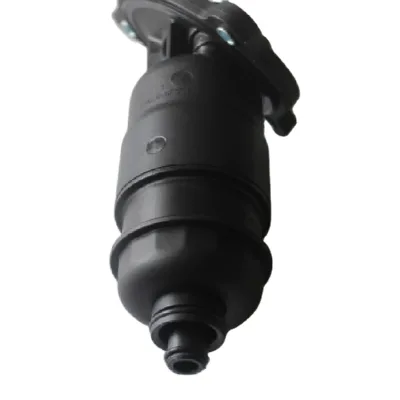
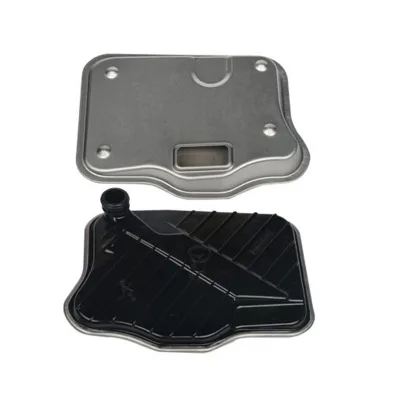
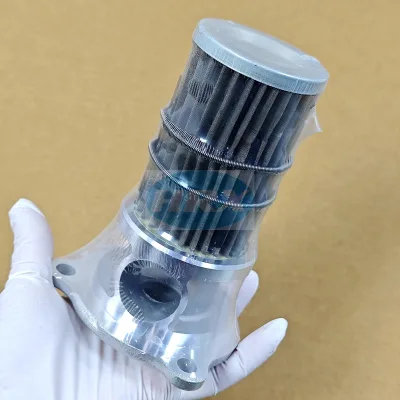


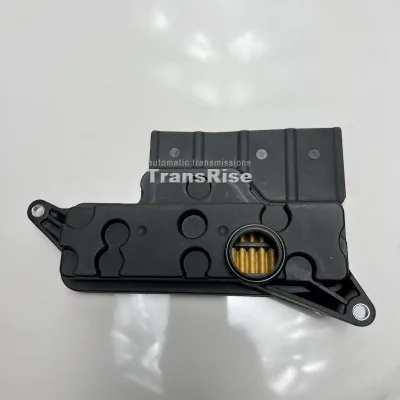
Good Control Module Actuator Reliability Remanufactured 5lk CVT Transmission
$950.00 - $1050.00
MOQ: 1 Pieces



Comprehensive Sourcing Guide
Strategic Sourcing Guide for CVT Automatic Transmission Filters
The global automotive aftermarket continues to demand high-precision components for Continuously Variable Transmission (CVT) systems, with the transmission filter serving as a critical maintenance item. Sourcing these components requires a disciplined approach that balances technical compatibility, supply chain reliability, and strict quality verification. Buyers must navigate a complex landscape where model-specific part numbers, material science, and manufacturing tolerances dictate the success of the procurement process. This guide outlines the essential factors for evaluating CVT automatic transmission filters, drawing on observed market data and technical specifications to ensure a robust sourcing strategy.
Technical Specifications and Model Compatibility
The primary challenge in sourcing CVT filters lies in the extreme specificity of model compatibility. Unlike generic filters, transmission filters are engineered to fit precise housing geometries and flow requirements for specific vehicle manufacturers. The market data indicates a wide array of part numbers, such as 35330-K4100 for Toyota, 46321-22050 for Mercedes-Benz, and 01V 325 429 for VW Audi. These identifiers are not interchangeable; selecting the wrong model can lead to immediate system failure or inadequate filtration.
Buyers must verify the "Product Name" and "OE Number" against their inventory or customer requirements. The data shows that products are often categorized by their specific application, such as "Transmission Filter" with parameters adhering to "OEM Standard." Furthermore, the physical structure of the filter is a critical differentiator. Observed listings describe the product structure as a "Filter Element/Assy," suggesting that the unit may include the housing or mounting assembly rather than just the media. The material composition is equally vital, with aluminum mesh and stainless steel being the predominant materials observed. Aluminum mesh variants are often noted for their specific pattern characteristics, such as "Dry" patterns, which influence fluid dynamics and filtration efficiency.
When evaluating specifications, buyers should look for confirmation of the "Casting Method" if the housing is involved. The data references "Thermal Gravity Casting" and "Lost Wax Casting" as relevant processes for related components, implying that the housing integrity depends on these manufacturing techniques. Additionally, surface finish is a key indicator of quality; a "Surface Roughness" of Ra1.6 is observed in high-quality listings, which is essential for ensuring a proper seal and preventing leaks in high-pressure transmission environments.
Compliance, Certification, and Manufacturing Standards
Quality assurance in the automotive sector relies heavily on adherence to international standards and certifications. A reputable supplier for CVT filters should demonstrate compliance with recognized quality management systems. The market data explicitly mentions "ISO 9001" certification, which serves as a baseline indicator that the manufacturer has established processes for consistent quality control. However, buyers should not assume that all listed products automatically possess this certification; it must be verified for each specific batch or supplier.
Beyond general quality management, specific industry standards govern the physical dimensions and tolerances of transmission components. The observed data references "DIN" standards, which are particularly relevant for European manufacturers like VW and Mercedes-Benz. When sourcing for these markets, verifying that the product meets DIN specifications is crucial for fitment. Furthermore, machining tolerances are a non-negotiable aspect of component integrity. The data highlights a tolerance of "+/-0.02mm," a tight specification that ensures the filter fits precisely within the transmission housing without causing binding or leakage.
Buyers must also scrutinize the "Standard" field in product listings. While some entries list "Standard OEM," others may reference specific housing standards like "I45, I50 housing." This distinction is important because the filter must match the housing design exactly. A mismatch in standard can render the filter useless, regardless of its material quality. Therefore, procurement teams should request documentation proving that the product conforms to the specific standard required for the target vehicle brand, whether it is a generic OEM standard or a proprietary manufacturer specification.
Cost Drivers and Pricing Dynamics
Understanding the cost structure of CVT transmission filters is essential for budgeting and margin analysis. The observed price range in the market is extensive, spanning from $0.60 to $1050 USD. This wide variance is not indicative of a single product type but rather reflects the diversity of the supply chain, ranging from simple filter elements to complete filter assemblies with complex housings. The lower end of the spectrum likely represents basic media or smaller components, while the higher end may include full assemblies, specialized materials, or bulk packaging for industrial applications.
Several factors drive these costs. First, the material choice significantly impacts price. Stainless steel components generally command a premium over aluminum due to higher raw material costs and more complex processing requirements. Second, the manufacturing process plays a role; components produced via "Lost Wax Casting" or those requiring precise "Machining Tolerance" of +/-0.02mm involve higher labor and equipment costs compared to simpler stamped or molded parts. Third, the level of customization affects pricing. Products listed as "Customizable" in terms of color, packaging, or dimensions often carry a higher unit cost or require a higher Minimum Order Quantity (MOQ) to justify the setup.
The MOQ is another critical cost driver. The data shows an MOQ range from 1 to 1000 units. For small-scale buyers or those testing new markets, suppliers offering an MOQ of 5 or 100 pieces are more accessible. However, larger buyers seeking to optimize unit costs should target suppliers with higher volume tiers. The "MOQ: 100PCS" observed for certain Toyota-compatible filters suggests that economies of scale are realized at this volume. Buyers should calculate the total landed cost, including shipping and potential customs duties, rather than focusing solely on the unit price, as the low unit price of $0.60 may not be viable if the shipping cost per unit is disproportionately high for small orders.
Typical Applications and Vehicle Integration
CVT transmission filters are designed for specific vehicle ecosystems, and understanding these applications is key to accurate sourcing. The data highlights several major automotive brands, including Toyota, Mercedes-Benz, and VW Audi. Each brand utilizes unique transmission architectures that dictate the filter's design. For instance, the Toyota application is associated with the OE number 35330-K4100, while Mercedes-Benz uses 46321-22050. These numbers are not merely labels; they represent the exact interface requirements between the filter and the transmission valve body.
The physical configuration of the filter also varies by application. Some listings specify a "Single" deck, while others indicate a "Double" deck. This distinction refers to the internal structure of the filter element, which affects the surface area available for filtration and the flow rate. A double-deck design might be required for high-performance or heavy-duty applications to prevent clogging and ensure adequate fluid circulation. Additionally, the "Muffler Type" listed in some data (e.g., Rear Muffler, Center Muffler) suggests that the sourcing guide must also consider related exhaust or acoustic components if the filter assembly is part of a larger system, though this is less common for standard transmission filters.
Buyers must also consider the condition of the product. The market data consistently lists items as "new," which is the expected standard for replacement parts. However, buyers should verify that "new" implies genuine OEM-equivalent quality rather than remanufactured or refurbished units, unless specifically requested. The "Feature" list, which includes "Safe, Fixed, Stable, Durable, Quality Assurance," reinforces the expectation that these components must perform reliably under the high stress and heat conditions typical of CVT operations.
Supplier Evaluation and Operational Capabilities
Selecting the right supplier is as important as selecting the right part. The data indicates that suppliers are often described as "Manufacturer and Exporter," suggesting a direct relationship with the production facility. This is preferable to dealing with intermediaries, as it often allows for better price negotiation and more direct communication regarding technical specifications. The geographic origin of the products is also a factor, with listings pointing to Hebei and Ningbo, China. These regions are known for their manufacturing clusters, but buyers should verify the specific factory capabilities rather than relying solely on the region name.
Lead time is a critical operational metric. The observed "Delivery Period" ranges from 15 to 30 days. This window is standard for international manufacturing but can vary based on order volume and customization requirements. Buyers should plan their inventory cycles to accommodate this lead time, especially for high-demand parts where stockouts can lead to significant downtime for their customers. Furthermore, the "Customization" attribute indicates that suppliers are willing to adapt packaging, color, or specific dimensions. This flexibility is valuable for private label opportunities or for meeting specific regional regulatory requirements.
Packaging is another area for supplier evaluation. The data mentions "Customizable Carton Packaging," "Boxed," and "Bubble Plastic, Bag" options. Proper packaging is essential to prevent damage during transit, particularly for delicate filter elements and precision-machined housings. Buyers should request samples to verify that the packaging meets their logistical needs and provides adequate protection against moisture and impact. The "Product Parameters" should also be checked to ensure they align with "OEM Standard," confirming that the supplier is producing parts that meet the original equipment manufacturer's rigorous performance criteria.
Quality Control and Long-Term Procurement Strategy
Ensuring long-term success in sourcing CVT filters requires a robust quality control (QC) framework. Buyers should not rely solely on the supplier's claims of "Quality Assurance." Instead, they must implement a verification process that includes checking for the "ISO 9001" certification, reviewing test reports for surface roughness (Ra1.6), and verifying machining tolerances (+/-0.02mm). For high-volume orders, implementing a pre-shipment inspection is advisable to catch any deviations in material composition or assembly quality.
The "Process" details, such as "Lost Wax Casting" or "Thermal Gravity Casting," should be verified against the product specifications to ensure the manufacturing method matches the intended use. For example, a filter housing requiring high strength should not be produced via a process that compromises structural integrity. Additionally, buyers should monitor the "Condition" of the product upon receipt to ensure it matches the "new" status described in the listing. Any signs of corrosion, damage, or incorrect part numbers should trigger an immediate quality review.
For long-term procurement, building a relationship with suppliers who offer "Customizable" options can provide a competitive advantage. This allows buyers to adapt to changing market demands, such as new vehicle models or specific regional requirements. However, this customization must be managed carefully to avoid introducing variability that could compromise quality. Establishing clear communication channels regarding the "Standard" and "OE Number" requirements will help maintain consistency across multiple orders. By focusing on these technical and operational details, buyers can secure a reliable supply of high-quality CVT automatic transmission filters that meet the rigorous demands of the automotive aftermarket.
FAQs
What materials are used for CVT transmission filters?
The filters are primarily constructed from aluminum mesh or stainless steel. Aluminum mesh variants often feature a dry pattern, while stainless steel options provide high durability for demanding transmission environments.
Which certifications should I verify for quality assurance?
Buyers should verify ISO 9001 certification to ensure consistent quality control processes. Additionally, check for specific machining tolerances of plus or minus 0.02mm to guarantee precise fitment within the transmission housing.
How long is the typical delivery period for these parts?
The standard delivery period ranges from 15 to 30 days. This timeline applies to orders from manufacturers located in regions like Hebei or Ningbo, China, depending on order volume and customization needs.
Can I customize the packaging and color of the filters?
Yes, customization is available for both color and packaging options. Suppliers offer customizable carton packaging, boxed units, or bubble plastic and bag configurations to meet specific logistical or branding requirements.
What is the minimum order quantity for these filters?
The minimum order quantity varies from 1 to 1000 units depending on the supplier. Some specific models require 100 pieces, while others may accept orders as low as 5 units for testing or small batches.
Which vehicle brands are compatible with these transmission filters?
These filters are compatible with major brands including Toyota, Mercedes-Benz, and VW Audi. Specific OE numbers like 35330-K4100 for Toyota or 46321-22050 for Mercedes-Benz ensure correct model matching.
What manufacturing processes are used for the filter housing?
Housing components are often produced using thermal gravity casting or lost wax casting methods. These processes ensure structural integrity and allow for surface roughness values like Ra1.6 to prevent leaks.