Source Demolition Robot for Building Demolition, Mining, and Marine Use
Compare 30 Demolition Robot listings from verified Chinese manufacturers. Buyers can evaluate specifications like power, climbing ability, and remote control range to select the right equipment for building demolition, mining, or marine applications.
Key considerations
Products List


Hot Sale Demolition Concrete Robots Multifunctional Demolition Robots
$10000.00 - $35000.00
MOQ: 1 Pieces


Robot Demolition Robotic Concrete Demolition Road Demolition Robot
$28000.00 - $35000.00
MOQ: 1 Pieces


Cheap Price Multifunctional Concrete Breaking Robot Electric Demolition Robot
$5000.00 - $30000.00
MOQ: 1 piece

Hydraulic Demolition Robot Multifunctional Demolition Robot Excavators
$28000.00 - $35000.00
MOQ: 1 Pieces


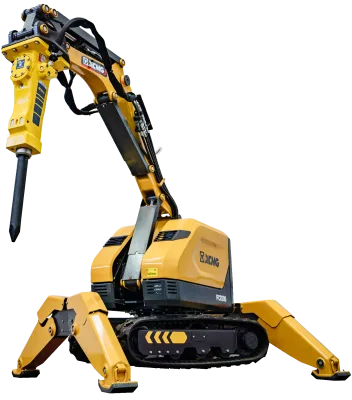

Practical Style Heavy Load Demolition Robot for Old House Removing
$50000.00 - $300000.00
MOQ: 1 Pieces

Slim-Structure Demolition Robot Offering Customizable Impact Strength
$50000.00 - $300000.00
MOQ: 1 Pieces

Trustworthy Made Reinforced Frame Demolition Robot for Strong Impact Resistance
$50000.00 - $300000.00
MOQ: 1 Pieces


Offline Batch Ordinary Practical Demolition Robot for Daily Minor Renovation Work
$50000.00 - $300000.00
MOQ: 1 Pieces

Visible Action Demolition Robot for Onsite Construction Progress Confirm
$50000.00 - $300000.00
MOQ: 1 Pieces

Comprehensive Sourcing Guide
Demolition Robot Sourcing Guide
Procuring a Demolition Robot requires a strategic approach that balances remote operational safety with mechanical reliability. These specialized machines are designed for high-risk environments where human presence is dangerous, offering high efficiency and time savings through remote control capabilities. Buyers must navigate a market where specifications vary significantly, from small-scale units to heavy-duty mining excavators, ensuring the selected equipment matches the specific demolition or construction task.
The sourcing process involves verifying critical technical attributes such as drive type, power source, and remote control range. While some units operate on internal combustion or electric drive systems, others may utilize hydraulic transmission for enhanced maneuverability. Understanding these mechanical differences is essential for selecting a robot that can handle the intended workload, whether it involves building demolition, marine operations, or special excavation tasks, without compromising on safety or performance.
Product Scope and Observed Listing Signals
The current market for demolition robots presents a diverse range of equipment, often categorized under broader headings like construction shovels or crawler excavators. Listings indicate a wide price spectrum, observed between $2,999 and $300,000, reflecting variations in power, size, and customization options. Buyers should note that while the core keyword is "Demolition Robot," many suppliers list these machines under generic terms, requiring careful scrutiny of the product name and application fields to ensure the equipment is suitable for remote-controlled demolition tasks.
Observed product attributes reveal a mix of drive types, including internal combustion and electric drive systems, with power outputs ranging from 11kW to 27kW. Some units are explicitly labeled as remote control demolition robots with a farthest remote control distance of 200 meters, while others are described as crawler excavators with climbing abilities of up to 30 degrees. This variability means buyers must cross-reference the listed type, such as "GM Excavator" or "Special Excavator," with their specific operational needs to avoid purchasing equipment that lacks the necessary remote control or demolition-specific features.
Technical Specifications to Verify
When evaluating technical specifications, the drive type and power source are primary considerations. Buyers should verify whether the robot uses internal combustion or electric drive, as this impacts operational noise, emissions, and suitability for enclosed spaces. Power ratings vary, with some units offering 15kW or 11kW, while others provide 27kW. It is crucial to match the power output to the required torque and hydraulic pressure, with some systems operating at a system pressure of 20MPa, to ensure the robot can handle the resistance of demolition materials effectively.
Dimensions and mobility features are equally critical for site accessibility. Key metrics to verify include the minimum walking width, which can be as narrow as 850mm for small-scale units, and the maximum height during operation, which may reach 4650mm. Buyers should also check the walking speed, typically ranging from 2km/h to 3km/h, and the climbing ability, often cited as 30 degrees. These physical constraints determine whether the robot can navigate tight spaces or steep inclines common in demolition sites, so precise measurement verification against site plans is essential before procurement.
Compliance and Safety Documentation
Safety is the paramount concern when sourcing remote-controlled demolition robots, given their use in hazardous environments. Buyers must ensure that the equipment comes with appropriate safety certifications, such as ISO9001, which indicates a quality management system in place for new condition products. While specific safety standards for remote control operations may vary by region, buyers should request documentation that confirms the robot meets local regulatory requirements for industrial machinery and remote operation, ensuring that the control systems are reliable and fail-safe.
Documentation should also cover the warranty and after-sales service terms, which are critical for maintaining operational continuity. Listings often mention a one-year service warranty, but buyers should clarify the scope of this coverage, including parts and labor. Additionally, verifying the availability of spare parts and technical support is vital, as demolition robots operate under high stress. Buyers should ensure that the supplier provides comprehensive manuals and training materials for remote control operation to minimize the risk of accidents due to operator error.
Cost Drivers and Commercial Terms
The cost of a Demolition Robot is influenced by several factors, including power output, drive type, and customization options. Units with higher power ratings, such as 27kW, or those with specialized features like grab shovels or alloy steel components, typically command higher prices. Buyers should also consider the cost of customization, which is often available but may add to the initial investment. Understanding these cost drivers helps in budgeting accurately and avoiding unexpected expenses during the procurement process.
Commercial terms, including minimum order quantity (MOQ) and packaging, also impact the total cost of ownership. Observed MOQs range from 1 to 2 units, suggesting that suppliers are flexible for small-scale purchases. Packaging methods vary, with options including wooden boxes, plywood cases, or specific dimensions like 180150130mm. Buyers should factor in shipping and handling costs, as the weight of the machine, which can be around 1200kg, and the packaging type will affect logistics. Negotiating clear terms for delivery and installation can further optimize the overall procurement cost.
Supplier Qualification and Quality Control
Selecting a qualified supplier is crucial for ensuring the reliability and longevity of the Demolition Robot. Buyers should verify the supplier’s manufacturing capabilities and quality control processes, looking for certifications like ISO9001 that indicate a commitment to quality. It is also important to assess the supplier’s experience in producing remote-controlled demolition equipment, as this specialized knowledge translates to better product design and support. Buyers should request references or case studies to validate the supplier’s track record in delivering functional and durable machines.
Quality control checks should include a thorough inspection of the robot’s core components, such as the engine and hydraulic systems. Buyers should verify that the machine is in new condition and that all parts are manufactured to specified standards, such as alloy steel for durability. Additionally, testing the remote control functionality and hydraulic transmission is essential to ensure smooth operation. Buyers should consider requesting a pre-shipment inspection or video demonstration to confirm that the robot meets all technical specifications before finalizing the purchase.
Long-Term Procurement Checks
Long-term procurement success depends on the supplier’s ability to provide ongoing support and maintenance services. Buyers should establish a clear communication channel with the supplier for technical assistance and spare parts ordering. Given the high-stress nature of demolition work, regular maintenance is critical to prevent downtime. Buyers should inquire about the availability of maintenance kits and the supplier’s response time for service requests, ensuring that any issues can be resolved quickly to minimize operational disruptions.
Furthermore, buyers should monitor the supplier’s product updates and technological advancements in the Demolition Robot sector. As remote control technology and hydraulic systems evolve, newer models may offer improved efficiency and safety features. Maintaining a relationship with a reliable supplier can provide access to these upgrades, allowing buyers to enhance their fleet’s capabilities over time. Regularly reviewing the performance of the purchased robots and providing feedback to the supplier can also help in refining future procurement decisions and ensuring continued satisfaction with the equipment.
FAQs
What is the climbing ability of the Demolition Robot?
The Demolition Robot features a climbing ability of 30 degrees. This specification allows the machine to operate effectively on inclined surfaces during building demolition tasks while maintaining stability.
Can the Demolition Robot be customized for specific needs?
Yes, customization is available for this Demolition Robot. Buyers can request specific modifications to suit unique project requirements, ensuring the equipment meets precise operational standards.
What is the power output of the Demolition Robot?
The Demolition Robot operates with a power output of 15kw or 11kw depending on the configuration. This power level supports high work efficiency during intensive demolition activities.
How far can the remote control operate the robot?
The farthest remote control distance for the Demolition Robot is 200 meters. This range enables operators to manage the machine safely from a secure distance during hazardous operations.
What is the noise level of the Demolition Robot?
The noise level of the Demolition Robot is 91dB (a). This measurement indicates the acoustic output during operation, which is a key factor for workplace safety and compliance.
What is the minimum walking width of the Demolition Robot?
The minimum walking width of the Demolition Robot is 850mm. This compact dimension allows the machine to navigate through narrow spaces often found in demolition sites.
What is the after warranty service period for the robot?
The after warranty service period for the Demolition Robot is 1 year. Buyers receive service support for this duration to ensure continued operational reliability after the initial purchase.