Source Desktop Cast Steel Chain Vise for Workshops, Machining, and Assembly
Explore 30 listings for Desktop Cast Steel Chain Vise options tailored for workshop and machining tasks. Buyers can compare specifications like jaw width, pipe capacity, and material grades to find the right tool for assembly and repair needs.
Key considerations
Products List


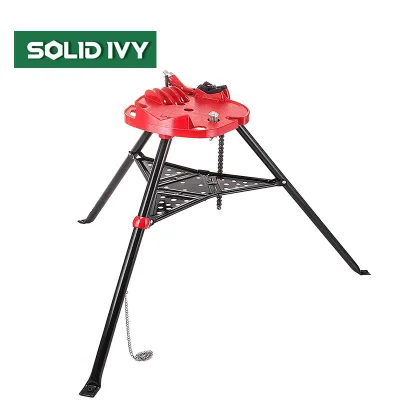


Zhongde Multi-Specification Optional Cast Iron Vise
$21.90 - $30.00
MOQ: 1 Pieces
Shandong Zhongde Machine Tool Accessories Producing Co., Ltd.


Comprehensive Sourcing Guide
Strategic Sourcing Guide for Desktop Cast Steel Chain Vises
The procurement of industrial holding tools requires a rigorous approach to ensure operational safety and long-term value. When searching for a Desktop Cast Steel Chain Vise, buyers must navigate a complex landscape of material specifications, dimensional constraints, and compliance standards. The following guide synthesizes available product data to provide a structured framework for evaluating potential suppliers and selecting the appropriate equipment for specific manufacturing or workshop environments. This analysis focuses on the technical realities of cast steel and cast iron vises, distinguishing between general market observations and verified product attributes found in current listings.
Technical Specifications and Material Composition
The foundation of any reliable vise lies in its material composition and structural integrity. In the context of desktop vises, the primary material observed in high-performance listings is cast steel or high-quality cast iron. These materials are selected for their ability to withstand high clamping forces without deforming. Specific product data indicates that the body material for certain models is explicitly identified as cast steel, while others utilize high-quality cast iron. Both materials offer the necessary rigidity for holding workpieces during drilling, milling, or grinding operations.
Dimensional specifications are critical for matching the vise to the intended application. The maximum pipe capacity is a defining characteristic for chain vises, with verified data pointing to a maximum capacity for pipes or round bars up to 6 inches. This specification dictates the size of the workpiece that can be securely held. Furthermore, the physical footprint of the unit is essential for desktop integration. Observed measurements for a standard model indicate a size of 28 by 24 by 14 centimeters, with a net weight of approximately 7 kilograms. Another variant, a drill press milling vise, presents a larger profile with a jaw width of 200 mm, a jaw height of 45 mm, and a maximum opening of 180 mm.
The build method for these tools is consistently described as "Connect," suggesting a modular or bolted assembly that allows for secure attachment to a workbench. The style is uniformly classified as "Desktop," confirming their suitability for stationary workstations rather than portable field use. The folding state is noted as "Unfolded," implying that these units are designed for permanent or semi-permanent installation where space is not a primary constraint for storage.
Compliance, Certification, and Safety Standards
When sourcing industrial hardware, verifying compliance with international safety and environmental standards is non-negotiable. While specific certification status varies by manufacturer, the product data highlights several key standards that buyers should look for in supplier documentation. Verified listings reference compliance with CE, ROHS, UL, and CSA standards. These certifications indicate that the product meets specific requirements for electrical safety (UL, CSA), environmental restrictions on hazardous substances (ROHS), and European conformity (CE).
It is important to note that not every listed product may possess all certifications simultaneously. Buyers must treat these as observations of specific models rather than universal guarantees for all cast steel vises. The standard designation "Standard" appears in some records, but this is a generic term. Procurement teams should request specific test reports or certificates of conformity to validate that a particular unit meets the required regulatory framework for their region. For instance, if the vise is intended for use in a facility requiring UL certification, the buyer must explicitly confirm this status before purchase, as the mere presence of a "Standard" label does not confirm UL compliance.
Additionally, the product origin plays a role in regulatory alignment. Listings indicate origins in Taizhou, Jiangsu, Yantai, Shandong, and generally China. Understanding the manufacturing location helps in assessing the supply chain's familiarity with international export standards. However, the origin alone does not guarantee compliance; the specific quality control processes of the factory determine the final product's adherence to safety norms.
Cost Drivers and Pricing Dynamics
The pricing of desktop cast steel chain vises is influenced by a combination of material costs, manufacturing complexity, and packaging requirements. The observed price range in the market spans from 0.9 to 456 USD. This wide variance suggests significant differences in product tier, capacity, and included features. Lower-priced items in this range may correspond to smaller, lighter-duty models or those with minimal packaging, while higher-priced units likely represent heavy-duty industrial grades with larger jaw capacities and robust build quality.
Material costs are a primary driver. The use of cast steel versus cast iron, and the specific grade of the metal, directly impacts the unit price. Furthermore, the coating process, identified as "Coating" in the data, adds to the cost. A high-quality coating protects the vise from corrosion and wear, extending its service life. The packaging method also contributes to the final cost. Some models are shipped in cartons, while others utilize plywood cases and cartons. Plywood cases offer superior protection during long-distance shipping but increase the overall weight and cost of the unit.
Minimum Order Quantity (MOQ) is another critical factor affecting the total cost of ownership. The observed MOQ range is between 1 and 2000 units. Buyers seeking a single unit for a small workshop may find suppliers with an MOQ of 1, whereas bulk purchasers can negotiate better unit prices by ordering closer to the 2000-unit threshold. The weight of the product, ranging from 7 kg to 18 kg depending on the model, also influences shipping costs, which are often a hidden component of the total procurement expense.
Typical Applications and Operational Capabilities
Desktop cast steel chain vises are designed for a variety of industrial and workshop applications. The primary function is to secure workpieces for machining operations. The data specifies the "Product Name" as "Cast Iron Drill Press Milling Vise" and "High Grade Cast Iron Drill Press Vise," indicating their primary use in drilling and milling scenarios. The ability to hold pipes and round bars up to 6 inches makes them ideal for plumbing, metal fabrication, and automotive repair tasks.
The specific dimensions of the jaws determine the versatility of the tool. For example, a model with a 200 mm jaw width and 180 mm maximum opening is suitable for larger components, while a model with a 75 mm jaw width and 60 mm maximum opening is better suited for smaller, precision parts. The "Recycled" attribute observed in some listings suggests that certain manufacturers incorporate sustainable materials into their production, which may be a deciding factor for companies with environmental sustainability goals.
The "Connect" build method implies that these vises are designed to be bolted securely to a workbench, ensuring stability during high-torque operations. This is crucial for preventing movement or vibration that could compromise the accuracy of the machining process. The "Unfolded" state confirms that these are not folding vises, but rather rigid, fixed units intended for permanent installation on a desktop or workbench surface.
Supplier Evaluation and Quality Assurance
Evaluating a supplier for cast steel vises requires a multi-faceted approach. Buyers should verify the supplier's ability to provide consistent product attributes, such as the "High-Quality Cast Iron" or "Cast Steel" body material. The consistency of the "Coating" process is also vital; a poor coating can lead to rust and premature failure.
Quality control should be a central part of the evaluation process. Buyers must request evidence of the manufacturing standards used. While "Standard" is listed as a product standard, this is insufficient on its own. Suppliers should be able to provide detailed specifications for the casting process, heat treatment, and machining tolerances. The "Product Name" and "Model No." (such as H402, Q19200, Q1975, Q19125) serve as unique identifiers that buyers can use to cross-reference technical data sheets.
Packaging is another indicator of supplier quality. The variation between "Carton" and "Plywood Case & Cartons" suggests different levels of care in shipping. A supplier that consistently uses robust packaging like plywood cases demonstrates a commitment to protecting the product during transit, reducing the risk of damage upon arrival. The "Qty/CTN" (Quantity per Carton) also provides insight into the supplier's logistics efficiency. Some models are packed one per carton, while others are packed ten per carton, affecting handling and storage requirements.
Long-Term Procurement and Maintenance Considerations
For long-term procurement success, buyers must consider the lifecycle of the vise. The weight of the unit, ranging from 7 kg to 18 kg, indicates a substantial build that should offer a long service life. However, regular maintenance is essential to preserve this longevity. The "Coating" on the surface must be inspected for chips or scratches, which can expose the underlying metal to corrosion.
The "Recycled" attribute found in some listings may also imply a focus on durability and sustainability, which can be a factor in long-term cost analysis. Buyers should inquire about the availability of replacement parts, such as jaws or screws, to ensure the vise can be repaired rather than replaced if components wear out.
Finally, the "Style" and "Build Method" suggest that these vises are designed for stationary use. Buyers should plan their workshop layout to accommodate the fixed nature of the "Unfolded" unit. The "Max Pipe Capacity" of 6 inches should be matched against the typical workpieces in the facility to ensure the tool remains relevant as production needs evolve. By carefully analyzing these factors, buyers can make informed decisions that balance immediate cost with long-term operational efficiency.
Comparative Analysis of Key Product Attributes
To facilitate a clearer understanding of the variations available in the market, the following table summarizes the key attributes observed in the product data. This comparison highlights the differences in model numbers, dimensions, and weights, which are critical for making a selection based on specific operational needs.
| Attribute | Model H402 / H402 Pipe Vise | Model Q19200 (Drill Press) | Model Q1975 (Drill Press) | Model Q19125 (Drilling Vise) |
|---|---|---|---|---|
| Body Material | Cast Steel | Cast Iron | Cast Iron | Cast Iron |
| Jaw Width | Not Specified | 200 mm | 75 mm | 125 mm |
| Jaw Height | Not Specified | 45 mm | 27 mm | Not Specified |
| Max Opening | Not Specified | 180 mm | 60 mm | Not Specified |
| Max Pipe Capacity | Max 6 Inch | Not Specified | Not Specified | Not Specified |
| Net Weight | 7 kgs | 13 Kgs | 17 kgs | Not Specified |
| Gross Weight | 7.3 kgs | 14 Kgs | 18 kgs | Not Specified |
| Packing Size | 282414 cm | 39.5X27.5X10 Cm | 26.5X26.5X23.5 | Not Specified |
| Origin | Taizhou, Jiangsu | Yantai Shandong | Yantai Shandong | Not Specified |
| Certifications | Not Specified | CE/ROHS/UL/CSA | CE/ROHS/UL/CSA | Not Specified |
This table illustrates that while the core function remains the same, the specific dimensions and weights vary significantly. A buyer must match these specifications to their specific workflow requirements. For instance, a facility handling large pipes will prioritize the 6-inch capacity, while a precision workshop may prefer the smaller, lighter models with specific jaw dimensions. By systematically evaluating these attributes, procurement teams can ensure they select the most appropriate tool for their specific industrial application.
FAQs
What is the maximum pipe capacity for this desktop vise?
The maximum pipe capacity is for pipes or round bars up to 6 inches. This specification ensures the tool can securely hold larger cylindrical workpieces during drilling or milling operations on a desktop setup.
Which materials are used to construct the body of this vise?
The body is constructed from cast steel or high-quality cast iron. These materials provide the necessary rigidity and durability to withstand high clamping forces without deforming during heavy industrial use.
Can buyers request custom packaging for these desktop vises?
Yes, customization is available for packaging options such as cartons or plywood cases. Buyers should verify specific packing requirements with the supplier to ensure the product arrives safely during long-distance shipping.
What certifications are available for these cast iron drill press vises?
Some models meet CE, ROHS, UL, and CSA standards. Buyers must request specific test reports to confirm that a particular unit holds these certifications before purchasing for regulated environments.
How does the minimum order quantity affect the pricing of these vises?
The minimum order quantity ranges from 1 to 2000 units depending on the supplier. Ordering closer to the higher threshold often results in better unit prices, while single-unit buyers can find suppliers with lower MOQs.
What is the typical weight of a standard desktop cast steel vise?
A standard model weighs approximately 7 kilograms net, while larger drill press models weigh up to 18 kilograms. The weight indicates the robust build quality required for stable desktop operations.
Which origin locations are common for these industrial vise manufacturers?
Common origins include Taizhou in Jiangsu and Yantai in Shandong, China. These regions are known for manufacturing industrial hardware, though buyers should verify specific factory locations for supply chain transparency.