Source Desktop Lab Drying Oven and Incubator for Labs, Hospitals, Schools
Compare 30 Desktop Lab Drying Oven and Incubator units from verified Chinese manufacturers. These devices feature adjustable temperature ranges, LCD displays, and micro-air circulation for precise drying and incubation in laboratory, hospital, and school settings; compare the available evidence and request quotations based on your requirements.
Key considerations
Products List


Biobase Drying Oven/Incubator Dual Use Incubator&Oven with 2 Shelves for Laboratory Use
$670.00 - $690.00
MOQ: 3 Pieces


18L 24L 30L 50L 80L 252L Drying Oven Incubator Machine Laboratory Incubator
$195.00 - $489.00
MOQ: 1 Pieces

Drawell Laboratory Incubator Dgl-B Electric Heating Forced Air Drying Oven
$180.00 - $440.00
MOQ: 1 Pieces


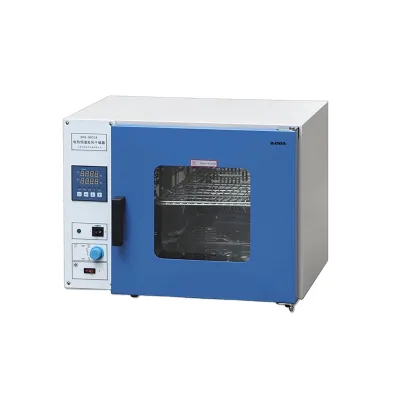


Laboratory Electric Thermostatic Drying Oven Constant Temperature Desiccant Drying Oven Ov-A15
$118.00 - $130.00
MOQ: 1 Pieces

Comprehensive Sourcing Guide
Desktop Lab Drying Oven and Incubator Sourcing Guide
Procuring a desktop unit for laboratory environments requires balancing compact footprints with precise thermal control capabilities. Buyers must verify that the selected device supports both incubation and drying functions, as some models offer a dual-mode capability ranging from room temperature plus five degrees up to 220 degrees Celsius. This versatility allows a single piece of equipment to handle biological sample preservation and material drying processes without requiring separate hardware investments.
The physical dimensions and internal capacity are critical constraints for laboratory benchtop integration. Units with an internal volume of approximately 35 liters and specific shelf configurations must fit within the available workspace while maintaining adequate airflow. Procurement teams should confirm that the external dimensions align with laboratory safety clearances and that the power consumption ratings match the facility's electrical infrastructure to prevent circuit overloads during continuous operation.
Product Scope and Observed Listing Signals
Market listings for these units frequently display a wide price variance, reflecting differences in build quality, control precision, and included accessories. Buyers should expect observed price points to range significantly, indicating that the lowest cost options may lack advanced features like LCD displays or precise temperature stability. It is essential to scrutinize the specific model number and configuration details rather than relying solely on the advertised price to ensure the equipment meets the rigorous demands of scientific research.
Listing signals often highlight the operational structure, such as desktop designs intended for continuous use in hospitals, schools, or industrial settings. The presence of specific attributes like micro-air circulation modes and contra-flow drying mechanisms suggests a focus on uniform heating and efficient moisture removal. However, buyers must distinguish between generic descriptions and verified specifications, ensuring that the listed application scope matches the actual intended use case for the specific laboratory environment.
Technical Specifications to Verify
Temperature uniformity and stability are the primary technical metrics that determine the reliability of experimental results. Buyers must verify that the unit maintains a temperature fluctuation within three percent at 100 degrees Celsius and ensures stability within plus or minus 0.5 degrees Celsius for incubation modes. These tight tolerances are non-negotiable for sensitive biological assays, and failure to confirm these specific performance metrics can lead to compromised data integrity and wasted resources.
The heating mechanism and airflow dynamics directly influence the drying efficiency and sample integrity. Confirming that the device utilizes convective heating with a micro-air circulation mode ensures consistent thermal distribution across the internal chamber. Additionally, the timing range of up to 5999 minutes provides the flexibility required for long-duration drying cycles, while the inclusion of adjustable shelves allows for the accommodation of various sample sizes and container types.
Compliance and Safety Documentation
Regulatory compliance is a fundamental requirement for laboratory equipment intended for use in professional settings. Buyers must request and validate that the unit carries recognized certifications such as ISO and CE, which indicate adherence to international safety and quality management standards. These documents serve as proof that the manufacturer has undergone rigorous testing and that the equipment meets the necessary electrical and mechanical safety requirements for deployment in regulated environments.
Safety features and operational documentation must be comprehensive to ensure safe handling by laboratory personnel. The equipment should include clear operational manuals detailing the continuous operational method and specific safety protocols for high-temperature drying processes. Procurement teams should verify that the voltage ratings match the local power supply standards and that the packaging instructions ensure the unit arrives without damage, preserving the integrity of sensitive internal components.
Cost Drivers and Commercial Terms
The total cost of ownership is influenced by factors beyond the initial purchase price, including packaging requirements and shipping logistics. Units may be shipped in standard export cartons or heavy-duty wooden cases, which can significantly impact freight costs and insurance premiums. Buyers should clarify the packaging specifications early in the negotiation process to avoid unexpected expenses and ensure that the equipment is protected during transit to the final destination.
Minimum order quantities and customization options also play a significant role in the commercial terms of the agreement. While some suppliers offer a minimum order quantity of one unit, others may require higher volumes for customized configurations. It is crucial to confirm whether the requested model is available as a standard non-customized item or if specific modifications are required, as this distinction can affect lead times and the overall budget allocation for the procurement project.
Supplier Qualification and Quality Control
Supplier qualification involves assessing the manufacturer's origin and their track record in producing laboratory-grade equipment. Many suppliers originate from regions known for manufacturing industrial heating appliances, such as Shandong, China, and buyers should verify the specific production location to understand the supply chain dynamics. Understanding the origin helps in evaluating the potential for logistical delays and ensures that the supplier has the necessary infrastructure to support consistent production volumes.
Quality control processes must be transparent and documented to guarantee that every unit meets the specified technical parameters. Buyers should inquire about the internal testing procedures used to verify temperature stability and uniformity before the unit leaves the factory. Establishing a clear quality assurance protocol with the supplier ensures that the delivered equipment matches the advertised specifications and reduces the risk of receiving non-compliant or defective units.
Long-Term Procurement Checks
Sustainability and maintenance requirements are critical considerations for the long-term viability of the laboratory equipment investment. Buyers should evaluate the availability of replacement parts, such as heating elements or control boards, to ensure that the unit can be serviced effectively over its operational lifespan. A robust supply chain for spare parts minimizes downtime and extends the useful life of the equipment, protecting the initial capital investment.
Future scalability and compatibility with laboratory workflows should also be assessed during the initial procurement phase. As laboratory needs evolve, the equipment must remain capable of handling new sample types or increased throughput without requiring immediate replacement. Procurement teams should verify that the unit's design allows for easy integration into existing laboratory information systems and that the operational parameters can be adjusted to meet changing research requirements.
FAQs
What is the temperature range for the incubator mode?
The incubator mode operates from room temperature plus 5°C up to 80°C. This range allows for precise biological sample storage and cultivation. The unit maintains a stability of ±0.5°C within this bracket, ensuring consistent conditions for sensitive laboratory applications without external interference.
How does the oven mode differ from the incubator?
The oven mode covers a higher temperature spectrum from 80°C to 220°C. It utilizes convective heating with micro-air circulation for uniform drying. This mode supports continuous operation and achieves a stability of ±1°C, making it suitable for industrial material testing and sterilization tasks.
Can I customize the internal shelves for my samples?
Yes, customization is available for this desktop unit. The standard configuration includes two shelves, but buyers can request modifications to suit specific sample sizes. The internal dimensions are 340x325x320mm, providing ample space for bulk or individual item placement during drying or incubation processes.
What certifications does this drying oven hold?
The product holds ISO and CE certifications, verifying compliance with international safety and quality standards. These credentials ensure the equipment meets rigorous manufacturing requirements for laboratory and industrial use. Buyers can rely on these documented standards for procurement compliance and operational safety in regulated environments.
What is the power consumption of this desktop unit?
The unit consumes 850 watts of power during operation. This energy rating supports efficient heating for both incubator and oven modes. The voltage requirement is 200-240V, making it compatible with standard laboratory electrical systems while maintaining stable performance across the specified temperature ranges.
What is the minimum order quantity for this model?
The minimum order quantity ranges from 1 to 3 units. This flexible MOQ allows small labs or individual researchers to purchase single units easily. Bulk buyers can also take advantage of this range for larger institutional setups, ensuring accessible procurement options for various budget scales.