Find Desktop Labeling Machine for Drinks Cosmetics Dairy
Source 30 desktop labeling machines from verified Chinese suppliers. Compare automatic round bottle labeling solutions for drinks, dairy products, and cosmetics with features like high accuracy and electric drive.
Key considerations
Products List


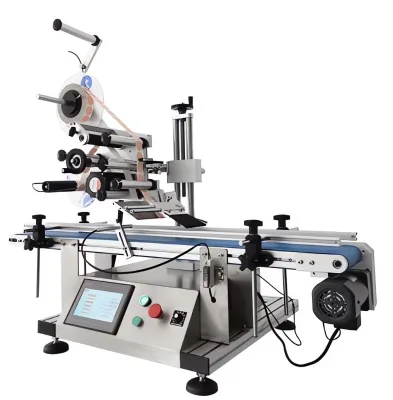


High-Speed Automatic Sleeve Labeling Machine Automatic Sleeve Labeler
$60000.00 - $3000000.00
MOQ: 1 Pieces

Fully Automated Labeling System Automatic Label Application Equipment
$60000.00 - $3000000.00
MOQ: 1 Pieces


Labeling Machine Small Desktop Self-Adhesive Semi-Automatic Automatic Labeling Machine
$3100.00 - $4100.00
MOQ: 1 Pieces

Comprehensive Sourcing Guide
Strategic Sourcing Guide for Desktop Labeling Machines
Understanding the Technical Landscape of Automated Labeling
When sourcing a Desktop Labeling Machine, buyers must first distinguish between the various operational classifications available in the market. The core keyword "Desktop Labeling Machine" often encompasses a spectrum of automated solutions ranging from fully electric systems to mechanically driven units. Based on current market observations, these machines are frequently categorized by their classification, such as "Automatic Vertical Round Bottle Labeling Machine" or "Automatic Bedroom Round Bottle Labeling Machine," indicating specific use-case orientations. The driven type is a critical technical differentiator; while some units operate on electric drives, others utilize mechanical systems. This distinction directly impacts the noise profile, maintenance requirements, and the smoothness of the labeling process.
The physical construction of these machines is equally vital. The material composition is predominantly 304 stainless steel, a standard choice for equipment handling food, beverages, and cosmetics due to its corrosion resistance and ease of cleaning. The weight of these units varies, with specific models observed at 45kg, which is a manageable figure for desktop integration but requires consideration for floor loading and stability. Dimensions are another key specification; while some models adhere to a footprint of 920mm (L) x 470mm (W) x 500mm (H), others may be significantly more compact, such as those measuring 255cm x 235cm x 202cm, or larger industrial desktop variants at 1200mm x 600mm x 800mm. Buyers must verify these exact dimensions against their available workspace, as the "desktop" designation does not guarantee a uniform size across all suppliers.
Core Components and Performance Specifications
The internal architecture of a labeling machine dictates its reliability and precision. High-performance desktop units typically integrate a PLC (Programmable Logic Controller) as the central brain, paired with high-quality motors and engines. The motor type is a significant variable; while some systems employ step motors for cost-effective operation, others utilize servo motors for superior control and speed consistency. The voltage requirements are generally standardized at 220V, but buyers must confirm compatibility with their local power infrastructure. Power consumption can range significantly, with observed values such as 500W for specific models, which helps in calculating operational energy costs.
Performance metrics are often the primary driver for procurement decisions. Label accuracy is a critical specification, with high-confidence data indicating a tolerance of +/-0.5mm for precision models. This level of accuracy is essential for industries where branding consistency is paramount. The maximum speed of operation is another defining characteristic; desktop units can range from 80 pieces per minute to capacities exceeding 180 bottles per minute. The labeling capability itself is versatile, supporting 1 to 3 sides of application. The machine must accommodate various bottle shapes, including round, oval, and square configurations, as well as cans and jars. The application scope is broad, covering sectors such as drinks, dairy products, hair care, skin care, cosmetics, cleaning detergents, and food items like rice, flour, and meat.
Compliance, Certification, and Operational Standards
In the realm of industrial machinery, compliance and certification are non-negotiable elements of the procurement process. While specific certification bodies are not universally mandated for every desktop unit, the presence of a Machinery Test Report is a strong indicator of a supplier's commitment to quality assurance. Buyers should insist on receiving this report before finalizing a purchase, as it provides empirical evidence of the machine's performance under test conditions. The standard of the machine itself is often defined by its physical dimensions and operational safety features, with specific models adhering to standards like 920mm length or other defined structural metrics.
Furthermore, the origin of the machinery plays a role in regulatory compliance. Products originating from regions such as Liaoning, Guangzhou, or Shanghai in China are common in the global market. Buyers must ensure that the machine meets the electrical safety standards and industrial hygiene regulations of their destination country. The material used, specifically 304 stainless steel, often aligns with food-grade safety standards, but this should be verified against local regulations regarding food contact materials. Additionally, the packaging standard, often described as a "Standard Exporting Wooden Case," is crucial for ensuring the machine arrives without damage, though the internal packaging may vary between cartons and wooden crates depending on the supplier.
Cost Drivers and Pricing Structures
The pricing of desktop labeling machines is influenced by a complex array of factors, resulting in a wide observed range from $350 to $3,000,000. This vast disparity is not necessarily indicative of quality alone but reflects differences in automation levels, component quality, and customization capabilities. The base cost is driven by the driven type; electric systems with servo motors and PLCs generally command a higher price point than mechanical alternatives. The inclusion of optional devices, such as a thermal transfer coding machine or printer, adds to the total cost of ownership.
Customization is a significant cost driver. While many suppliers offer "Available" customization options, the extent of this customization—ranging from minor adjustments to fully bespoke engineering—directly impacts the final price. The MOQ (Minimum Order Quantity) is another financial consideration; observed ranges of 1 to 10 units suggest that buyers can often procure single units for pilot testing, though bulk orders may offer different pricing structures. The warranty period, typically observed as 12 months, also influences the initial investment, as extended warranties or premium after-sales service packages often carry a premium. Buyers should analyze the total cost of ownership, including energy consumption (e.g., 500W models) and the potential cost of spare parts, rather than focusing solely on the sticker price.
Supplier Evaluation and Verification Protocols
Evaluating a supplier for desktop labeling machinery requires a rigorous due diligence process. The first step is verifying the supplier's ability to provide a Machinery Test Report. This document serves as a critical validation of the machine's claimed specifications, such as label accuracy and speed. Buyers should also assess the supplier's capacity for customization, as the "Available" status often implies a range of flexibility that needs to be quantified during negotiations. The origin of the machine, whether from Liaoning, Guangzhou, or Shanghai, can provide insights into the regional manufacturing capabilities and supply chain maturity.
Supplier reliability is further gauged by their after-sales service offerings. A robust supplier will provide engineers available to service the machine overseas, a crucial feature for international buyers who cannot rely on local technicians. The availability of core components like PLCs, motors, and engines from reputable manufacturers is another indicator of quality. Buyers should request detailed specifications for these components to ensure they meet the demands of their production line. Additionally, the packaging method, whether it is a standard export wooden case or cartons, reflects the supplier's attention to detail and concern for product safety during transit.
Quality Control and Long-Term Procurement Strategy
Implementing a robust quality control strategy is essential for ensuring the longevity and performance of the Desktop Labeling Machine. The initial inspection should focus on the material integrity, specifically confirming the use of 304 stainless steel. The structural dimensions must be measured against the provided specifications, such as the 1200x600x800mm or 255x235x202cm benchmarks, to ensure they fit the intended workspace. The labeling accuracy of +/-0.5mm should be tested with actual product samples to verify the machine's performance in a real-world setting.
Long-term procurement considerations extend beyond the initial purchase. The availability of spare parts and the supplier's commitment to after-sales support are critical for minimizing downtime. The "Engineers Available to Service Overseas" feature is a key differentiator for global buyers, ensuring that technical issues can be resolved promptly. The machine's versatility in handling different bottle shapes and applications, from drinks to cosmetics, ensures that the investment remains relevant as product lines evolve. Finally, buyers should consider the scalability of the machine; while a desktop unit may suffice for current needs, the ability to upgrade or integrate with larger systems can provide future-proofing for the business.
Application Scope and Operational Versatility
The versatility of desktop labeling machines makes them suitable for a wide array of industries. The observed applications span from beverages and dairy products to hair care, skin care, and cosmetics. The ability to handle various product types, including seasoning, rice, flour, snacks, fish, meat, vegetables, fruit, tea, oil, and cleaning detergents, highlights the adaptability of these machines. The labeling mechanism, whether it is a wrap-around applicator or a sticker labeling machine, must be compatible with the specific product shape, which can be round, oval, or square.
The integration of optional devices, such as thermal transfer coding machines, allows for the application of batch numbers, expiration dates, and other critical information directly onto the label or product. This functionality is particularly valuable for industries with strict regulatory requirements regarding traceability. The machine's capacity, ranging from 80 to 180 bottles per minute, allows for flexibility in production volume, making it suitable for both small-batch artisanal producers and larger commercial operations. The "High-Accuracy" selling point is a testament to the machine's ability to maintain consistent labeling quality across diverse product lines, ensuring brand integrity and consumer satisfaction.
Final Procurement Considerations and Decision Framework
In conclusion, sourcing a Desktop Labeling Machine requires a balanced approach that weighs technical specifications, cost drivers, and supplier reliability. Buyers must navigate a market where prices range from $350 to $3,000,000, driven by factors such as automation level, customization, and component quality. The presence of a Machinery Test Report, the availability of after-sales service, and the use of high-quality materials like 304 stainless steel are essential criteria for evaluation. By carefully analyzing the machine's dimensions, speed, accuracy, and application scope, buyers can make informed decisions that align with their operational needs and long-term strategic goals. The ability to customize the machine and the flexibility to handle various bottle shapes and product types further enhance the value proposition of these desktop solutions. Ultimately, a successful procurement strategy involves a thorough understanding of the machine's capabilities, a rigorous supplier evaluation process, and a commitment to quality control to ensure optimal performance and return on investment.
FAQs
What is the label accuracy of this Desktop Labeling Machine?
The label accuracy is plus or minus 0.5mm for high-precision models. This tolerance ensures consistent branding on round, oval, or square bottles used in drinks, cosmetics, and food applications.
Can the machine handle different bottle shapes like cans and jars?
Yes, the machine is designed to suit round bottles, cans, and jars. It accommodates various shapes including oval and square configurations for diverse products like dairy, cleaning detergents, and hair care items.
Which motor types are used in these automatic labeling machines?
The machines utilize either step motors or servo motors for operation. These core components work with a PLC to drive the labeling process, ensuring reliable performance for capacities ranging from 80 to 180 bottles per minute.
How is the machine constructed to ensure durability and safety?
The main body is constructed from 304 stainless steel for corrosion resistance and hygiene. This material choice meets food-grade standards and supports easy cleaning for applications involving drinks, meat, and cosmetics.
What is the maximum speed capacity for this labeling equipment?
The maximum speed capacity reaches up to 180 bottles per minute depending on the specific model. Some units operate at 80 pieces per minute, suitable for small to medium production runs in various industries.
Does the supplier provide a machinery test report for verification?
Yes, a machinery test report is provided to verify performance specifications. This document serves as empirical evidence of the machine's accuracy and operational stability before purchase.
What customization options are available for this labeling machine?
Customization is available for specific production needs and branding requirements. Buyers can request modifications to the machine to fit unique bottle shapes or integrate optional devices like thermal transfer coding machines.