Source Detachable Ceramic Spice Jar with Lids for Kitchen, Restaurant, Market
Compare 30 Detachable Ceramic Spice Jar with Lids options from verified Chinese suppliers. These glass and ceramic containers feature leakproof designs, customizable sizes, and OEM services for food storage needs in kitchens and restaurants.
Key considerations
Products List


Colorful Condiment Storage Jar Healthy Round Custom Ceramic Spice Jar with Design
$0.80 - $5.00
MOQ: 5000 Pieces

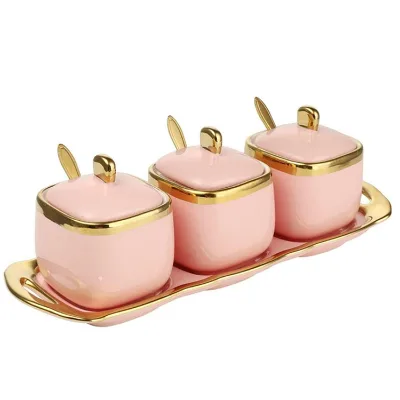
Ins Style Food Container Jar Simple Ceramic Spice Jar Custom Ceramic Storage Jar
$2.50 - $5.00
MOQ: 5000 Sets

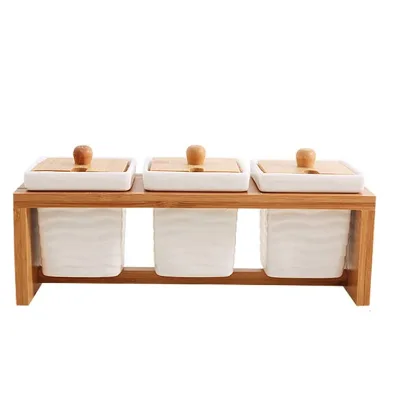
High Quality Ceramic Kitchen Storage Jar Embossed Sugar Jar White Ceramic Spice Jar
$0.80 - $1.50
MOQ: 5000 Pieces

High Quality Healthy Restaurant Spice Container Custom Ceramic Food Storage Container
$1.50 - $3.00
MOQ: 5000 Pieces




Comprehensive Sourcing Guide
Strategic Sourcing Guide for Detachable Ceramic Spice Jars with Lids
Understanding Product Variability and Core Specifications
When sourcing detachable ceramic spice jars with lids, buyers must first navigate the significant variability inherent in this product category. The market does not offer a single standardized unit but rather a spectrum of configurations designed for different culinary and commercial needs. Based on observed market data, the physical attributes of these jars vary widely in shape, size, and capacity. While some listings describe square glass containers, others specify round ceramic vessels, indicating that the term "ceramic" often encompasses a broader range of materials or that specific product lines may differ in composition.
The capacity of these jars is a primary differentiator. Observed specifications range from small units around 100ml to larger containers reaching up to 3000ml. For a typical kitchen application, capacities between 100ml and 500ml are most common, with specific dimensions such as a top diameter of 8.9cm and a bottom diameter of 7.2cm being noted for certain models. However, larger industrial or bulk storage jars may reach heights of 18.4cm with a diameter of 10cm. Buyers must verify the exact dimensions required for their shelving or packaging constraints, as the "detachable" nature of the lid often necessitates specific height clearances to ensure the lid can be removed and replaced without obstruction.
The material composition is another critical specification to confirm. While the core keyword specifies "ceramic," the available data includes glass products with similar usage profiles, such as vinegar bottles and spice grinders. It is essential for buyers to distinguish between ceramic and glass when reviewing supplier catalogs, as their thermal properties, weight, and breakage resistance differ significantly. If the requirement is strictly for ceramic, the buyer must explicitly filter for this material, as some suppliers may list "glass" or "ceramic" interchangeably in broad categories. The color options also vary, with transparent and multicolor finishes being available, allowing for aesthetic customization to match brand identity or kitchen decor.
Compliance, Certification, and Regulatory Standards
Navigating the regulatory landscape for food-contact ceramics requires a rigorous approach to compliance and certification. The primary concern for any buyer is ensuring that the materials used in the jar and the lid are safe for food storage. While specific test results for lead or cadmium leaching are not provided in the general product data, the presence of ISO certification on certain listings suggests that manufacturers may adhere to international quality management standards. Buyers should explicitly request proof of compliance with local food safety regulations, such as FDA approval in the United States or EU Framework Regulation (EC) No 1935/2004 for materials intended to come into contact with food.
The H.S. Code 7010902000 is a critical identifier for glass containers, which may overlap with ceramic products in customs classification depending on the specific material composition. If the product is strictly ceramic, the H.S. Code may differ, and buyers must verify the correct classification to avoid customs delays or incorrect duty assessments. The origin of the product, often listed as China or specific provinces like Anhui, also influences the regulatory burden. Sourcing from regions with established manufacturing clusters can provide access to suppliers with more mature compliance infrastructures, but it does not guarantee adherence to specific standards without direct verification.
Certification status should be treated as a variable attribute rather than a universal guarantee. While some product listings mention ISO certification, this typically refers to the manufacturer's quality management system (such as ISO 9001) rather than a specific product safety certification for the ceramic itself. Buyers must distinguish between the two. A supplier may hold an ISO 9001:2015 certificate for their production processes, yet the specific batch of spice jars must still undergo independent testing to ensure it meets food safety standards. Therefore, the procurement strategy should include a requirement for third-party laboratory test reports for every batch or at least for the initial production run, focusing on heavy metal migration and thermal shock resistance.
Cost Drivers and Pricing Dynamics
The pricing of detachable ceramic spice jars is influenced by a complex interplay of factors, including material quality, customization level, order volume, and packaging requirements. The observed price range in the market spans from $0.04 to $10.90 per unit, a vast disparity that reflects the difference between basic, mass-produced items and premium, custom-designed vessels. The lower end of the price spectrum typically corresponds to standard, non-customized products with minimal packaging, while the higher end reflects custom shapes, specialized glazes, or complex lid mechanisms.
Order volume is a significant driver of unit cost. The Minimum Order Quantity (MOQ) varies widely, ranging from as low as 5 units for sample orders to 5000 units for large-scale production runs. Suppliers often offer tiered pricing structures where the unit cost decreases as the order quantity increases. For instance, an MOQ of 1000 pieces is common for standard models, while custom orders may require higher thresholds to justify the setup costs for molds and design changes. Buyers should be aware that the "Free Sample" policy mentioned in some listings does not necessarily imply free shipping; logistics costs for samples can be substantial and should be factored into the total cost of ownership.
Packaging and customization are additional cost drivers. The choice between pallet or carton packaging, as well as the inclusion of custom logos or specific color schemes, adds to the base manufacturing cost. Customization options, such as altering the shape from round to square or modifying the lid mechanism, require retooling and additional labor, which increases the per-unit price. Furthermore, the "Send Inquiry, Get Discount Price" model suggests that pricing is not static and is often negotiated based on the buyer's volume commitment and payment terms. Buyers should expect that the final landed cost will be a sum of the unit price, packaging fees, shipping, and any applicable duties, rather than just the base product cost.
Typical Applications and Usage Scenarios
The versatility of detachable ceramic spice jars with lids makes them suitable for a wide array of applications, ranging from domestic kitchen use to commercial and promotional purposes. In a home setting, these jars are primarily used for storing spices, herbs, and condiments, where the detachable lid facilitates easy refilling and cleaning. The specific design features, such as the "without handle" configuration, suggest that these jars are intended for stationary storage on shelves or countertops rather than for portable use.
In commercial environments, such as restaurants and markets, the durability and aesthetic appeal of ceramic jars are leveraged for presentation and efficiency. The "European" and "Original" styles noted in product descriptions indicate that these jars can be selected to match specific interior design themes, enhancing the visual appeal of the dining experience. Additionally, the "Eco-Friendly" attribute highlights their suitability for businesses aiming to reduce plastic waste, offering a sustainable alternative to disposable containers.
The promotional and gift markets also represent a significant application area. The ability to customize logos and colors allows businesses to use these jars as branded merchandise or corporate gifts. The "Application Scenario" data points to Kitchen, Restaurant, Market, Gift, and Promotion as key use cases. For promotional items, the small size and attractive design make them ideal for inclusion in gift sets or as standalone giveaways. The "Milled Food" and "Pepper & Spice Grinder" attributes suggest that some models may be integrated into grinding systems, expanding their utility beyond simple storage to active food preparation.
Supplier Evaluation and Selection Criteria
Selecting the right supplier for detachable ceramic spice jars requires a multi-faceted evaluation process that goes beyond price comparison. Buyers should prioritize suppliers who demonstrate transparency in their manufacturing capabilities and quality control processes. The availability of OEM services is a key indicator of a supplier's flexibility and ability to meet specific customization needs. A supplier that offers OEM capabilities is more likely to accommodate unique design requirements, such as specific dimensions or branding, which is crucial for buyers seeking a differentiated product.
The supplier's location and origin are also important factors. While many suppliers are based in China, with specific mentions of Anhui as an origin, the geographic location can impact lead times and shipping costs. Buyers should assess the supplier's logistics network and their ability to handle export documentation efficiently. The "Standard Export Packing" mentioned in some listings suggests that the supplier has experience with international shipping, but buyers should verify the robustness of the packaging to prevent breakage during transit, especially for fragile ceramic items.
Quality control is another critical criterion. Buyers should inquire about the supplier's internal quality assurance processes, including how they handle defects and ensure consistency across batches. The "Quality Standard" of "A-B Grade, or According to Your Requirements" indicates that suppliers may offer different grades of quality, and buyers must specify their acceptable tolerance levels. Additionally, the lead time of 15 days for certain models suggests that production schedules can be tight, and buyers should confirm the supplier's ability to meet deadlines, especially during peak seasons.
Quality Control and Long-Term Procurement Considerations
Implementing a robust quality control (QC) strategy is essential for mitigating risks associated with ceramic product procurement. Given the fragility of ceramic materials, buyers should establish clear acceptance criteria for breakage rates and cosmetic defects. The "A-B Grade" classification implies that there may be variations in quality, and buyers should define what constitutes an acceptable level of imperfection for their specific use case. For high-end applications, such as gift sets or premium restaurant ware, the tolerance for defects should be minimal, requiring strict inspection protocols.
Long-term procurement considerations involve building a sustainable relationship with suppliers that ensures consistent quality and supply chain reliability. Buyers should evaluate the supplier's capacity to scale production as demand grows and their ability to maintain consistent material quality over time. The "Customized" and "Customized size" attributes highlight the importance of maintaining accurate records of specifications to ensure that future orders match the initial product design. Regular communication and periodic audits can help maintain these standards.
Furthermore, buyers should consider the environmental impact of their procurement choices. The "Eco-Friendly" attribute suggests that some suppliers are adopting sustainable practices, which can be a differentiator in the market. Buyers should inquire about the sourcing of raw materials and the manufacturing processes to ensure alignment with their corporate sustainability goals. Finally, the payment terms, such as "Tt" (Telegraphic Transfer), should be negotiated to balance risk and cash flow, ensuring that payments are made only after satisfactory delivery and inspection of the goods. By focusing on these long-term factors, buyers can secure a reliable supply of high-quality detachable ceramic spice jars that meet their operational and strategic needs.
FAQs
Can I get free samples for Detachable Ceramic Spice Jar with Lids?
Yes, free samples are available for many models, though shipping costs may apply. Buyers should verify if the sample includes the detachable lid and check the capacity, which ranges from 100ml to 3000ml depending on the specific model selected.
What customization options exist for Detachable Ceramic Spice Jar with Lids?
Customization is available for shape, size, and logo printing on the product. Buyers can request specific dimensions like 120ml or custom sizes, and choose from styles such as European or Original, provided the order meets the minimum quantity requirements.
Which certifications do Detachable Ceramic Spice Jar with Lids manufacturers hold?
Some manufacturers hold ISO certification for their quality management systems. However, buyers must explicitly request third-party food safety test reports to ensure the ceramic material meets local regulations for lead and cadmium leaching before placing large orders.
How long is the lead time for Detachable Ceramic Spice Jar with Lids?
The standard lead time is approximately 15 days for production. This duration may vary based on the order volume and whether the product requires custom molds or specific packaging configurations like pallet or carton packing for export.
What is the minimum order quantity for Detachable Ceramic Spice Jar with Lids?
The minimum order quantity typically ranges from 5 units for samples up to 5000 units for bulk production. Specific models may have an MOQ of 1000 pieces, so buyers should confirm the threshold before negotiating pricing and payment terms.
Can Detachable Ceramic Spice Jar with Lids be used for pepper grinding?
Yes, certain models are designed as pepper and spice grinders with milled food functionality. These units often feature a rotary design and can be customized for specific capacities, making them suitable for both home kitchens and commercial restaurant applications.