Source Detachable Industrial Shipping Container House for Hospital, Apartment, Hostel
Compare 30 Detachable Industrial Shipping Container House options featuring fast installation, steel frames, and customizable sizes. Buyers can evaluate specifications for hospitals, apartments, and hostels from verified suppliers in China.
Key considerations
Products List




Comprehensive Sourcing Guide
Strategic Sourcing Guide for Detachable Industrial Shipping Container Houses
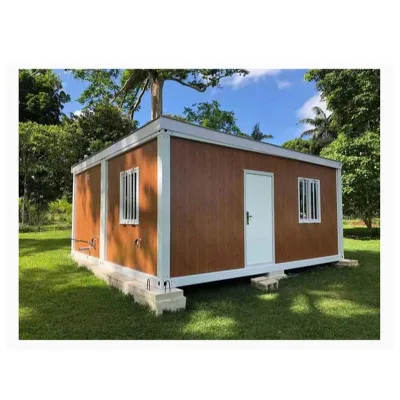
The global demand for modular and prefabricated housing solutions has surged, driven by the need for rapid deployment, cost efficiency, and structural resilience. For procurement professionals targeting detachable industrial shipping container houses, the sourcing landscape requires a nuanced understanding of structural engineering, material composition, and supply chain logistics. These units, often marketed as prefabricated housing or container houses, represent a hybrid of industrial shipping standards and residential or commercial utility. This guide synthesizes observed market data and technical attributes to provide a disciplined framework for evaluating potential suppliers and products.
Structural Engineering and Material Composition
The core of any Detachable Industrial Shipping Container House lies in its structural integrity and material selection. Based on observed product specifications, the dominant structural configuration is the bolt-connected steel frame structure. This design facilitates the "detachable" nature of the units, allowing for rapid assembly and disassembly without the need for complex welding on-site. The frame components, specifically columns and beams, are frequently manufactured from steel plate bending processes. Critical thickness parameters observed in high-quality units range up to 2.7mm, though customization is often available to meet specific load-bearing requirements.
Material selection is equally vital for durability and thermal performance. The primary construction material identified is the sandwich panel, which serves as the wall and roof cladding. These panels are typically integrated with a galvanized steel frame to ensure corrosion resistance. The galvanized coating is a standard feature, providing a robust defense against environmental degradation, particularly in industrial or coastal settings. The overall frame protection often involves electrostatic spray painting, which ensures a uniform finish and additional protection against rust.
When evaluating the physical dimensions, buyers should note that standard configurations often align with specific modular sizes, such as 5800mm in length, 2480mm in width, and 2800mm in height. However, the market also supports highly customized dimensions, with some units designed to be 3000mm by 6000mm. The weight of these units varies significantly based on size and material density, with observed weights ranging from 900kg to 1200kg per set. This variance impacts transportation costs and foundation requirements, necessitating a precise calculation of the total payload before finalizing a procurement order.
Technical Specifications and Customization Capabilities
A defining characteristic of the Detachable Industrial Shipping Container House is its high degree of customization. Unlike traditional shipping containers which are fixed in dimension, these units are designed to be flexibly combinable. Suppliers frequently offer customization options for doors, windows, wall panels, flooring, and electrical systems. This flexibility allows the units to be tailored for specific applications, ranging from temporary labor camps to permanent residential hostels or hospitals.
The electrical system is a critical technical component that must be verified for compliance. In the observed market, electrical appliances are designed to comply with CE certification standards, ensuring safety and interoperability with international power grids. The delivery form for these units is typically flat-pack components, which significantly reduces shipping volume and cost. This "flat-pack" approach is distinct from "container transportation" methods where the unit is fully assembled and shipped within a larger container. The choice between flat-pack and pre-assembled delivery depends on the buyer's logistical capabilities and the urgency of the project timeline.
Furthermore, the units are engineered for specific environmental challenges. The feature set consistently includes wind resistance, waterproofing, thermal insulation, moisture proofing, and leak proofing. These attributes are essential for maintaining habitability in diverse climates. The earthquake-resistant design is another key specification, achieved through the flexible nature of the bolt-connected frame and the lightweight yet strong sandwich panel construction. The ability to be easily moved and reconfigured makes these units ideal for projects requiring temporary or semi-permanent solutions that may need to be relocated.
Compliance, Certification, and Safety Standards
Navigating the compliance landscape is a critical step in the procurement process. While specific certification statuses can vary by supplier, buyers must verify that the electrical systems meet recognized international standards, such as CE certification, which is frequently cited in product descriptions. Structural safety is often underpinned by adherence to local building codes and international engineering standards, though the specific standard numbers (e.g., ISO, ASTM) should be confirmed directly with the manufacturer rather than assumed.
The warranty period is a tangible indicator of a supplier's confidence in their product quality. Observed data indicates warranty periods of up to 15 years for certain structural components, suggesting a high level of durability in the galvanized steel and sandwich panel construction. However, buyers should scrutinize the terms of this warranty to understand what is covered, such as structural integrity versus cosmetic finishes like the electrostatic spray paint.
Environmental compliance is another growing concern. The "Eco-Friendliness" attribute is frequently listed, implying that the materials used, particularly the sandwich panels, may be recyclable or manufactured with low environmental impact. Buyers should request documentation regarding the recyclability of the steel frame and the core material of the sandwich panels to ensure alignment with corporate sustainability goals. Additionally, the production origin, often cited as regions in China such as Shandong or Hebei, should be verified for any regional environmental regulations that might affect the supply chain.
Cost Drivers and Procurement Economics
The pricing of detachable industrial shipping container houses is influenced by a complex array of factors, resulting in a wide observed price range from $0.40 to $5,499 per unit. This vast disparity is not indicative of quality differences alone but reflects variations in size, customization level, material thickness, and included features. A basic unit with standard dimensions and minimal customization will sit at the lower end of the spectrum, while a fully equipped, custom-sized unit with advanced electrical systems and premium finishes will command a higher price.
Minimum Order Quantity (MOQ) is a significant cost driver. Suppliers often set MOQs to optimize production runs and shipping logistics. Observed MOQs range from 1 set to 100 sets, with specific configurations requiring orders of 6 or 8 sets. Buying in bulk can significantly reduce the per-unit cost, but it also increases the upfront capital requirement and storage needs. Buyers must balance the economies of scale against their immediate project requirements.
Lead time is another critical economic factor. The delivery time for these units is typically reported as 10-15 days for production, but this does not include shipping time. The transportation method, whether sea container shipping or flat-pack trucking, will add to the total lead time. For urgent projects, buyers should verify if expedited production or air freight options are available, though these will incur additional costs. The "Fast Installation" feature, which claims one set can be installed in one hour, is a significant cost saver in terms of labor, but it requires that the site is fully prepared in advance to avoid delays.
Typical Applications and Use Cases
The versatility of detachable industrial shipping container houses allows them to serve a wide range of applications. The primary use cases identified include residential hostels, hospitals, apartments, and general housing. The "Hospital" application highlights the need for clean, modular spaces that can be rapidly deployed for medical emergencies or temporary clinics. The "Residential Hostel" and "Apartment" uses demonstrate the suitability of these units for workforce housing, student accommodation, and temporary residential projects.
The "Temporary & Permanent Use" attribute underscores the dual nature of these structures. They can be deployed as temporary shelters for construction sites or disaster relief and then repurposed or relocated once the immediate need has passed. The "Easily Movable" feature supports this flexibility, allowing organizations to adapt their infrastructure to changing operational needs without the sunk costs associated with traditional construction.
The "Fast Installation" capability is particularly valuable in time-sensitive scenarios. Whether for a rapid response to a natural disaster or the urgent need for worker housing on a new industrial site, the ability to have a functional unit on-site within hours of delivery is a decisive advantage. The "Leak Proof" and "Waterproof" features ensure that these units can withstand harsh weather conditions, making them suitable for a variety of geographic locations.
Supplier Evaluation and Quality Control
Evaluating suppliers requires a rigorous approach to verifying claims and ensuring product consistency. Buyers should prioritize suppliers who provide detailed technical specifications, including the exact thickness of the steel frame and the composition of the sandwich panels. The "Galvanised Frame + Sandwich Panel" combination is a standard indicator of quality, but the specific grade of galvanization and the type of insulation core within the panels should be explicitly confirmed.
Quality control processes should be a prerequisite for any order. Buyers should request evidence of the "Electrostatic Spray" application process and the "CE Certification" for electrical components. Visual inspections of the "Corner Fitting" thickness (observed at 4mm) and the "Column/Beam" dimensions are essential to ensure they meet the stated specifications. The "Flat-Pack Components" delivery form requires careful inspection upon arrival to ensure no damage has occurred during transit, as the structural integrity relies on the precise fit of these components.
When assessing the supplier's capacity, buyers should look for a track record of delivering units that meet the "Customized" standards. The ability to produce units with specific dimensions, such as the 580024802800mm configuration, demonstrates manufacturing flexibility. Additionally, the "Brand Name" and origin, such as "Qinyuan" from "Shandong, China," should be verified for reputation and reliability in the international market.
Long-Term Procurement and Lifecycle Management
Long-term procurement considerations extend beyond the initial purchase price to include maintenance, relocation, and end-of-life disposal. The "15 Years" warranty period suggests a long service life, but regular maintenance of the electrostatic spray paint and the galvanized frame is necessary to prevent corrosion over time. The "Eco-Friendliness" attribute implies that the materials are designed for sustainability, but buyers should confirm the recyclability of the sandwich panels and steel components at the end of the unit's life.
The "Flexibly Combinable" nature of the units allows for expansion or reconfiguration, which is a key consideration for growing organizations. However, this flexibility requires that the initial design accounts for future connections. The "Standard Installation" and "Fast Installation" features reduce long-term labor costs, but the availability of replacement parts and technical support for the bolt-connected frame is crucial for ongoing operations.
Finally, buyers should consider the logistical implications of the "Flat-Pack" design. While it reduces shipping costs, it requires a well-organized site and skilled labor for assembly. The "Unpackaged" or "Naked" delivery options may further reduce costs but increase the risk of damage during transit. A comprehensive procurement strategy must balance these factors to ensure that the Detachable Industrial Shipping Container House meets both immediate operational needs and long-term strategic goals.
FAQs
How fast can detachable industrial shipping container houses be installed?
One set can be installed in approximately one hour using the fast installation method. This rapid deployment relies on the bolt-connected steel frame structure and flat-pack components delivered to the site.
What structural features ensure wind and earthquake resistance?
The units utilize a bolt-connected steel frame structure with galvanized steel columns and beams. This design, combined with sandwich panels, provides wind resistance, earthquake resistance, and structural integrity for various applications.
Which customization options are available for doors and windows?
Suppliers offer customization for doors, windows, wall panels, flooring, and electrical systems. Buyers can select specific configurations to meet the needs of hospitals, residential hostels, or apartments while maintaining the core structural standards.
Can these houses be used for both temporary and permanent purposes?
Yes, the Detachable Industrial Shipping Container House supports both temporary and permanent use cases. Their easily movable nature and durable construction allow for flexible deployment in various environments without sacrificing long-term stability.
What is the typical delivery time for these prefabricated housing units?
The standard delivery time ranges from 10 to 15 days for production. This timeline applies to the manufacturing of flat-pack components or container transportation methods depending on the specific order requirements and customization level.
How does the warranty coverage apply to the steel frame structure?
Warranty coverage can extend up to 15 years for specific structural components. This long-term guarantee reflects the durability of the galvanized steel frame and the electrostatic spray paint protection against corrosion.