Source Detachable Steel Big Bag Rack for Warehouse, Industrial, Tools
Compare 30 Detachable Steel Big Bag Rack options for warehouse, industrial, and tool storage needs. These racks feature hot dip galvanized surfaces, adjustable heights up to 5m, and customizable beams for versatile pallet racking applications.
Key considerations
Products List






Comprehensive Sourcing Guide
Strategic Sourcing Guide for Detachable Steel Big Bag Racks
The global demand for efficient warehouse storage solutions has elevated the importance of specialized racking systems designed for bulk material handling. Among these, the Detachable Steel Big Bag Rack represents a critical asset for industries managing heavy, flexible intermediate bulk containers (FIBCs). Sourcing these units requires a disciplined approach that balances technical specifications, structural integrity, and logistical feasibility. This guide synthesizes verified product attributes and industry standards to assist procurement professionals in making informed decisions without relying on unverified marketing claims.
Technical Specifications and Structural Configuration
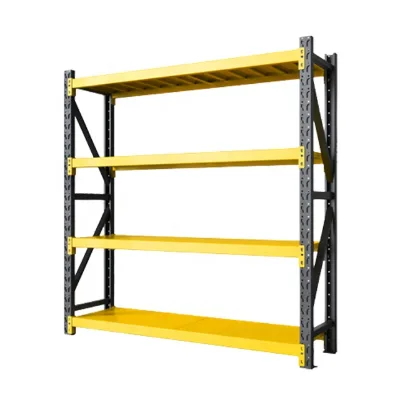
Understanding the precise technical architecture of a Detachable Steel Big Bag Rack is the first step in the procurement process. The core construction typically relies on high-strength mild steel, specifically conforming to the Q235 standard, which provides a reliable balance of ductility and tensile strength. The structural design often features a rack configuration where uprights and beams are detachable, allowing for modular assembly and reconfiguration based on changing storage needs.
Dimensions vary significantly based on the specific model and intended load. For instance, specific configurations may feature base dimensions of 950L950W310 mm or 1395L1060W310 mm, depending on the footprint required for the facility. The upright posts are critical load-bearing elements; observed specifications include posts measuring 1200L1000W2.5 mm or 1200L60W2.5 mm, with some models offering customizable upright sizes such as 60501.5 mm, 70501.5 mm, or 90702.0 mm. The beam dimensions are equally variable, ranging from 5030 mm to 8050 mm, with customization options available to meet specific span requirements.
Load capacity is a primary differentiator among models. Verified data indicates that certain configurations support a loading capacity of 1000 kg, while others are engineered to handle up to 1500 kg. The stackability of these units is another vital technical parameter; some systems are designed to stack up to four high, maximizing vertical storage density. The height of the racking system generally falls within a range of 0 to 5 meters, allowing for adaptation to various warehouse ceiling heights. Furthermore, the flooring material often utilizes checkered steel plate or perforated plates, with hole types available as Type II elongated holes or circular holes to facilitate drainage or weight reduction.
Compliance, Certification, and Surface Treatment
In the industrial racking sector, compliance with international standards is non-negotiable for ensuring safety and longevity. Buyers must verify that the supplier possesses valid certifications, as the market data indicates that reputable manufacturers often hold ISO9001, TUV, BV, and SGS certifications. These credentials serve as evidence of a structured quality management system rather than mere marketing fluff. However, procurement teams should request current, verifiable certificates for the specific batch of goods being purchased, as certification status can vary by production facility.
Surface treatment is equally critical for corrosion resistance, particularly in environments where humidity or chemical exposure is a concern. The standard process observed in high-quality detachable racks is hot-dip galvanizing, which provides a robust protective layer. Alternative or supplementary finishes may include powder coating, available in standard colors like blue or orange, or fully customized RAL color schemes. The choice of finish impacts the product's shelf life; proper handling and treatment can extend the service life of the rack to up to three or five years.
When evaluating compliance, buyers should also consider the product standard. The use of mild steel Q235 is a common baseline, but the specific grade and manufacturing process must align with local safety regulations. The "Open" nature of the rack structure, combined with its "Mobile" or "Adjustable" attributes, requires that the design adheres to stability standards that prevent tipping under dynamic loads.
Cost Drivers and Pricing Dynamics
The pricing of detachable steel big bag racks is influenced by a complex matrix of factors, including material costs, surface treatment complexity, and logistical arrangements. The observed price range in the market spans from 0.5 to 800 USD, reflecting the vast difference between small-scale components and fully assembled, high-capacity systems. This wide variance underscores the necessity of defining precise requirements before soliciting quotes.
Key cost drivers include the thickness of the steel used in posts and beams, the extent of the galvanizing process, and the level of customization. Customization, which is widely available for these products, inevitably adds to the unit cost. Factors such as the inclusion of specific accessories like forklift guides, bottom wire mesh, bags, or wheels will also impact the final price. Additionally, the "Product Warranty" of one year is a standard offering, but the cost implications of extended warranties or specific OEM support should be negotiated separately.
Logistics play a significant role in the total landed cost. The "Price Type" options typically include FOB, CIF, DDU, and Factory Price. Buyers must calculate the cost of freight based on the loading capacity of the container. For example, a 40-foot high cube container can typically load 160 sets of certain configurations, while others may accommodate up to 250 sets. Understanding the "Load in 40 Hq" metric is essential for optimizing shipping costs per unit. The "MOQ" (Minimum Order Quantity) ranges from 1 to 500 units, meaning that small buyers may face higher per-unit costs compared to bulk purchasers.
Typical Applications and Operational Use Cases
Detachable steel big bag racks are versatile solutions designed for a wide array of industrial applications. The primary usage scenarios identified include warehouse racking, general industrial storage, and specialized tool storage. The versatility extends to specific industries such as food processing, beverage production, and general tool management. The "Serviceability" is categorized as "Common Use," indicating that these racks are suitable for standard operational environments rather than highly specialized or extreme conditions.
The "Multi-Level Racking" capability allows for the creation of mezzanine levels, typically ranging from 2 to 3 levels, which is ideal for maximizing floor space in facilities with limited square footage. The "Stair Options" are customizable, offering one or two stair configurations to ensure safe access to upper levels. The shelf decking can be selected as flat, checkered, or perforated steel plates, depending on the nature of the goods being stored. For instance, checkered plates provide better slip resistance for heavy bags, while perforated plates may be preferred for ventilation.
The "Mobility" of these racks, described as both "Mobile" and "Adjustable," suggests that they can be reconfigured or moved to accommodate changing inventory patterns. This flexibility is particularly valuable in dynamic warehouses where storage needs shift seasonally. The "Closed" attribute being "Open" refers to the rack structure's accessibility, allowing for easy loading and unloading of big bags from multiple sides.
Supplier Evaluation and Verification Protocols
Evaluating a supplier for detachable steel big bag racks requires a rigorous due diligence process. Buyers should prioritize suppliers who offer "Sample" products, allowing for physical inspection of the build quality before committing to a large order. The "Remark" section of product listings often highlights "Customized and OEM Support," which indicates a supplier's willingness to adapt designs to specific client needs.
When assessing a supplier, verify their "prod_origin," which is often listed as Dalian, China, a known hub for steel manufacturing. However, buyers should not rely solely on the origin city; instead, they must verify the specific factory's capabilities and capacity. The "Product Warranty" of one year is a baseline expectation, but the terms of this warranty, including what constitutes a defect versus normal wear and tear, must be clearly defined in the contract.
Supplier reliability can also be gauged by their "prod_packing" standards. Effective packing, such as plastic banding combined with stretch film wrapping, ensures that the components arrive undamaged. The "Easy Loading" feature mentioned in packing specifications suggests that the supplier has considered the efficiency of the unloading process at the destination. Buyers should also inquire about the "Available Accessories" to ensure the supplier can provide a complete system, including necessary hardware for assembly and safety.
Quality Control and Long-Term Procurement Considerations
Quality control (QC) is paramount when sourcing heavy-duty steel racking. The "Development" process is described as "Conventional," implying that the manufacturing techniques are well-established and proven. However, buyers must still implement strict QC measures. This includes verifying the "Surface Finish" for uniformity and checking the "Loading Capacity" claims against independent test results. While specific test data is not universally provided, the presence of certifications like ISO9001, TUV, BV, and SGS suggests a commitment to quality assurance.
Long-term procurement considerations involve the "Product Shelf Life," which is estimated at up to three or five years against proper handling. This timeline is contingent on the environment in which the rack is installed. Buyers should assess the potential for corrosion and the frequency of maintenance required. The "Stackability" of up to four high requires careful attention to floor flatness and load distribution to prevent structural failure over time.
Furthermore, the "Type" of racking, whether "Pallet Racking" or "Multi-Level Racking," dictates the long-term scalability of the investment. A system that is too rigid may become obsolete as storage needs evolve. Therefore, the "Customization" availability is a key factor in long-term value. Buyers should seek suppliers who can offer modular upgrades or expansions without requiring a complete system replacement. The "Base and Top" dimensions and "Post" specifications must be compatible with future expansion plans to ensure a seamless integration of new units.
Final Procurement Strategy and Decision Framework
To conclude the sourcing process, buyers should adopt a structured decision framework that prioritizes verified data over marketing assertions. The "prod_model" numbers, such as HM-PP006 or HM-PP001, serve as specific identifiers for the technical configurations discussed. By cross-referencing these models with the observed specifications for load capacity, dimensions, and material thickness, buyers can ensure they are selecting the right product for their specific application.
The final decision should be based on a holistic view of the total cost of ownership, including the initial purchase price, shipping costs, installation labor, and long-term maintenance. The "Price Type" options (FOB, CIF, DDU) offer flexibility in managing risk and cost, but the buyer must understand the implications of each term. Ultimately, the goal is to secure a Detachable Steel Big Bag Rack that offers the optimal balance of strength, flexibility, and cost-efficiency, ensuring a safe and productive storage environment for years to come. By adhering to these evidence-based guidelines, procurement professionals can navigate the complexities of the market and make decisions that align with their organization's strategic objectives.
FAQs
What certifications do detachable steel big bag racks typically hold?
These racks typically hold ISO9001, TUV, BV, and SGS certifications. Buyers should verify current certificates for the specific batch to ensure quality management compliance.
How much weight can a standard Detachable Steel Big Bag Rack hold?
Verified configurations support loading capacities of 1000 kg or 1500 kg. The specific capacity depends on the model dimensions and structural design selected for the facility.
Can I customize the dimensions of the rack posts and beams?
Yes, customization is available for posts and beams to meet specific span requirements. Uprights can be sized at 60*50*1.5 mm or 90*70*2.0 mm, while beams range from 50*30 mm to 80*50 mm.
What surface treatment protects the steel from corrosion?
Hot dip galvanizing is the standard process used for robust corrosion resistance. Alternative finishes include powder coating in blue, orange, or custom RAL colors.
How many sets of racks fit into a 40-foot high cube container?
Loading capacity varies by configuration, with some models fitting 160 sets and others up to 250 sets per 40-foot high cube container. This affects the shipping cost per unit significantly.
What is the expected shelf life of these steel racks?
The product shelf life is up to three or five years against proper handling. This duration depends on the environment and the quality of the surface treatment applied.