Source Detachable Stainless Steel Lunch Box for Work, School, Travel
Compare 30 Detachable Stainless Steel Lunch Box options featuring freshness preservation, eco-friendly materials, and customizable designs. Buyers can evaluate models with FDA and CE certifications, varying capacities, and delivery times from China-based suppliers.
Key considerations
Products List


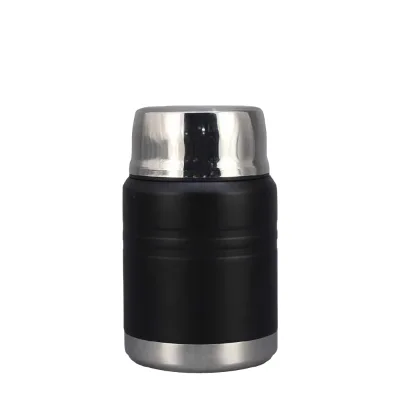
Reusable Food Grade 304 Stainless Steel Lunchbox Portable Bento Lunch Box
$4.23 - $4.92
MOQ: 240 Pieces




Comprehensive Sourcing Guide
Strategic Sourcing Guide for Detachable Stainless Steel Lunch Boxes
The global demand for sustainable, durable, and functional food storage solutions has elevated the Detachable Stainless Steel Lunch Box to a critical category within the B2B procurement landscape. These products, characterized by their modular design and robust metallic construction, offer a distinct advantage over single-compartment containers by allowing users to separate components for easier cleaning, stacking, and thermal management. For procurement professionals, navigating this market requires a disciplined approach that balances technical specifications with rigorous compliance verification. The following guide synthesizes observed market data and industry standards to provide a framework for sourcing high-quality detachable stainless steel lunch boxes without relying on unverified supplier claims.
Technical Specifications and Material Integrity
The foundational element of any Detachable Stainless Steel Lunch Box is the material composition. In the current market, the primary material observed is metal, specifically stainless steel, which provides the necessary structural integrity for repeated heating and cooling cycles. Buyers must verify that the stainless steel grade meets food-grade standards, as this directly impacts corrosion resistance and longevity. The observed product attributes indicate a strong emphasis on "Heatable" and "Steamable" features, suggesting that the design must accommodate thermal expansion without compromising the seal or the structural bond between detachable parts.
Capacity is another critical technical variable. Market observations reveal standard volume specifications ranging from 1000ml to 3000ml, with specific models citing 1800ml and 3000ml as common benchmarks. When evaluating detachable units, the buyer must ensure that the total volume is accurately distributed across the compartments. A common configuration involves a main food container paired with a separate compartment for rice or side dishes, all enclosed within a cover. The "Cover" attribute is consistently noted as a standard feature, implying that the sealing mechanism is integral to the "Freshness Preservation" function. Procurement teams should request detailed dimension sheets to confirm that the detachable components fit together securely, preventing leakage during transport.
Furthermore, the design flexibility is a key differentiator. Observed data points to options for "Fruit or Customized" designs and "as Your Requirement" specifications, indicating that manufacturers can adapt the internal layout of the detachable sections. This modularity is essential for brands targeting specific demographics, such as students or office workers, who may require distinct separation for dry and wet foods. The "Unicolor" and "Multicolor" options suggest that surface finishing techniques, such as powder coating or anodizing, are available to meet aesthetic branding requirements while maintaining the underlying metal properties.
Compliance and Certification Verification
In the food contact sector, regulatory compliance is non-negotiable. The supply chain for stainless steel lunch boxes is heavily influenced by certifications that validate the safety of materials in contact with food. Based on available market data, the most frequently cited certifications include FDA (Food and Drug Administration) and LFGB (German Food and Feed Code), alongside CE and EEC (European Economic Community) marks. These certifications are not merely marketing labels; they represent adherence to strict migration limits for heavy metals and other contaminants.
Buyers must distinguish between products that hold valid, current certifications and those that merely claim compliance. The presence of "FDA, EEC" or "FDA, LFGB" on a product listing should be treated as a starting point for verification rather than a guarantee. Procurement teams should request copies of the actual test reports from accredited third-party laboratories. These documents must explicitly state that the stainless steel and any associated plastics or silicone seals used in the detachable mechanism have passed specific migration tests.
Additionally, the "Eco-Friendly" attribute observed in the market suggests a growing trend toward sustainable manufacturing. While this is a positive indicator, it should be backed by verifiable data regarding the recyclability of the stainless steel and the sourcing of materials. Buyers should inquire about the supplier's environmental management systems, such as ISO 14001, to ensure that the "Eco-Friendly" claim aligns with broader corporate sustainability goals. The absence of specific certification numbers or dates in a product listing is a red flag that warrants immediate clarification before proceeding with an order.
Cost Drivers and Pricing Dynamics
Understanding the cost structure of detachable stainless steel lunch boxes is essential for budgeting and margin analysis. The observed price range in the market spans from $0.76 to $12.84 USD, a wide disparity that reflects differences in material quality, manufacturing complexity, and order volume. The lower end of this spectrum typically corresponds to basic models with standard stainless steel grades and minimal customization, while the higher end reflects premium finishes, complex detachable mechanisms, and high-volume branding.
Several factors drive these costs. First, the material grade of the stainless steel is a primary cost driver. Higher grades, such as 304 or 316, offer superior corrosion resistance but come at a premium. Second, the complexity of the detachable design influences production costs. A unit with a secure, leak-proof locking mechanism for its compartments requires more precise tooling and assembly time than a simple stackable design. Third, customization plays a significant role. Features like "Customized" designs, specific "Logo" placements via "Label Sticker" or direct printing, and unique "prod_packing" solutions (such as "Paper Box Packaging" versus standard "Polybag") add to the unit cost.
The Minimum Order Quantity (MOQ) is another critical cost factor. Market data indicates an MOQ range from 1 to 3000 units, with specific models citing MOQs of 200 or 500 pieces. Higher MOQs generally result in a lower unit price due to economies of scale. Buyers with smaller volume requirements may need to accept a higher per-unit cost or look for suppliers who offer "Small Orders: Accepted" services, though this may involve a premium. The "Stocked" attribute suggests that some suppliers maintain inventory of standard models, which can reduce lead times and potentially lower costs for immediate needs compared to fully custom orders.
Typical Applications and Usage Scenarios
The versatility of detachable stainless steel lunch boxes makes them suitable for a wide array of applications. The primary usage category is "Food," encompassing everything from school meals to corporate catering. The "Tableware" designation highlights their role as reusable dining vessels, replacing disposable alternatives. Specific applications include "Lunch Box" scenarios for students and office workers, where the "Freshness Preservation" feature is vital for keeping food safe and palatable throughout the day.
The "Thermal" usage attribute indicates that these containers are designed to maintain food temperature, either by retaining heat from hot meals or keeping cold items chilled. This is particularly relevant for the "Steamable" and "Heatable" features, which allow the containers to be used in microwaves or steamers. This functionality expands their utility beyond simple storage to active food preparation and reheating.
Furthermore, the "Food, Spice, Sundries" usage category suggests that these containers are also employed for storing dry goods, spices, or condiments. The detachable nature of the design is particularly advantageous here, as it allows for the separation of dry ingredients from wet ones, preventing cross-contamination and moisture absorption. The "Student Lunch Box" model observed in the market underscores the importance of durability and ease of use for younger demographics who may handle the containers roughly. For B2B buyers, identifying the specific end-user application is crucial for selecting the right model, as a container designed for a high-school student may differ significantly in durability requirements from one intended for a professional chef.
Supplier Evaluation and Quality Control
Selecting the right supplier requires a rigorous evaluation process that goes beyond the initial product listing. The "prod_origin" is consistently listed as China, with specific mentions of "Chaozhou, Guangdong," a region known for its metalware manufacturing capabilities. While this indicates a concentration of expertise, buyers must verify the specific factory's capabilities. The "OEM/ODM: Accept" attribute suggests that many suppliers are capable of custom manufacturing, but the buyer must assess their capacity for quality control during the customization process.
Quality control should be a continuous process, not a one-time check. Buyers should implement a system that includes pre-production sample approval, in-process inspections, and final random sampling. The "prod_packing" variations, such as "Each Packed in a Polybag" or "1sets/Box," indicate that packaging is a critical component of the final product quality. Damaged packaging can lead to product damage during transit, negating the value of the high-quality stainless steel inside.
When evaluating suppliers, look for evidence of consistent production standards. The "prod_standard" field shows values like "1800ml/3000ml" or "customized," which implies that the supplier has defined standards for volume and design. However, buyers must verify that these standards are consistently met across all production batches. The "Delivery Time" of "30days" or "Within 30 Days" is a common benchmark, but buyers should clarify if this refers to production time only or includes shipping. A reliable supplier will provide a clear timeline that accounts for potential delays in raw material sourcing or logistics.
Long-Term Procurement Considerations
Sourcing detachable stainless steel lunch boxes is not a transactional event but a long-term strategic partnership. The "Design: as Your Requirement" and "Customized" attributes highlight the potential for deep collaboration between the buyer and the supplier. Over time, buyers should aim to refine the product design based on user feedback, which may involve adjusting the size of detachable compartments, improving the sealing mechanism, or changing the surface finish.
Sustainability is a growing long-term consideration. As regulations tighten and consumer awareness increases, the "Eco-Friendly" attribute will likely become a mandatory requirement rather than a differentiator. Buyers should plan for a transition to fully recyclable materials and packaging, ensuring that the "Paper Box Packaging" or other eco-friendly options are scalable. The "Small Orders: Accepted" feature is also valuable for long-term procurement, allowing buyers to test new designs with lower risk before committing to large volumes.
Finally, supply chain resilience is paramount. Relying on a single supplier or a single region can expose the business to risks such as geopolitical tensions, natural disasters, or logistical disruptions. Buyers should consider diversifying their supplier base, even within the same manufacturing hub, to ensure continuity of supply. The "Stocked" attribute offers a buffer against immediate demand spikes, but for long-term stability, a robust relationship with a supplier capable of scaling production quickly is essential. By focusing on these long-term factors, buyers can secure a reliable supply of high-quality detachable stainless steel lunch boxes that meet both current market demands and future regulatory requirements.
FAQs
What certifications do detachable stainless steel lunch boxes typically have?
These products commonly hold FDA, LFGB, CE, and EEC certifications to ensure food safety. Buyers must verify valid test reports from accredited labs rather than relying solely on listing claims. The specific certification combination depends on the target export market and material grade used in manufacturing.
How long is the standard delivery time for these lunch boxes?
The standard delivery time is typically 30 days or within 30 days from order confirmation. This duration covers production and packaging but excludes international shipping transit times. Buyers should clarify if the timeline includes raw material sourcing to avoid delays.
Which capacity sizes are available for detachable stainless steel models?
Available capacities range from 1000ml to 3000ml, with specific models offering 1800ml or 1500ml options. The volume is often distributed across multiple detachable compartments for food and side dishes. Buyers should request dimension sheets to confirm how the total volume is allocated.
Can I order small quantities of these lunch boxes with customization?
Yes, some suppliers accept small orders and offer OEM or ODM customization services. Minimum Order Quantities vary widely from 1 unit up to 3000 units depending on the supplier. Custom features like logos or specific designs may require higher MOQs than stocked items.
What materials are used to construct these detachable lunch containers?
The primary material is metal, specifically stainless steel, which provides durability and heat resistance. The design supports heating and steaming functions while maintaining structural integrity. Buyers should verify the specific stainless steel grade to ensure corrosion resistance and food-grade compliance.
How are these lunch boxes packaged for shipment?
Packaging options include polybags, paper boxes, cartons, or individual boxes per set. The specific method depends on the order volume and customization requirements. Buyers should confirm packaging details to ensure product protection during transit and alignment with their branding needs.
Where are these detachable lunch boxes primarily manufactured?
These products are primarily manufactured in China, with specific production hubs in Chaozhou, Guangdong. This region is known for its metalware manufacturing capabilities and supply chain efficiency. Buyers should verify the specific factory location to assess logistics and quality control standards.