Source Die-Casting Zinc Alloy Key Cover for Car Keys, Locks, Hardware
Find 30 Die-Casting Zinc Alloy Key Cover options tailored for automotive, household, and hardware applications. Compare models like CMS01 and CMK01, noting CNC machining, ISO 9001 certification, and customization availability for precise fit and durability.
Key considerations
Products List


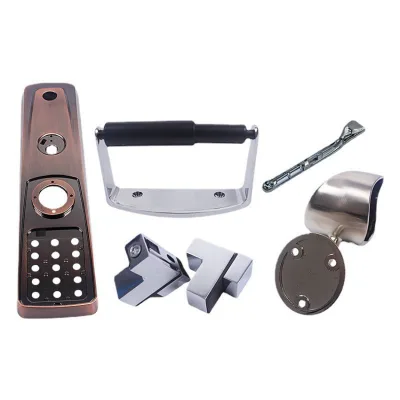


Comprehensive Sourcing Guide
Die-Casting Zinc Alloy Key Cover Sourcing Guide
Sourcing die-cast zinc alloy key covers requires a nuanced understanding of both the protective function of the accessory and the precision manufacturing capabilities of the supplier. These components serve as durable shields for automotive and household keys, combining aesthetic appeal with functional protection against drops, scratches, and environmental wear. The procurement process must balance the need for high-volume production consistency with the flexibility to accommodate custom branding or specific fitment requirements for various key models. Buyers must recognize that while the end product is a small accessory, the tooling and casting processes involved demand rigorous quality control to ensure dimensional accuracy and surface finish.
The market for these items is characterized by a wide range of customization options, from material grades to packaging solutions. Suppliers often offer extensive model libraries to ensure compatibility with original car keys, indicating a mature supply chain capable of handling diverse SKUs. However, this variety introduces complexity in supplier qualification, as not all manufacturers possess the same level of expertise in both die casting and subsequent finishing processes like polishing. Procurement teams must therefore focus on verifying the supplier’s specific capabilities in zinc alloy handling, their tolerance management, and their ability to maintain consistent quality across large production runs without compromising lead times.
Product Scope and Observed Listing Signals
The observed product landscape for die-cast zinc alloy key covers reveals a significant diversity in model availability and customization potential. Listings indicate the existence of over 2000 models, suggesting that suppliers have invested heavily in tooling to cover a broad spectrum of automotive and household key designs. This extensive cataloging implies that buyers can likely find a direct fit for most standard key types without requiring expensive custom mold development. The availability of regular colors and the option for full customization further highlights the market’s focus on brand differentiation and consumer preference, allowing purchasers to tailor products for specific retail channels or corporate branding needs.
Material composition and physical specifications are critical signals when evaluating product listings. The primary material identified is zinc alloy, with specific grades such as Zamak 2, Zamak 3, Zamak 5, and Zamak 7 frequently cited. These variations in alloy composition can influence the mechanical properties, casting fluidity, and final surface quality of the key cover. Additionally, the observed weight range of 0.02 to 5 kilograms for available parts, alongside specific product weights around 0.09 kilograms, provides insight into the density and structural integrity of the castings. Buyers should note that while the product is described as fitting original car keys, the precise dimensional tolerances must be verified against the specific key model to ensure a snug and secure fit.
Technical Specifications to Verify
Dimensional accuracy and surface finish are paramount for die-cast key covers, as even minor deviations can affect the usability of the key. The tolerance grades observed in the market range from 5 to 6, which indicates a moderate level of precision suitable for general-purpose accessories. However, buyers must confirm whether these tolerances are sufficient for their specific application, particularly if the key cover includes moving parts or requires a tight seal. The machining process, often cited as CNC machining, suggests that secondary operations are performed to achieve final dimensions or to add intricate details that die casting alone cannot produce. Verifying the sequence of these operations is essential to ensure that the final product meets both aesthetic and functional requirements.
The manufacturing process itself involves hot chamber die casting, a method well-suited for zinc alloys due to their low melting point and high fluidity. This process allows for high production rates, with some suppliers reporting capacities of 50,000 pieces per month. The pressure chamber structure can be either vertical or horizontal, which may influence the design of the mold and the ejection mechanism. Surface preparation typically involves polishing, which enhances the visual appeal and smoothness of the final product. Buyers should inquire about the specific polishing techniques used, as this step significantly impacts the perceived quality and durability of the key cover, especially regarding resistance to fingerprints and minor abrasions.
Compliance and Safety Documentation
While the primary function of a key cover is protective, compliance with international standards remains a critical aspect of the procurement process. Certifications such as ISO 9001 are frequently mentioned, indicating that suppliers adhere to established quality management systems. This certification ensures that the manufacturing process is consistent and that defects are minimized through systematic control measures. Additionally, certifications like CE may be relevant depending on the target market, particularly if the product is intended for sale in regions with strict regulatory requirements for consumer goods. Buyers should request valid certification documents to verify that the supplier’s quality management system is current and covers the specific production lines used for key covers.
Environmental and material safety standards are also important considerations, especially for products that come into direct contact with users. Standards such as REACH and RoHS are often referenced in the broader hardware and casting industry, implying that suppliers may be capable of producing lead-free or restricted-substance-compliant components. Although specific test results for these standards are not always explicitly detailed in general listings, buyers should proactively ask for material safety data sheets (MSDS) or third-party test reports. This is particularly important if the key covers are intended for use in sensitive environments or if the buyer’s brand has strict sustainability and safety commitments.
Cost Drivers and Commercial Terms
The cost of die-cast zinc alloy key covers is influenced by several factors, including material costs, tooling expenses, and production volume. Zinc alloy prices fluctuate based on global market conditions, directly impacting the unit cost of the final product. Tooling costs can be significant, especially for custom designs, but many suppliers offer OEM services that may amortize these costs over larger orders. The observed minimum order quantities (MOQs) range from 10 to 5,000 pieces, providing flexibility for both small-scale trials and large-volume production runs. Buyers should negotiate pricing based on their expected annual volume to secure better unit costs and potentially reduce tooling fees for custom molds.
Commercial terms such as lead times and packaging options also play a crucial role in the total cost of ownership. Production times are typically around 10 days for standard items, while custom orders may require 2-4 weeks. These timelines should be factored into inventory planning to avoid stockouts or excess inventory. Packaging is another area where costs can vary; options include poly bags, cartons, and wood cartons, each offering different levels of protection and convenience for shipping. Buyers should evaluate the trade-off between packaging costs and the risk of damage during transit, ensuring that the chosen packaging method aligns with their logistics strategy and end-user expectations.
Supplier Qualification and Quality Control
Evaluating supplier capabilities requires a thorough assessment of their manufacturing infrastructure and quality control processes. Suppliers utilizing hot chamber die casting machines with tonnage capacities ranging from 80 to 280 tons demonstrate the ability to handle a variety of part sizes and complexities. Buyers should verify the age and maintenance records of these machines, as well as the skill level of the operators, to ensure consistent production quality. Additionally, the supplier’s ability to handle different zinc alloy grades, such as Zamak 2 through Zamak 7, indicates a versatile material handling capability that can be leveraged to optimize cost and performance based on specific project requirements.
Quality control measures should be integrated throughout the production process, from raw material inspection to final packaging. Suppliers should have clear protocols for checking dimensional accuracy, surface finish, and structural integrity. Buyers may request samples for initial evaluation and consider implementing third-party inspections for larger orders. The origin of the products, often cited as Guangdong, China, suggests access to a robust supply chain and manufacturing ecosystem. However, buyers should conduct on-site audits or virtual tours to verify the supplier’s operational standards, ensuring that they meet the buyer’s specific quality and ethical requirements.
Long-Term Procurement Checks
Establishing a long-term relationship with a die-cast zinc alloy key cover supplier involves continuous monitoring of performance metrics and market trends. Buyers should regularly review key performance indicators such as on-time delivery rates, defect rates, and responsiveness to issues. Consistent performance in these areas is essential for maintaining supply chain stability and meeting customer demands. Additionally, buyers should stay informed about advancements in die casting technology and material science, as these developments can offer opportunities for cost reduction or product improvement. Engaging in regular communication with the supplier can help identify potential improvements and foster a collaborative partnership.
Adaptability to changing market conditions is another critical factor for long-term success. The ability to customize products, such as offering different colors or models, allows buyers to respond quickly to consumer preferences and competitive pressures. Buyers should ensure that their suppliers have the flexibility to adjust production volumes and designs as needed. Furthermore, maintaining a diverse supplier base can mitigate risks associated with single-source dependencies. By regularly evaluating and qualifying new suppliers, buyers can ensure they have access to competitive pricing and innovative solutions, securing a resilient and efficient supply chain for die-cast zinc alloy key covers.
FAQs
What materials are used for die casting zinc alloy key covers?
The key covers are primarily manufactured using zinc alloy, specifically grades such as Zamak 2, Zamak 3, Zamak 5, and Zamak 7. These materials provide the necessary durability and precision for protecting car keys. The production utilizes hot chamber die casting methods to ensure high-quality surface finishes and structural integrity for various key models.
Can I customize the design of the zinc alloy key cover?
Yes, customization is available for these key covers. Buyers can request specific models, sizes, and styles to fit original car keys or household door locks. The factory supports OEM services and can produce parts with custom dimensions, allowing for tailored solutions that meet specific branding or functional requirements for hardware applications.
What is the typical production lead time for these key covers?
The standard production time is approximately 10 days for regular orders. However, for customized or bulk orders, the lead time may extend to 2-4 weeks. The factory has a monthly production capacity of 50,000 pieces, ensuring timely delivery for various order sizes while maintaining great quality standards throughout the manufacturing process.
Which certifications apply to the die casting process for these parts?
The manufacturing process adheres to ISO 9001 standards for quality management. The die casting operations utilize hot chamber die casting machines to ensure precision. While specific certifications like CE or REACH are noted in background data, the primary documented standard for the production quality is ISO 9001, ensuring consistent quality for hardware and key cover applications.
What packaging options are available for shipping zinc alloy key covers?
Products are typically packed in poly bags for individual units. For bulk shipments, carton or wood carton packaging is available to ensure safe transit. The standard packing dimensions are around 50x50x50 cm, and the product weight per unit ranges from 0.02 to 5kgs, depending on the specific model and size selected by the buyer.
Where are these zinc alloy key covers manufactured?
These products are manufactured in Guangdong, China. The production facilities utilize advanced CNC machining and die casting technologies to produce over 2000 models. The location supports efficient logistics and supply chain management, ensuring that high-quality zinc alloy key covers and hardware parts are produced and shipped to global buyers effectively.