Source Die-Casting Metal Buckle for Bags Belts and Garments
Find 30 Die-Casting Metal Buckle options featuring zinc alloy construction and customizable plating. Buyers can compare adjustable sizes, eco-friendly coatings, and OEM services for applications in bags, belts, and garments.
Key considerations
Products List


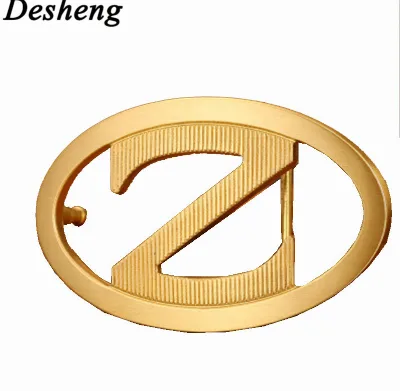


Die-Casting Square Cylinder Belt Buckle Day Adjustment Decorative Pull Core Buckle
$0.09 - $0.12
MOQ: 10000 Pieces


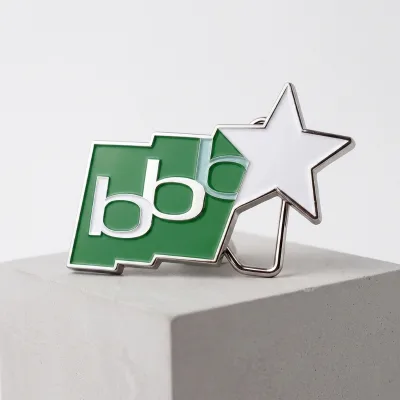


Comprehensive Sourcing Guide
Strategic Sourcing Guide for Die Casting Metal Buckles
Understanding Product Specifications and Material Integrity
When sourcing die casting metal buckles, the primary objective is to secure components that balance structural durability with aesthetic versatility. The core material identified in the market is zinc alloy, specifically utilizing a die casting process. This manufacturing method allows for the creation of complex geometries and intricate designs that are difficult to achieve with stamping alone. The product attributes indicate a "Metal Type" of Die Casting Zinc Alloy, which is distinct from other metal alloys due to its excellent fluidity during casting and ability to hold fine details.
Buyers must verify the specific alloy composition and the quality of the die casting process, as these factors directly influence the final product's density and resistance to breakage. The observed specifications reveal a wide range of sizes, including 10mm, 12mm, 15mm, 19mm, 25mm, 32mm, 38mm, and 50mm. Additionally, some standards list sizes such as 45mm, 51mm, and 20mm, suggesting that while standard sizes exist, the market heavily supports customized dimensions. The "prod_model" identifiers like MB and SJR00342 indicate that manufacturers often use internal coding systems that may vary by supplier, necessitating clear communication of exact dimensional requirements.
The physical attributes of the buckle are equally critical. The product is described as "Adjustable" and often features a "Spring" mechanism, which is essential for functionality in applications like belts, bags, and suspenders. The "Wearing Way" is noted as "Breast" in some contexts, implying specific orientation requirements for garment applications. Furthermore, the "Feature" category includes "3D" elements and "Anti-corrosion" properties, indicating that the design often incorporates depth and requires surface treatments to ensure longevity. The "Design" is explicitly "Customized," meaning that buyers should expect a high degree of flexibility in shape and form, provided the die casting tooling can support the design.
Compliance, Certification, and Environmental Standards
In the global B2B market, compliance with environmental and safety standards is non-negotiable, particularly for products that come into direct contact with skin or are used in consumer goods. The supplied data highlights a "Coating" process described as "Eco-Friendly," which suggests that manufacturers are increasingly adopting plating and finishing techniques that minimize hazardous substances. However, buyers must not assume that all listed products automatically meet specific international regulatory thresholds without verification.
The "Plated" options include Silver, Gold, Black, Antique, Rose Gold, and Gunmetal. The choice of plating is not merely aesthetic; it is a critical compliance factor. For instance, gold and silver plating often require specific base layers and top coats to prevent nickel migration, which is a common regulatory concern in the European Union and North America. The "Feature" of "Anti-corrosion" is a performance claim that must be validated through testing. While the product attributes list this feature, the actual resistance to salt spray or humidity depends on the thickness of the plating and the quality of the pre-treatment process.
Buyers should request documentation regarding the "Inspection Resin" process, which is noted as "pc by pc" (piece by piece) in the data. This indicates a rigorous quality control step where each item is individually checked, likely for defects in the plating or structural integrity. Additionally, the "Logo" application methods, such as Soft Enamel, Hard Enamel, Embossed, and Laser, must comply with local labeling laws. For example, if the product is intended for the US market, the use of certain enamel colors or metals may be restricted. The "Brand" names like Sjr and Desheng appear in the data, but buyers should treat these as examples of existing branding rather than endorsements. The "Standard" for production is listed as "Customize" or "Standard size," but specific compliance standards (such as REACH, RoHS, or CPSIA) are not explicitly defined in the provided facts. Therefore, procurement teams must explicitly ask suppliers to confirm adherence to the target market's specific regulatory frameworks before placing an order.
Cost Drivers and Pricing Dynamics
The pricing of die casting metal buckles is influenced by a complex interplay of material costs, tooling expenses, and order volume. The observed listed price range in the market is 0.09 to 3.5 USD, a significant variance that reflects differences in size, plating complexity, and customization levels. A 10mm buckle with a simple silver plating will naturally cost less than a 50mm buckle with a multi-layer antique gold finish and a 3D design.
The "MOQ" (Minimum Order Quantity) is a primary cost driver. The data shows a wide range from 5 to 10,000 units, with specific high-confidence facts indicating MOQs of 1000 PCS and 300 PCS. Lower MOQs, such as 300 pieces, are often associated with higher per-unit costs because the fixed costs of die casting and setup are amortized over fewer units. Conversely, orders approaching 10,000 units can leverage economies of scale to reduce the unit price. Buyers must understand that the "MOQ" is not a static number; it is often negotiable based on the complexity of the "Design" and the availability of existing tooling.
Tooling costs represent a significant upfront investment for custom designs. Since the "Design" is "Customized," creating a new die for a unique buckle shape can be expensive. However, the "Service" category lists "OEM/ODM," indicating that suppliers are equipped to handle custom tooling. Buyers should clarify whether the tooling cost is included in the unit price or charged separately. Additionally, the "Plating" process adds to the cost. Options like "Rose Gold" or "Gunmetal" may require more complex chemical baths and longer processing times than standard "Silver" or "Black" plating. The "Coating" being "Eco-Friendly" might also incur a premium compared to traditional plating methods, depending on the specific chemicals used.
Typical Applications and Usage Scenarios
Die casting metal buckles are versatile components found across a diverse array of industries. The "Usage" attributes list Bag, Suspenders, Garment, Cap, Bra, Shoe, and Belt, demonstrating their adaptability to various textile and accessory applications. The "Application" section further expands this to include Bags, Pet Collar, Purse, Sport, and Clothes. This breadth of application requires the buckle to meet different functional demands. For instance, a buckle used on a "Pet Collar" must withstand pulling forces and outdoor exposure, while a buckle for a "Bra" or "Cap" may prioritize lightweight construction and aesthetic appeal.
The "Type" is frequently identified as a "Belt Buckle," but the "Feature" of "3D" and "Fashion" suggests that these components are also used as decorative elements in high-end fashion accessories. The "Color" attribute of "Color Matching" implies that buckles are often selected to coordinate with the fabric or leather of the product, requiring a wide palette of plating options. The "Stock" status is noted as "Not Stock," which is typical for custom die casting products. This means that most orders are made-to-order, leading to a supply chain that is responsive to specific design needs rather than immediate off-the-shelf availability.
The "Shipment" methods, including Sea, Air, DHL, FedEx, and UPS, indicate that these products are frequently exported globally. The "Package" options, ranging from "Bubble Bag" to "Plastic" and "Velvet Box," suggest that the final packaging is tailored to the end-use. A buckle intended for a luxury "Gift" or "Souvenir" would likely require a "Velvet Box" presentation, whereas a component for industrial "Sport" gear might only need a simple "Bubble Bag" for protection. Understanding the end-use context is crucial for selecting the appropriate plating, packaging, and structural strength.
Supplier Evaluation and Service Capabilities
Selecting the right supplier for die casting metal buckles requires a thorough evaluation of their technical capabilities and service offerings. The "Service" category highlights "OEM/ODM" capabilities, which are essential for buyers seeking custom designs. A capable supplier should demonstrate proficiency in the "Technics" of "Die Casting & Stamping," as this combination allows for the production of robust, detailed buckles. The "Brand" names mentioned, such as Sjr and Desheng, serve as examples of established players, but buyers should not rely on brand recognition alone. Instead, they should verify the supplier's production capacity and quality control systems.
The "Location" is consistently identified as "Dong Guan, Guang Dong, China" or simply "China." This region is a known hub for metal hardware manufacturing, offering a dense ecosystem of suppliers and specialized labor. However, buyers must verify the specific factory location to ensure it aligns with their logistics and ethical sourcing requirements. The "Lead Time" is a critical factor in supplier selection. The data indicates a "Lead Time" of 7-10 days for sampling and 12-15 days for production. These timelines are relatively short, suggesting efficient production lines, but buyers should confirm if these times apply to custom orders or standard stock items.
Payment terms are another area for careful evaluation. The "Payment" methods listed include T/T, Paypal, Western Union, L/C, and Credit Card. The availability of "L/C" (Letter of Credit) is particularly important for large international transactions, as it provides security for both parties. Buyers should also assess the "Inspection Resin" process, which is described as "pc by pc." This level of inspection is a strong indicator of a supplier's commitment to quality. A supplier that performs individual piece-by-piece inspection is more likely to deliver consistent products than one that relies solely on random sampling.
Quality Control and Long-Term Procurement Strategy
Maintaining high quality in die casting metal buckles requires a robust quality control (QC) strategy that extends beyond the initial inspection. The "Feature" of "Anti-corrosion" must be validated through standardized testing, such as salt spray tests, to ensure the plating will not degrade over time. The "Inspection Resin" process of checking each piece individually is a strong foundation, but buyers should also implement their own incoming quality control (IQC) protocols. This may involve checking for plating uniformity, spring tension, and dimensional accuracy against the provided "Standard" sizes.
Long-term procurement considerations involve building a sustainable relationship with the supplier. The "Customization" attribute suggests that the supply chain is flexible, but buyers should ensure that the supplier has the capacity to scale production as demand grows. The "prod_packing" details, such as "2000 PCS One Carton" with specific dimensions (302520cm), are vital for logistics planning. Consistent packaging standards help prevent damage during shipping and streamline inventory management at the buyer's facility.
Buyers should also consider the "Delivery Time" variability. While the data suggests 7-10 days for sampling and 12-15 days for production, these figures can fluctuate based on order volume and material availability. Establishing clear communication channels and agreeing on realistic timelines is essential for avoiding delays. Finally, the "Product" attributes like "Modern" design and "Fashion" orientation indicate that the market is trend-driven. Buyers must stay agile, regularly updating their designs to match current fashion trends while maintaining the structural integrity and quality standards established in the initial procurement phase. By focusing on these key areas, buyers can secure a reliable supply of high-quality die casting metal buckles that meet both functional and aesthetic requirements.
FAQs
What customization options are available for die casting metal buckles?
Customization is available for shape, size, and plating. Buyers can select from standard sizes like 10mm to 50mm or request customized dimensions. The design can be tailored with logos using soft enamel, hard enamel, embossing, or laser techniques to meet specific brand requirements.
Which materials are used to manufacture these metal buckles?
The primary material is die casting zinc alloy, ensuring structural durability. Some listings also specify general metal or alloy compositions. The manufacturing process combines die casting and stamping to create complex geometries and intricate designs suitable for various fashion applications.
Can buyers order samples before placing a bulk production order?
Yes, sampling is available with a lead time of 7 to 10 days. Production for bulk orders typically requires 12 to 15 days. This allows buyers to verify quality, plating finish, and spring functionality before committing to larger quantities.
What is the minimum order quantity for die casting metal buckles?
The minimum order quantity varies, with observed ranges from 300 to 1000 pieces. Some suppliers list an MOQ of 1000 PCS, while others accept orders as low as 300 PCS. Lower quantities often result in higher per-unit costs due to setup expenses.
How are the buckles plated to ensure anti-corrosion properties?
Buckles feature eco-friendly coatings with plating options including silver, gold, black, antique, rose gold, and gunmetal. The anti-corrosion feature is achieved through specific plating thickness and pre-treatment processes. Each piece undergoes individual inspection to verify plating uniformity and structural integrity.
Which applications are suitable for these adjustable metal buckles?
These buckles are designed for bags, suspenders, garments, belts, caps, bras, shoes, and pet collars. They function as belt buckles or decorative elements in fashion accessories. The adjustable design with a spring mechanism ensures secure fastening across diverse textile and accessory products.