Source Diesel Engine Overhaul Liner Kit for Excavators, Motors, and Engines
Compare 30 listings for Diesel Engine Overhaul Liner Kit options including piston and motor components. Buyers can review specifications, certifications, and pricing from suppliers in China and Zhejiang.
Key considerations
Products List

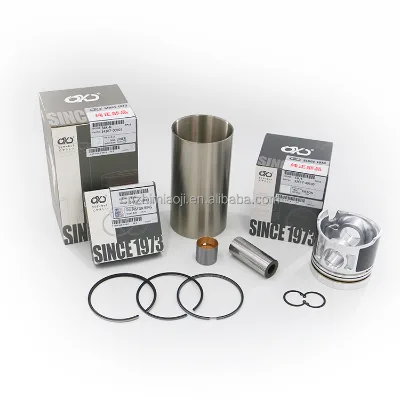
Diesel Engine Type Overhaul Rebuild Cylinder Liner Kit for John Diesel Engine
$209.50 - $210.00
MOQ: 10 Pieces


Comprehensive Sourcing Guide
Strategic Sourcing Guide for Diesel Engine Overhaul Liner Kits
Navigating the global market for diesel engine overhaul liner kits requires a disciplined approach that balances technical precision with supply chain reliability. Buyers seeking components such as the 612600030017 or ZS1115 models must understand that these parts are not generic commodities but engineered solutions designed for specific engine architectures. The sourcing process begins with a rigorous definition of requirements, moving from the identification of the correct engine model to the verification of material integrity and manufacturing techniques. This guide outlines the critical factors for procurement, focusing on the specific attributes observed in the current market, including the distinction between forged and cast components, the variance in material composition, and the necessary compliance checks for international trade.
Technical Specifications and Material Integrity
The foundation of a successful procurement strategy lies in the precise identification of technical specifications. In the current market, diesel engine liners are available in distinct material configurations, primarily Aluminum Alloy and Iron. The choice between these materials is not merely a matter of preference but is dictated by the specific engine design and operating conditions. For instance, listings indicate the presence of Aluminum Alloy components alongside Iron-based variants, suggesting that buyers must verify the material composition against the original equipment manufacturer (OEM) specifications for their specific engine type.
Manufacturing techniques further differentiate these products. The market features both "Forging" and "Casting" methods. Forging generally implies a denser grain structure and higher strength, often preferred for high-stress applications, whereas casting offers flexibility in complex geometries. A buyer must confirm whether the liner kit is produced via casting or forging, as this directly impacts the component's durability and thermal expansion characteristics. Additionally, the physical dimensions are critical; observed specifications include models like S195 and D7d/D7e, with weight variations ranging from 0.3 KG to 6.5 Kg. These discrepancies highlight the necessity of cross-referencing the part number, such as 612600030017, with the specific engine application to ensure a perfect fit.
Furthermore, the shape and sealing characteristics are vital. Some listings describe the product as having a "Universal Sealing Cycle," while others specify exact dimensions like 131 * 60 mm. Buyers should treat these numerical values as observation points rather than universal standards. The procurement process must involve a direct verification of the single package size and the physical dimensions of the liner to prevent installation errors. The weight of the component, observed at 6.5 Kg for certain models, serves as a secondary verification metric for shipping costs and handling requirements, but the primary focus must remain on the dimensional accuracy relative to the engine block.
Compliance, Certification, and Regulatory Standards
In the realm of industrial procurement, compliance is a non-negotiable prerequisite. The market data indicates a variety of certifications associated with these liner kits, including TSCE, ISOCCC, CE, and ISO9001. However, the presence of these certifications in a product listing does not guarantee that every unit in a shipment possesses them. Buyers must treat certification status as a claim that requires independent verification. For example, while some listings mention CE and ISO9001, others reference ISOCCC or TSCE. This variance suggests that different suppliers or production batches may adhere to different standards.
The standard component classification is another critical area of verification. Many products are listed as "Standard Component" or adhering to "Standard Specifications or Customized" standards. The term "standard" in this context often refers to the adherence to a specific industry norm, but the exact numerical standard (e.g., a specific ISO number or DIN standard) is frequently omitted in general listings. Buyers should explicitly request the specific standard number or the technical drawing that validates the "standard" claim. The observation of "Standard Specifications or Customized" indicates that the market supports both off-the-shelf solutions and bespoke manufacturing, requiring the buyer to clarify their needs upfront.
Additionally, the condition of the product is a key compliance factor. Listings consistently describe the items as "New," "Original," or "Alternative." The distinction between "Original" and "Alternative" is significant for warranty and performance assurance. While "Original" implies a direct match to the OEM part, "Alternative" suggests a compatible aftermarket part. Buyers must verify the quality claim, as some listings mention "Original and Alternative" options. The presence of certifications like CE and ISO9001 is a positive indicator, but the buyer must ensure that the specific batch being purchased is covered by these certificates. The lack of a universal standard across all listings means that the buyer must demand proof of certification for the specific lot before finalizing the purchase.
Cost Drivers and Pricing Dynamics
Understanding the cost structure of diesel engine overhaul liner kits is essential for budgeting and negotiation. The observed price range in the market spans from 1 USD to 2000 USD, a vast spectrum that reflects the diversity of product types, materials, and order quantities. This wide range is driven by several factors, including the material cost (Aluminum Alloy vs. Iron), the manufacturing complexity (Forging vs. Casting), and the level of customization required.
The Minimum Order Quantity (MOQ) is a primary driver of unit cost. The market data shows an MOQ range from 1 Set to 1000 Sets. Buyers purchasing a single set may face a higher unit price compared to those ordering in bulk. The flexibility of the MOQ allows small workshops to procure single units, while large fleets can leverage economies of scale. The payment terms also influence the financial dynamics, with common structures including a 30% deposit and 70% upon delivery, or alternative methods such as L/C, T/T, Western Union, Money Gram, and Paypal. These terms affect cash flow and risk exposure, requiring buyers to align their financial policies with the supplier's requirements.
Lead time is another significant cost factor. Delivery times are observed to range from 3-7 days to "Negotiable." A shorter lead time of 3-7 days may command a premium or require a higher MOQ, whereas negotiable lead times suggest a more flexible but potentially slower supply chain. The transportation method, whether Sea, Land, or Air, also impacts the final landed cost. Air freight offers speed but at a higher price, while sea freight is cost-effective for large volumes but extends the delivery window. Buyers must calculate the total cost of ownership, including shipping, insurance, and potential downtime costs, rather than focusing solely on the unit price.
Typical Applications and Engine Compatibility
The application of diesel engine liner kits is highly specialized, with components designed for specific machinery. The market data identifies "Excavator" as a primary application, indicating that these liners are critical for heavy-duty construction equipment. The specific models mentioned, such as S195, ZS1115, and the 6126 series, correspond to various engine types used in different sectors. The S195, for instance, is a well-known engine model often found in agricultural and industrial machinery, while the 6126 series is frequently associated with heavy-duty truck and construction applications.
The engine type is consistently listed as "Diesel," confirming the fuel source for which these liners are designed. However, the specific engine configuration, such as the number of cylinders or the cooling system type, is not always detailed in general listings. Buyers must ensure that the liner kit matches the exact engine configuration of their machinery. The "Universal Sealing Cycle" mentioned in some listings suggests a design intended for broad compatibility, but this should not be assumed without verification. The "Selectable" attachments and "Customizable" color options indicate that suppliers may offer variations to suit different operational environments, but the core mechanical interface must remain compatible with the engine block.
Furthermore, the weight of the component, ranging from 0.3 KG to 6.5 Kg, provides a clue to the size and power class of the engine. A 6.5 Kg liner is likely intended for a larger, high-torque engine, whereas a 0.3 KG component may be for a smaller, lighter-duty application. Buyers should use these weight metrics as a preliminary filter to narrow down the search to the correct engine class before engaging with suppliers.
Supplier Evaluation and Origin Verification
Evaluating suppliers requires a focus on their geographic origin and logistical capabilities. The market data indicates that products originate from various locations in China, specifically Shandong and Zhejiang provinces. These regions are known for their manufacturing clusters, but the specific origin can impact shipping logistics and lead times. Buyers should verify the exact location of the supplier to estimate transit times accurately. The transportation options listed include Sea, Land, and Air, suggesting that suppliers have the infrastructure to handle international shipping, but the buyer must confirm the specific carrier and route.
The "Quality" attribute is another critical evaluation point. Listings mention "Original and Alternative" quality, which requires careful scrutiny. Buyers should request documentation that verifies the quality control processes used by the supplier. The "Condition: New" claim is standard, but the buyer must ensure that the product is not refurbished or reconditioned unless explicitly stated. The "Packing" options, ranging from "Neutral" to "Customized" and "Wooden Box," also reflect the supplier's attention to detail. A supplier offering "Anti-Tarnish Paper/Carton" or "Wooden Box" packing demonstrates a commitment to protecting the product during transit, which is crucial for preventing corrosion or damage.
The "Payment" terms and "Delivery Time" are also indicators of supplier reliability. A supplier offering a 30% deposit and 70% delivery structure is common, but the buyer must assess the supplier's financial stability. The "Negotiable" delivery time suggests flexibility, but it also introduces uncertainty. Buyers should seek suppliers who can provide a firm delivery schedule to avoid production delays. The "Customization" availability is a significant advantage, allowing buyers to tailor the product to their specific needs, but it also requires clear communication and detailed specifications to avoid errors.
Quality Control and Long-Term Procurement Considerations
Implementing a robust quality control (QC) protocol is essential for mitigating risks in the procurement of diesel engine liner kits. Given the variation in materials and manufacturing techniques, buyers should establish a clear set of acceptance criteria. This includes verifying the material composition (Aluminum Alloy vs. Iron), the manufacturing method (Forging vs. Casting), and the dimensional accuracy. The "Single Package Size" and "Weight" should be measured upon receipt to ensure they match the specifications provided. Any deviation should trigger a rejection or a return process.
Long-term procurement considerations involve building a relationship with suppliers who can provide consistent quality and support. The "Customization" feature allows for ongoing collaboration, where the supplier can adapt the product to evolving engine designs or operational requirements. The "Standard Component" status suggests that the product is widely compatible, but the buyer should maintain a stock of critical spares to minimize downtime. The "Transportation" options, including Sea, Land, and Air, should be leveraged to optimize the supply chain based on urgency and cost.
Finally, buyers should remain vigilant regarding the "Certification" status. While certifications like CE, ISO9001, and TSCE are listed, they must be validated for each batch. The "Quality: Original and Alternative" distinction requires a clear definition of what constitutes an acceptable alternative. By maintaining a disciplined approach to verification and documentation, buyers can ensure that their diesel engine overhaul liner kits meet the necessary performance and safety standards, ultimately protecting their operations and minimizing downtime.
FAQs
What materials are used for diesel engine overhaul liner kits?
These kits are manufactured using Aluminum Alloy or Iron. Buyers must verify the specific material against their engine's original equipment manufacturer specifications to ensure compatibility and performance under operating conditions.
Which manufacturing techniques are available for these liner kits?
The market offers both Forging and Casting techniques. Forging typically provides a denser grain structure for high-stress applications, while casting allows for complex geometries, so the choice depends on the specific engine design requirements.
Can I find customized packing options for these kits?
Yes, customization is available for packaging including Neutral, Color, Customized, Wooden Box, or Anti-Tarnish Paper. Buyers should specify their preference to ensure the product is protected during transit according to their logistical needs.
What is the typical delivery time for these engine parts?
Standard delivery times range from 3 to 7 days, though some suppliers offer negotiable schedules. Buyers should confirm the exact lead time with the specific vendor as it may vary based on order volume and customization requirements.
Which certifications are commonly associated with these liner kits?
Common certifications include CE, ISO9001, TSCE, and ISOCCC. Buyers must request proof of certification for the specific batch being purchased, as different suppliers or production batches may adhere to different standards.
How does the minimum order quantity affect the pricing?
The minimum order quantity ranges from 1 Set to 1000 Sets, influencing the unit price significantly. Smaller orders may incur higher per-unit costs, while bulk purchases leverage economies of scale to reduce the overall price.
What payment terms are typically accepted for these orders?
Common terms include a 30% deposit with 70% due upon delivery. Alternative methods such as L/C, T/T, Western Union, Money Gram, and Paypal are also accepted depending on the supplier's financial policies and risk assessment.