Source Diesel Generator for Land Use, Standby, and Emergency Crew
Compare 30 Diesel Generator options including silent, open, and trailer types with rated powers from 15kw to 1000kw. Buyers can evaluate specifications such as frequency, voltage, and cooling methods for land use, standby, and emergency crew applications.
Key considerations
Products List


$28000.00 - $32000.00
MOQ: 1 Pieces

$9000.00 - $110000.00
MOQ: 1 Pieces


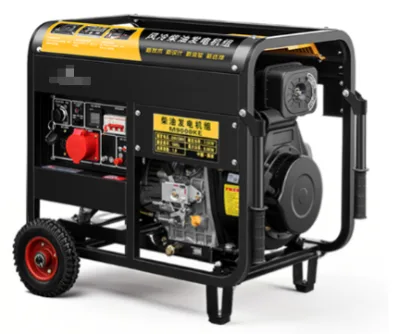
Diesel Super Silent Generator Diesel Engine Generator Diesel CNG Generator
$5000.00 - $30000.00
MOQ: 1 Sets




Comprehensive Sourcing Guide
Strategic Sourcing Guide for Diesel Generator Procurement
Understanding Technical Specifications and Variability
When initiating a procurement process for diesel generators, buyers must first navigate a complex landscape of technical specifications that vary significantly between models and intended applications. The market offers a diverse array of configurations, ranging from basic diesel generators to self-starting units designed for critical emergency scenarios. A primary point of differentiation lies in the engine stroke cycle. While some units in the supply chain are explicitly described as four-stroke engines, others are listed with eight-stroke configurations, indicating a need for rigorous verification of the specific engine architecture required for the intended load profile.
The electrical output parameters are equally critical. The observed data indicates a wide range of rated powers, with specific models citing capacities from 15kW up to 1000kW, and a specific unit noted at 240kW. Frequency requirements must be strictly aligned with the local grid infrastructure; listings show options for 50Hz, 60Hz, and dual-frequency capabilities of 50/60Hz. Voltage ratings are similarly flexible, with common configurations including 220V, 230V, 240V, 440V, and 460V, often available in three-phase four-wire systems with neutral grounding. The alternator component, a vital part of the power generation system, is frequently sourced from established manufacturers such as Stanford, Leroy Somer, or Marathon, though the specific brand assignment depends on the order configuration.
Cooling methods and excitation modes further define the operational envelope. Water cooling is a documented method for certain high-output units, while the excitation mode is specified as AC rotating exciter in several models. Speed ratings also vary, with specific observations of 1500rpm, which is standard for 50Hz applications, though general "Speed" attributes are also listed without specific numerical values in some contexts. Buyers must ensure that the intake type, whether normally aspirated or turbocharged, matches the altitude and ambient temperature conditions of the deployment site, as some units are rated for air temperatures up to 45°C.
Compliance, Certification, and Standard Verification
Navigating the compliance and certification landscape is essential for ensuring that the purchased equipment meets international safety and performance standards. The provided data highlights specific standards and certifications that buyers should verify during the supplier selection process. One observed standard is CE, which indicates conformity with health, safety, and environmental protection standards for products sold within the European Economic Area. However, the presence of a CE mark on a listing does not automatically guarantee compliance for all jurisdictions; buyers must confirm the validity and scope of such certifications for their specific region.
Physical dimensions and packaging standards are also part of the compliance and logistical verification process. Listings show specific standard dimensions such as 23508201330mm and 290011001500mm, which are critical for planning installation spaces and transport logistics. Packaging methods vary from plywood cases and wooden pallets to plastic film cartons and sea-worthy packing, each offering different levels of protection during transit. The protection class, such as IP23, defines the ingress protection against solid objects and water, which is a crucial specification for outdoor or industrial installations.
Buyers must treat these standard values as observations of specific listings rather than universal guarantees. For instance, while one model may be listed with a specific dimensional standard, another may differ. Therefore, the procurement strategy must include a verification step where the supplier provides the exact technical data sheet for the specific batch being ordered. This ensures that the physical footprint, weight, and environmental protection ratings match the site requirements. Additionally, the origin of the units, often cited as China or specifically Jiangsu, China, should be considered in the context of trade regulations and import duties applicable to the buyer's location.
Cost Drivers and Pricing Structure Analysis
The pricing structure for diesel generators is influenced by a multitude of factors, resulting in a broad observed range from 10 USD to 110,000 USD. This vast disparity is not indicative of product quality alone but reflects differences in capacity, features, and customization levels. The minimum order quantity (MOQ) is another significant cost driver, with observed ranges spanning from 1 to 10 units. For buyers requiring a single unit, the unit cost may be higher due to the lack of economies of scale, whereas bulk orders may benefit from reduced per-unit pricing.
Customization is a primary factor that drives cost variability. The availability of customization options allows buyers to tailor the generator to specific needs, such as choosing between open or silent types, selecting specific alternator brands, or modifying the fuel tank configuration (top or bottom tank). These customizations, while adding value, inherently increase the production complexity and cost. Furthermore, the inclusion of advanced controller modules, such as Comap, or the selection of specific starting models like DC24V electricity, adds to the overall price point.
The rated power is the most direct correlation to cost. Units ranging from 15kW to 1000kW will exhibit exponential cost differences. A 15kW unit will be significantly less expensive than a 1000kW industrial unit. Additionally, the type of installation—whether fixed or portable—affects the structural requirements and, consequently, the price. Portable units often require reinforced frames and specialized mounting, which can increase manufacturing costs compared to fixed installations. Buyers should request detailed cost breakdowns that separate the base engine cost, alternator cost, enclosure costs, and any customization fees to understand the true value proposition of each offer.
Typical Applications and Usage Scenarios
Diesel generators serve a wide array of applications, ranging from common units for general power supply to specialized standby and emergency crew units. The usage classification is a key determinant in selecting the right equipment. "Common Units" are typically designed for general industrial or commercial use where power continuity is important but not critical to life safety. In contrast, "Standby Units" and "Emergency Crew" units are engineered for critical scenarios where power failure could result in significant financial loss or safety hazards. These units often feature self-starting capabilities and automation types to ensure immediate response to grid outages.
The land use type and environment also dictate the appropriate generator selection. Units are categorized for "Land Use" and further specified by land use types such as "Ordinary," "Automation Type," or "Low Noise." Low noise units are essential for residential areas, hospitals, or events where sound pollution must be minimized. These units often come in silent or open types, with the silent variant providing a sound-attenuated enclosure. The installation method, whether fixed or portable, further aligns with the application. Fixed installations are permanent solutions for data centers or hospitals, while portable units are ideal for construction sites, outdoor events, or temporary power needs.
The specific model numbers, such as SAC300GF, SATG9, or Gd-150kVA, often correspond to specific application profiles. For example, a model with a 1500rpm speed rating is typically suited for 50Hz applications common in many parts of the world, while the frequency and voltage ratings must match the local infrastructure. Buyers should map their specific operational requirements, such as the need for continuous operation versus standby duty, against these usage classifications to ensure the selected generator can handle the intended load profile without premature failure.
Supplier Evaluation and Origin Considerations
Evaluating suppliers requires a focus on their manufacturing capabilities, origin, and service offerings. The observed data indicates that many suppliers originate from China, with specific mentions of Jiangsu as a manufacturing hub. This region is known for its industrial base, but buyers must verify the specific factory capabilities and quality control processes of the supplier they choose. The presence of OEM (Original Equipment Manufacturer) and ODM (Original Design Manufacturer) services suggests that suppliers are capable of producing custom-branded units or modifying designs to meet specific client requirements.
When evaluating a supplier, buyers should look for evidence of their ability to provide the specific components observed in the listings, such as Stanford, Leroy Somer, or Marathon alternators, and Comap controller modules. The ability to source these high-quality components is a strong indicator of a supplier's supply chain robustness. Additionally, the supplier's flexibility in offering different packing methods, from sea-worthy packing to plywood cases, demonstrates their logistical competence.
It is crucial to avoid relying solely on the listed attributes as guarantees of performance. Instead, buyers should request references, factory audit reports, and detailed product specifications for the exact models they intend to purchase. The supplier's ability to handle the specific customization requests, such as color customization or specific voltage configurations, is a key differentiator. Buyers should also consider the supplier's experience with the specific "Landuse Type of Unit" they are targeting, whether it is an ordinary unit or a low-noise automation type, to ensure they have the necessary expertise in that niche.
Quality Control and Long-Term Procurement Considerations
Ensuring long-term reliability and performance requires a robust quality control strategy. The observed specifications, such as the protection class IP23 and the rated current ranges of 264AMP to 864AMP, provide a baseline for quality expectations. However, these values must be validated through independent testing or third-party inspection reports. Buyers should insist on factory acceptance tests (FAT) before shipment to verify that the generator meets the stated performance criteria, including frequency stability, voltage regulation, and cooling efficiency.
Long-term procurement considerations extend beyond the initial purchase price to include maintenance, spare parts availability, and service support. The availability of customization and the specific model numbers (e.g., SAC300GF, SATG9) should be cross-referenced with the supplier's long-term support capabilities. Buyers must ensure that the supplier can provide a steady supply of spare parts for the specific alternator and controller models selected. The "Other Service" category, which includes OEM/ODM, often implies a level of ongoing partnership that can be beneficial for long-term maintenance and upgrades.
Furthermore, the environmental conditions in which the generator will operate must be considered for long-term durability. The air temperature rating of 45°C is a specific constraint that must be respected; operating in environments exceeding this limit without additional cooling measures could lead to premature failure. The cooling method, whether water cooling or air cooling, should be matched to the site's environmental conditions. Finally, the installation method, whether fixed or portable, impacts the long-term maintenance schedule and accessibility for servicing. Buyers should develop a comprehensive maintenance plan that aligns with the specific technical attributes of the selected generator to ensure optimal performance over its lifecycle.
FAQs
What customization options are available for diesel generators?
Customization is available for these units, allowing buyers to select specific alternator brands like Stanford or Marathon. Options include choosing between open or silent types and customizing voltage ratings to match local grid requirements.
Which frequency options do these diesel generators support?
The units support 50Hz, 60Hz, and dual-frequency configurations of 50/60Hz. Buyers must verify the specific frequency requirement for their site to ensure compatibility with local electrical infrastructure and load profiles.
Can I find diesel generators with water cooling systems?
Yes, water cooling is a documented method for certain high-output units in this supply chain. This feature is typically found in models designed for continuous operation or high ambient temperature conditions up to 45 degrees Celsius.
What are the typical rated power ranges for these units?
Rated power ranges from 15kW up to 1000kW, with specific models listed at 240kW. The wide capacity spectrum allows selection for applications ranging from common units to critical standby and emergency crew scenarios.
Which certifications are listed for these Diesel Generator models?
CE certification is observed on specific listings, indicating conformity with European safety standards. Buyers should verify the validity of this mark for their specific region as it may not guarantee compliance for all jurisdictions.
How does the installation method vary across these products?
Installation methods include both fixed and portable configurations. Fixed units are suitable for permanent sites, while portable units are designed for construction or temporary needs, often featuring reinforced frames for mobility.