Source Diesel Generator AVR Regulator Board for Industrial Backup
Find and compare 30 Diesel Generator AVR Regulator Board options from China. Evaluate models like ZR-2 and KI-DAVR-250S for three-phase applications, checking voltage inputs, CE certification, and warranty terms to match your power requirements.
Key considerations
Products List


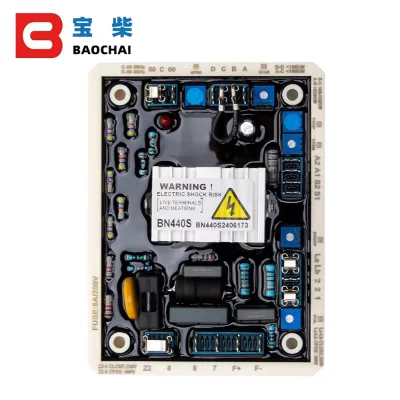


Diesel Generator Set Part AVR an-5W-201 Generator AVR Automatic Voltage Regulator Board
$420.00 - $450.00
MOQ: 5 Pieces


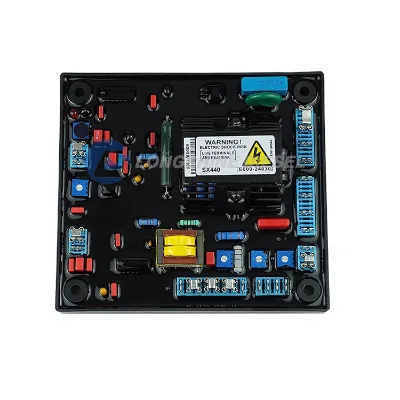


Comprehensive Sourcing Guide
Diesel Generator AVR Regulator Board Sourcing Guide
The diesel generator automatic voltage regulator (AVR) board serves as the critical control unit that stabilizes output voltage by adjusting the excitation current supplied to the generator's rotor. In the context of three-phase diesel generators, these boards ensure that the output remains within tight tolerances despite fluctuations in engine speed or electrical load, preventing damage to sensitive downstream equipment. Buyers must recognize that while the core function is universal, the specific implementation varies significantly based on the generator's capacity, such as the 30 kVA units observed in the market, and the required input voltage ranges like 220 V or 380 V.
Sourcing these components requires a clear distinction between standard replacement parts and custom-engineered solutions. The available market data indicates a mix of standard components and customizable options, with specific model numbers like ZR-2 AVR, KI-DAVR-250S, and SX460 representing different design iterations. Procurement decisions should be driven by the exact compatibility requirements of the existing generator set, as mismatched excitation currents or voltage ranges can lead to system instability. Understanding whether a unit is designed for portable or fixed installation is also essential, as the physical mounting and environmental protection requirements differ between these configurations.
Product Scope and Observed Listing Signals
The current market for diesel generator AVR boards presents a diverse range of products characterized by varying physical dimensions, weights, and packaging standards. Listings show single package sizes ranging from compact units like 17.5x14.3x5.5 cm to larger assemblies, with gross weights observed between 0.24 kg and 1.5 kg. These physical attributes are critical for logistics planning, particularly for buyers sourcing portable generator components where space and weight are constrained. The packaging is typically listed as cartons, which suggests a need for buyers to verify if additional protective measures are required for international shipping to prevent damage to the sensitive electronic circuitry.
Price and minimum order quantity (MOQ) signals indicate a flexible commercial landscape suitable for both individual replacements and bulk procurement. The observed price range spans from $10 to $450, reflecting the disparity between basic regulator boards and more complex units with advanced protection features. MOQs are equally variable, ranging from single items to orders of 20 units, allowing buyers to test compatibility with a single unit before committing to larger volumes. This flexibility is particularly useful for maintenance teams that need to replace a single failed board without incurring the cost of a full batch, while also supporting larger projects that require multiple units for fleet standardization.
Technical Specifications to Verify
Verifying the electrical compatibility of an AVR board is the most critical technical step before finalizing a purchase. Buyers must confirm that the unit's input voltage range matches the generator's output, with observed specifications including 190-240 VAC and 220 V/380 V inputs. The output voltage and frequency must also align with the target application, typically 220 V at 50/60 Hz for three-phase systems. Mismatches in these parameters can result in improper voltage regulation, leading to equipment failure or inefficient generator operation. Additionally, the excitation current, such as the 4A observed in specific models, must be compatible with the generator's rotor requirements to ensure stable field excitation.
Physical and environmental specifications further define the suitability of a regulator board for a specific installation. The product models observed, including BN440S, BR409, and NS421, often come with specific dimensional constraints and protection ratings that must be checked against the generator's control panel. Protection features like overvoltage safeguards are standard but vary in implementation, and the unit power dissipation, noted as a maximum of 8 Watts in some listings, impacts thermal management requirements. Buyers should also verify the phase configuration, ensuring the board supports the three-phase requirement of the generator, as single-phase units are incompatible with three-phase systems.
Compliance and Safety Documentation
Certification status is a primary indicator of a supplier's adherence to international safety and quality standards. The market data confirms the presence of CE and 3C certifications, which are essential for products intended for the European and Chinese markets, respectively. These certifications validate that the electronic components meet specific electromagnetic compatibility and safety requirements, reducing the risk of electrical hazards during operation. Buyers should request valid certification documents for each batch of products, as the presence of a certification mark on a listing does not guarantee that every unit in a shipment has undergone the same rigorous testing.
Beyond certifications, documentation regarding the product's origin and standard compliance provides necessary context for regulatory clearance. Products listed with a place of origin in Fujian, China, or general China origin must be accompanied by clear documentation regarding the manufacturing standards applied. The observed product standards, such as 1KG or 0.3KG, likely refer to weight classifications or specific internal standards rather than international safety codes, so buyers must not assume these replace formal compliance certificates. Ensuring that the supplier can provide a certificate of origin and detailed technical datasheets is vital for customs clearance and for maintaining the warranty validity of the installed equipment.
Cost Drivers and Commercial Terms
The final cost of an AVR board is influenced by a combination of material composition, customization levels, and the complexity of the electronic design. Materials such as rubber and PC (polycarbonate) are used in the construction of these units, affecting both durability and cost. Customization availability allows buyers to tailor the board to specific generator models, but this often comes at a premium compared to standard off-the-shelf components. The warranty terms, ranging from three months to one year, also play a significant role in the total cost of ownership, with longer warranties often reflecting higher confidence in the product's reliability and quality control processes.
Commercial terms regarding packaging and selling units directly impact the logistics and administrative overhead of the procurement process. Most listings indicate a "single item" selling unit with carton packaging, which simplifies inventory management but may increase per-unit shipping costs for small orders. Buyers should negotiate based on the observed MOQ ranges, leveraging the ability to order single items for testing while planning bulk orders for standardization. The capacity of the generator, such as the 30 kVA units, can also influence pricing, as higher capacity systems often require more robust and expensive AVR boards with higher current handling capabilities.
Supplier Qualification and Quality Control
Evaluating a supplier's ability to maintain consistent quality is essential when sourcing critical electronic components like AVR boards. The presence of a brand name, such as BAOCHAI, suggests a level of market presence, but buyers must verify the supplier's track record for delivering products that match the listed specifications. Quality control should focus on the consistency of the model numbers and standards, ensuring that the delivered units match the exact part numbers like DSR or EA63-4. Inconsistent quality can lead to field failures, which are particularly costly in generator applications where downtime can disrupt critical operations.
The warranty period serves as a tangible metric for supplier confidence and product reliability. With observed warranty terms ranging from three months to one year, buyers should prioritize suppliers offering the longer duration, as this indicates a higher tolerance for potential defects and a commitment to after-sales support. It is also important to verify the supplier's capacity to handle returns and replacements efficiently, as the "Installation Method" being portable suggests that these units may need to be swapped quickly in the field. A supplier with a robust quality control system will provide clear documentation on testing procedures and defect rates, giving buyers the confidence to proceed with larger orders.
Long-Term Procurement Checks
Establishing a long-term relationship with a supplier requires ongoing verification of product consistency and supply chain stability. Buyers should implement a system to track the performance of specific model numbers over time, noting any deviations in specifications such as frequency, voltage, or excitation current. The availability of customization options should be reassessed periodically to ensure that the supplier can adapt to changes in generator technology or specific project requirements. Regular audits of the supplier's production capabilities and quality assurance processes will help maintain the integrity of the procurement pipeline.
Future-proofing the procurement strategy involves monitoring the evolution of standards and certifications in the AVR market. As regulations tighten and technology advances, the current standards like CE and 3C may be supplemented by new requirements. Buyers should maintain open communication with suppliers to stay informed about upcoming changes in product specifications or compliance needs. Additionally, keeping a record of the observed price ranges and MOQs allows buyers to anticipate market fluctuations and negotiate better terms as the volume of procurement increases. This proactive approach ensures that the sourcing strategy remains resilient and adaptable to changing market conditions.
FAQs
What is the warranty period for these diesel generator AVR boards?
The warranty period is typically one year for most models listed. Some specific units may offer a shorter three-month warranty, so verify the exact term for your selected model before purchasing.
Can I find customizable diesel generator AVR regulator boards?
Yes, customization is available for these diesel generator AVR regulator boards. Buyers can request specific modifications to meet unique operational requirements while maintaining standard component quality.
Which certifications are available for these AVR regulator boards?
Available certifications include CE and 3C for compliance with safety standards. These documents verify that the products meet specific regulatory requirements for electrical equipment used in various regions.
How is the output voltage specified for these diesel generator boards?
The output voltage is specified as 220 V for single-phase applications. Input voltage options include 220 V and 380 V to accommodate different generator configurations and power systems.
What is the typical packaging for these diesel generator AVR components?
Products are typically packed in cartons or cartons for safe transport. The single package size is often around 17.5 by 14.3 by 5.5 cm with a gross weight of 0.5 kg.
Which models are available for three-phase diesel generator systems?
Models such as ZR-2 AVR, KI-DAVR-250S, and SX460 are available for three-phase systems. These units support 50/60 Hz frequencies and are designed for stable voltage regulation.