Source Diesel Garbage Compactor Truck for municipal waste, recycling centers, and industrial sites
Compare 30 Diesel Garbage Compactor Truck listings from verified Chinese manufacturers. Buyers can evaluate specifications like payload, volume, and emission standards to find suitable waste collection vehicles for municipal and industrial applications.
Key considerations
Products List
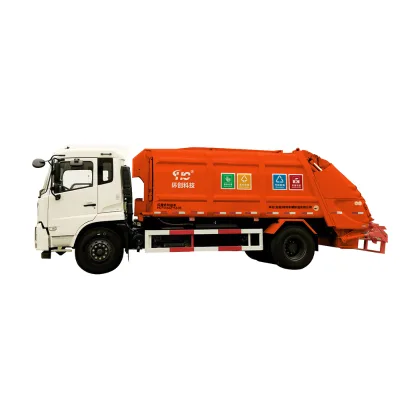


Garbage Compressor Truck Waste Collection Garbage Compactor Truck 4m3
$39000.00 - $55000.00
MOQ: 1 Pieces


China Factory 35cbm Big Capacity Garbage Compression Trash Compactor Truck
$29999.00 - $38888.00
MOQ: 1 Pieces


Comprehensive Sourcing Guide
Diesel Garbage Compactor Truck Sourcing Guide
Procuring a Diesel Garbage Compactor Truck requires a disciplined approach to aligning heavy-duty mechanical specifications with municipal waste management operational goals. These vehicles are engineered to maximize payload efficiency by compressing loose refuse into dense blocks, thereby reducing the frequency of disposal trips and optimizing fleet logistics. Buyers must navigate a complex landscape of technical variables, from chassis configuration and hydraulic power systems to emission standards and body material durability. The following guide provides evidence-based procurement strategies to ensure that the selected equipment meets rigorous performance, safety, and regulatory requirements.
Successful sourcing begins with a clear definition of operational parameters, including daily mileage, waste density, and collection route characteristics. The decision between rear loader and side loader configurations, as well as the selection of appropriate drive wheel arrangements, directly impacts vehicle maneuverability and fuel economy. Furthermore, understanding the interplay between engine horsepower, transmission type, and hydraulic pressure is essential for maintaining consistent compaction force under varying load conditions. This guide outlines the critical verification steps necessary to mitigate procurement risks and secure reliable, high-performance waste collection assets.
Product Scope and Observed Listing Signals
The current market for diesel garbage compactor trucks presents a diverse array of models tailored to different payload capacities and body volumes. Listings indicate a price range typically spanning from $5,000 to $85,000 USD, reflecting significant variations in chassis origin, engine brand, hydraulic system complexity, and body construction materials. The minimum order quantity (MOQ) is frequently observed as one unit, allowing municipalities and private waste management firms to procure single vehicles for pilot testing or specific route deployment without committing to large fleet orders. This flexibility supports phased fleet modernization strategies and enables buyers to evaluate vehicle performance in real-world conditions before scaling up procurement.
Observed product attributes reveal a strong emphasis on customization and specific operational features. Buyers can expect to find vehicles with automatic or manual transmission options, with some models offering left-hand or right-hand drive configurations to suit regional traffic laws. The body volume for many listed units falls within the 10,001 to 15,000-liter range, suitable for medium to heavy-duty urban collection routes. Additionally, features such as efficient waste collection capabilities, sealed bodies to prevent leakage, and various arm types for different bin interfaces are common selling points. These signals help buyers identify models that align with their specific waste stream characteristics and collection infrastructure.
Technical Specifications to Verify
Verifying the chassis and powertrain specifications is paramount to ensuring long-term reliability and operational efficiency. Buyers should confirm the engine horsepower, which typically ranges around 200 HP for standard models, and ensure compatibility with local fuel quality and emission standards. The transmission type, whether automatic or manual, must be selected based on driver preference and operational intensity, with automatic transmissions often preferred for stop-and-go urban routes. Additionally, the drive wheel configuration, such as 4x2 or 6x4, should be matched to the expected payload and road conditions, with heavier payloads requiring more robust axle configurations to prevent premature wear and structural failure.
The compactor body construction and hydraulic system details require close scrutiny to assess durability and compaction performance. The garbage box material is often specified as high-strength manganese steel, such as Q355, with plate thicknesses around 5 mm to resist abrasion and impact damage. Buyers should verify the hydraulic power source, ensuring it provides sufficient pressure for consistent compaction force, and check the gearbox specifications, such as a 6-level system, for smooth power delivery. Furthermore, the overall dimensions, including length, width, and height, must be validated against local road regulations and facility access constraints, such as garage door heights and turning radii at transfer stations.
Compliance and Safety Documentation
Ensuring that the vehicle meets all relevant safety and environmental regulations is a non-negotiable aspect of the procurement process. Buyers must verify that the truck complies with local emission standards, such as Euro 5 or Euro 6, depending on the jurisdiction’s environmental policies. The braking system should include advanced features like ABS (Anti-lock Bracing System) and hydraulic power steering to enhance driver control and safety during emergency maneuvers. Additionally, the presence of a parking brake and other standard safety mechanisms must be confirmed to ensure the vehicle operates safely in diverse traffic and loading conditions.
Certification documentation serves as proof of manufacturing quality and regulatory adherence. Buyers should request valid certification marks, such as ISO, CE, CCC, or EEC, which indicate that the vehicle has undergone rigorous testing and meets international quality and safety standards. The machinery test report provided by the supplier is a critical document that validates the vehicle’s performance under load and stress conditions. It is essential to review these reports for any discrepancies or limitations that could affect the vehicle’s operational lifespan or compliance with local municipal codes.
Cost Drivers and Commercial Terms
Understanding the factors that influence the total cost of ownership is crucial for effective budgeting and financial planning. The price of a Diesel Garbage Compactor Truck is driven by several key components, including the chassis brand, engine origin, hydraulic system quality, and body material thickness. Higher-end models with imported engines or advanced hydraulic systems will command a premium price, while more basic configurations may offer cost savings but potentially higher maintenance costs over time. Buyers should also consider the warranty terms, which typically range from one year, as a factor in assessing the supplier’s confidence in their product’s durability.
Commercial terms and payment structures play a significant role in the procurement process. Buyers should negotiate clear terms regarding delivery lead times, shipping methods, and installation support. The packing method, whether nude or waxed, can affect the vehicle’s condition during transit and should be specified in the contract to prevent damage. Additionally, customization options, such as specific truck colors or body modifications, may incur additional costs and extend lead times. It is advisable to include clauses for performance guarantees and after-sales support to mitigate financial risks associated with potential defects or operational failures.
Supplier Qualification and Quality Control
Selecting a qualified supplier is essential to ensuring the delivery of a reliable and compliant vehicle. Buyers should verify the supplier’s manufacturing capabilities, including their production facilities in regions like Fujian, China, and their ability to provide detailed machinery test reports. The supplier’s reputation for quality control, including adherence to ISO standards and other relevant certifications, should be thoroughly evaluated. Requesting references from previous clients and conducting site visits, if possible, can provide valuable insights into the supplier’s production processes and quality assurance practices.
Quality control measures should be implemented throughout the procurement process, from initial specification agreement to final delivery. Buyers should insist on pre-shipment inspections to verify that the vehicle meets all agreed-upon technical specifications and quality standards. This includes checking the integrity of the hydraulic system, the alignment of the compactor body, and the functionality of all safety features. Establishing a clear communication channel with the supplier for addressing any issues during the inspection process can help resolve problems quickly and ensure that the delivered vehicle is ready for immediate deployment.
Long-Term Procurement Checks
Establishing a framework for long-term procurement checks ensures that the vehicle continues to perform optimally throughout its service life. Buyers should develop a preventive maintenance schedule based on the manufacturer’s recommendations, focusing on critical components such as the engine, hydraulic system, and braking mechanism. Regular inspections and timely replacements of wear parts, such as seals and filters, can significantly extend the vehicle’s lifespan and reduce unexpected downtime. Keeping detailed records of maintenance activities and repairs is essential for tracking performance trends and planning future fleet replacements.
Building a strong relationship with the supplier for ongoing support and spare parts availability is a key strategy for long-term success. Buyers should negotiate service agreements that include access to genuine spare parts and technical support. This ensures that any issues can be addressed promptly, minimizing operational disruptions. Additionally, staying informed about updates in emission regulations and waste management technologies can help buyers make informed decisions about future fleet upgrades and modifications, ensuring that their operations remain efficient and compliant with evolving industry standards.
FAQs
What is the warranty period for this Diesel Garbage Compactor Truck?
The warranty period is 1 Year for this Diesel Garbage Compactor Truck. This coverage applies to the new condition units originating from Fujian, China, ensuring reliability for the initial operational phase.
Which engine horsepower is available for the Diesel Garbage Compactor Truck?
The available engine horsepower is 200HP for the Diesel Garbage Compactor Truck. This power output supports the 60 KW machinery requirement and ensures efficient waste collection operations across various terrains.
Can the Diesel Garbage Compactor Truck be customized for specific needs?
Yes, the Diesel Garbage Compactor Truck can be customized for specific needs. Customization is available for features like truck color and specific usage types, allowing buyers to tailor the vehicle to their operational requirements.
What is the payload capacity of the Diesel Garbage Compactor Truck?
The payload capacity is 20T for the Diesel Garbage Compactor Truck. This high capacity allows for efficient transport of large volumes of waste, making it suitable for heavy-duty municipal and industrial collection tasks.
How is the Diesel Garbage Compactor Truck certified for safety and standards?
The Diesel Garbage Compactor Truck is certified with ISO, CCC, TSEPA, EEC, RoHS, and CE standards. These certifications ensure the vehicle meets international safety and environmental requirements for operation in various global markets.
What is the voltage requirement for the Diesel Garbage Compactor Truck?
The voltage requirement is 380 V for the Diesel Garbage Compactor Truck. This electrical specification supports the vehicle's hydraulic and control systems, ensuring stable performance during waste compression and collection cycles.
Which transmission type is used in the Diesel Garbage Compactor Truck?
The transmission type is Automatic for the Diesel Garbage Compactor Truck. This feature simplifies operation for drivers and enhances efficiency during frequent stop-and-go waste collection routes in urban environments.